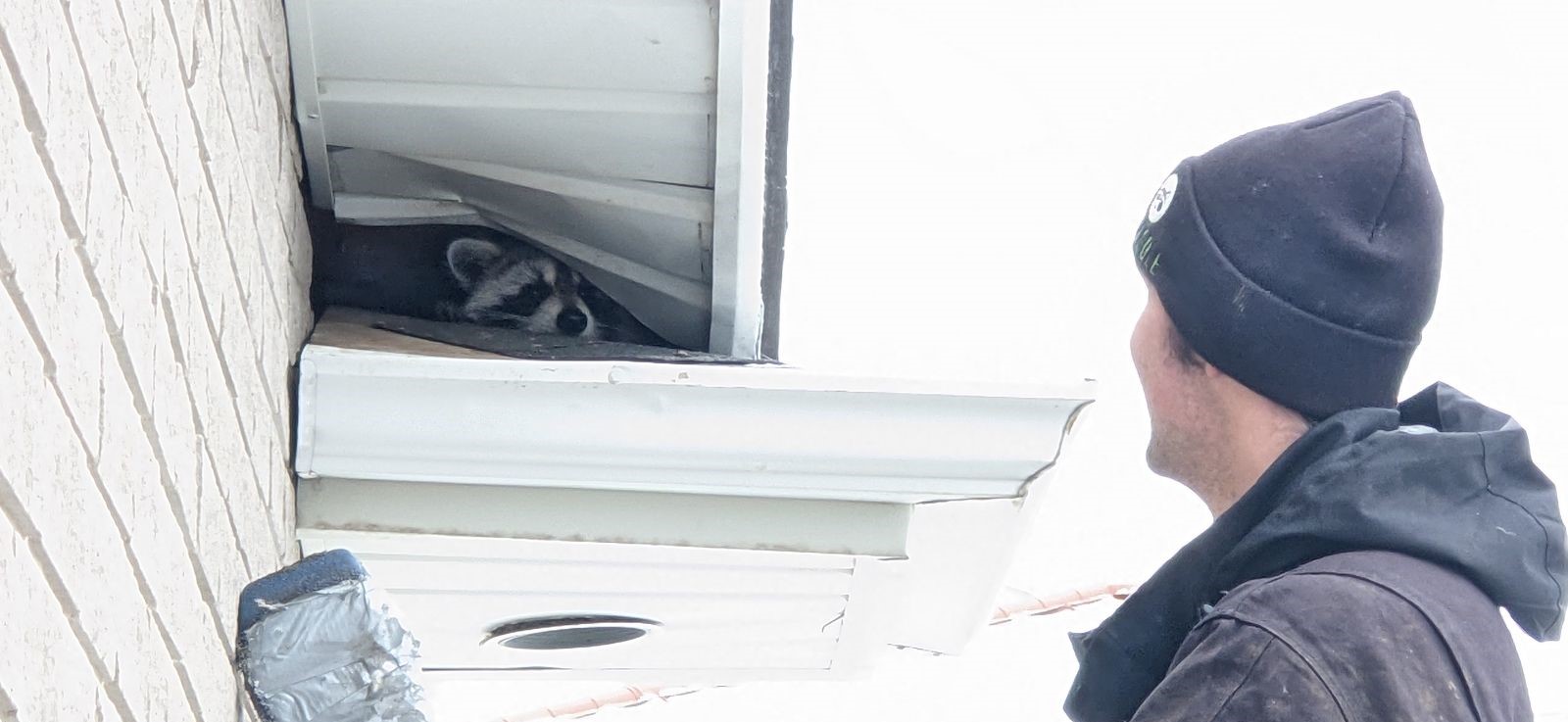
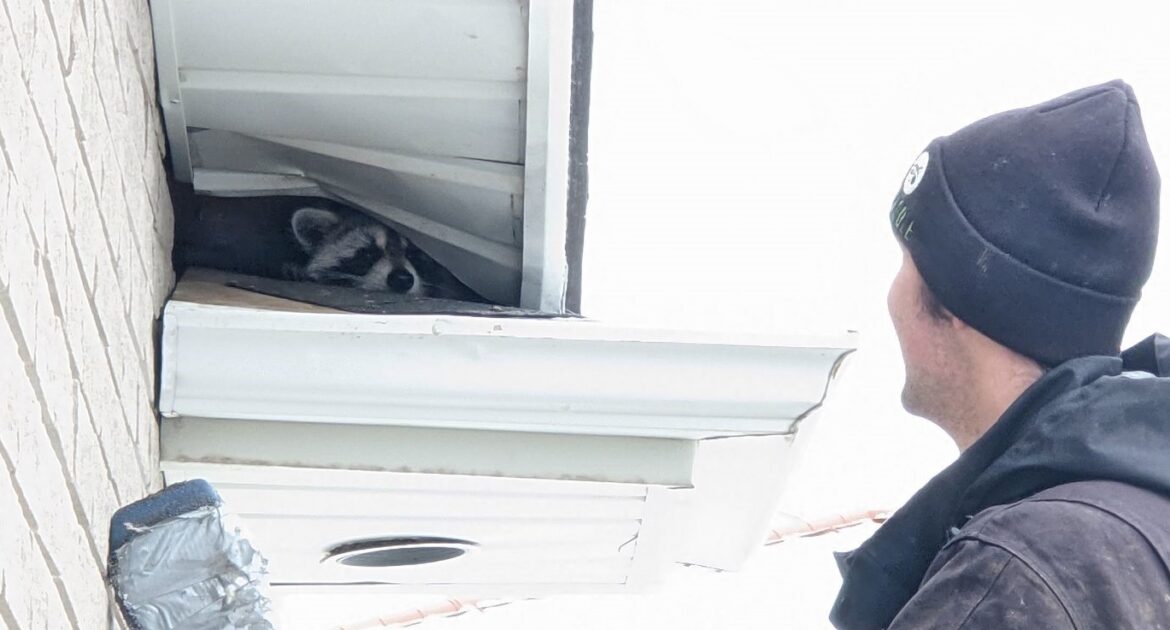
You may hear loud thumping at night or notice damage near your roof and wonder what’s going on. In Niagara, this is a common experience for many homeowners. As urban areas expand and natural spaces change, animals look for warm, quiet places to stay. Homes often provide exactly what they need, which is why issues like this show up more often than people expect.
You may not realize how much raccoon problems in Niagara can affect your daily life. From damaged roofs to torn insulation, the impact can be serious if the issue isn’t addressed early. These animals are strong, curious, and very persistent.
Once they find a way inside, the damage can grow quickly. At Skedaddle Humane Wildlife Control in Niagara, we see how fast small problems can turn into costly repairs when entry points are left open.
You’ll see below how raccoons in Niagara affect homeowners, why the damage spreads over time, and why early action matters. In this blog, you’ll also learn how raccoon removal in Niagara Region helps reduce long-term risk and limits raccoon damage to homes before it becomes more costly.
Why Raccoons Are Drawn to Homes in Niagara
You may think a house feels busy and loud, but to a raccoon, it can feel safe and quiet. Attics, chimneys, and rooflines provide shelter from wind, rain, and cold. Food sources nearby make staying close even more appealing.
You’ll often see more activity in spring and fall, but problems can happen any time of year. Once an entry point is found, it’s remembered. That’s why raccoon problems in Niagara tend to return unless access is properly addressed.
Structural Damage Is Often the First Sign
You may notice damage outside before you hear anything inside. Roof edges, vents, and soffits are common targets. These areas are exposed to weather and easier to break through.
- Roof and Soffit Damage Can Lead to Water Issues: Raccoons can pull apart shingles and soffits to create an opening. When that happens, rain and snow can enter the structure. Over time, moisture can lead to rot, mould, and ceiling damage inside the home.
- Vents and Chimneys Are Common Entry Points: Roof vents and chimneys release warm air, which attracts animals looking for shelter. Lightweight materials can bend or break with repeated pressure. Once damaged, these openings allow easy access to attic spaces.
- Damage Often Spreads Beyond the Entry Point: What starts at the roofline rarely stays there. As movement continues, surrounding materials weaken. This increases the risk of leaks and structural repairs.
This type of raccoon damage to homes can grow quickly if left unchecked.
Attic Damage Affects Comfort and Energy Use
You may not spend much time in your attic, but damage there can affect the whole house. Once raccoons enter, insulation is often torn apart for nesting. Here’s a breakdown of how it works.
- Insulation Loss Reduces Energy Efficiency: Torn insulation no longer holds heat properly. This can make rooms colder in winter and warmer in summer. Over time, energy bills may increase as heating and cooling systems work harder.
- Movement Compresses and Shifts Materials: Heavy animals moving through the attic can flatten insulation and shift it out of place. Even areas not used for nesting can lose coverage. This affects comfort throughout the home.
- Damage Is Often Hidden From View: Many homeowners don’t realize there’s a problem until noises or smells appear. By that point, repairs may already be needed.
Fire Risks Increase With Interior Damage
You may not think of raccoons as a fire risk, but attic activity can create dangerous conditions inside a home. Electrical wiring often runs through these spaces, and damage can happen without being seen right away.
- Chewed or Exposed Wires Can Cause Electrical Issues: When wires are disturbed or damaged, electrical problems can start to appear. Lights may flicker, outlets may stop working, or breakers may trip more often. These signs can point to hidden damage that needs attention.
- Dry Nesting Materials Can Be Flammable: Nesting areas often contain dry materials packed tightly together. When these materials sit near wiring or heat sources, they can warm up quickly. Over time, this increases the chance of a fire starting.
- Problems Can Go Unnoticed Until Serious: Fire risks inside walls or ceilings are not always easy to spot. Many homeowners don’t realize there’s a danger until damage becomes severe. Early prevention helps reduce these risks and protects the home.
This is another reason raccoon damage to homes should be addressed quickly.
Noise and Odours Disrupt Daily Life
You may hear scratching, thumping, or loud movement at night that seems to come from above or inside the walls. Raccoons are active after dark, which can make it hard to relax or sleep. The noise often becomes more frequent as the animal gets comfortable moving around the space.
You may also notice strong odours over time, especially near vents or upper rooms. Waste left in nesting areas can soak into wood and insulation, causing smells that linger. As the problem continues, those odours can spread through walls and ventilation, making them difficult to ignore or remove.
Noise and odour issues often signal ongoing activity and growing raccoon problems in Niagara.
Health Risks Around the Home
You may not see the animal often, but health risks can still be present. Raccoons can carry parasites and diseases that affect people and pets.
Waste left in attics or on roofs can contaminate surfaces. Pets or children may come into contact with affected areas without realizing it. This is why homeowners should never try to handle the situation themselves.
Reducing exposure is an important part of raccoon removal in the Niagara Region.
Outdoor Damage Adds to the Problem
You may first notice issues outside before anything happens indoors. Lawns, gardens, and garbage areas often show clear signs of activity. These outdoor clues usually appear before raccoons try to enter the home.
- Lawns Can Be Dug Up Overnight: Raccoons search for grubs and insects just below the surface of the soil. While digging, they can tear up large sections of grass in a single night. The damage often looks sudden, but it can repeat if the area continues to attract food.
- Garbage and Pet Food Attract Repeat Visits: Easy food sources make a property more appealing. Once raccoons learn where food is available, they are likely to return often. Over time, these repeat visits increase the chance of damage spreading closer to the home.
- Outdoor Activity Often Leads to Indoor Entry: When raccoons feel safe around a yard, they begin exploring nearby structures. Rooflines, vents, and foundations become the next areas of interest. This is often how outdoor activity turns into interior damage.
Outdoor damage often connects directly to raccoon damage to homes.
Why Problems Get Worse Over Time
You may hope the issue will stop on its own, but that rarely happens. Once an animal feels safe in or around a home, it will keep coming back. Over time, familiar paths and entry points become part of its routine.
As activity continues, entry points widen and damage spreads to new areas. Small problems can turn into larger repairs that cost more and take longer to fix. What starts as seasonal activity can quickly become a long-term issue if access isn’t addressed properly.
That’s why early raccoon removal in the Niagara Region helps limit damage and prevent repeat problems before they grow.
Raccoon Removal in Niagara Region With Our Professional Team
You want the problem handled the right way, without causing harm or creating new issues later. Raccoon removal in the Niagara Region focuses on safe removal, proper sealing, and long-term prevention. The goal is to protect the home while stopping repeat raccoon problems in Niagara.
Let’s take a closer look at each approach.
- Humane Exit Comes First: You want animals to leave without being harmed. Our professional team uses one-way doors that allow raccoons to exit safely on their own. These doors prevent them from getting back inside after they leave. This keeps the process calm while protecting your home.
- Access Points Are Sealed After Activity Stops: You don’t want the same problem to happen again. Once raccoons have exited, entry points are sealed and reinforced to block return access. Open gaps invite repeat activity, which is why proper sealing matters. This step helps protect the structure long-term.
- The Focus Stays on Prevention, Not Short-Term Fixes: You need more than a quick solution. This approach changes how raccoons access the home in the first place. By removing shelter and blocking entry, the home becomes less attractive over time. That’s how repeat raccoon problems in Niagara are reduced.
- The Home Is Protected Without Trapping or Relocation: You don’t have to worry about trapping or moving animals elsewhere. This method avoids relocation and focuses on keeping raccoons out for good. When access is controlled, the problem doesn’t shift to another area of the home. The result is safer, longer-lasting protection.
Protecting Your Home From Ongoing Raccoon Damage
You don’t need to wait for damage to get worse. Understanding how raccoons in Niagara affect homeowners makes it clear why early action matters. Addressing raccoon damage to homes helps protect comfort, safety, and long-term property value.
You can request an estimate to learn more about raccoon removal in the Niagara Region with our professional team. Skedaddle Humane Wildlife Control in Niagara is ready to help protect your home using proven, humane solutions designed to last.

 Loading...