Is skunk spray dangerous to pets? Yes, it certainly can be. While the foul odour is the most obvious problem, the spray carries toxic elements that can cause serious health issues for your furry friends. Exposure can lead to severe eye irritation, respiratory distress, and in rare cases, a dangerous form of anemia if the spray is swallowed. You should always take a skunk encounter seriously and seek immediate veterinary care if your pet takes a direct hit to the face.
If you live in our area, you know that skunks are a common sight. Skedaddle Humane Wildlife Control in Niagara is here to help you keep your property safe. We understand how scary it is when your dog or cat gets sprayed in the backyard. You want to protect your pets from these smelly and potentially harmful encounters. The best way to do that is to ensure these animals do not make a home on your property in the first place.
In this article, you will learn exactly how a skunk’s spray can affect your dog or cat. We will explore the common health risks, explain why these animals spray in the first place, and show you how our professional team can help keep your yard clear. You will also find answers to the most frequently asked questions about these smelly backyard visitors.
Why do skunks spray?
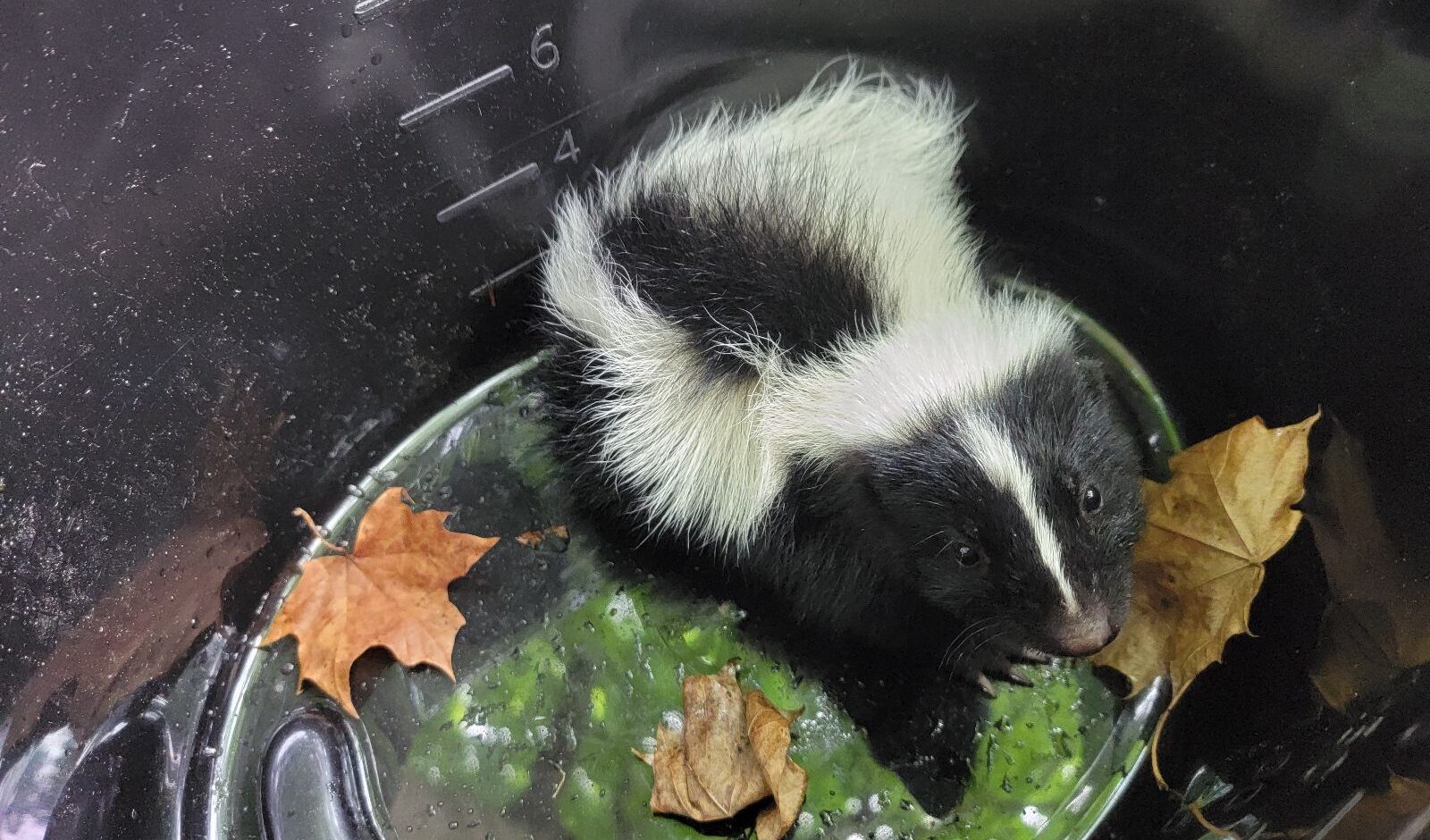
Skunks spray as a defence mechanism when they feel threatened, frightened, or cornered by another animal. Because they are naturally docile creatures, they prefer to avoid conflict and will usually only use their spray as a last resort. If a dog runs up to them in the yard, they view it as a direct threat to their safety.
Before releasing their pungent spray, skunks will try to warn off the predator. You might see them hiss, stamp their front feet, and raise their tail high into the air. If the warning signs are ignored by an overly curious pet, the animal will take aim and fire. They can shoot their oily spray accurately up to 15 feet. This is why dogs so often end up taking a direct hit to the face when they get too close.
How Skunk Spray Could Be Dangerous To Pets
Skunk spray is much more than just a terrible smell that ruins your evening. It is a chemical defence designed to repel predators, and it can cause real harm to your pets. The spray contains toxic compounds that can trigger severe physical reactions in dogs and cats.
If your pet is sprayed, the health impacts depend on where the spray hits them and how much they absorb. A light misting on the back might only cause a bad odour, but a direct blast to the face is a medical concern. You must watch your pet closely after an encounter. Below, we break down the specific ways this spray can threaten your pet’s health.
Eye and Mouth Exposure
When your pet gets too close to a skunk, their face is usually the first thing to get hit. This direct exposure to the eyes and mouth is very painful. You will quickly notice your pet acting distressed.
- Temporary Blindness: The spray acts very much like tear gas when it hits the eyes. Your pet will likely experience intense burning, redness, and swelling of the eyes. They might paw at their face and struggle to open their eyes for quite some time. In many cases, this causes temporary blindness that makes them very anxious and confused.
- Stomach Upset: If the spray gets into their mouth, it tastes absolutely awful and causes immediate irritation. Your dog or cat will probably start drooling heavily right away. This is often followed by severe nausea and repeated vomiting. You should contact a vet if the vomiting does not stop quickly.
- Damage to the Cornea: The chemical compounds in the spray are harsh enough to cause physical damage to the surface of the eye. The cornea can become scratched or ulcerated if the skunk rubs their eyes aggressively. This type of damage requires professional medical treatment to heal properly. You never want to leave eye injuries unchecked.
Respiratory Distress
Inhaling the spray can cause significant breathing issues for your pet. The strong fumes irritate the lining of the nose and lungs. You might hear them struggling to catch their breath.
- Severe Sneezing: As the harsh chemicals enter the nasal passages, your pet’s body will try to expel them. This leads to violent and uncontrollable sneezing fits. The irritation can last for several hours, making your pet very uncomfortable. You should keep them calm and in a well-ventilated area while they recover.
- Coughing and Wheezing: The fumes can travel down into the lungs and cause inflammation. This results in heavy coughing and wheezing, similar to an asthma attack. Dogs with pre-existing breathing issues are especially at risk for severe complications. You must monitor their breathing closely and seek help if they are gasping for air.
- Inflammation of the Airways: The toxic nature of the spray can cause the airway tissues to swell. This swelling restricts the flow of oxygen and can make your pet very lethargic. They may refuse to eat or drink because it is too hard to breathe normally. You should always trust a veterinarian to check their lungs after a bad encounter.
The Risk of Anemia
One of the most dangerous, though rare, side effects of the spray is a specific type of anemia. This happens when the toxic chemicals enter the bloodstream. You need to know the warning signs.
- Red Blood Cell Damage: The chemicals in the spray can cause oxidative damage to the red blood cells. This condition, known as Heinz body anemia, destroys the cells and prevents them from carrying oxygen properly. It usually happens if a pet swallows a large amount of the spray. You will notice the effects within a few hours to a day after the incident.
- Weakness and Lethargy: As the red blood cells die off, your pet will lose their energy completely. They will become extremely weak, unwilling to play, and may collapse if they try to walk. This sudden drop in energy is a major red flag that something is wrong internally. You must rush them to an animal hospital if this happens.
- Discoloured Gums: A clear sign of this severe anemia is a change in the colour of their gums. Instead of a healthy pink, the gums may turn pale, muddy, or even a dark chocolate brown. This means their body is being starved of oxygen. You should lift their lip to check their gum colour if they seem sick after being sprayed.
Rabies Risk and Bite Wounds
While the spray itself does not carry rabies, the encounter still poses a major risk. These animals are common carriers of the rabies virus. You must look beyond the smell and check for physical injuries.
- Hidden Bite Wounds: If a dog corners the skunk, this animal may bite or scratch in self-defence before running away. Because of the terrible smell and thick fur, you might easily miss a small puncture wound. These bites can quickly become infected and cause serious health problems. You should carefully examine your pet’s skin while wearing gloves.
- Rabies Transmission: Rabies is transmitted through the saliva of an infected skunk during a bite. Even a tiny scratch or nip is enough to pass the deadly virus to your pet. This is why it is so important to keep your pet’s vaccinations up to date every year. You should call your vet immediately if you find any marks on your pet’s body.
- Secondary Infections: Skunk mouths are full of bacteria that cause severe infections. A bite wound can swell, fill with pus, and cause a high fever within a few days. These infections require strong antibiotics prescribed by a professional. You cannot treat skunk bites with simple first aid at home.
Professional Skunk Prevention with Skedaddle
Keeping skunks out of your yard is essential for the safety and health of your pets. Wildlife like skunks can carry harmful diseases and parasites, which could pose serious risks to your furry friends. Additionally, skunks may behave unpredictably if they feel cornered, which could lead to scratches or bites. Ensuring your yard is free from skunks provides peace of mind and a safer space for your pets to play.
DIY solutions might seem like an easy and cheap way to address a skunk problem, but they rarely solve the issue permanently. Methods like using repellents or placing traps often fail because they do not address how the skunks are getting into your yard or home. Skedaddle Humane Wildlife Control in Niagara understands that effective wildlife management starts by removing the root causes of intrusion. With our proven approach, we can secure your property to ensure skunks stays out for good.
When you choose Skedaddle, you get a professional and humane solution. Our skilled team carefully inspects every corner of your property, identifying weak points where skunks may enter. Once we’ve sealed up these areas and installed one-way doors, skunks can safely leave but cannot come back. By choosing our services, you’re investing in a long-term solution that protects not only your home but also the well-being of your family and pets.
Keeping Skunks Away in Niagara
Skunks are a common sight in Niagara, but having them settle on your property is less than ideal. Famous for their distinctive odour, skunks often take shelter under decks, sheds, or porches. While their presence might seem harmless at first, skunks can cause damage to structures and dig up lawns while foraging for food. Their spray, used as a defence mechanism, can be tough to remove from fabrics, pets, and even the air around your home.
At Skedaddle, we specialize in humane and effective skunk removal. Our team uses methods that protect both your property and the skunks themselves. By inspecting your property thoroughly, we’ll identify where skunks might be living and how they are entering. Once identified, we install one-way doors, allowing them to leave but not return. Afterward, we ensure these access points are sealed to prevent future issues.
Taking action quickly is key if you notice signs of skunks on your property. Look for small holes in your yard or that unmistakable odour as early warnings. By reaching out to Skedaddle, you’ll get a trusted team that will solve the problem efficiently and protect your home for seasons to come. With our help, you can enjoy a skunk-free property and peace of mind.
Frequently Asked Questions
Can a dog die from skunk spray?
While it is rare, a dog can die if they ingest a large amount of the spray. The toxic chemicals can cause severe anemia that destroys their red blood cells. You should always consult a vet if your dog takes a direct hit to the face.
How long does the smell stay on a dog?
If not treated properly, the foul odour can linger on a dog for many months. The smell often comes back every time the dog gets wet. Professional cleaning formulas are required to truly break down the oils.
Should I use tomato juice to clean my dog?
No, tomato juice does not actually neutralize the chemical odour. It only masks the smell temporarily and creates a massive mess in your bathroom. You should use proper skunk odour neutralizers recommended by your vet.
Do skunks carry diseases?
Yes, they are known carriers of several diseases, including the rabies virus. This is passed through their saliva if they bite or scratch your pet. You must ensure your pets are vaccinated against rabies.
Will a skunk spray without warning?
Most of the time, they will give warning signs like hissing or stomping their feet. However, if they are startled suddenly, they may spray instantly out of fear. You should always keep your dog on a leash at night.
Protect Your Pets With Professional Wildlife Control
Skunk problems can be more than just a nuisance; they can pose real risks to your family, pets, and property. The powerful spray is not only smelly but can also cause health issues like irritated eyes or breathing problems. Skunks may even carry diseases like rabies, which can be dangerous for both people and pets. That’s why it’s important to take steps to protect your home and yard before a skunk becomes a bigger problem.
At Skedaddle Humane Wildlife Control in Niagara, we understand how stressful dealing with a skunk can be. Our team has the experience and tools needed to remove skunks safely and prevent them from coming back. We use humane methods to protect the animals while also keeping your family safe. Your home is important, and we’re here to help make sure it stays a comfortable and secure place for everyone.
Don’t wait until a skunk encounter becomes an emergency. Reach out to us today to learn how we can help. Our reliable team is ready to offer expert advice and solutions tailored to your situation. Request an estimate now and take the first step toward a skunk-free property!

 Loading...







