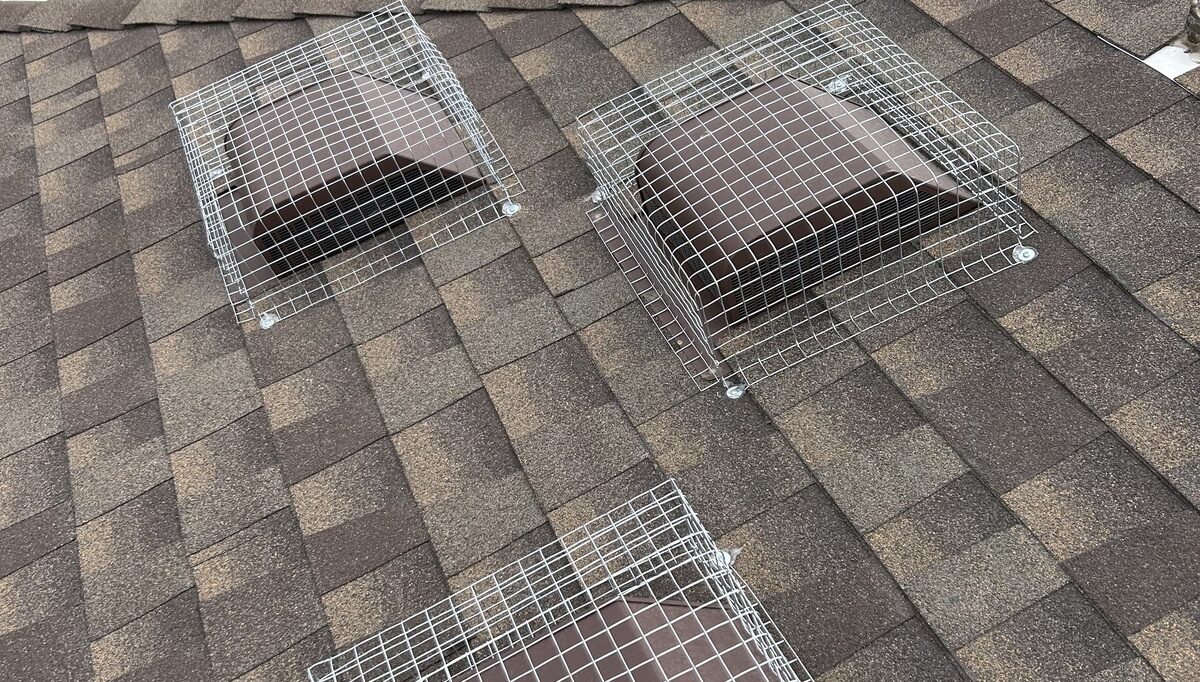
You should have a professional inspect the parapets, roof drains, flashing, vents, and roof-to-wall junctions when wildlife activity affects your flat-roofed home. These areas can contain damaged materials or concealed openings that lead into sheltered spaces. Seeing movement on the roof does not prove indoor entry, but repeated activity near one opening deserves attention.
You may hear scratching above the ceiling even though your home has no large attic. Flat and low-slope roofs can still have cavities between the roof surface and the rooms below. Nearby wall spaces and additions may also provide shelter. The sound you hear may travel through framing, so its apparent location does not always reveal the entrance.
At Skedaddle Humane Wildlife Control in Niagara, we inspect these features and trace signs of activity for you. You should not climb onto the roof, touch waste, disturb nesting material, or seal a suspected route. Our team checks whether the concern involves rooftop visits, indoor occupancy, or damage requiring further assessment. Below, we explain the key areas we inspect and how professional removal and prevention protect your home.
How Do Animals Get Onto a Flat Roof?
These animals can reach a flat roof by climbing nearby structures, using branches or adjoining rooflines, or flying onto it. The route depends on the species and the layout of your property. A garage, lower addition, or neighbouring building may provide access to a higher roof. Exterior features can also form part of a climbing route.
Your roof does not need a steep slope to attract attention. Sheltered corners, ledges, and nearby openings may give visitors a reason to explore. However, reaching the roof and entering your home are separate events. One brief sighting does not tell us whether an occupied space exists below.
Our inspection checks where movement leads and whether an accessible gap connects with the interior. We compare entry-point evidence with sounds, damage, and other signs. You can share what you have already noticed from inside your home or a safe location outside. Leave the roof access and closer inspection to our team.
Parapets and Low Roof Walls
A parapet is a low wall that extends above the roof edge. These walls may run around the roof perimeter or separate adjoining roof sections. We inspect their coverings, joints, and connections to determine whether any opening provides access inside.
- Loose Caps and Edge Coverings: The protective covering along the top of a parapet may become loose or displaced. This can expose gaps beneath the edge that are difficult to see from below. Our team checks whether those gaps end at the surface or lead into a concealed space. A loose covering alone does not confirm occupancy, but it deserves assessment.
- Cracked Masonry and Open Joints: Damaged mortar or cracks can leave openings where different materials meet. Some defects are surface damage, while others may connect with a cavity behind the wall. We inspect the depth and location before treating the area as an entrance. You should not reach into a crack or attempt to close it before the space is assessed.
- Concealed Corners and Roof Connections: A parapet may meet a taller wall, an addition, or another roof section. These corners can hide openings and repeated activity from ground-level view. Our team checks the connections and looks for evidence that the area is being used. We do not assume that every sheltered corner contains an occupant.
Roof Drains and Scuppers
Flat roofs generally have a slight slope that directs water toward drainage points. Some use drains within the roof surface, while others have outlets through the edge wall. An outlet through that wall is called a scupper. The design affects how water leaves the roof and which surrounding areas need inspection.
Debris, nesting material, damaged components, or repeated activity near an outlet may deserve attention. However, a drain is not automatically an entrance into your home. We check the surrounding construction to determine whether a separate gap provides access. We also distinguish signs of wildlife use from ordinary leaves or other roof debris.
Pooling water and leaks can occur without any wildlife involvement. These concerns may need assessment by a qualified roofer or drainage professional. Any exclusion work must preserve the outlet’s ability to carry water away. You should not remove suspected nesting material or cover an opening yourself, since that could disturb occupants or interfere with drainage.
Deteriorated Flashing Around Roof Edges
Flashing protects vulnerable joins against water entry. It is often found around roof edges, walls, and features that pass through the roof surface. We inspect damaged sections to determine whether they expose an accessible opening beneath them.
- Lifted or Missing Sections: Flashing can separate from the surface or stop covering a joint properly. Age, weather exposure, movement, and physical damage may contribute to the change. Our team checks the opening without assuming that wildlife caused it. Where roofing damage is present, restoring the weather seal may require work by a qualified roofer.
- Signs of Repeated Contact: Chewed edges, disturbed materials, staining, or repeat attention to one spot may suggest activity. These signs are more useful when several appear together. A mark on the metal does not identify a species or prove that the interior is occupied. We compare it with the condition of the opening and other evidence nearby.
- Openings Behind Visible Damage: A small gap at the edge may connect with a larger space behind the covering. The entrance you can see may therefore reveal only part of the route. Our team assesses what lies beyond it before planning removal or exclusion. Sealing the visible opening too soon could leave occupants inside.
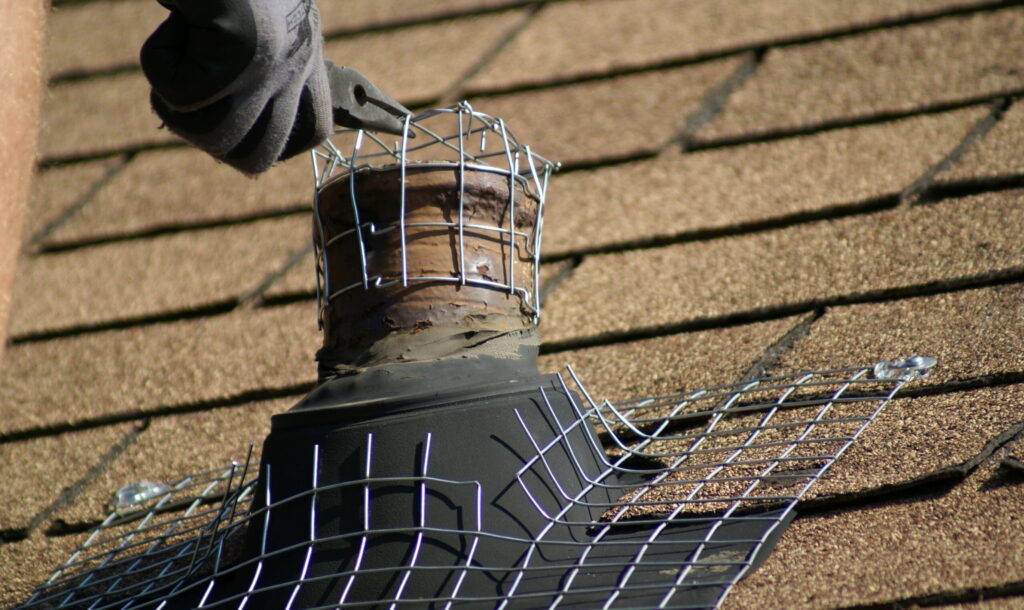
Roof Vents and Other Penetrations
Vents and pipes pass through a roof for different purposes. Damage to a cover and a gap around its base are separate concerns. Our inspection identifies the feature and its function before any protection is recommended.
- Damaged Vent Covers: A cracked housing, displaced cap, or damaged existing screen may leave part of a vent exposed. Depending on the design, that opening may lead to a duct or another space. We look for evidence of use rather than assuming every damaged cover is an entrance. Suitable protection must allow the vent to keep working as intended.
- Gaps Around Vent Bases: The point where a vent assembly meets the roof can develop separation or damaged flashing. This surrounding gap may matter more than the vent’s intended opening. Our team checks whether it connects with the roof cavity or another sheltered area. Roofing work may also be needed to restore the seal around the base.
- Plumbing Stacks and Other Openings: Plumbing stacks are pipes that help the plumbing system operate properly. They should not be treated like ordinary holes that can simply be covered. Other roof penetrations also have their own design and operating needs. We assess accessible gaps around these features and ensure that prevention does not obstruct their function.
Roof-to-Wall Junctions and Adjoining Rooflines
A roof-to-wall junction is the place where the roof meets a vertical wall. Additions, garages, and adjoining homes may create several of these transitions. We inspect the joins to find actual access points rather than treating every seam as a problem.
- Worn or Separated Joints: Sealant, flashing, and other materials may separate where horizontal and vertical surfaces meet. Age, building movement, or weather exposure can contribute to the damage. An opening needs assessment before it is identified as a wildlife entrance. Our team checks whether the route reaches an interior space and whether there is evidence of current use.
- Connections Around Additions: A lower roof may meet the taller wall of the original house or another extension. Overlapping materials and sheltered corners can make these joins difficult to assess from the ground. We check for gaps and follow any signs of activity into relevant spaces. You do not need to climb onto the addition or examine the corner yourself.
- Boundaries Between Connected Homes: Adjoining rooflines may allow outdoor movement from one property to another. Shared walls do not automatically mean the interior cavities are open between homes. The building layout and evidence determine whether a wider assessment is needed. If inspection or work extends beyond one property, coordination with the relevant owners may be necessary.
Signs That Rooftop Activity Has Reached the Interior
You should not assume that a rooftop sighting means your home is occupied. A brief visit may involve travel across the building rather than shelter inside it. Concern grows when repeat attention to an opening appears alongside indoor sounds or damage. Our assessment considers the full pattern instead of relying on a single clue.
Scratching above the ceiling, repeated calls, unusual odours, or droppings already visible indoors may suggest a hidden issue. Damaged materials near an opening can provide further evidence. Sound may travel through the roof framing, so the loudest area is not always closest to the entrance. Our team checks the likely routes without asking you to open ceilings or enter cavities.
Water stains and leaks need careful assessment too. They may result from roofing or drainage problems rather than wildlife activity. Even when both concerns exist, we must identify what caused each one. Share what you have noticed, leave affected materials untouched, and let the appropriate professionals assess the source.
Flat-Roofed Homes and Seasonal Conditions in Niagara
Some Niagara homes have flat or low-slope roof sections over living areas, garages, or additions. Semi-detached homes and row houses may also have adjoining rooflines and several roof-to-wall transitions. The exact construction matters more than the housing label. Two homes that look similar from the street can have different concealed spaces and access points.
Rain, snow, freezing temperatures, and thawing can expose roofing or drainage concerns. Damaged materials may deserve closer inspection, but weather wear does not automatically create a wildlife entrance. Our team looks for evidence of actual access and occupancy. A qualified roofer may need to assess leaks, damaged membranes, or other weatherproofing problems.
Season also affects how sheltered spaces are used and when removal methods are suitable. Dependent young may remain inside even when an adult is away. A quiet period therefore does not confirm that an occupied area is empty. At Skedaddle in Niagara, we plan inspection, humane removal, cleanup, and prevention around the findings at your home.
Close the Entry Routes with Skedaddle
Our process begins with inspecting the roof features and signs of activity. We assess parapets, flashing, vents, drainage surroundings, and roof-to-wall joins where relevant. We also check accessible interior spaces to locate occupants and dependent young. This helps us identify actual entrances instead of sealing every visible gap.
When removal is needed, we choose humane methods suited to the species, location, and season. Our one-way doors allow wildlife to leave but prevent re-entry where this method is appropriate. They are part of a planned exclusion process, not a reason to skip checking the occupied space. Some situations require a different response before entry points can be secured.
We use durable materials to protect suitable access points and assess any need for professional cleanup. Roofing repairs may also be required where damaged components affect the weather seal or roof surface. Our exclusion work must preserve ventilation, drainage, and the function of each feature. You can leave the inspection and wildlife work to us without climbing, handling waste, or disturbing hidden spaces.
Frequently Asked Questions
Can wildlife enter a home that has no large attic?
Yes, an accessible opening can lead into a roof cavity, wall space, or another sheltered area. A flat-roofed home does not need a large attic to contain usable indoor spaces. The construction determines where an occupant can travel or settle. Our inspection identifies the actual route rather than assuming the noise comes from an attic.
Does a roof leak mean wildlife caused damage?
No, a roof leak does not prove wildlife damage. Ageing materials, damaged flashing, drainage problems, and other roofing defects can also allow water inside. We need supporting evidence before connecting a leak with activity. You may need both a wildlife inspection and a roofing assessment to identify and address the separate concerns.
Do adjoining row houses always share interior travel routes?
No, adjoining homes do not always have open routes between their interior spaces. Their rooflines may connect outdoors while walls or other barriers separate the cavities inside. The building layout must be assessed before anyone assumes activity can move between units. If evidence points beyond your property, we can explain why coordination with another owner may be needed.
Should a roof opening be sealed as soon as it is noticed?
No, a suspected entrance should be inspected before it is sealed. Adults, dependent young, or an occupant unable to leave may remain inside. Blocking the route too soon can trap them or separate a family. Our team assesses the space and plans suitable removal before completing the required exclusion work.
Can every roof vent or drain be covered with screening?
No, roof components cannot all be protected in the same way. Vents, plumbing stacks, drains, and scuppers have different functions that must be preserved. Poorly suited screening may obstruct water flow or affect operation. Any protection should follow an assessment of the feature, the access problem, and the appropriate design.
Address Hidden Openings Before Activity Spreads
You should have parapets, roof drains, flashing, vents, and roof-to-wall junctions assessed when activity affects your flat-roofed home. These features may conceal openings even when the building has no large attic. Rooftop visits alone do not confirm indoor entry. Repeated sounds, damage, or attention to one gap deserve a closer professional inspection.
Do not climb onto the roof, touch waste, disturb nesting material, or seal a suspected route. An adult may be outside while dependent young remain within the structure. Inspection must establish what is present before removal and exclusion begin. Leaks and other roofing concerns may also require assessment by a qualified roofer.
At Skedaddle Humane Wildlife Control in Niagara, we trace entry routes and plan humane removal around the evidence found. Our team uses one-way doors where suitable, secures vulnerable access points, and identifies professional cleanup needs. We protect the building while preserving essential roof functions such as drainage and ventilation. Contact us to schedule a professional assessment or request an estimate to learn more.

 Loading...