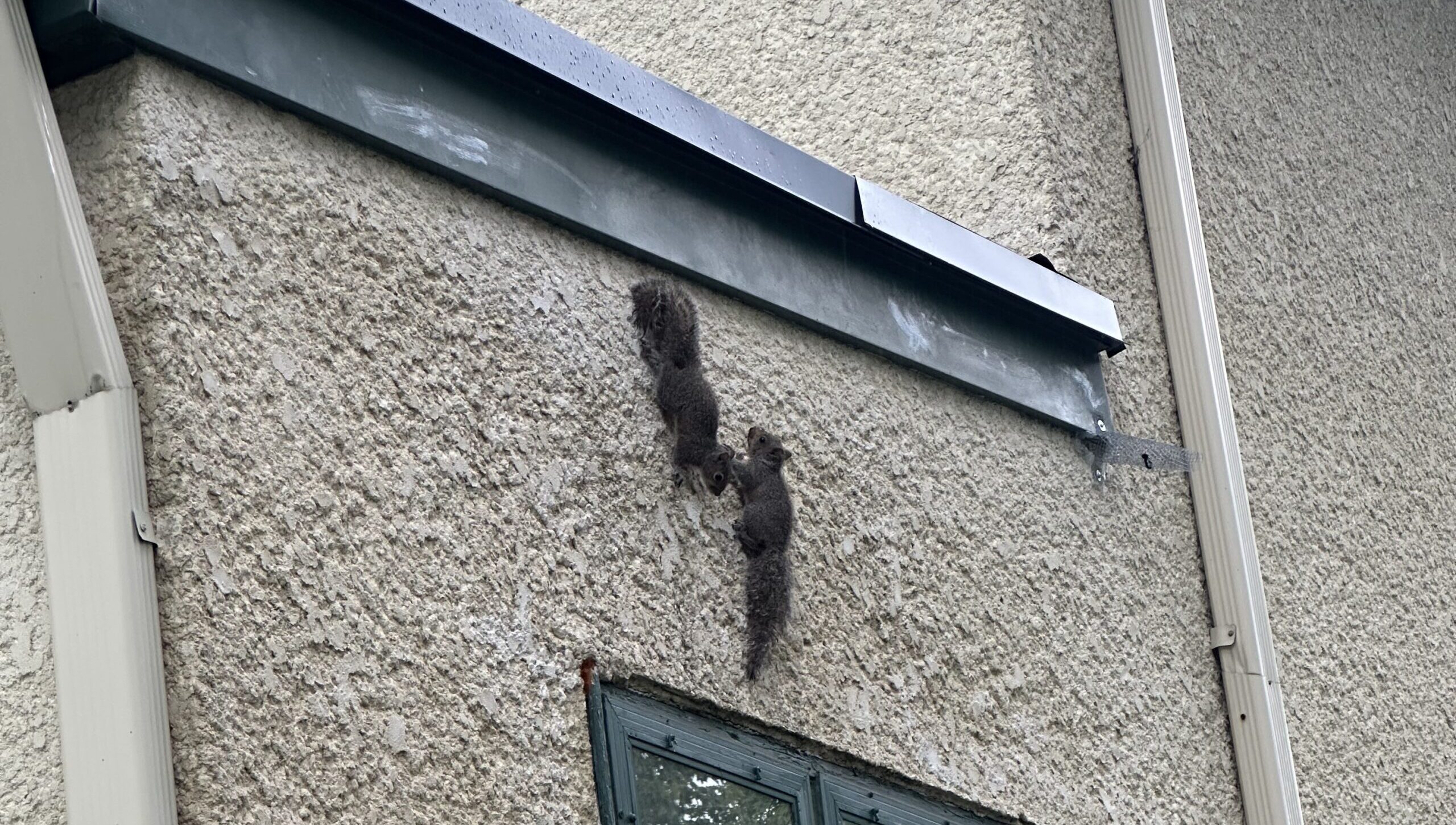
If you’ve ever heard scratching, scurrying, or gnawing sounds coming from above your ceiling, you’re not alone. Many homeowners have experienced squirrels chewing Atlanta roofs, and it can lead to serious home damage if ignored. These small animals are determined and clever, and their constant chewing may seem destructive—but there’s a natural reason behind it.
In North Atlanta, where neighborhoods blend with wooded areas, squirrels see rooflines and attics as safe, warm spaces to shelter and raise their young. By learning why they chew through rooflines and wires, homeowners can better protect their homes while also respecting the wildlife that shares their environment.
Squirrel Behavior: Chewing Is Part of Survival
For squirrels, chewing isn’t optional—it’s essential. Their front teeth grow continuously, sometimes up to six inches a year, and they must gnaw on hard materials daily to keep them from overgrowing. When they move into residential areas, that instinct stays the same, but their options change. Roof beams, vents, and siding often take the place of tree bark or acorns.
This habit isn’t about causing harm; it’s simply how squirrels survive. Their powerful jaws can easily cut through wood, plastic, and even aluminum flashing. Their curiosity also drives them to explore objects by gnawing. When exploring a home’s exterior, they often chew at shingles, fascia boards, and soffits to test for weak spots or potential entry points.
According to the National Wildlife Federation, gray squirrels—the most common species in Atlanta—can bite with impressive strength, enough to make quick work of most construction materials. So when you hear that faint gnawing, it’s not mischief—it’s instinct in action.
Why Rooflines Attract Squirrels
Atlanta’s tall trees and shaded yards make it easy for squirrels to access rooftops. Once on a roof, they only need one small weakness to make their way inside. Attics are warm, dry, and protected—everything a squirrel looks for in a nesting site.
Here are the main reasons squirrels target rooflines:
- Shelter and safety: Roofs and attics mimic natural tree cavities, offering a secure place to rest or raise young.
- Comfort: During colder months, attics provide warmth and protection from harsh weather.
- Easy entry: Loose soffits, vents, and roof edges often allow small openings that squirrels can enlarge by chewing.
- Nesting behavior: Females preparing for birth in late winter or early fall may chew their way through to create a den site.
The Georgia Department of Natural Resources notes that squirrel activity rises in the spring and fall, matching their main nesting seasons. This means these months are when roof damage from chewing is most likely to occur.
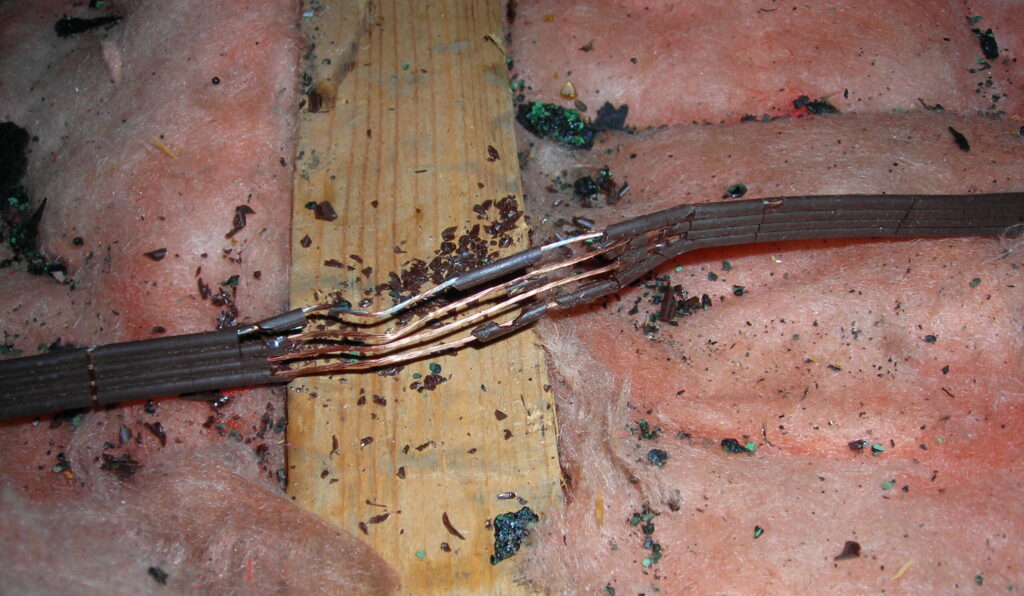
The Dangers of Chewing Through Wires
While roof damage is visible, wire damage is much harder to detect—and potentially far more dangerous. When squirrels chew through insulation on electrical wires, they expose live currents that can create sparks, short circuits, or even fires.
Squirrels often encounter wires while nesting in attics, where electrical systems run along beams or rafters. The texture, warmth, or even the faint scent from soy-based wire coatings can draw their attention. As they gnaw to keep their teeth in check, they can unintentionally strip insulation and leave the wires bare.
The U.S. Fire Administration estimates that around 25,000 house fires each year are linked to electrical problems caused by wildlife, including squirrels. In older Atlanta homes, where wiring systems may not meet current safety standards, this risk is especially high.
If you’ve noticed flickering lights, burning smells, or circuit breakers that trip repeatedly, these could be warning signs of squirrel wire damage Atlanta homeowners should take seriously.

How to Spot Signs of Squirrel Damage
Squirrels are active mostly during the day, which makes early signs of their activity easier to notice. Listening and looking carefully can help catch the problem before it turns serious.
Common indicators include:
- Scratching or gnawing noises from ceilings or walls, especially in the morning or evening
- Chew marks on fascia boards, roof edges, or vent openings
- Shredded insulation, paper, or nesting materials in the attic
- Flickering lights, burnt smells, or tripped breakers from potential wire damage
- Visible entry holes or disturbed shingles along the roofline
Even if the signs seem small, they can quickly lead to major problems. Squirrels can cause extensive structural and electrical damage over time, so early detection is key.
Preventing Squirrel Damage in Atlanta
Preventing squirrel damage in Atlanta homes starts with understanding how these animals find their way in—and then blocking those routes safely. At Skedaddle Humane Wildlife Control North Atlanta, we believe that humane prevention is the key to long-term protection. Our focus is on keeping squirrels safe and homeowners secure by identifying and closing entry points without causing harm.
We use a variety of proven techniques to stop ongoing chewing and prevent it from happening again.
- We perform detailed home inspections to locate every gap, weak spot, or potential nesting area.
- We install one-way doors that allow squirrels to exit safely without being trapped or harmed.
- We seal all entry points with chew-resistant materials such as steel mesh or aluminum flashing.
- We clean and sanitize to remove nesting debris and scent trails that might attract other squirrels.
- We provide maintenance advice to help keep vents, soffits, and attic openings in good condition.
Homeowners can also take a few simple steps to reduce the risk:
- Trim tree branches six to eight feet away from your roofline.
- Keep gutters and downspouts clear of debris.
- Schedule roof inspections at least once a year, especially before nesting seasons.
With the right prevention plan, it’s possible to protect your home while ensuring that squirrels remain outdoors where they belong.
Humane Solutions for Lasting Results
At Skedaddle Humane Wildlife Control, we believe that every solution should protect both people and animals. Humane wildlife control goes beyond simply removing squirrels—it addresses why they entered in the first place and ensures they don’t return.
When we’re called to handle squirrels chewing Atlanta roofs, our team takes a compassionate and scientific approach. We assess the structure, identify access points, and use humane exclusion systems that let squirrels leave safely. We also ensure that no young squirrels are left behind, keeping family units together whenever possible.
Once removal is complete, we repair and clean the area so homeowners can feel confident their attic is safe, sanitary, and secure. By combining experience, care, and preventive strategies, we deliver long-term results that last through every season.
Why Professional Help Matters
It’s understandable for homeowners to want a quick fix when they notice damage, but squirrels are persistent. If even one small gap remains, they’ll often return. That’s why professional support is so important.
When we inspect a home, we look for subtle signs that may not be visible to the untrained eye. We understand how squirrels think, move, and behave, which helps us stay one step ahead of them. Our humane methods also comply with Georgia’s wildlife protection regulations, so no animals are harmed during the process.
HomeAdvisor reports that the average cost of wildlife-related repairs can range from a few hundred dollars to more than a thousand, depending on the extent of damage. Investing in humane prevention early not only protects your home from fire and electrical hazards—it also saves money and stress in the long run.
A Safe, Humane Path Forward
Squirrels are a lively part of Atlanta’s landscape—quick, curious, and endlessly active. But when they begin chewing through rooflines or wires, they can create serious problems inside our homes. Understanding their behavior allows us to protect both our property and the animals that make our city unique.
At Skedaddle Humane Wildlife Control North Atlanta, we’re proud to provide homeowners with solutions that are safe, humane, and effective. By combining compassion with expertise, we help keep families safe, roofs intact, and wildlife where it belongs—outdoors.

 Loading...







