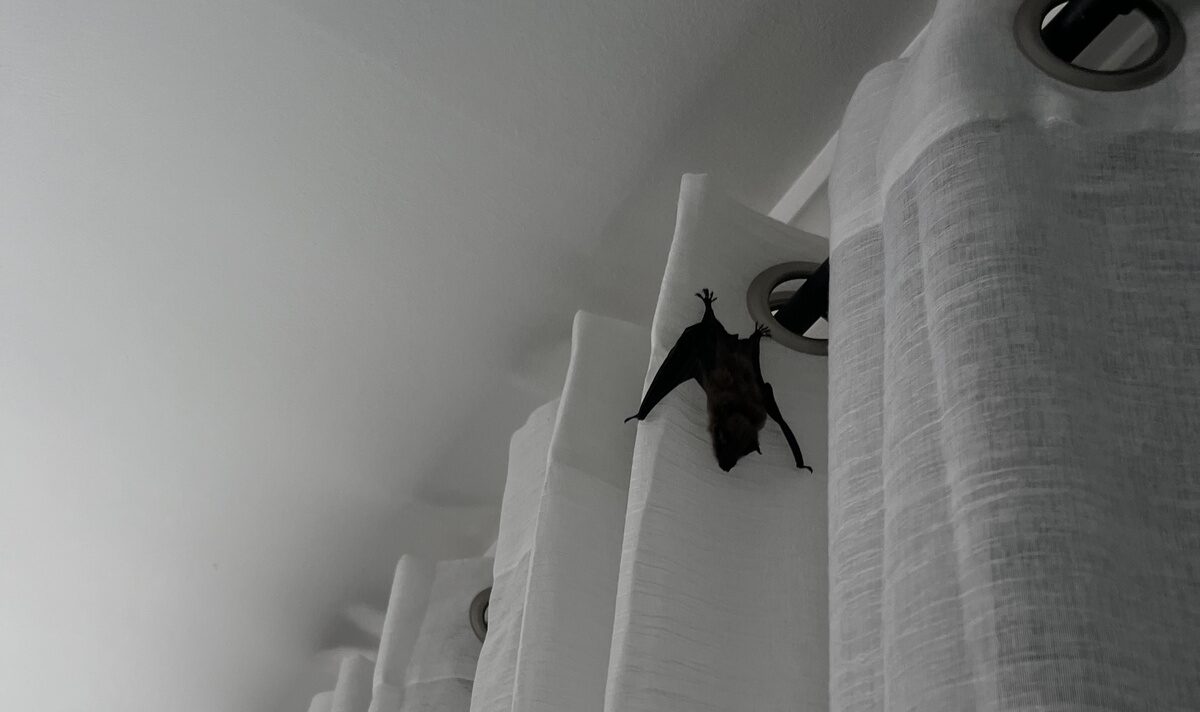
You should keep your distance, keep others away, and contact a professional wildlife removal team if a bat flies into your home. Do not touch, chase, catch, or try to release it yourself. If anyone had direct contact, or you cannot rule out contact, seek prompt medical advice and contact Halton Region Public Health.
You may notice something flying across your living room or resting near the ceiling. That sudden movement can be alarming, especially when you do not know how it got inside. Keep the room separate only if you can close an interior door without approaching it. If reaching the door would bring you close, stay away and wait for professional guidance.
At Skedaddle Humane Wildlife Control in Oakville, we help you address the indoor situation and the entry points that may have allowed access. One sighting may involve an accidental entrance, but it can also point to a route from the attic or another hidden space. The next steps involve keeping a safe distance, getting health advice when needed, and letting our team inspect and protect your home.
What Should You Do if a Bat Flies Into Your House?
You should stay back, keep others outside the affected room, and call our professional team. Avoid any attempt to grab, guide, or move it, even if it has stopped flying. Resting on a wall or curtain does not make it safe to approach.
If anyone was bitten, scratched, or touched, medical advice becomes an immediate priority. A small bite may not leave an obvious mark, so you should not rely on what you can see. A health care provider and public health staff can assess the situation and decide whether treatment is needed.
Our role involves professional removal and checking how access happened. Health professionals handle questions about exposure, testing, and treatment. You may need both services, and seeking health advice should not wait until our team arrives.
Keep the Room Separate Without Approaching
You can help limit movement through your home by keeping others away from the affected area. Any room separation must happen without bringing you close to the flight path or resting place. If that cannot be done safely, stay back and wait for guidance.
- Keep Household Members Away: Ask others to stay outside the affected room rather than gathering around the doorway. Extra movement can make the situation harder to manage. Give children a clear instruction to keep their distance and let professionals handle the problem.
- Close an Interior Door Only if Safe: A closed door can separate the room from the rest of your home. Close it only if you can reach it without approaching. Do not cross the room, reach past a resting spot, or enter again to make adjustments.
- Leave the Space Undisturbed: Avoid moving furniture, pulling back curtains, or checking behind objects. You may bring yourself close without knowing where it has settled. Tell our team the last place you saw movement and leave the search to us.
Avoid Contact and Leave Removal to Professionals
You do not need to catch anything before calling our team. Trying to take control of the situation can bring you into contact. Keeping your distance gives our trained professionals room to assess what needs to happen.
- Do Not Grab or Swat: Reaching with your hands or swinging an object can lead to a bite, scratch, or skin contact. Even a brief touch needs medical attention. Leave removal to our team rather than trying to stop the movement yourself.
- Do Not Chase Through the House: Following it from room to room can bring you closer and spread the disturbance. You may also lose track of where it settles. Stay away and share the last known location when you call us.
- Do Not Attempt a Release: Possible exposure may mean testing is needed before release. Do not open an escape route or try to guide it outdoors. Tell our team about any possible contact so the response can follow public health direction.
Seek Health Advice After Possible Exposure
You should take direct contact seriously even when there is no clear wound. Small bites can go unnoticed, and appearance cannot tell you whether rabies is present. Health professionals must assess the need for treatment rather than relying on how the individual looked or behaved.
- A Bite, Scratch, or Skin Contact: Immediately wash the affected area with soap and water and contact a health care provider. Explain that the contact involved a bat, even if you cannot see a mark. Do not wait for symptoms or delay care until our removal visit.
- Contact Cannot Be Ruled Out: Tell public health if the room held a sleeping person, young child, or someone unable to describe what happened reliably. These details help staff assess whether contact may have occurred. Finding one in a bedroom does not automatically mean treatment is required, but uncertainty deserves professional advice.
- Public Health and Testing: Call Halton Region Public Health through 311 to report possible exposure. Local animal control may need to arrange testing, depending on the circumstances. Do not handle or capture it yourself, and share any instructions you receive with our team.
Call Our Team With the Details Already Known
You can contact us without first searching the house or collecting proof. Information you already noticed can help us assess the situation. We do not need you to approach, photograph, or investigate anything before asking for help.
- Share the Last Known Location: Tell us which room was involved and where it was last seen. Explain whether it was flying, resting, or moving into another space. Do not follow it or move objects to give us a more exact location.
- Mention Earlier Signs: Share any scratching sounds, previous sightings, or visible gaps you had already noticed. These details may help us decide which areas need closer inspection. You should not enter the attic or climb outside to look for more evidence.
- Explain Possible Contact: Tell us whether anyone may have been touched and whether you have contacted a health care provider. Medical advice should be sought promptly rather than waiting for our arrival. Public health instructions can affect how the indoor situation is handled.
Why One Indoor Sighting May Point to an Entry Gap
One sighting inside does not prove your attic is occupied. An open exterior door or damaged screen may allow accidental entry into a living space. Our inspection considers that possibility alongside signs of access through the building.
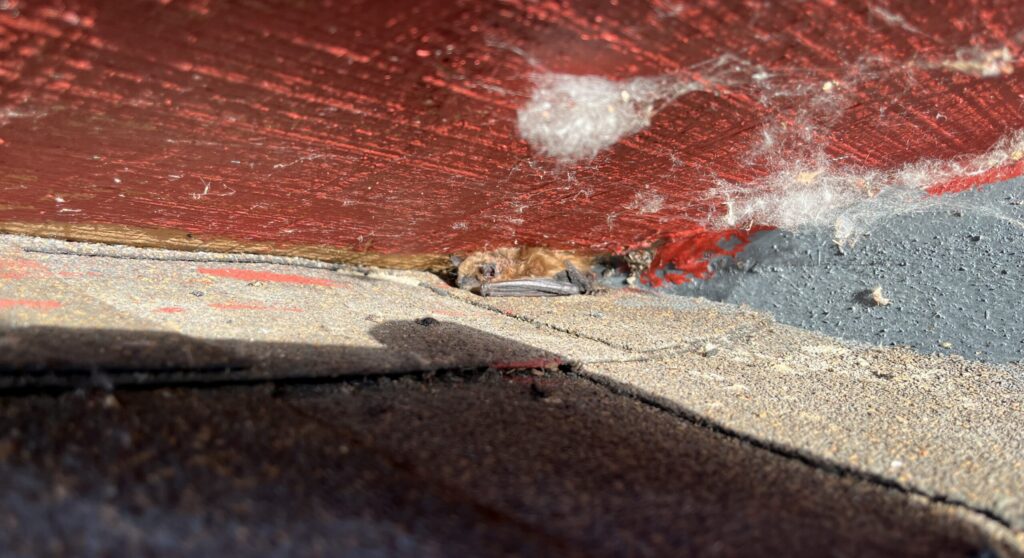
Small gaps near roof edges, vents, soffits, or flashing can provide a route into sheltered spaces. From there, openings around framing or other building connections may lead toward occupied rooms. The place where you first saw movement may therefore be far from the original entrance.
We look at the full pattern rather than treating the visible room as the whole problem. Repeat sightings, sounds, droppings, and activity near a roof opening may point to ongoing use. You should not enter hidden spaces, touch waste, or seal a suspected route before we assess it.
Entry Risks Around Oakville Homes
Oakville homes vary in age, roof design, and building condition. Older houses, newer homes, and properties with additions can all have gaps that are difficult to see from the ground. Mature trees and sheltered surroundings do not prove indoor activity, but building openings deserve attention.
Loose soffits, worn flashing, and spaces around vents may provide access to the roofline. A gap where an addition meets the original house can also connect to a hidden area. Our team inspects these features without asking you to climb or check them yourself.
Seasonal conditions also affect the plan for removal and exclusion. Dependent young may be present during certain periods, while colder weather can affect how sheltered spaces are used. We assess the occupied areas and suitable timing before carrying out work that could block access.
Bat Removal and Prevention with Skedaddle
At Skedaddle, we begin by assessing the indoor situation and any possible contact you report. We also consider public health instructions that may affect testing or release. Our inspection then looks for the building openings and hidden routes that may have allowed access.
When exclusion is appropriate, our one-way doors allow wildlife to leave but prevent re-entry. These devices address access to occupied building spaces, such as an attic. They do not replace professional handling of an individual found in a living room.
Our team secures vulnerable areas as part of the prevention plan. We also assess affected materials and determine whether professional cleanup is needed. You should not touch droppings, remove contaminated materials, or carry out the exclusion work yourself.
Frequently Asked Questions
Does one indoor sighting mean the attic is occupied?
No, one sighting does not confirm that your attic is occupied. Entry may have happened through an open exterior door or damaged screen. Repeat sightings, sounds, or other evidence may suggest a hidden route. Our team inspects the property before recommending removal or exclusion work.
Can a bite happen without leaving a clear mark?
Yes, a small bite may leave little visible evidence, and you may not feel it happen. Skin that looks normal does not rule out contact. If you were touched, bitten, or scratched, seek prompt medical advice. A health care provider can assess the need for treatment with public health staff.
What if it disappears before help arrives?
Losing sight of it does not prove it has left your home. It may have settled behind an object or moved into another space. Do not search behind furniture, reach into gaps, or enter the attic. Tell our team where it was last seen and seek health advice if contact may have happened.
Do all bats carry rabies?
No, they do not all carry rabies. However, appearance and behaviour cannot reliably rule out infection. You should not approach to judge whether one looks healthy or harmless. Keep your distance and let health professionals assess any possible exposure.
Should a suspected entry gap be sealed immediately?
No, sealing an opening before inspection may trap occupants inside. It can also separate adults from dependent young during certain seasons. The visible gap may connect to more than one hidden space. Our team checks building use and plans suitable exclusion before closing access points.
Restore Safety and Keep Entry Points Closed
You can respond to an indoor sighting without taking on the removal yourself. Keep your distance, keep others away, and leave the affected space undisturbed. Contact our team for professional help, and seek prompt medical advice if anyone had direct contact or exposure cannot be ruled out.
A quiet room does not confirm that the problem has ended. Something that disappears from view may still remain inside, and removal from one room may leave a hidden entry route unresolved. An inspection helps us determine whether access happened by chance or connects to ongoing use of the building. That evidence guides the removal and prevention plan.
At Skedaddle Humane Wildlife Control in Oakville, we inspect possible entry areas and handle humane removal based on the conditions we find. Our team uses one-way doors where suitable, secures vulnerable openings, and assesses any cleanup needs. You do not need to climb, search hidden spaces, or handle affected materials. Contact us to schedule a professional assessment or request an estimate to learn more.

 Loading...