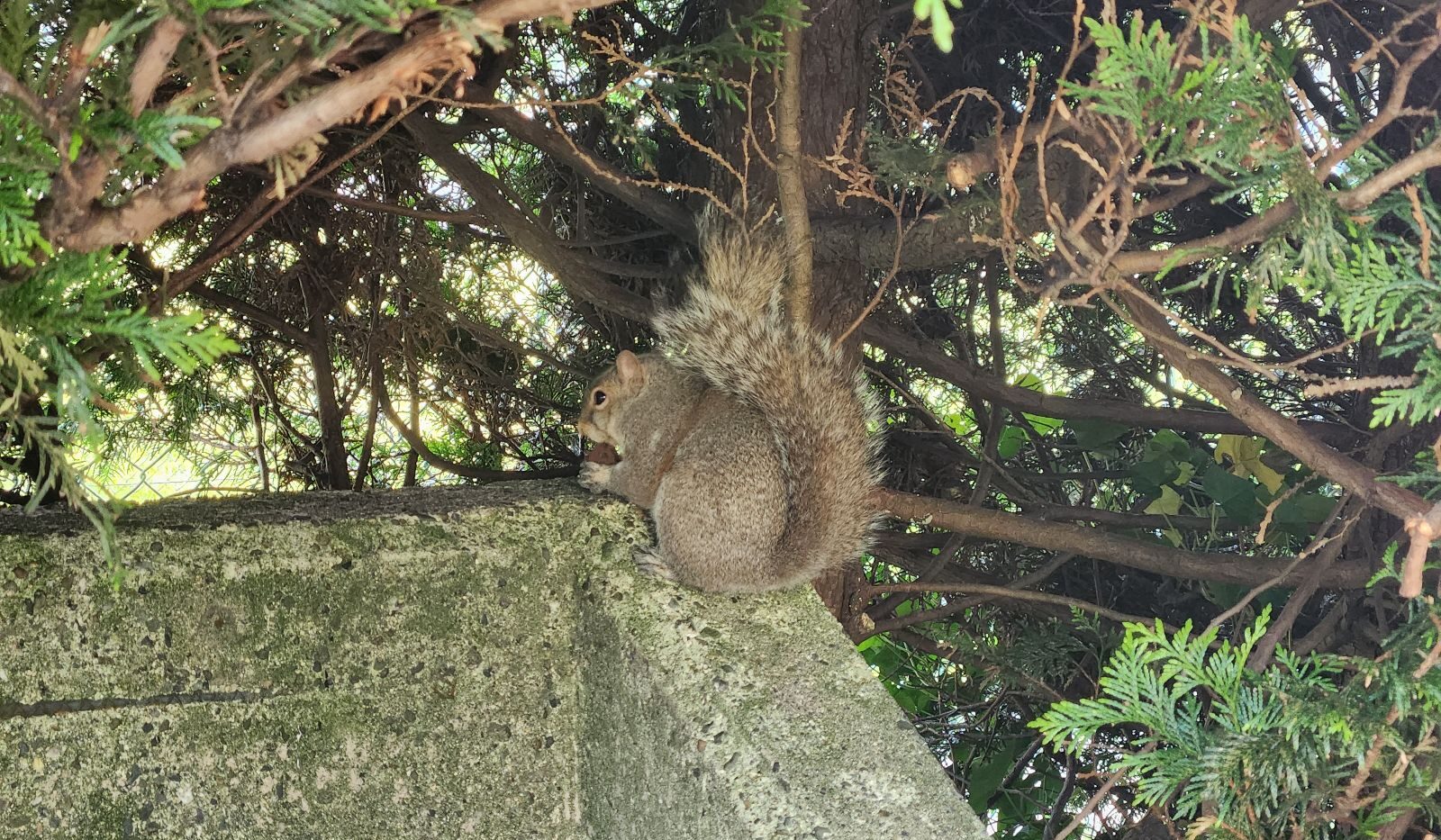
You may enjoy the privacy, shade, and natural views that come with living beside an Oakville ravine. However, these properties also sit closer to regular wildlife travel routes. Mature trees can provide roof access, while sloped yards, drainage paths, and spaces beneath raised decks can guide animals toward your home.
A standard prevention plan may focus on one loose vent or visible opening. Ravine properties require a wider approach because new animals may continue to pass through the area after the first problem has been resolved. Rooflines, soffits, chimneys, decks, foundations, and drainage areas must all be checked.
Homeowners should watch for problems from the ground but should not climb, touch droppings, block openings, or approach a den. At Skedaddle Humane Wildlife Control in Oakville, we inspect the complete property, remove animals humanely, clean affected areas, and install durable protection. In this blog, we explain how trees, complex rooflines, raised decks, drainage corridors, and frequent wildlife movement change the prevention needs of ravine homes.
Can I Trap Raccoons in My Yard in Ontario?
Ontario allows property owners to capture certain wildlife that is damaging their property in limited situations, but several rules may apply. Requirements can affect how an animal is captured, handled, and released. Because of these rules and the risks involved, homeowners should contact our trained professionals instead of trying to trap a raccoon.
A female may have dependent young in an attic, chimney, shed, or space beneath a deck. Trapping the mother could separate her from babies that cannot survive alone. It also leaves the original entry point open for another visitor.
Trapping one raccoon does not create a prevention plan for a home beside a ravine. Another may soon follow the same branches, fences, drainage routes, or roof edges. Skedaddle focuses on humane removal, family care, cleanup, and exclusion that protects the structure.
Continuous Tree Access Brings Activity Close to the Roof
Mature trees give ravine properties much of their beauty, but connected branches can also create raised travel routes. Animals may move from the wooded space to a fence, roof, chimney, or upper deck without crossing much open ground. The following features can increase this pressure.
- Overlapping Branches: Connected canopies allow squirrels and raccoons to travel above the yard. They may reach shingles, vents, chimneys, and soffits while avoiding activity at ground level. Our inspection identifies the roof areas receiving the most attention.
- Overhanging Limbs: A branch does not need to touch the roof to place an animal close to it. A short jump may be enough to reach a lower roof or attached garage. Homeowners should not climb or attempt high pruning around these routes.
- Tree-Care Limits: Some work may be affected by the tree’s size, location, health, or local rules. Cutting branches alone may also fail to protect other parts of the building. Skedaddle examines the full exterior so prevention does not depend on removing natural cover.
Frequent roof access can damage shingles or place extra pressure on lightweight vents. Once an opening is found, it may be used again by another visitor travelling through the same canopy.
Complex Rooflines Provide More Places to Enter
Homes overlooking ravines may have several roof levels, dormers, attached garages, and large rear additions. Every place where two surfaces meet creates another joint to inspect. Some of the most important openings cannot be seen clearly from the yard.
- Hidden Intersections: Roof valleys and wall-to-roof connections can hide gaps behind flashing or trim. A small exterior weakness may lead beneath shingles or into an attic. Our technicians inspect these concealed areas closely.
- Soffits and Vents: Aluminum soffits and lightweight vent covers may bend, loosen, or become damaged. Determined animals can sometimes enlarge an existing weak point through pushing, pulling, or chewing. We inspect nearby matching features because more than one may be vulnerable.
- Places that Provide Leverage: Corners and opposing roof surfaces can provide support while an animal works at exterior materials. Damage may form where trim, shingles, wood, and soffits meet. Our professional exclusion strengthens the connection after the occupants have been removed.
A sound heard over one room does not reveal where the entry occurred. An occupant may enter near a garage and travel across the attic before building a nest elsewhere. Our team traces the full route instead of repairing only the nearest visible gap.
Raised Decks and Patios Can Offer Protected Shelter
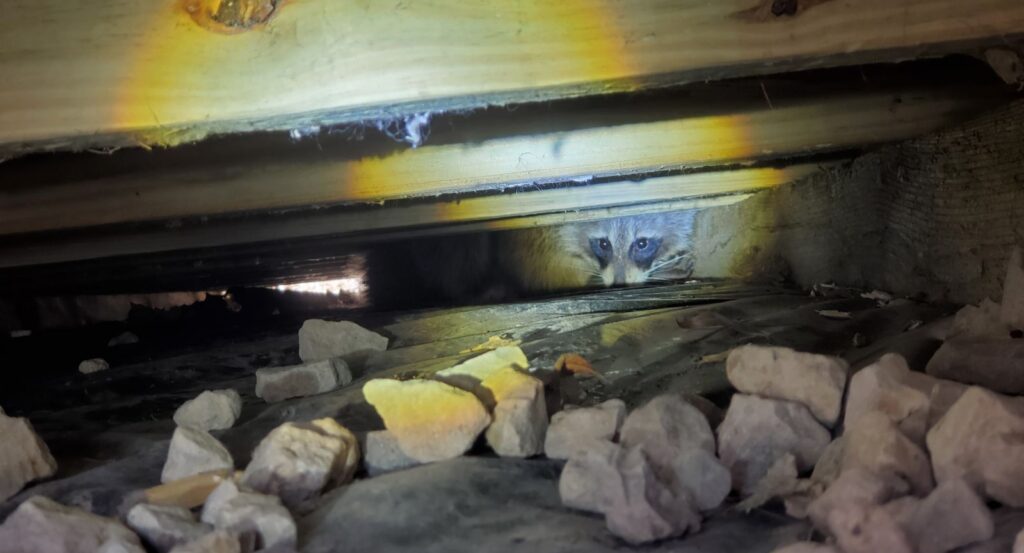
Sloped ravine lots often require tall posts and raised outdoor living spaces. The downhill side of a deck may leave a large open area beneath the floor. Shade and protection from the structure above can make this space appealing for resting or raising young.
- Large Spaces Below Decks: A raised deck may provide cover from rain, wind, and daily human activity. A small entrance at one end can open into a much larger sheltered area. Homeowners should not crawl beneath the structure to search for a den.
- Quiet Denning Conditions: Areas beneath decks and patios may receive little disturbance during the day. This can make them suitable places for a mother to protect her babies. Our team checks for adults and dependent young before any exclusion work begins.
- Access Beside the Foundation: Digging beneath a deck may expose gaps near a foundation, addition, or basement window. Disturbed soil, tracks, odours, or waste can point to regular use. We inspect the deck perimeter and the connected parts of the building.
An entrance should never be covered simply because no activity is visible. The adult may be away searching for food while young remain hidden inside. Blocking the opening could trap them or cause the mother to dig another route.
Drainage Corridors Can Guide Animals Toward the Home
Ravines carry water through slopes, low areas, creeks, and natural drainage channels. These quiet routes can also guide animals from wooded spaces toward yards and buildings. Moisture and moving soil may create added concerns around foundations and outdoor structures.
- Erosion Near Foundations: Flowing water can move soil away from steps, retaining walls, additions, and foundation edges. A gap that was once covered may become exposed. Our team checks whether the opening leads into a crawl space, basement, garage, or wall.
- Moisture-Weakened Materials: Damp conditions may affect lower wood, trim, vents, and deck parts over time. Loose or softened material can be easier to damage. Professional inspection determines whether the weak point connects to an interior space.
- Natural Travel Routes: Drainage channels offer sheltered paths between the ravine and nearby properties. These routes may pass close to sheds, decks, gardens, garbage storage, and garages. A complete plan considers how animals move across the lot, not only where one was last seen.
Water can also wash away tracks or other evidence after heavy rain. Our technicians compare the property layout with digging, damage, waste, and entry marks to locate the most likely routes.
Frequent Movement Creates Constant Pressure
A regular neighbourhood property may receive an occasional visit. A ravine home can sit beside a busy natural corridor used during feeding, nesting, and seasonal searches for shelter. This means one resolved problem may be followed by new activity if structural weaknesses remain.
Different species also use different parts of the same home. Raccoons and squirrels may climb to an attic, skunks may seek shelter beneath a deck, and mice may use small foundation or utility gaps. Bats and birds can enter narrow roof, vent, or chimney openings.
Food can add to this pressure. Gardens, compost, birdseed, pet food, garbage, insects, grubs, and fallen fruit may encourage repeated visits. Skedaddle looks at shelter, food sources, travel routes, and building access as connected parts of the same issue.
Warning Signs Around Ravine Properties
Activity may be visible outdoors before you hear anything inside. Repeated movement near one part of the house can reveal a common travel path. Physical damage, sounds, waste, and odours provide other important clues.
- Roof and Fence Movement: You may see animals following the same branches, fence lines, or roof edges. Visits at similar times can suggest that the property is part of a regular route. Our team follows this movement toward possible entry points.
- Sounds and Exterior Damage: Scratching, thumping, bent vents, lifted shingles, or loose soffits may point to activity inside. Sound can travel through an attic, wall, or ceiling. Homeowners should not enter these spaces to search for the source.
- Digging, Waste, and Odours: Disturbed soil beneath a deck may mark an active den entrance. Droppings or strong smells can also appear near a feeding area or travel route. You should not touch, sweep, vacuum, or clean this material.
One sign does not always show the size of the problem. A loose soffit may be the entrance, while nesting material and contamination sit farther across the attic. Professional inspection connects all the evidence before removal begins.
One Repaired Opening May Not Protect the Whole House
Covering the first hole found may leave many other parts of a ravine home exposed. Similar vents, roof intersections, soffit returns, and foundation gaps may exist around the structure. Constant movement nearby gives new animals time to find those weak points.
The active entrance may also be part of a larger route. An occupant can travel through a soffit, attic, wall void, duct, or space above an attached garage. Damage and contamination may therefore extend beyond the room where sounds were first heard.
Skedaddle inspects both active and possible entry areas. We also assess nesting locations, affected insulation, waste, and damage. This creates one professional plan for humane removal, cleanup, restoration, and long-term prevention.
Wildlife Problems Near Oakville Ravines
Oakville’s ravines, creeks, mature trees, parks, and wooded spaces provide food, water, cover, and travel routes. Properties backing onto these areas sit at the edge of both residential and natural settings. This makes regular wildlife activity a normal part of the location.
Seasonal changes affect how these animals use the area. Spring brings nesting and baby season, while summer provides steady access to food and water. Fall can increase the search for protected shelter, and winter may push some animals toward warm attics, walls, and crawl spaces.
Every ravine property is different. One home may have a steep yard and high deck, while another has a complex roof beside mature branches. Skedaddle Humane Wildlife Control in Oakville considers the land, building design, season, species, and local conditions before recommending service.
Wildlife Removal and Prevention with Skedaddle
Our professional wildlife team begins with a detailed inspection of the house and surrounding property. We identify the species, locate active entrances, check for dependent young, and trace likely routes from the ravine. We also examine nearby parts of the structure that may face similar pressure.
The removal method depends on the species, season, and location. When appropriate, we use one-way doors that allow wildlife to leave but prevent re-entry. If babies are present, our technicians use a humane, family-focused process so they are not trapped or separated from their mother.
After the space is empty, we install durable exclusion materials around the active opening and other vulnerable areas. Our team also handles contaminated nesting material, professional cleanup, damage assessment, and restoration. You will not be asked to approach an animal, enter the attic, crawl beneath a deck, or complete repairs yourself.
Frequently Asked Questions
Why do ravines bring wildlife close to homes?
Ravines provide water, natural food, shelter, and protected travel paths. Homes beside these corridors sit close to regular feeding and nesting activity. A backyard may become part of the route between wooded cover and a safe place inside or beneath a structure.
Can branches provide access to a roof?
Yes, connected or overhanging branches can bring raccoons and squirrels close to shingles, chimneys, soffits, and vents. They may also travel along fences, garages, or neighbouring roofs. Skedaddle inspects both the travel route and the building areas that may be under pressure.
What could be living beneath a raised deck?
Raccoons, skunks, or other wildlife may use the space beneath a raised deck for shelter. A female could also have dependent young hidden inside the den. You should keep people and pets away while a professional determines what is present.
Should a roof opening be sealed immediately?
No, the opening should not be sealed until the connected space has been inspected. An adult may be outside while babies remain in an attic, soffit, or wall. Closing the route can trap them, separate the family, or lead to further building damage.
Are droppings near a ravine home dangerous?
Droppings may contain germs or parasites and should not be touched. Sweeping or vacuuming dry waste can also disturb contaminated particles. Our technicians identify affected areas and determine what professional cleanup is required.
Who should inspect a ravine property in Oakville?
Our trained wildlife-control professionals should inspect the roof, attic, soffits, vents, chimney, decks, foundation, and drainage areas. Skedaddle can identify active entrances and other structural weaknesses. Homeowners will not be asked to climb, enter confined spaces, or handle contaminated material.
Give a Ravine Home the Wider Protection It Needs
Living beside an Oakville ravine places your home close to trees, drainage corridors, wooded cover, and regular wildlife travel routes. Overhanging branches can provide roof access, while complex rooflines may contain hidden entry points. Raised decks, eroded foundations, vents, chimneys, and soffits can provide additional shelter.
Watch for repeated roof activity, scratching, digging, loose vents, damaged soffits, droppings, and unusual odours. These signs should be observed from a safe distance. Homeowners should not trap animals, climb onto roofs, clean waste, block openings, or approach a den.
At Skedaddle Humane Wildlife Control in Oakville, we provide the property-wide care that ravine homes require. We handle detailed inspection, humane removal, one-way doors when appropriate, professional cleanup, restoration, and durable prevention. Our plan addresses the active entrance as well as the surrounding areas that another visitor could use.
Contact us to request an estimate and learn more about protecting your home from the steady activity that comes with living near a ravine.

 Loading...







