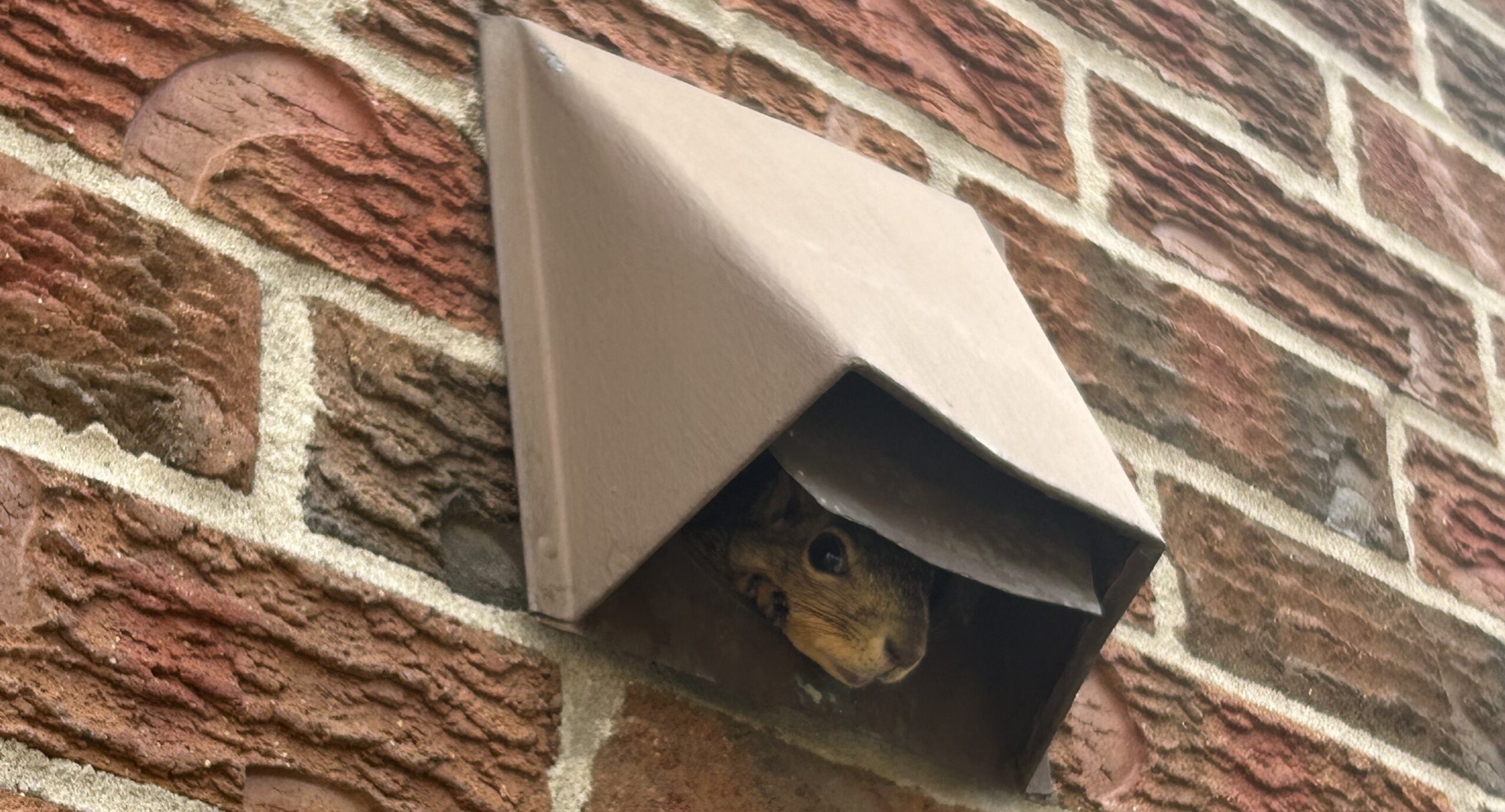
In homes across the Okanagan, unusual sounds inside the walls are often easy to dismiss. A faint scratching or movement might seem like shifting insulation or seasonal changes in the structure, but in many cases, it’s something far more active. Wildlife can find remarkably hidden pathways into a home, and once inside, they rarely stay in one place.
Recently, a homeowner reached out to Skedaddle Humane Wildlife Control after hearing persistent noises coming from an exterior wall. As General Manager Noel Erickson explained, “We had a customer call reporting noises in their exterior wall.” What seemed like a simple concern quickly turned into a detailed investigation through the attic and wall cavities.
What the technician discovered was surprising, and a reminder that even small exterior openings like wall vents can become direct highways for squirrels to access multiple areas of a home.
Signs in the Attic Point to a Larger Problem
The technician’s first step was a full interior inspection to pinpoint where the noise was coming from. What initially seemed localized to an exterior wall quickly revealed a much larger pattern of activity. In the attic, there were clear signs of disturbance, most notably displaced insulation, which is one of the most common red flags that wildlife is actively using a home.
Displaced insulation is important because it rarely happens on its own. When animals like squirrels move through attic spaces, they leave behind very specific indicators that help technicians understand what’s really happening inside the structure:
- Flattened or compressed insulation paths where animals repeatedly travel
- Hollowed nesting areas where materials are pulled together for shelter
- Soiled or darkened patches caused by droppings and frequent movement
- Clear tunnelling routes showing consistent entry and exit patterns
These signs don’t just confirm that wildlife is present, they also help determine how established the infestation is and how far the animals have spread within the home.
This discovery immediately changed the direction of the inspection. Rather than focusing only on the wall where the noise was first reported, the technician now needed to trace how the animal was moving through interconnected spaces inside the home. As General Manager Noel Erickson explained, “after a little bit of poking around, we found some displaced insulation that led us to a further investigative search.”
From there, the investigation expanded beyond the attic and deeper into the home’s ventilation system, where the real entry point was about to be uncovered.
The Unexpected Entry Point: Exterior Wall Vents
As the investigation continued beyond the attic, the technician followed the trail of disturbance deeper into the home’s structure. The path eventually led to a surprising access point that many homeowners overlook entirely: an exterior wall vent.
At first glance, these vents don’t appear to be vulnerable. They’re small, sealed off from the outside, and typically blend into the home’s exterior. However, what most people don’t realize is that they are often connected to long runs of flexible ducting inside the walls. These ducts link the vent to appliances such as bathroom fans, dryers, or ventilation systems, creating a hidden passageway through the home’s structure.
As General Manager Noel Erickson explained during the inspection, “These wall vents are typically fed by a flexible duct line that connects them to whatever appliance they’re servicing.”
In this case, that ducts became the key vulnerability. Once compromised, it provided direct access from the exterior vent into the wall cavities and eventually into the attic space, giving the squirrel an efficient, hidden route throughout the home.
How Squirrels Exploit Weak Points in Ductwork
Once the technician traced the movement pathway back to the exterior wall vent, it became clear how the squirrel had managed to travel so deeply inside the home. The issue wasn’t just the vent itself: it was the flexible ducting connected to it. This type of ductwork is essential for ventilation systems, but it also creates an unexpected vulnerability when wildlife is involved.
As General Manager Noel Erickson described it, the material is deceptively soft. “That duct line is quite soft in material… like a slinky with heavy-duty tin foil wrapped around it.” Once squirrels identify a weak point, they are quick to take advantage of it.
This is exactly how the intrusion happened in this case. The squirrel was able to chew through the ducting and move freely between the vent, wall cavities, and attic space.
Key reasons ductwork is so vulnerable include:
- Thin, flexible material that is easy for squirrels to chew through
- Hidden placement inside walls, making damage hard to detect early
- Direct connection to multiple areas of the home, including attics and ceilings
- Warm air flow, which can attract nesting wildlife seeking shelter
- Soft insulation layers around ducts that can be torn apart for nesting material
Once inside this system, squirrels don’t just stay in one area; they can move throughout the home undetected, which is what made this case more complex than a simple attic intrusion.
The Hidden Risks: More Than Just Structural Damage
When squirrels gain access to duct-connected wall vents, the problem extends far beyond chewed materials or damaged insulation. In this Okanagan home, the technician quickly recognized that the duct system had essentially become a hidden pathway for contamination to spread through multiple areas of the house.
Because ductwork is responsible for moving air throughout the home, any disturbance inside it can introduce serious health concerns. Nesting materials, droppings, and debris are not contained to one area; they can potentially circulate through connected ventilation systems.
Some of the key risks include:
- Airborne contamination from droppings and nesting debris entering airflow systems
- Bacteria and parasites carried through duct pathways into living spaces
- Unpleasant odours are spreading through vents as materials decay
- Compromised air quality due to disturbed insulation and waste buildup
- Hidden damage inside walls and ceilings that continues long after the animal is gone
This is also why situations like this should never be treated as a simple DIY repair. Even if a homeowner were able to seal an exterior vent, it would not address the contamination already inside the duct system or the hidden damage within the walls.
Professional inspection is critical because technicians with Skedaddle Humane Wildlife Control are trained to trace the full extent of wildlife entry, not just the visible entry point. Without that level of expertise, it’s easy to miss secondary damage that continues to affect a home long after the animal has been removed.
Skedaddle’s Humane Removal Process
Once the entry point was confirmed at the exterior wall vent, the technician shifted from investigation to humane removal. In this case, the goal was not to trap or relocate the animal through force, but to safely guide it out of the home while preventing any further entry.
The first step was securing the active opening at the vent. A protective screen was installed around the access point, ensuring the structure was reinforced without harming the animal inside. From there, a temporary one-way exit door was fitted to the vent system. This device allows wildlife to leave on their own but prevents them from returning once they’ve exited.
As General Manager Noel Erickson explained, “We install a temporary one-way exit door to allow them to escape the building unharmed.”
This method is especially effective in cases like this because squirrels are highly motivated to leave once they realize their nesting site has been disrupted. The one-way door works with their natural behaviour, encouraging a stress-free exit without direct confrontation or harm.
Throughout this process, technicians with Skedaddle Humane Wildlife Control carefully monitor the structure to ensure all animals have safely exited before moving on to permanent repairs.
Repairing the Damage: Restoring the Duct System
Once the squirrel had safely exited the home, the technician’s focus shifted to restoring the damaged areas and ensuring the entry point was fully secured. In cases like this, removal is only half the job, the real importance lies in preventing any future access and repairing what was compromised inside the structure.
After confirming the home was clear of wildlife activity, the one-way door was removed from the exterior vent. The technician then addressed the damaged ductwork that had allowed the squirrel to move through the walls and attic in the first place. In many situations, this flexible ducting must be replaced entirely due to chewing damage and contamination.
From there, a permanent exclusion system was installed at the vent opening. This included durable screening designed to withstand future wildlife pressure while still allowing the ventilation system to function properly. As General Manager Noel Erickson explained, “once the eviction is complete, we come back and remove the one-way door and install a final piece of screen.”
Finally, the technician ensured all access points were properly sealed so the squirrel could not re-enter the wall cavity or attic. This restoration work is a key part of the process carried out by Skedaddle Humane Wildlife Control, ensuring the home is not only cleared of wildlife but also protected against future intrusions.
Why Professional Intervention Matters
Cases like this highlight why squirrel intrusions in ductwork and wall vents are not something homeowners should attempt to handle on their own. While the entry point may seem small and straightforward, the reality inside the structure is often far more complex. Once squirrels gain access to ducting systems, they can move between walls, attics, and ventilation pathways in ways that are not visible from the outside.
Without professional training, it’s easy to miss the full extent of the damage. A homeowner might seal an exterior vent, but still leave behind compromised ductwork, contaminated insulation, or hidden entry points deeper in the structure. These oversights can allow the problem to continue even after a DIY repair.
Technicians with Skedaddle Humane Wildlife Control are trained to:
- Trace wildlife movement through interconnected building systems
- Identify subtle signs of contamination and nesting activity
- Locate secondary entry points that are not immediately visible
- Assess and repair damaged ductwork and insulation safely
- Ensure the entire structure is properly secured against re-entry
As General Manager Noel Erickson demonstrated in this case, understanding how animals exploit building materials like flexible ducting is critical. What appears to be a simple vent issue can quickly become a full structural and air quality concern if not addressed properly.
Prevention: Protecting Wall Vents and Duct Systems
Once a home has experienced a squirrel intrusion through ductwork, prevention becomes the most important long-term step. These systems are often overlooked during routine home maintenance, yet they can provide direct access into walls, ceilings, and attics if left unprotected.
In this Okanagan case, the key takeaway was how easily a single vulnerable vent allowed access to multiple areas of the home. Proper prevention focuses on removing those opportunities before wildlife can exploit them.
Effective prevention strategies include:
- Installing heavy-duty vent screening that prevents chewing and entry
- Inspecting exterior wall vents regularly for signs of damage or movement
- Checking duct connections in attics and crawl spaces for wear or gaps
- Sealing small exterior openings that may go unnoticed over time
- Scheduling routine attic inspections to catch early signs of wildlife activity
These preventative measures are especially important because squirrels are persistent and highly adaptable. If one entry point is secured but another weakness remains, they will continue searching until they find a way in.
Technicians with Skedaddle Humane Wildlife Control often emphasize that exclusion work is just as important as removal. By reinforcing vulnerable areas like wall vents and duct systems, homeowners can significantly reduce the risk of future intrusions and protect both the structure and air quality of their home.
Small Openings, Big Consequences
What began as a faint noise in a wall turned into a clear example of how squirrels can exploit even the smallest vulnerabilities in a home. In this Okanagan case, a single exterior wall vent and its connected ductwork provided direct access into the walls and attic, allowing the animal to move through the structure completely unseen. It’s a reminder that what looks minor on the outside can quickly become a much larger issue inside the home.
As General Manager Noel Erickson noted, understanding how these systems connect is key to solving the problem properly and safely. Without a full inspection and professional approach, hidden damage and contamination can continue long after the animal has been removed.
If you hear noises in your walls or suspect wildlife may be accessing your home through vents or ductwork, it’s important to act quickly. Contact Skedaddle Humane Wildlife Control for a thorough inspection and humane removal solutions that protect both your home and the animals involved.

 Loading...