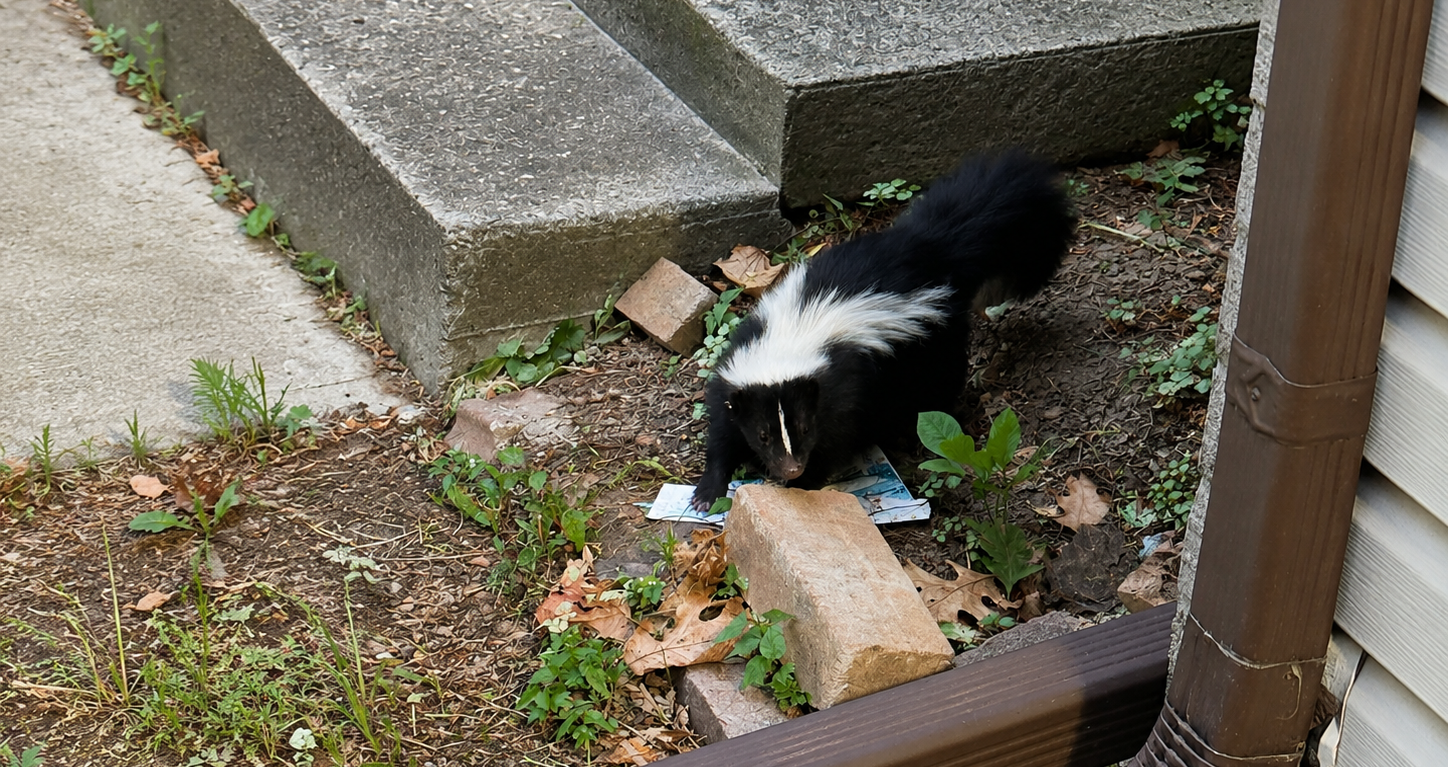
Skunks are drawn to residential properties because they provide easy access to food and safe shelter. Common attractants include grubs in your lawn, unsecured garbage, outdoor pet food, and dark spaces under decks or sheds. Removing these temptations makes your yard much less appealing to these nocturnal animals.
If you are noticing a strong odor or seeing shallow holes in your grass, you might have a skunk on your property. You are probably wondering why these animals chose your home in the first place. Residential areas offer everything skunks needs to survive. Yards provide plenty of food, water, and quiet places to hide from predators. When natural resources run low, your property becomes the perfect urban habitat. In this blog, we explore exactly what brings these animals to your yard and how our team can help.
You do not want to handle wild animals on your own. Approaching them can lead to a very smelly spray or a dangerous bite. Instead, you need professional help to keep your property safe. At Skedaddle Humane Wildlife Control in Okanagan, we specialize in humane wildlife removal. Our experts know exactly how to identify entry points and install one-way doors that allow the animals to leave but prevent them from coming back inside.
Understanding what draws these creatures to your yard is the first step in solving the problem. You can learn to spot the signs early. We will outline the top reasons these animals visit your home so you know what to look for. Read on to discover the specific food sources and shelter opportunities that make your property so attractive.
What time of night are skunks most active?
Skunks are most active during the late night and early morning hours, typically between dusk and dawn. Because they are nocturnal animals, they spend the daytime resting safely in their hidden dens. Once the sun goes down, they wake up and begin actively searching for food across your property.
You will rarely see these animals during the daylight hours unless they are sick or their den has been disturbed. They use the cover of darkness to stay safe from larger predators while they forage for meals. If you leave for work early in the morning or stay up late, you might catch a glimpse of them wandering near your porch or driveway.
Our technicians at Skedaddle know exactly how to track their nighttime habits. We assess your property to find out where they travel after dark. We then use our specialized one-way doors to ensure they safely exit your property during their active nighttime hours.
How Lawn Grubs and Insects Attract Skunks
Skunks are often drawn to yards because they’re searching for food, and one of their favourites is lawn grubs. These small insects live just beneath the surface of your grass, making them an easy snack for skunks. Other bugs, like beetles and crickets, can also attract skunks to your property. Understanding what draws skunks in is the first step to keeping them away.
- Digging for Grubs: Grubs are a favourite food for many skunks. If you notice small, cone-shaped holes in your grass, skunk is likely digging up your turf to eat beetle larvae. They have strong front claws that make tearing through your lawn very easy. You will often see this damage appear overnight while you are sleeping. Our team can inspect the lawn damage to confirm which the animal is causing the problem.
- Hunting for Earthworms: Earthworms provide another easy meal for these animals. After a heavy rain, earthworms come to the surface of the soil. This makes your yard a massive buffet for any hungry creature wandering by. You might see muddy tracks or upturned soil near your garden beds. We understand how these feeding habits drive skunks to your property, and we know how to stop them from making a den nearby.
- Searching for Other Insects: Insects like crickets, beetles, and grasshoppers also draw hungry animals to your property. Yards with thick grass or excessive moisture hold large populations of these bugs. When insects are plentiful, skunks will keep coming back night after night. You can count on Skedaddle to evaluate the situation and provide the right exclusion services to keep them away.
Pet Food and Water
Leaving pet food and water outside can attract unwanted wildlife to your yard. Skunks are always looking for an easy meal, and food left out overnight is an open invitation. Even water dishes can bring these curious animals to your property in search of a drink. To keep your pets safe and prevent wildlife encounters, it’s important to manage these resources carefully.
- Leftover Pet Food: Leaving bowls of pet food outside overnight is a major invitation for these hungry animals. Dog and cat food is packed with protein and smells very appealing to wildlife. Once a skunk finds a free meal on your porch, it will return every single night. We always recommend feeding your pets indoors so you do not accidentally feed the local wildlife.
- Accessible Water Sources: Skunks need fresh water to survive, just like any other creature. Leaky outdoor faucets, birdbaths, or pet water bowls give them exactly what they need. If you have a decorative pond or a puddle that never dries up, you are giving animals a perfect place to drink. Our experts know how to identify these water sources during our thorough property assessments.
- Easy Scavenging Opportunities: Skunks prefer meals that do not require much effort to catch. A bowl of food sitting on a deck is much easier to get than hunting for bugs in the dirt. You are essentially offering them a free buffet when food is left out. When we visit your home, we check for these easy scavenging opportunities to help you understand why these animals are staying.
The Appeal of Garbage and Compost Bins
Garbage bins provide a constant source of food for skunks in residential areas. When bags of trash are left outside without secure lids, the strong smells travel far and wide. You might wake up to find trash scattered all over your driveway. These creatures will happily eat food scraps, old fruit, and discarded meat.
Open compost piles are just as attractive to wandering wildlife. People often throw eggshells, vegetable peels, and leftover dinner into their compost bins. Because these animals are omnivores, they view your compost pile as a giant dinner plate. They will dig through the pile to find the best pieces of rotting food.
We highly recommend letting professionals handle the prevention work around your waste areas. At Skedaddle, we help homeowners understand how unsecured garbage leads to wildlife problems. We install exclusion barriers around your home so that even if the animal smells your trash, it cannot find a place to build a den on your property.
Under Decks and Sheds Provide the Perfect Shelter
Skunks are always on the lookout for safe, hidden places to live, and the space under decks and sheds offers exactly that. These areas are sheltered from harsh weather, predators, and provide a quiet place to rest or raise their young. If left unprotected, they can quickly become the perfect home for raccoons, skunks, and other wildlife. It’s important to take steps to secure these spaces before skunks move in.
- Burrowing Under Decks: Decks offer a dark, quiet, and dry place for skunks to hide. Skunks are excellent burrowers and can easily dig a tunnel right under your wooden deck. Once inside, they are safe from bad weather and dangerous predators. You should never try to block the hole yourself, as you might trap babies inside.
- Hiding Beneath Sheds: Sheds are usually elevated slightly off the ground, creating a perfect ready-made roof for a den. The soil underneath is usually dry and easy to dig through. Skunks love to raise their babies in these secure, hidden locations away from human activity. We install heavy-gauge steel mesh around the base of sheds to permanently keep animals out.
- Nesting Under Porches: Your front porch can also become a cozy home for a skunk family. Porches often have small gaps or weak lattice that animals can easily push through. Because porches are close to your front door, you might smell a terrible odour every time you leave the house. You can trust our team to safely remove the skunks and secure your porch against future invasions.
Wood and Brush Piles
Neatly stacked firewood provides an excellent natural hiding spot for wildlife. The gaps between the logs give skunks a place to squeeze into when they feel scared. You might reach for a piece of wood and get a terrible surprise. These areas are dark, sheltered, and completely out of the wind.
Overgrown brush piles and tall weeds also make your yard very inviting. When you leave yard waste sitting in the corner of your property, it creates a small ecosystem for insects and rodents. The larger animals then follow the food source right into the brush pile. You will often find these animals sleeping in these thick bushes during the day.
At Skedaddle, we know that natural debris provides perfect cover for wildlife. We assess your entire property, including your landscaping, to determine where animals might be hiding. Our professional team will implement exclusion strategies that keep these creatures away from your home and yard, no matter how much brush is around.
Skunk Challenges in Okanagan
Skunks are a common challenge for homeowners in the Okanagan area. These small mammals are known for digging up lawns in search of insects, leaving behind unsightly holes. Their distinctive and strong-smelling spray is another concern, especially when pets encounter them.
Skunks are nocturnal and often create dens under decks, sheds, or piles of debris. This can lead to unwanted encounters as they seek shelter near human homes. Additionally, their presence can attract other wildlife, causing even more concerns for property owners.
At Skedaddle, we understand how frustrating skunk issues can be. Our team specializes in humane removal methods and effective prevention strategies. We will assess your property, remove skunks safely, and ensure your home remains protected from future visits.
Skunk Removal and Prevention with Skedaddle
Skunks may seem like a manageable nuisance, but once they establish a den on your property, the problem grows quickly. A mother skunk will defend her young fiercely, and any attempt to remove them without professional training puts you at serious risk of a spray. Their dens under decks, sheds, and porches can also cause structural damage over time as they dig deeper into the soil and foundation.
Our professional wildlife team at Skedaddle handles skunk removal safely and humanely. We do not use live trapping or relocation methods. Instead, we perform a thorough inspection of your property to locate every active den and identify how the animals are accessing the space. We then install specialized one-way doors that allow the skunks to exit on their own terms, but completely prevent them from returning.
Once the animals have left, we remove the one-way doors and seal every entry point with heavy-gauge steel mesh driven deep into the ground. This underground barrier stops future skunks from digging their way back under your structures. Our team handles the entire process from start to finish, so you never have to get close to a skunk or risk an unwanted encounter on your own property.
Frequently Asked Questions
What smells attract skunks to my yard?
Skunks are attracted to the smell of rotting food, garbage, and outdoor pet food. They have a very strong sense of smell that helps them find meals from far away. Uncovered compost bins and fallen fruit from trees also produce strong odours that draw them in.
Why do skunks dig up my lawn at night?
Skunks are usually searching for grubs, earthworms, and other insects hiding just below the surface. They use their long claws to pull back the grass, leaving small holes everywhere. This feeding behavior is most common in the spring and fall.
Will bright lights keep skunks away from my house?
Bright lights might startle an animal temporarily, but skunks are not a permanent solution. Over time, the skunks will get used to the light if there is a good food source nearby. Our professional exclusion is the only proven way to keep them away.
Do skunks live in groups?
During the warm summer months, mothers live with their babies in a single den. In the winter, multiple skunks might share a den to stay warm to survive the freezing temperatures. We safely handle families using our proven one-way doors without separating mothers from their babies.
How do I know if a skunk is living under my shed?
You might notice a strong, unpleasant smell near the structure. You may also see a large hole dug out next to the foundation of the shed. If you see scattered dirt or footprints, you should call our team to investigate immediately.
Secure Your Home from Skunks Today
Skunks may look harmless, but they can cause big problems if they decide to settle on your property. Their strong smell, caused by their defensive spray, is hard to remove and can linger for days, making it important to address the problem quickly. Skunks are also known to dig under decks, sheds, and porches to create dens, which can lead to structural damage over time. Even though removing food and sealing garbage will help, it won’t stop a skunk that has already made a den on your property.
At Skedaddle Humane Wildlife Control in Okanagan, we specialize in safely and humanely removing skunks from homes. Our team has the professional knowledge and tools to deal with skunks and prevent future problems. After removing the skunks, we seal all entry points to make sure they can’t return. This way, your home is protected from damage, bad smells, and the stress of dealing with unwanted wildlife.
Don’t put yourself or your family at risk by trying to handle a skunk problem on your own. Trust the experts at Skedaddle to get the job done right. Contact us today for an estimate and take the first step toward a safe and skunk-free property!

 Loading...







