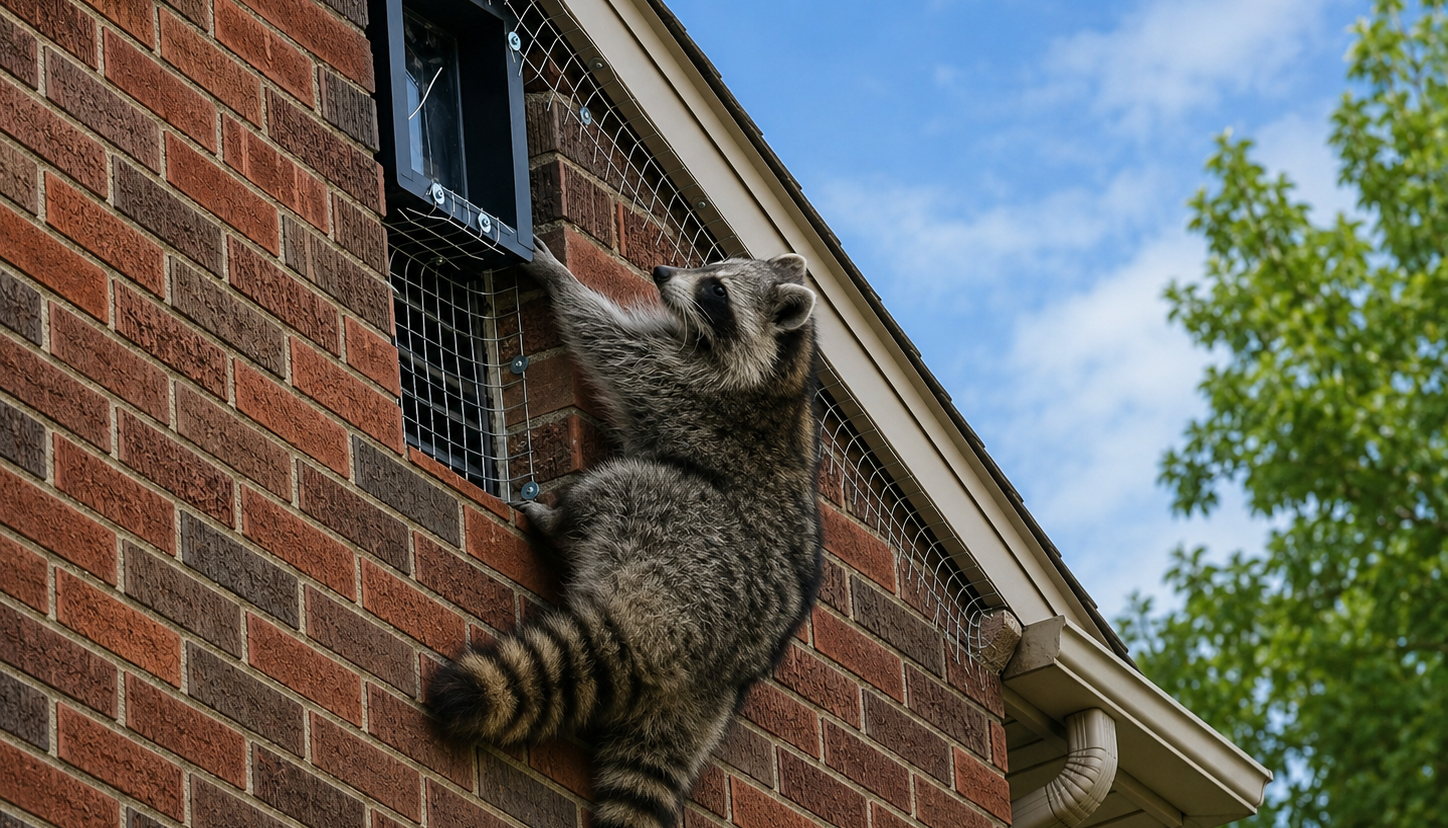
A tiny roof opening, often just 3 to 4 inches wide, gives a pregnant female raccoon the perfect way into your attic. Once inside, she builds a nest and gives birth to a litter. That small gap quickly turns into a full infestation that can damage your home and your health.
You might not think a small hole on your roof is a big deal. But for a raccoon, that little gap is an open door. In the summer, female raccoons look for safe, cool, and quiet spots to have their babies. Your attic checks every box. So when they find even a tiny opening, they squeeze in, settle down, and start a family right above your head.
This is how one small roof opening can lead to a summer raccoon infestation. It starts with one animal looking for shelter. Within weeks, you can have a mother and her young living in your home, chewing wires, tearing insulation, and leaving a mess behind. The longer it goes on, the worse the damage gets.
We put this guide together for homeowners in Marietta who want to understand how these problems start and what we do to fix them. We are Skedaddle Humane Wildlife Control in Marietta, and we handle these situations the right way. You will learn how these animals get in, what happens once they do, why summer makes things worse, and how our team safely removes them and keeps them out for good.
How Do Raccoons Get Into Houses?
Raccoons get into houses through weak spots on the roof. They need just a 3- to 4-inch gap to squeeze inside. That is smaller than you might think. These animals are smart, strong climbers with paws that work almost like hands. When they find a small opening, they use their paws and teeth to make it bigger until they can fit through.
Your roof has many spots that can become entry points over time. Weather, age, and wear all create weak areas that these animals are quick to notice. They climb up using nearby tree branches, gutters, or even trash bins left near the house.
Here are the most common ways these animals break into a home:
- Roof Vents: Most homes have plastic or thin metal vents on the roof. These let air flow out of the attic, but they are easy for a raccoon to chew or rip apart. Once the cover is gone, there is a clear hole straight into your attic. We see this happen all the time.
- Soffits and Roof Edges: The soffit is the spot where your roof meets the wall. It is often made of soft aluminum or wood that bends easily. A raccoon can push up on it with its back and create a gap. Once they get into the soffit, they have access to the whole attic.
- Loose or Damaged Shingles: Shingles protect your roof, but they can loosen over time. A raccoon will grab the edge of a weak shingle and pull until it makes an opening. From there, they can chew through the wood underneath.
- Chimneys: An uncapped chimney looks like a hollow tree to a raccoon. They climb right down and set up a den. Without a proper cap, your chimney is an open invitation.
The Squeeze: How a Tiny Gap Becomes a Big Hole
A small opening rarely stays small. Raccoons are determined, and they will work hard to get inside once they find a weak spot. We have seen tiny cracks turn into large holes in just a day or two.
These animals have strong paws and sharp teeth. They use both to pull, chew, and bend their way through soft wood, plastic, and metal. A gap that starts the size of your fist can quickly grow large enough for a full-grown adult to climb through.
The bigger the hole gets, the more problems it causes. A wide opening lets in rain, which can rot the wood and soak your insulation. So the same gap that lets the animal in also leaves your home open to water damage.
The Summer Nursery: Why the Season Makes It Worse
Summer is baby season for raccoons. This is when mothers are looking hard for a safe, quiet place to give birth and raise their young. An attic with a small opening is exactly what they want. It is warm, dry, hidden from predators, and close to food.
Once a mother moves in, she builds a nest and has her litter. Now you do not have one animal in your attic. You have a whole family. The babies cannot leave on their own, so the mother stays put and protects them, which makes the problem much harder to handle.
This is why summer openings are so risky. A gap that might be ignored in another season becomes a magnet during baby season. The mother is highly motivated, and your attic offers everything she needs.
Exponential Growth: One Animal Becomes a Family
What starts with a single mother quickly grows into a bigger group. A litter can include several young, and they grow fast through the summer months. By the time fall arrives, those babies are nearly the size of adults and just as active.
As the family grows, so does the damage. More animals mean more weight, more scratching, and more wear on your attic. They tear apart insulation to build nests and trample what is left.
Here is what tends to happen as the group gets larger:
- More Noise: Scratching, thumping, and scurrying sounds will become a regular occurrence. These noises are most noticeable at dawn or dusk, as raccoons are primarily active during these times. The sounds of movement overhead can disrupt sleep and create unease within your home. Over time, the frequent activity can make the attic feel like it is no longer a quiet or peaceful space.
- More Damage: The increased number of animals leads to more chewing on vital parts of your home. Wood, electrical wires, and air ducts often become targets, posing serious risks. Damaged wiring can create fire hazards, while chewed ducts can affect airflow or heating systems. The longer they remain, the worse the structural and system issues may become.
- More Mess: An expanding group means more droppings and urine being left behind. The waste not only creates unpleasant odors but also poses significant health hazards for anyone in the home. Accumulated waste can seep into insulation and flooring, making cleanup more challenging. These conditions make it essential to address the problem quickly to prevent further contamination.
- More Entry Points: Young raccoons exploring their surroundings can easily widen existing holes. Their curiosity might lead them to create additional entry points elsewhere in your attic. Each new entry point weakens the structure and makes it increasingly difficult to secure the area. Over time, this can lead to even more infestations and a higher cost for repairs.
The Damage and Danger: What an Infestation Leaves Behind
An infestation does more than make noise. Left alone, these animals cause real harm to your home and can put your family’s health at risk. The longer they stay, the bigger the bill to fix it all.
Inside the attic, they chew on electrical wires, which can lead to short circuits or even fire risks. They scratch through ductwork, which hurts your home’s heating and cooling. And they shred insulation, which means higher energy bills and a less comfortable home.
The mess is just as serious as the structural damage. Here is what we often find:
- Droppings and Urine: Droppings and urine left behind can spread dangerous bacteria and parasites throughout the home. These waste products expose residents to potential health problems if not handled properly. Direct contact or improper cleaning can worsen the situation. It’s critical to rely on our trained professionals to safely remove and disinfect contaminated areas.
- Bad Smells: Nest materials and waste often produce powerful odors that quickly travel through the house. These smells not only create discomfort but can also linger long after the pests are gone. Over time, the odors can seep into walls and furniture, making them hard to eliminate. Proper cleanup and deodorization are necessary to fully restore a fresh environment.
- Water Damage: When pests widen entry holes, it makes it easier for rain and moisture to enter your home. Over time, this water exposure can rot wooden structures and create ideal conditions for mold growth. Mold and mildew not only damage materials further but also pose health risks to those living inside the home. Repairing these issues early prevents expensive restoration work later.
- Roof Damage: The weight and activity of pests constantly moving and scratching above can weaken the roof’s structure. Plywood under shingles often becomes compromised, leading to costly repairs. Loose or damaged shingles worsen the risk of leaks. Regular inspections are essential to identify and address such problems before they escalate.
Raccoon Challenges in Marietta
Homes in Marietta face their own set of wildlife problems. Our warm, humid summers give these animals plenty of time to roam, breed, and look for shelter. That long warm season means more chances for them to find their way into local attics.
Many homes in the area have features that make entry easier. Wooded lots and mature trees give raccoons natural bridges to the roof. Older roofs, vents, and soffits can wear down in the heat and storms, creating the small openings these animals love.
Because our summers are long and active, we stay busy helping homeowners across Marietta protect their homes. We know the local building styles and the common weak spots, which helps us find every entry point and seal it the right way.
Raccoon Removal and Prevention With Skedaddle
When these animals get into your attic, the job needs to be done by our trained professionals. At Skedaddle Humane Wildlife Control in Marietta, we handle the entire process so you never have to. You should not climb into the attic or touch any mess. Just call us, and we take it from there.
Here is how we handle it:
- Full Inspection: The process begins with a thorough inspection of the home to assess the situation. Technicians carefully climb onto the roof and into the attic to locate every possible entry point. Signs of raccoon activity, such as footprints or droppings, are examined to identify problem areas. Special attention is given to any evidence of young, as their presence requires additional careful handling.
- Humane Removal: Raccoons inside a home, especially when babies are present, must be removed with great care. Trained technicians gently remove the young by hand, ensuring minimal stress to the animals. Once removed, the babies are placed in a safe container and reunited with their mother outside. This compassionate approach allows the family to relocate naturally without harm.
- One-Way Doors: To encourage raccoons to leave, one-way doors are carefully installed at entry points. These specialized devices allow animals to exit but prevent re-entry once they leave the premises. It is an effective and humane way to ensure they vacate the space completely. By monitoring the activity, technicians confirm when the property is clear of wildlife.
- Sealing and Prevention: Once it is confirmed that all raccoons have vacated, every entry point is carefully sealed. Durable steel materials are used to block openings and prevent future intrusions. Repairing and reinforcing weak spots ensures the structure is protected from other wildlife seeking shelter. All measures are designed to provide long-term prevention and peace of mind.
- Clean and Restore: Any mess left behind is professionally cleaned and restored to ensure a safe home environment. Raccoon droppings and urine can pose health risks, so specialized cleaning techniques are employed to handle them properly. Damaged insulation is also repaired or replaced to restore energy efficiency. Once complete, the space is left clean, safe, and ready for use.
The goal is simple. We remove the animals safely, protect your home, and make sure they stay out for good.
A Quick Word on Bats
Raccoons are not the only summer visitors we deal with. Bats can also slip through small gaps in your roofline and roost in your attic. Like raccoons, they leave behind droppings that can be harmful to your health, and you should never try to clean it up on your own.
Our team handles bats with the same humane approach. We find how they are getting in, remove them safely using one-way doors that let them exit but not return, and seal up the openings so they cannot come back. If you hear fluttering or notice droppings near your attic, give us a call and we will take care of it.
Frequently Asked Questions
How small of a hole can a raccoon fit through?
A raccoon can squeeze through an opening that is only 3 to 4 inches wide. They are very flexible and can fit through spaces that seem too small for their body. If an opening is weak, they can also use their strong paws and teeth to make it larger.
What time of year are raccoons most likely to get into my attic?
Summer is the most common time for raccoons to enter attics. Mother raccoons look for safe, quiet places to raise their babies during this season. An attic provides warmth, shelter, and protection from predators.
How do I know if raccoons are living in my attic?
You may hear scratching, thumping, or movement coming from the ceiling, especially in the early morning or evening. Other signs include droppings, damaged insulation, and strong odors. If you notice any of these warning signs, it is important to have your attic inspected.
Is raccoon waste dangerous to clean up?
Yes, raccoon droppings and urine can contain harmful bacteria and parasites. Cleaning them without proper training and equipment can put your health at risk. It is best to contact Skedaddle Humane Wildlife Control in Marietta for safe removal and cleanup.
Do you harm the raccoons when you remove them?
No, we use humane wildlife removal methods that do not harm the animals. Our team carefully removes babies by hand and reunites them with their mother outside. We also install one-way doors that allow raccoons to leave safely and prevent them from returning.
How do you keep raccoons from coming back?
Once the raccoons have left, we seal all entry points around your home. We use strong steel materials to secure vulnerable areas like vents, soffits, and roof openings. This helps protect your home from future wildlife intrusions.
Don’t Let a Small Hole Turn Into a Big Problem
Raccoons can quickly make a small problem much larger. What starts as a little gap in your roof can quickly become an entryway for a whole family of raccoons looking for shelter. Once inside, they can cause expensive damage to your home, chew through insulation and wiring, and even leave behind messes that can be hazardous to your health. Acting fast is key to preventing these issues and saving yourself time, money, and stress.
If you suspect raccoons or other animals are in your attic, don’t wait for the problem to get worse. At Skedaddle Humane Wildlife Control in Marietta, we specialize in solving wildlife issues quickly, safely, and humanely. Our experienced team will carefully inspect your home, remove any animals, and professionally seal up entry points to keep them from coming back. We are here to give you peace of mind while ensuring the animals are treated with care.
Don’t take a chance with your home’s safety—act now before the damage grows. Contact Skedaddle Humane Wildlife Control today to request a free estimate and protect your home from unwanted wildlife. We’re here to help you reclaim your space and enjoy a worry-free summer!

 Loading...