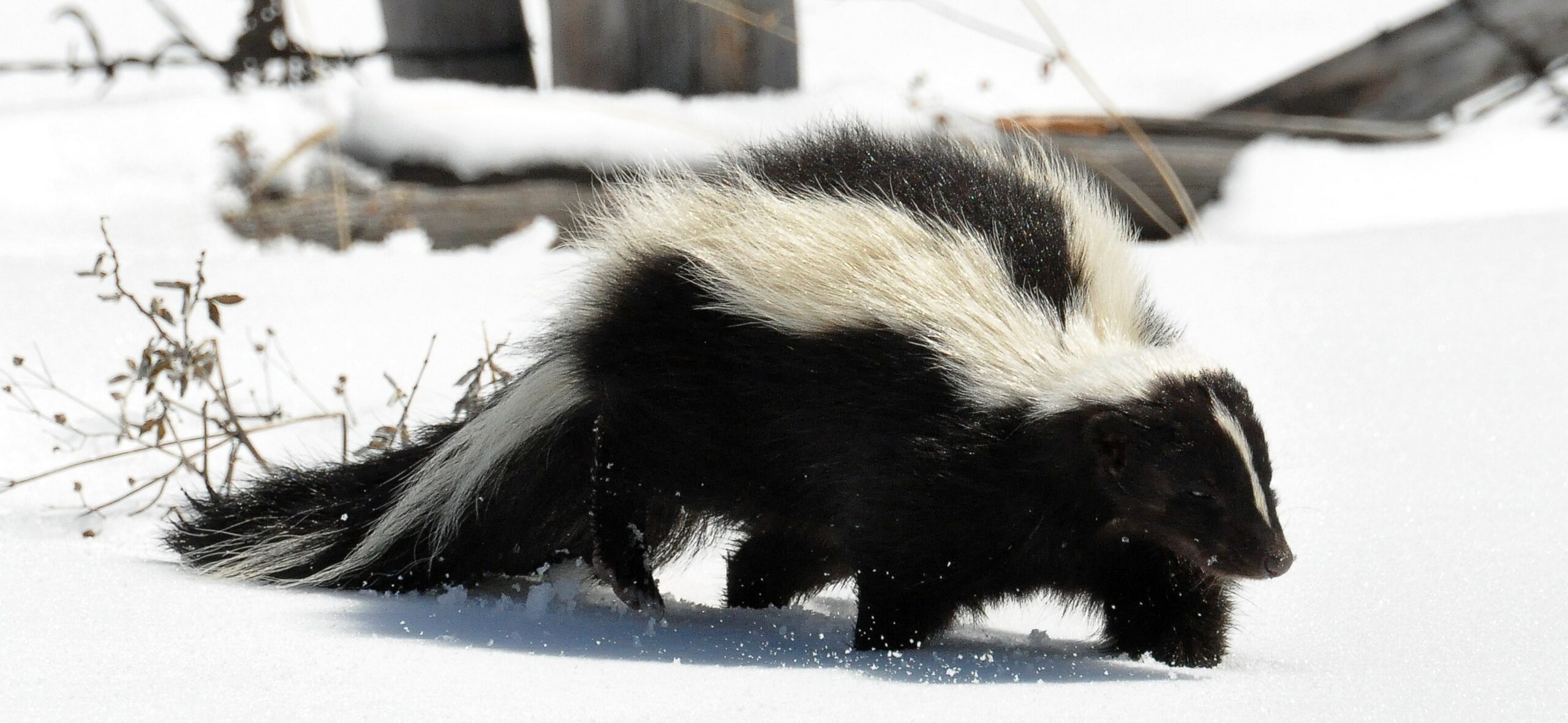

You step outside on a chilly winter morning and notice small tracks in the snow near your deck. Maybe you catch a faint smell in the air that makes you stop and wonder: are skunks active this time of year, or do they hibernate like bears?
That’s a great question, and it’s one we hear often at Skedaddle Humane Wildlife Control in Pickering. The truth is, skunks don’t fully hibernate. They slow down during cold weather, sleeping for long stretches, but they still wake up to move around when it’s mild outside. This winter pattern is called torpor, and it’s an important part of winter skunk behaviour.
For homeowners in Pickering, this means skunks can still appear around your home in winter, digging for shelter or food near decks, porches, and sheds. Knowing how they behave helps you protect your property and avoid unwanted visitors.
Let’s take a closer look at how skunks hibernate in Pickering, how they survive the cold, and what you can do to prevent them from settling too close for comfort.
Do Skunks Hibernate? Not Exactly.
Skunks enter a lighter sleep called torpor. During this time, their heart rate and body temperature drop, and they move much less.
However, they don’t stay asleep all winter long. When the weather warms up, even for a day or two, they’ll leave their dens to find food before returning to rest again.
You might notice them during these short warm periods in January or February. That’s completely normal and part of their natural cycle.
For Pickering homeowners, this means skunks can still dig under sheds, porches, or decks to make dens. These quiet spaces are perfect for hiding from the cold and staying safe from predators.
How Skunks Survive the Winter Cold
Skunks have some smart ways to make it through freezing temperatures. Their bodies are built for cold weather, and their instincts help them find just the right spots to stay warm.
Here’s how they manage it:
- Thick Fur Coat: Their fur traps heat and helps them stay warm even in the snow.
- Extra Body Fat: Before winter, they eat as much as possible to store fat, which keeps them energized while resting.
- Sheltered Dens: They dig or reuse burrows, crawl spaces, or hollow logs that protect them from wind and snow.
- Group Dens: In some cases, several females share a den to stay warmer together.
These clever survival habits mean they don’t need to stay active all winter, just awake enough to survive.
Where Skunks Hide in Pickering
In Pickering, skunks look for cozy, hidden areas near homes where they can stay warm and dry. Urban and suburban neighbourhoods give them plenty of choices.
Here are a few common hiding spots:
- Under Decks and Porches: These areas are dry, quiet, and close to food sources.
- Under Sheds or Crawl Spaces: The small, enclosed space provides warmth and safety.
- Wood Piles and Rock Walls: These natural shelters block wind and keep them out of sight.
- Abandoned Burrows: They often take over dens left behind by groundhogs or rabbits.
If you see tracks, hear digging, or notice disturbed soil near these areas, it may mean a skunk is nearby looking for a winter den.
Why Skunks Stay Active in Mild Weather
Even though they rest through much of the winter, skunks will wake up and move around during mild weather spells. These short bursts of activity help them find food and check their surroundings.
You might see signs of activity such as:
- Small digging holes in your lawn or garden
- Tracks in the snow near decks or sheds
- A faint, unpleasant smell near a potential den
This movement is part of winter skunk behaviour, not a full return to activity. They’ll usually go back to resting once temperatures drop again.
Why Skunks Choose Properties Like Yours
Your property can unknowingly offer the perfect setup for a winter den. Skunks don’t dig random holes; they choose places with warmth, food, and safety.
Here’s what might be attracting them:
- Easy Shelter: Open spaces under decks, porches, and sheds are ideal.
- Food Sources: Garbage bins, pet food, or fallen fruit can attract hungry skunks.
- Low Disturbance: Quiet yards or properties with little winter activity are safer for them.
- Access to Water: Puddles or leaky outdoor taps give them a water source even in cold months.
At Skedaddle, we’ve found that prevention works best when these attractants are addressed before winter. When our team inspects a property, we look for all the small things that can make it appealing to wildlife.
The Dangers of Winter Denning Near Homes
While skunks usually keep to themselves, their presence near your home can lead to some messy problems.
Here’s what can happen if they settle nearby:
- Strong Odours: A startled skunk can spray under your porch or near vents, spreading a powerful smell inside the home.
- Digging and Damage: Skunks dig to make dens or find insects, which can harm lawns, gardens, and foundations.
- Noise and Movement: You might hear scratching or shuffling under the house, especially during warmer nights.
- Health Risks: Their droppings can carry bacteria and parasites that are unsafe for people and pets.
These issues can be stressful, especially during the winter when repairs and cleanups are harder to manage. That’s why early skunk prevention in Pickering is so important.
How Skunks React to Extreme Cold
During deep freezes, skunks stay hidden and rely on their stored fat to get through. They rarely move until the temperature rises above freezing.
In the coldest weeks, they may remain in their dens for days or even weeks at a time. However, once the weather softens, they’ll wake up and look for food.
If you notice signs of movement near your home after a mid-winter thaw, that’s likely what’s happening. They’re not fully awake for the season, just stepping out for a quick meal before resting again.
Skunks in Early Spring
By late February or early March, male skunks start leaving their dens more often. This is mating season, which means more activity in neighbourhoods.
Females stay in their dens longer, sometimes sharing space with other females until it’s warm enough to move.
Spring is also when most homeowners notice damage or odours left behind from winter denning. Professional inspections at this time help ensure any openings are sealed and that animals have safely left the property.
Signs You Might Have a Skunk on Your Property
Skunks are secretive, but they leave clear signs when they’re around. If you notice these clues, it’s time to call professionals:
- Small cone-shaped holes in your yard from digging for grubs
- A musty or sulphur-like smell near your deck or shed
- Tracks in the snow with five toes on each foot
- Soil pushed up near concrete slabs or porch edges
- Noises at night coming from under your deck or floorboards
If these signs appear during winter, it’s best to stay cautious. Approaching a den could lead to a spray or frighten the animal, especially if there are multiple inside.
How Professionals Help Prevent Winter Dens
Our team at Skedaddle Humane Wildlife Control in Pickering specializes in humane, effective methods for removing and preventing denning animals.
When we inspect a property, we focus on:
- Finding Entry Points: Locating gaps and holes around decks, sheds, and crawl spaces.
- Humane Removal: Using one-way doors so animals can exit safely but not return.
- Sealing and Reinforcing: Closing entry points with durable materials that last.
- Future Prevention: Offering long-term strategies to keep your property protected.
These steps keep both homeowners and animals safe while maintaining a peaceful winter environment.
Keep the Peace This Winter: Stay Skunk-Free
So, do skunks hibernate in Pickering? Not exactly. They rest through the cold but stay ready to move when temperatures rise. This means they can still find their way under porches, decks, or sheds during mild winter weather.
Understanding winter skunk behaviour helps you take steps to avoid problems before they start. If you see signs of denning or notice odours near your home, professional skunk prevention in Pickering is the safest and most effective solution.
At Skedaddle Humane Wildlife Control in Pickering, we use humane one-way doors and thorough sealing methods to keep wildlife out while protecting your property.
Don’t let winter guests overstay their welcome. Request an estimate today to learn how we can help you stay skunk-free all season long.

 Loading...