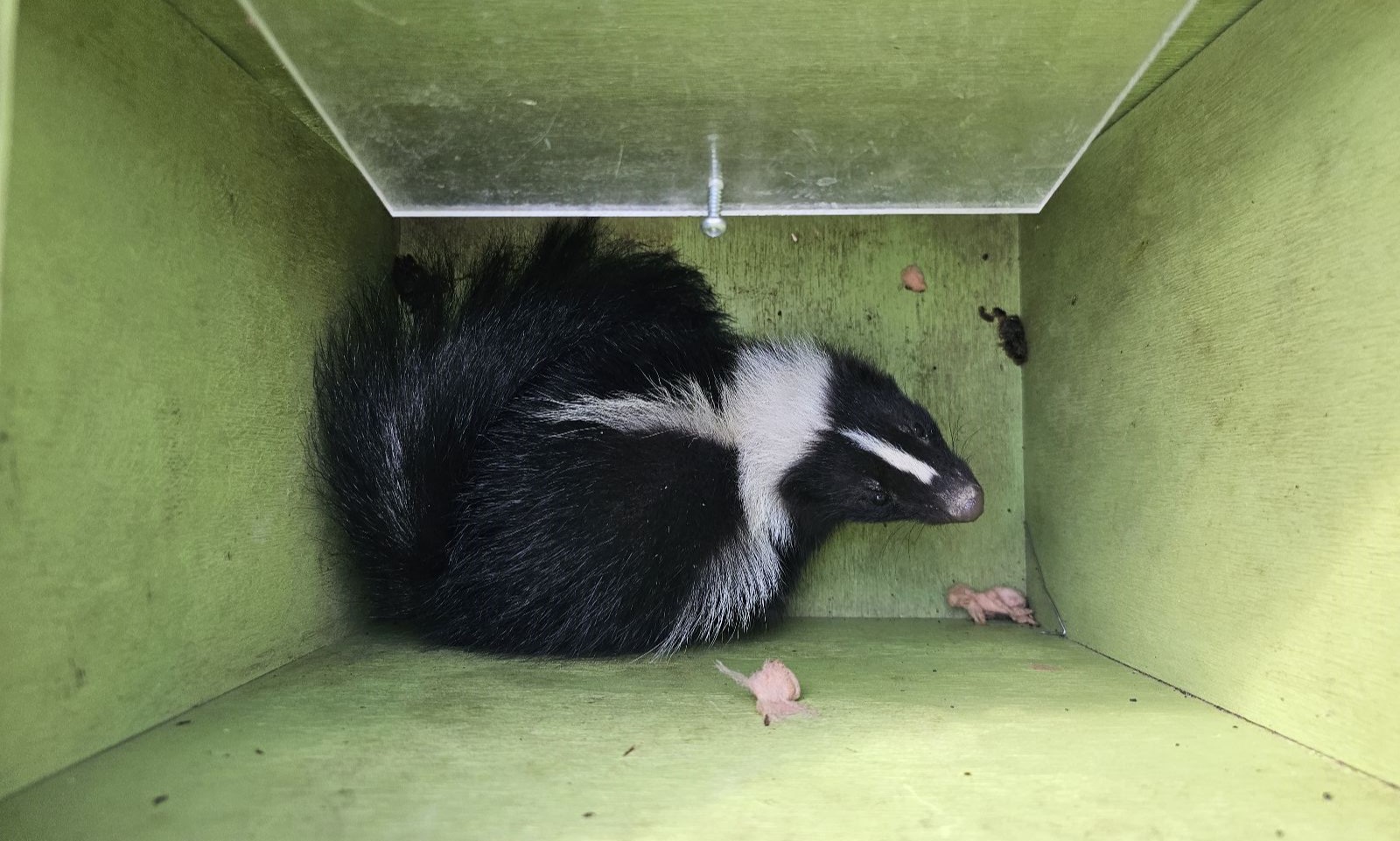
You will usually find skunk dens in dark, quiet, and dry spots with low clearance. If you are asking where do skunks den in a yard, the short answer is that they love to hide under decks, porches, sheds, and garages. You might also find them in deep burrows or hiding beneath overgrown bushes. You need to act fast if you notice these animals moving in, as they can cause serious property damage and leave behind a terrible smell.
You can always rely on us to handle these situations safely. Our team at Skedaddle Humane Wildlife Control in Pittsburgh is here to help homeowners like you. We provide professional removal services to keep your property safe and clean. We know exactly how to find these hidden spots and safely remove the animals.
In this post, we will walk you through everything you need to know about skunk habitats. You will learn the top locations they choose to build their homes and the warning signs to look out for. You will also discover why our professional help is always the best choice for protecting your yard.
Could a skunk hurt your pet?
Yes, a skunk can absolutely hurt your pet. You need to keep dogs and cats away from these wild animals at all times. A skunk will use its powerful spray as a defence mechanism when it feels threatened or scared. This spray can cause severe eye irritation, temporary blindness, and serious discomfort for your furry friend.
You should also know that these animals carry harmful diseases. They are known carriers of rabies, which is a serious health threat to unvaccinated pets. They can also pass on parasites like ticks, fleas, and mites to your dogs or cats. If your pet gets too close, a mother protecting her babies might even scratch or bite in defence.
You must keep your distance if you spot one in your yard. We strongly advise against letting pets roam near suspected den sites. Our trained team knows how to handle these situations without causing stress to the animal, keeping both your family and your pets safe from harm.
Common Places Skunks Den Under Structures
Skunks often look for safe, quiet places to build their dens, and they especially like areas close to humans. Spaces under buildings, decks, porches, and sheds are some of their favourite hiding spots. These locations give them shelter from predators and bad weather. Understanding where skunks might be living can help you take steps to keep them away from your home.
- Under Porches and Patios: You will often find skunks living right under your front porch or back patio. These areas offer perfect shelter from rain, snow, and large predators. The space is usually dark and undisturbed, which makes it an ideal spot for a mother to raise her babies. We often safely remove whole families from these specific hiding spots.
- Beneath Backyard Sheds: You might notice fresh digging around the base of your garden shed. Sheds usually sit slightly off the ground, leaving a very tempting gap for an animal to squeeze into. They only need a tiny opening to create a warm and comfortable home for the season. Our team can easily identify and secure these vulnerable structures.
- Below Concrete Slabs: You could discover a den under a heavy concrete slab or walkway on your property. Skunks are excellent diggers and will burrow deep into the dirt beneath the concrete to make a secure cave. The solid roof protects them from the weather and keeps them hidden from plain sight. We use specialized techniques to clear out these hard-to-reach areas.
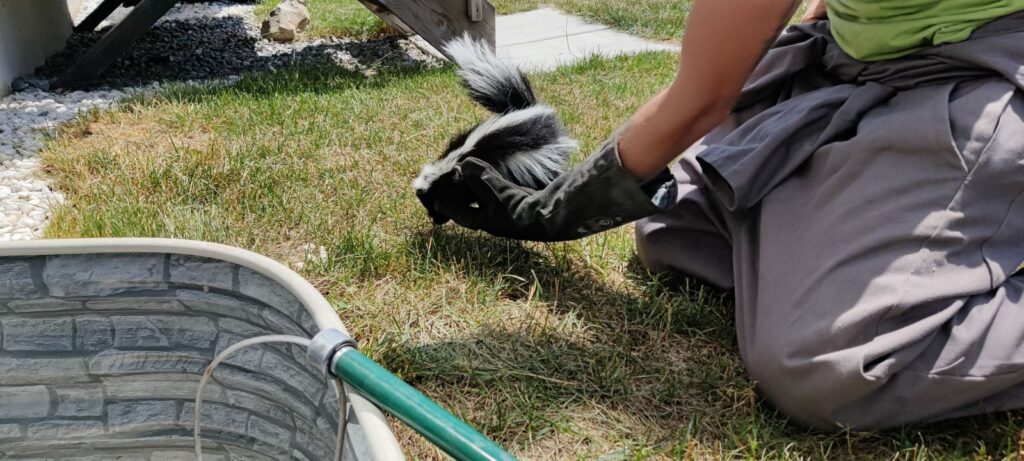
How Skunks Create Burrows In Your Lawn
You might be surprised by how well these animals can dig. Skunks have strong front claws built for moving heavy dirt very quickly. They can create deep burrows right in the middle of your lawn if they cannot find a structure to hide under. You will often see holes that are seven to nine inches wide leading deep underground.
You may also find that they take the easy route by stealing homes from other animals. Skunks gladly move into abandoned burrows left behind by groundhogs or foxes. This saves them a lot of time and energy, allowing them to settle in right away. They simply clean out the old hole and make it their own cozy space.
You should never try to fill in a burrow yourself. If you trap an animal inside, it will cause immense stress and lead to even more digging as they try to escape. Our professional team relies on customized one-way doors to solve this problem. These unique doors allow the animals to leave safely to find food, but completely block them from getting back inside the burrow.
Yard Features That Attract Skunks
Skunks are often drawn to certain features in your yard that provide food, shelter, or a safe place to hide. By understanding what attracts them, you can take steps to make your yard less appealing to these critters. Common things like open trash, pet food, or overgrown plants can make your yard a skunk-friendly environment. Being aware of these factors is an important step in preventing skunks from settling in.
- Large Woodpiles: You might accidentally invite skunks in if you store large stacks of firewood right on the ground. Woodpiles provide fantastic cover from the cold wind and hide the animals from larger predators. The gaps between the logs also make great spots to sleep safely. We always suggest keeping your firewood stacked high off the ground.
- Overgrown Shrubs and Bushes: You will likely see skunks hiding in yards with dense, overgrown landscaping. Thick flower beds and low-hanging bushes give them a safe place to rest safely during the day. The heavy plant cover blocks the sunlight and makes them feel completely invisible. Our experts know exactly how to search these tricky, overgrown garden areas.
- Rock Heaps and Yard Debris: You could easily find a den hidden inside a pile of rocks or leftover construction materials. Skunks love to wedge themselves into tight, secure spaces where nothing can reach them. Any pile of yard waste can turn into a permanent home for a family of skunks. We highly recommend letting us inspect any large piles of debris on your property.
Signs Of A Skunk Den On Your Property
Skunks can leave behind some noticeable clues when they’ve made a home on your property. If you know what to look for, it’s easier to find and address the problem quickly. Here are some common signs that a skunk might be living nearby.
- Distinct Musky Odour: You will almost always smell a skunk before you ever see one. A strong, garlic-like or burnt-rubber smell is a very clear sign that a den is nearby. This distinct odour becomes much stronger right next to the entrance of their home. If you notice this scent lingering for days, you likely have a resident animal.
- Visible Entry Holes: You should look for round holes in the dirt that are about four to eight inches wide. These entryways often have loose, freshly turned dirt piled up right outside the opening. This tells you that an animal has recently been digging out a home. We are expertly trained to spot these specific types of holes.
- Small Lawn Damage: You might see tiny, coin-sized holes shaped like little cones all over your grass. Skunks make these shallow marks when they are hunting for grubs and insects to eat at night. If your lawn looks like it has been plugged with small holes, an animal is feeding nearby. We can help assess this damage during a property inspection.
- Animal Tracks in the Dirt: You can often spot tiny footprints in the mud or snow around your yard. Skunk tracks show five toes on each foot and usually feature long claw marks at the tips. Finding these tiny tracks leading under a deck or shed is a massive warning sign. Our professionals use tracks to figure out exactly where the den is located.
Effective Skunk Prevention Methods
You can take simple steps to make your yard less appealing, but true prevention always requires expert help. Skunks are naturally drawn to properties that offer easy access to food and shelter. You should make sure your garbage cans have tight-fitting lids to stop them from eating your trash. You should also remove any pet food from your porch before nightfall.
You might think about putting up fences, but these animals can dig up to a foot underground to bypass simple barriers. Because they are so persistent, basic prevention methods rarely hold up for long. Our team knows exactly how to install heavy-duty exclusion barriers. We securely bury heavy gauge wire deep into the ground around your decks and sheds to stop any future digging.
You should always let our trained experts handle the tough work. We know how to secure your property without putting you or your family at risk. Relying on us means you get lasting results that keep these animals away for good.
Local Challenges In Pittsburgh: What to Know
You will notice that Pittsburgh offers a unique mix of busy city streets and lush green parks. This blend creates the perfect environment for animals to thrive right alongside human residents. Skunks easily take advantage of the parks for food, but often turn to local neighbourhoods when they need a warm place to sleep.
You also have to consider the changing seasonal weather in our area. The harsh winters drive animals to seek out warmer shelter early in the fall. They actively look for cozy spots under our porches and concrete steps to wait out the freezing months. By the time spring arrives, these same winter dens become nurseries for their newborn babies.
You can fully trust Skedaddle Humane Wildlife Control in Pittsburgh because we understand these local patterns perfectly. We know exactly how the local climate affects animal behaviour throughout the year. Our team is always ready to protect your home no matter what the changing season brings.
Frequently Asked Questions
What should I do if I find a den?
You should stay far away and avoid making any loud noises. Call us immediately so we can assess the situation safely without scaring the skunk.
Do skunks come out during the day?
You will rarely see them in daylight because they are nocturnal creatures. If you do see one during the day, it might be sick or searching desperately for food.
Will a mother skunk attack me?
You can expect a mother to be very defensive if she feels her babies are threatened. She will stamp her front feet and spray to protect her young.
Can I clean up a skunk den myself?
You should never attempt to clean up a den on your own. Skunk droppings and nesting materials carry harmful diseases that require our professional, safe removal methods.
Do skunks hibernate in the winter?
You will not see true hibernation from these animals, but they do enter a deep sleep. They spend most of the winter resting inside their dens to stay warm.
Keep Your Yard Safe With Professional Help
You do not have to live with the stress of skunks damaging your yard. When you are dealing with a wild animal on your property, safety must always come first. Trying to handle the situation alone can lead to awful smells, property damage, and health risks for your family and pets.
You can totally depend on us to fix the problem using safe, proven methods. We never use harmful traps or relocation methods that cause unnecessary stress. Instead, we rely entirely on our humane one-way doors to ensure the animals leave safely and cannot return. We take massive pride in defending homes while respecting nature.
You deserve to enjoy your outdoor space without a single worry. Contact Skedaddle Humane Wildlife Control in Pittsburgh today to request an estimate. Our expert team is ready to protect your home and give you total peace of mind.

 Loading...