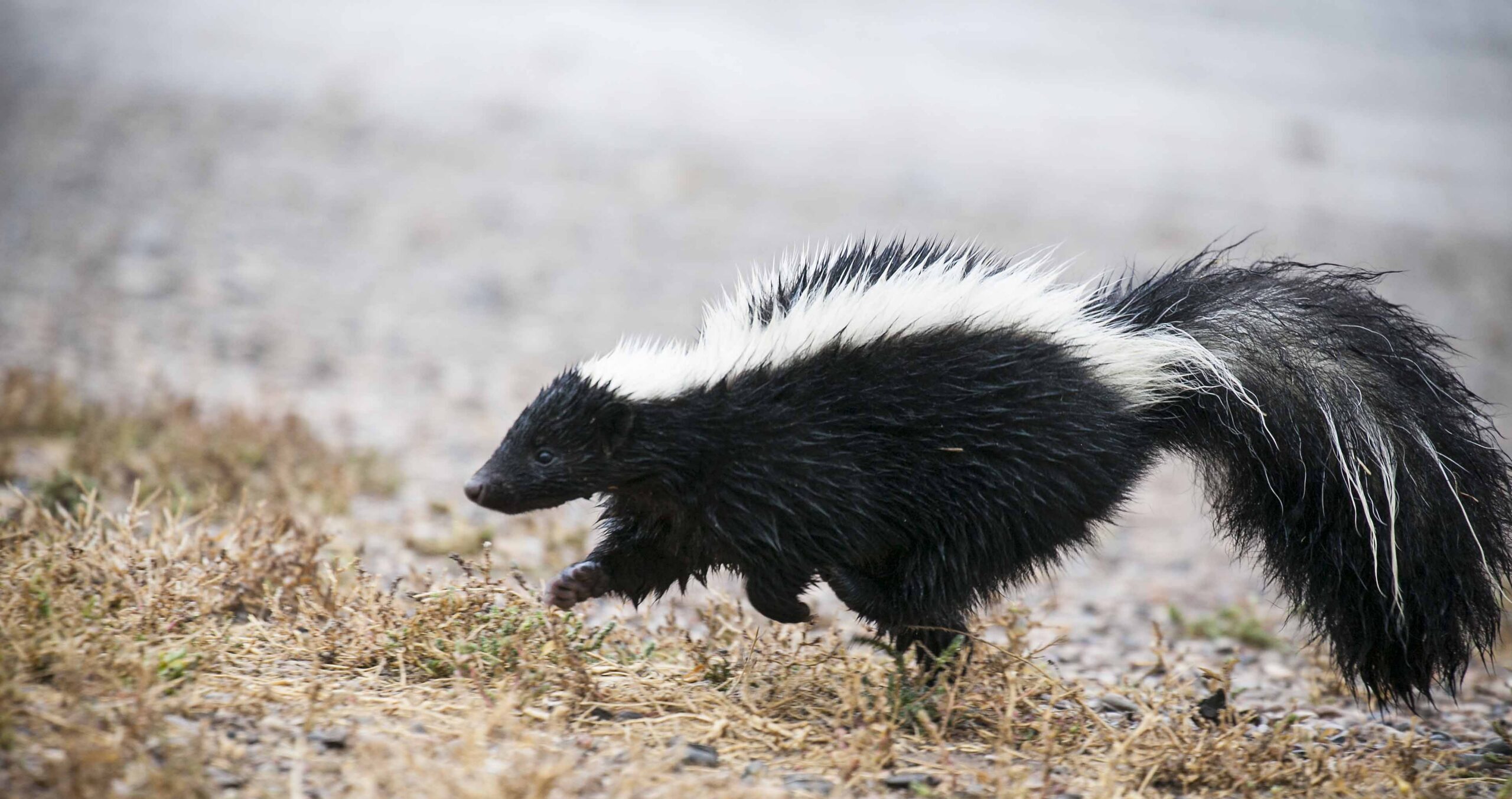
Skunks are attracted to properties that offer two things: food and shelter. If your yard has either of these, there’s a good chance you’ll eventually have a problem on your hands. The good news is that knowing what draws them in is the first step toward keeping them away.
You might not even realize your property is rolling out the welcome mat for them. A lawn full of grubs, an unsecured garbage bin, a bowl of pet food left outside, or a gap under your deck, any one of these is enough to bring skunks onto your property and keep them coming back. Once they find a reliable food source or a safe place to live, they settle in and are very reluctant to leave.
At Skedaddle Humane Wildlife Control in Toronto, we help homeowners deal with these situations every day. In this blog, we walk you through the most common reasons skunks are drawn to residential properties, what that looks like in your yard, and why calling our professional team is the fastest and safest way to deal with the situation.
When Do Skunks Have Babies?
Skunks have babies in the spring, typically between April and June. Females give birth to litters of four to seven kits, and they’re very protective of their young during this time. If one has denned under your deck or shed heading into spring, there’s a good chance she’s either pregnant or already nursing.
This timing matters a lot for homeowners. An animal that moves onto your property in late winter is often a female looking for a safe, sheltered spot to give birth. Once the kits arrive, the family will stay in that den for several weeks while the young develop. Disturbing a den during this period can be dangerous – a mother protecting her young is much more likely to spray.
This is exactly why early action is so important. If you notice signs of activity on your property in late winter or early spring, call our team right away. The sooner we assess the situation, the better the outcome for everyone involved.
Grubs and Insects Are a Big Draw
Your lawn might look perfectly normal to you, but to a skunk, a lawn full of grubs and soil insects is an all-you-can-eat buffet. Skunks are natural diggers and spend a lot of their time foraging for food just below the surface of the ground. Here’s what that looks like on your property:
- Small Holes Dug Across Your Lawn: One of the most common signs of activity is small, cone-shaped holes dug into the turf. They dig these holes to get at grubs, beetle larvae, and earthworms living in the soil. If you’re waking up to a lawn that looks like it’s been poked with a stick overnight, these animals are almost certainly the cause.
- Grub-Heavy Lawns Are Prime Targets: Lawns that haven’t been treated for grubs tend to have higher concentrations of beetle larvae in the soil, which makes them especially attractive. The more grubs your lawn has, the more reason they have to keep coming back night after night. This kind of repeated digging damages your lawn and gets worse over time.
- Insects Around Foundations and Garden Beds: These animals don’t just dig in open lawn areas. Skunks also forage along the edges of garden beds, around the base of trees, and near the foundation of your home where insects tend to concentrate. If you’re seeing disturbed soil in these areas, that’s a sign our team needs to take a closer look at what’s going on around your property.
- Our Team Identifies All the Attractants: When we inspect your property, we look at everything, including lawn and soil conditions that may be drawing them in. Understanding what’s attracting them helps us put together a plan that addresses the full picture, not just the most obvious part of the problem.
Garbage and Compost Bring Them Running
Unsecured garbage and open compost bins are two of the most reliable attractants on any property. Skunks have a strong sense of smell, and the odours coming from a garbage bin or compost pile carry a long way on a still night. Here’s how this plays out:
- Garbage Bins Left Out Overnight: Skunks are most active at night, which means garbage bins left outside after dark are an easy target. They’ll tip over bins, tear through bags, and scatter waste across your driveway or yard looking for food. This happens fast and the mess they leave behind is significant.
- Open Compost Bins Are Especially Attractive: Compost bins that aren’t properly sealed are a major draw. Fruit and vegetable scraps, coffee grounds, and food waste all produce strong smells that pull them in from a distance. Once they find a compost bin that gives them a regular meal, they’ll keep returning to it night after night.
- The Smell Alone Is Enough: Even a garbage bin with a lid can attract them if it’s not sealed tightly. The smell of food waste seeps out through loose-fitting lids and carries through the air. They follow their noses, and a bin that smells like food is worth investigating as far as they’re concerned.
- Call Us If Skunks Are Already Visiting: If these animals have already found your garbage or compost and are visiting regularly, the pattern is established and they won’t stop on their own. Our team can assess the situation and put measures in place to protect your property and break the cycle of nightly visits.
Pet Food and Bird Seed Keep Them Coming Back
Pet food left outside is one of the most overlooked attractants on residential properties. If you feed your dog or cat on the porch or in the yard and leave the bowl out after feeding time, you’re setting out a free meal for any skunk in the area. They’re opportunistic feeders and won’t pass up something that easy.
Bird feeders are another common problem. Seeds that fall from a feeder pile up on the ground below it, and that ground-level food is exactly the kind of thing skunks forage for. You may not connect a bird feeder to a wildlife problem, but the two go together more often than most homeowners realize. They will visit the same feeding spot every night as long as food keeps showing up.
The fix seems simple, but it’s not always enough on its own if they have already established a routine on your property. Bringing food inside and cleaning up spilled seed helps reduce the attractant, but an animal that has been visiting regularly doesn’t just stop because the food is gone one night. If these animals are already active on your property, our team at Skedaddle needs to be involved to make sure the problem is fully resolved.
Fallen Fruit and Garden Vegetables
If you have fruit trees, berry bushes, or a vegetable garden on your property, you have a natural attractant that’s hard to eliminate completely. Skunks are omnivores and will eat almost anything they come across – ripe fruit that has fallen to the ground is an easy, reliable food source that brings them back to the same spot repeatedly.
Garden vegetables are also a target. Root vegetables, leafy greens, and soft fruits like tomatoes and strawberries are all appealing to them. They’ll dig around the edges of garden beds looking for food, and that digging can damage both your plants and the soil structure of your garden. The damage tends to be worse in late summer and fall when produce is ripening and falling naturally.
The challenge with fruit trees and vegetable gardens is that they’re a permanent feature of your property, you can’t just take them away. What you can do is call our team to assess the situation and figure out what protective measures make the most sense for your yard. We look at the full picture and put together a plan that addresses what’s drawing them in without disrupting what you’ve worked hard to grow.
Shelter Under Structures and Cluttered Areas
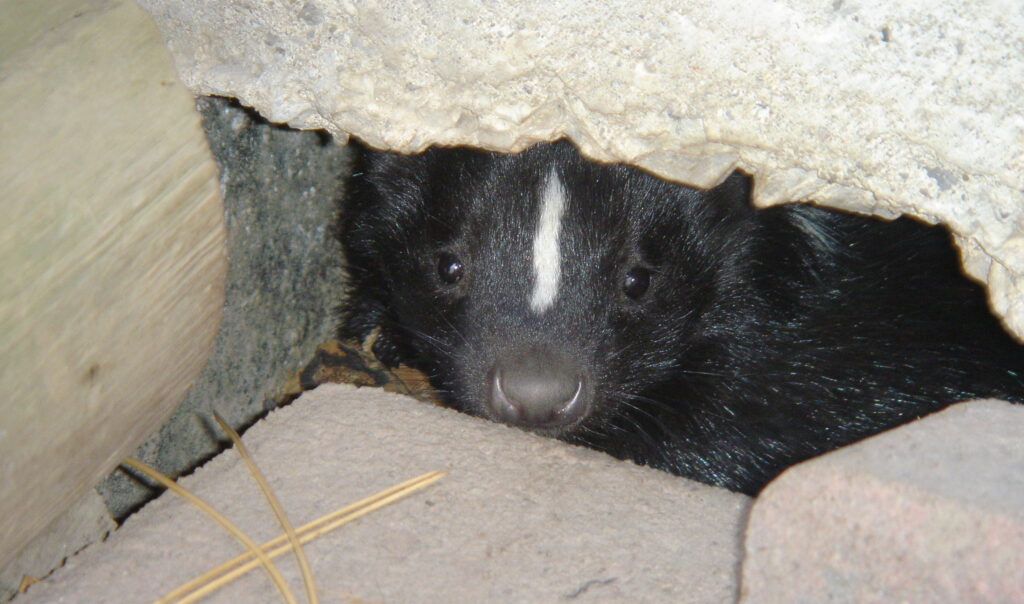
Food is only half of what skunks are looking for. They also need a safe, sheltered place to den and most residential properties have several spots that fit the bill perfectly. Here’s where they tend to set up their dens:
- Under Decks and Porches: The space under a deck or porch is one of the most common denning spots. It’s dark, sheltered from the weather, and protected from predators, which makes it feel very safe to an animal looking for a place to settle in. Once they’ve dug in under a deck, they can be difficult to remove without professional help.
- Under Sheds and Outbuildings: Garden sheds, detached garages, and other outbuildings often have gaps at the base that these animals can squeeze through. The space underneath is ideal denning territory: quiet, undisturbed, and close to the food sources in your yard. Those denning under a shed will typically stay for the whole season if they’re not dealt with.
- Wood Piles and Brush Piles: Stacked firewood, brush piles, and cluttered storage areas near the ground give them plenty of places to hide and nest. These spots are easy to overlook because they don’t look like obvious entry points, but they’re very attractive to any animal looking for cover. The more cluttered the area, the more appealing it is.
- Our Team Finds Every Den Site: When we inspect your property, we check all of these areas, not just the ones that are easy to see. Finding every den site and every potential entry point is the only way to make sure the problem is fully resolved. We handle all of it so you don’t have to go near any of these spots yourself.
Skunks at Toronto Properties
Toronto’s mix of established neighbourhoods, green spaces, and suburban yards creates ideal conditions for skunks. The city has plenty of mature trees, garden beds, and older properties with gaps under decks and sheds that give them easy access to shelter. As the city continues to grow and develop, they adapt by moving deeper into residential areas and Toronto homeowners are dealing with the results.
Activity in Toronto tends to peak in late winter and spring when females are searching for denning spots ahead of birthing season, and again in fall when they’re preparing for the colder months. During these windows, they are more active and more motivated to find food and shelter on residential properties. Homeowners who notice signs of digging, odour, or sightings during these seasons should act quickly.
The risk of a spray encounter goes up significantly when skunks are denning on your property. A startled skunk, especially a mother with young, will spray without much warning. This isn’t a situation where waiting to see what happens is a good idea. Our team responds quickly and handles these situations safely so you and your family don’t have to deal with the consequences of a close encounter.
Skunk Removal and Prevention with Skedaddle
When skunks have moved onto your property, whether they’re denning under your deck, visiting nightly for food, or digging up your lawn, the right response is to call our team at Skedaddle Humane Wildlife Control. We start with a full inspection of your property, checking every area where they might be active, denning, or finding food. We look at the whole picture so nothing gets missed.
We use one-way door systems that allow them to leave their den on their own without being able to get back in. It’s a humane approach that gets results without putting anyone at risk of a spray encounter. Once they’re out, we seal the entry points so they can’t return and we make sure the job is done right the first time so you’re not dealing with the same problem again next season.
Prevention is just as important as removal. After they’re gone, we address the conditions on your property that drew them in. Whether that’s gaps under structures, accessible food sources, or denning spots that need to be properly sealed. Our goal is to make your property as unattractive as possible so they move on and stay gone. We handle all of it from start to finish so you don’t have to deal with any part of it yourself.
Frequently Asked Questions
How do I know if one is denning under my deck or shed?
The most obvious sign is the smell even without spraying, they produce a mild musky odour that becomes noticeable near their den. You may also notice small holes dug near the base of the structure, disturbed soil, or tracks in soft ground nearby. If you suspect a den, call our team rather than investigating on your own.
Are skunks dangerous to people and pets?
These animals are not typically aggressive, but they will spray if they feel threatened, and their spray causes intense irritation to the eyes and is very difficult to remove from skin, fur, and clothing. They can also carry rabies, which makes any close encounter a health concern. Keep children and pets away from any area where activity has been noticed.
Can skunks damage my property?
Yes. Their digging damages lawns and garden beds, and one denning under a deck or shed can cause structural damage over time as they dig and expand their den space. The longer they stay, the more damage accumulates.
Will skunks go away on their own?
These animals that have found a reliable food source or a safe den on your property are very unlikely to leave on their own. They're creatures of habit and will return to the same spots night after night. Without intervention, the problem typically gets worse, especially if a female gives birth on your property.
What should I do if my pet gets sprayed?
Keep your pet outside and away from the interior of your home right away. Do not attempt to handle the situation yourself beyond keeping your pet contained. Call a veterinarian for guidance on treatment, and contact our team to deal with the animal that caused the encounter.
Is skunk spray harmful to humans?
Skunk spray causes intense burning and irritation to the eyes and skin. In high concentrations, it can cause nausea and temporary vision issues. It's not life-threatening in most cases, but it's extremely unpleasant and very hard to get rid of. Avoiding a spray encounter entirely is always the goal, which is why calling professionals is so important.
Don’t Let Them Make Themselves at Home
Skunks are attracted to properties that give them what they need: food and shelter. Grubs in your lawn, unsecured garbage, pet food left outside, fallen fruit, and gaps under your deck or shed are all open invitations. Once they move in, they don’t leave easily. The longer they stay, the greater the risk of a spray encounter, property damage, and a problem that comes back every season.
These problems don’t fix themselves. An animal that has found a safe den and a reliable food source on your property will keep coming back until something changes. Waiting it out isn’t a strategy; it just gives them more time to settle in and cause more damage.
You don’t have to deal with this on your own. Our team at Skedaddle Humane Wildlife Control in Toronto is ready to help. We’ll inspect your property, find out where they’re denning and what’s drawing them in, and take care of everything from removal to prevention. Contact us today to request an estimate and find out how we can help protect your property for good.

 Loading...