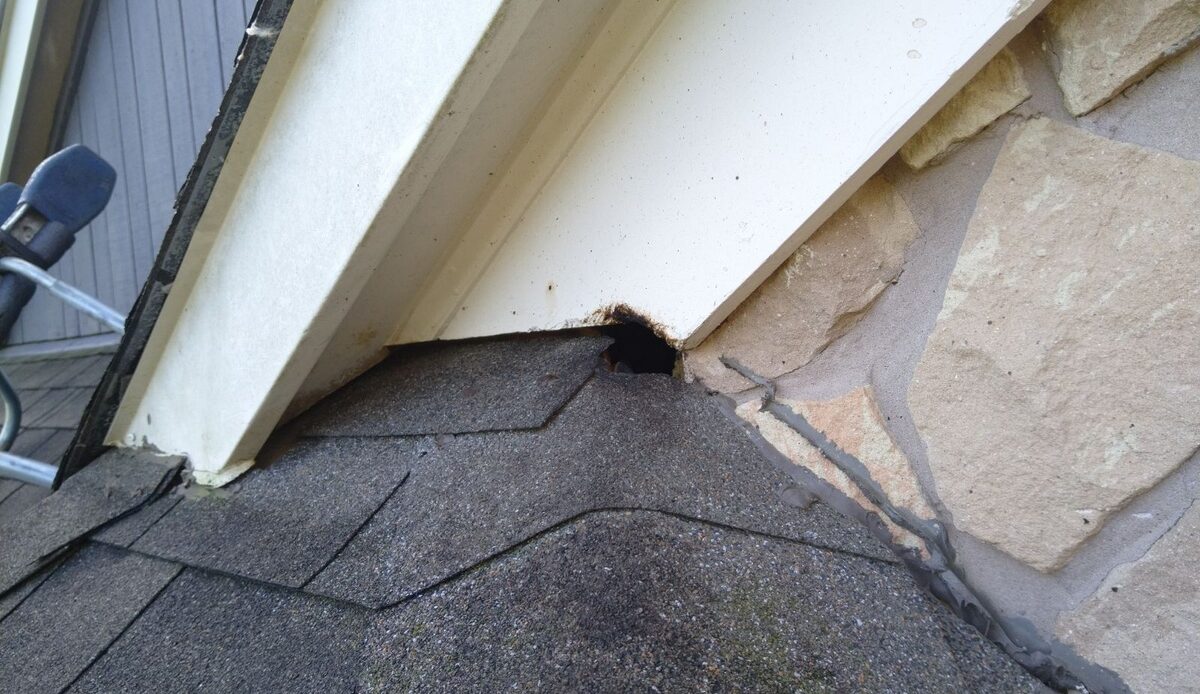
You may see squirrels reach a roof by climbing nearby trees, building surfaces, or connected structures, then investigate vents and roof edges for access. An existing gap or damaged cover may provide a route into the attic. Some openings may also become wider through chewing or repeated use.
Getting onto the roof and entering the attic are separate events. Running across shingles does not prove that anything is living inside your home. The concern grows when repeated attention to one opening appears alongside damage, scratching above the ceiling, or other indoor signs.
At Skedaddle Humane Wildlife Control in Denver, Colorado, we assess both the approach route and the building’s vulnerable areas. You should not climb, approach utility lines, enter the attic, or seal a suspected entrance. We explain how roof features support movement, which details may provide access, and what our professional inspection includes before removal and prevention work begins.
How Do Squirrels Get Onto a Roof and Into an Attic?
Squirrels climb trees, fences, wall surfaces, or adjoining structures to reach a roof and investigate potential attic entry points. However, a climbing route does not prove an entrance exists; secure rooflines often receive regular travel without attic intrusion. Our team inspects the entire path to compare outdoor activity with actual indoor evidence, determining whether squirrels are traveling on the roof or occupying the attic.
The Approach Can Start in the Yard or on the Building
Several routes may bring these animals to the same roof, and the easiest approach depends on the property’s layout. A tree may provide one path while a fence or textured wall provides another. Our team checks the available connections rather than treating one branch distance as a guarantee against access.
- Nearby Tree Branches: Branches may provide a route or a jumping point toward the roofline. Their position, height, and connection with other surfaces affect how they can be used. Removing one nearby approach would not necessarily address every route or an existing attic entrance. We assess the surroundings and explain how they relate to the building’s vulnerabilities.
- Downspouts and Gutter Edges: Some downspouts can provide grip, while gutters may support movement along the roof edge. These features help explain how the roof is reached, but a gutter is not itself an attic entrance. The important question is whether a vulnerable panel or gap sits along that route. Our team checks where the climb leads and what is accessible at the top.
- Textured Walls and Vines: Some wall surfaces and vegetation can offer climbing opportunities toward an overhang or vent. The amount of grip varies with the surface, condition, and building layout. A home without overhanging branches may therefore still have an approach route. We assess those possibilities without assuming that every wall is easy to climb.
- Fences, Adjoining Structures, and Overhead Lines: A fence, detached garage, or lower roof may connect with another part of the building. Overhead lines can also provide travel routes across a property. You should not approach or alter utility lines to investigate access. Our team assesses the relevant connections and identifies when utility expertise is needed.
Roof Edges Provide Routes Along the Building
Reaching one part of the roof can allow movement toward another feature. Gutters, ledges, and adjoining roof sections may connect different areas. The location where you first see activity may be far from the place receiving the most attention.
A lower roof can also place an upper overhang or wall vent within reach. They may travel across that surface to explore a sheltered corner. However, the route remains an outdoor path if no usable opening exists.
Repeated traffic helps guide our inspection but does not confirm attic entry. We check the destination, nearby materials, and evidence of use. You can report what you noticed during normal use of the property without climbing or following the route yourself.
Intersections Can Put a Weak Point Within Reach
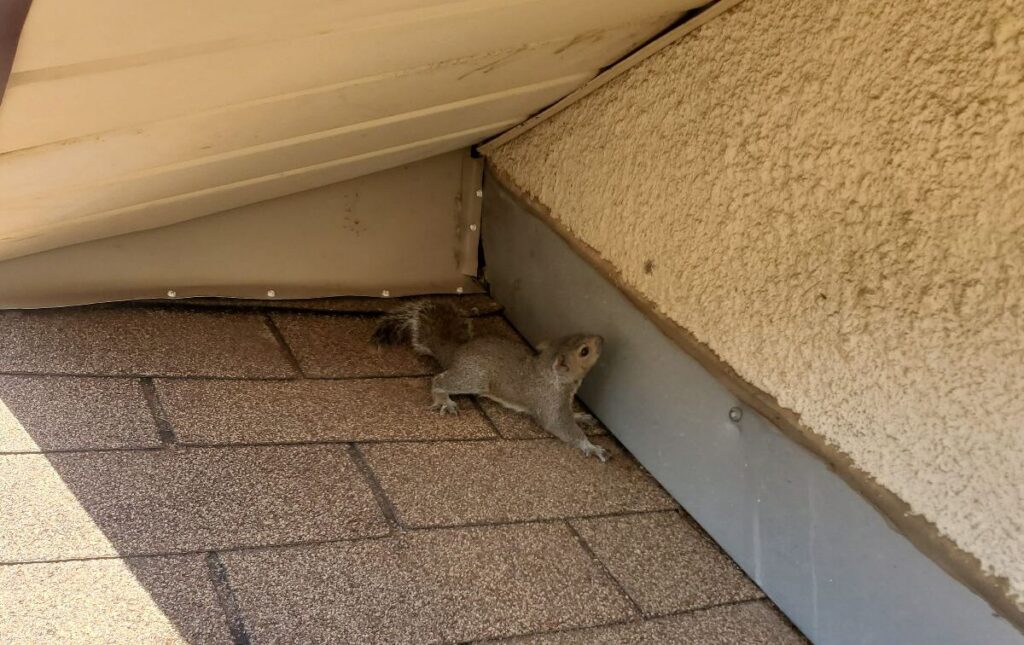
Roof transitions bring different building materials together, sometimes above a surface that provides a convenient foothold. Loose panels or poorly fitted edges may leave a weakness that receives attention. Our team assesses the joint and its connection with the interior rather than assuming every intersection contains an entrance.
- Lower Roofs Beneath Upper Soffits: The soffit is the underside of a roof overhang. Where a lower roof sits beneath it, that surface may place a panel or seam within reach. A loose edge could provide a starting point for investigation or further damage. We assess how firmly the materials are secured and whether a gap leads inside.
- Dormers and Roof-to-Wall Joints: Dormers and projecting walls create seams where wall materials meet roofing. Some areas are partly hidden by trim or the building’s shape. A visible stain or shifted edge does not establish whether the joint provides attic access. Our professionals check the route and surrounding condition before recommending protection.
- Additions and Changing Roof Heights: Connections between building sections can create several levels and sheltered corners. These features may support movement without being damaged or poorly constructed. Where materials are loose or gaps exist, the same route may bring a vulnerable point within reach. We inspect the actual condition rather than judging an addition by its age alone.
Vent Covers and Loose Edges Can Become Entrances
A raised roof feature may provide a place to stand or investigate without allowing entry. The risk changes when damaged materials or open edges connect with a space inside the building. Our team distinguishes a confirmed entrance from a vulnerability that needs prevention.
- Roof and Ridge Vents: Damaged covers, loose edges, and vulnerable end sections may provide access around roof vents. Material alone does not show how secure a vent is because design, thickness, condition, and installation also matter. A mostly intact cover may still have an opening beside it. We assess the feature and preserve its intended airflow when planning protection.
- Soffit Panels and Fascia Edges: Fascia is the board along the outer roof edge, beside the soffit and below the roofing. Loose panels or gaps around these materials may leave access to sheltered roof spaces. Weather wear or weakened supports can contribute before chewing occurs. Our team checks the opening, its supports, and signs that it is being used.
- Gable Vents: A gable vent sits on a wall near the roof peak and may open into the roof space. Damaged slats or screening can leave an access point if the vent is reachable. The appearance of the cover does not confirm occupancy behind it. We inspect the connection and compare it with other evidence found at the property.
- Pipe Boots and Other Roof Openings: A pipe boot helps weatherproof the area where a pipe passes through the roof. Damage to its flexible material may create a leak without necessarily providing a usable attic entrance. The surrounding opening and building layout need closer assessment. Our team identifies access concerns while roofing defects may require a qualified roofing professional.
A Small Weakness May Be Enlarged Through Repeated Use
Chewing or pushing at a vulnerable edge may widen an existing opening. A loose cover or damaged panel can provide a starting point. The rate and extent of the change depend on the material and how it is used.
Repeated visits to one feature can suggest investigation, outdoor resting, or an active entrance. You might see attention around the same corner before hearing anything indoors. That pattern deserves assessment, but it does not establish occupancy by itself.
Our team compares damage with entry routes and evidence inside connected spaces. A rough edge alone cannot confirm that squirrels are currently using the attic. The inspection establishes what is known before removal or permanent closure is planned.
Exterior Findings Need to Be Connected With Indoor Evidence
Scratching above the ceiling, nesting material, droppings, and disturbed insulation can help establish indoor use. Some signs may remain hidden while the living areas look unaffected. Their location and condition need professional assessment.
Framing can carry noise between different parts of a home. The loudest room may therefore sit some distance from the entrance or nest. Timing and volume also cannot reliably establish how many occupants are present.
Our team connects exterior findings with the relevant interior spaces. We assess whether the route leads to travel, resting, or nesting areas. You should leave the attic and affected materials untouched rather than entering to confirm the source.
What a Professional Exterior Inspection Should Include
An exterior inspection should follow the approach route, assess vulnerable features, and connect the findings with evidence of occupancy. The aim is to understand how access occurs and what needs protection. Our team also considers safe removal and the building function of each area before choosing exclusion materials.
- Approach and Landing Routes: We assess nearby trees, building surfaces, fences, and adjoining roofs that may support movement. More than one route can lead to the same vulnerable feature. The approach provides context without proving that entry occurs at its end. Our team follows the connections and checks the roofline where they lead.
- Panels, Covers, and Roof Joints: Vents, soffits, fascia edges, and roof transitions are assessed for damage or gaps. Some weaknesses may need protection even when there is no evidence of current use. A confirmed entrance may also sit beside other vulnerable materials. We examine the surrounding area rather than treating one visible hole as the entire problem.
- Evidence of Repeated Use: Chewing, disturbed edges, and other marks may help guide the investigation. Those signs can be old or have another cause, so they need to be compared with current activity. A worn area does not automatically identify the occupant. Our team assesses the exterior evidence alongside findings from connected indoor spaces.
- Safe Closure and Building Function: Occupancy must be assessed before a suspected entrance is permanently secured. Dependent young or other occupants unable to leave independently require an appropriate plan. Vents must also retain their intended function, and roofing concerns may need specialist attention. We account for these needs before completing screening or sealing work.
Denver Rooflines Need Property-Specific Prevention
Denver’s established neighborhoods and varied roof designs create different inspection needs. Trees, adjoining garages, and additions may influence how a roof is reached. A home near a park does not automatically have an occupied attic.
Seasonal weather and material wear can affect existing vulnerabilities. However, every snowstorm or temperature change does not create a new entrance. The actual condition of the panels, joints, and covers matters more than an assumption about the season.
Older and newer homes can both have areas that deserve assessment. Our Denver team inspects entry routes and provides humane removal, cleanup, and prevention based on the property findings. The plan follows the building’s layout and confirmed activity rather than its age alone.
Follow the Route Through Removal and Prevention with Skedaddle
Our professional wildlife team assesses climbing routes, suspected entrances, and occupied spaces. We compare the evidence and check for dependent young before squirrel removal begins. The plan addresses how the building is being used.
Where suitable, our one-way doors allow wildlife to leave but prevent re-entry. Occupants unable to reach or use the exit independently require an appropriate approach. We confirm that the space is clear before completing permanent exclusion.
Our team assesses professional cleanup needs and secures vulnerable routes with durable materials. Roofing or utility concerns may require the appropriate qualified professional. At Skedaddle Humane Wildlife Control in Denver, we explain the findings so you know what each part of the work addresses.
Frequently Asked Questions
Does running across the roof mean the attic is occupied?
No, the roof may be part of an outdoor travel route. Movement across it does not show that an entrance is available. Repeated attention to an opening, damage, and indoor evidence provide more useful clues. Our team compares those signs before confirming attic use.
Can they reach a roof without nearby trees?
Yes, building surfaces and connected structures may offer other approaches. Fences, lower roofs, and adjoining buildings can contribute to the route. What is possible depends on the property’s layout and available grip. Our inspection considers more than the nearest tree.
Does a metal vent prevent every entry attempt?
No, the material alone does not guarantee protection. Thickness, design, installation, and condition affect how secure the vent remains. Loose edges or damaged screening may leave access even when the main cover is metal. Our team assesses the complete feature before recommending exclusion.
Will removing one climbing route solve an attic problem?
Not necessarily, because another approach may remain available. Existing occupants and the entrance they used also need assessment. A change outside does not confirm that the attic is empty. Prevention must address the building’s openings alongside the routes used to reach them.
Get the Roof Route Checked Before the Opening Is Closed
You may see squirrels reach the roof using branches, building surfaces, or connected structures. That approach does not prove attic entry, but a damaged vent or loose roof edge may provide access once they arrive. Climbing routes, vulnerable materials, and indoor evidence need to be assessed together.
Repeated attention to one opening, scratching, or visible damage deserves professional inspection. You should not climb, approach utility lines, enter the attic, touch waste, or seal a suspected entrance. A quiet opening does not confirm an empty space. Our team accounts for occupants and dependent young before removal and permanent closure.
At Skedaddle Humane Wildlife Control in Denver, Colorado, we assess the route from the approach to the occupied area. We provide humane removal when needed, professional cleanup, and exclusion suited to the building. The work addresses confirmed access and relevant vulnerabilities around the roofline. Contact us to schedule a professional assessment or request an estimate to learn more.

 Loading...