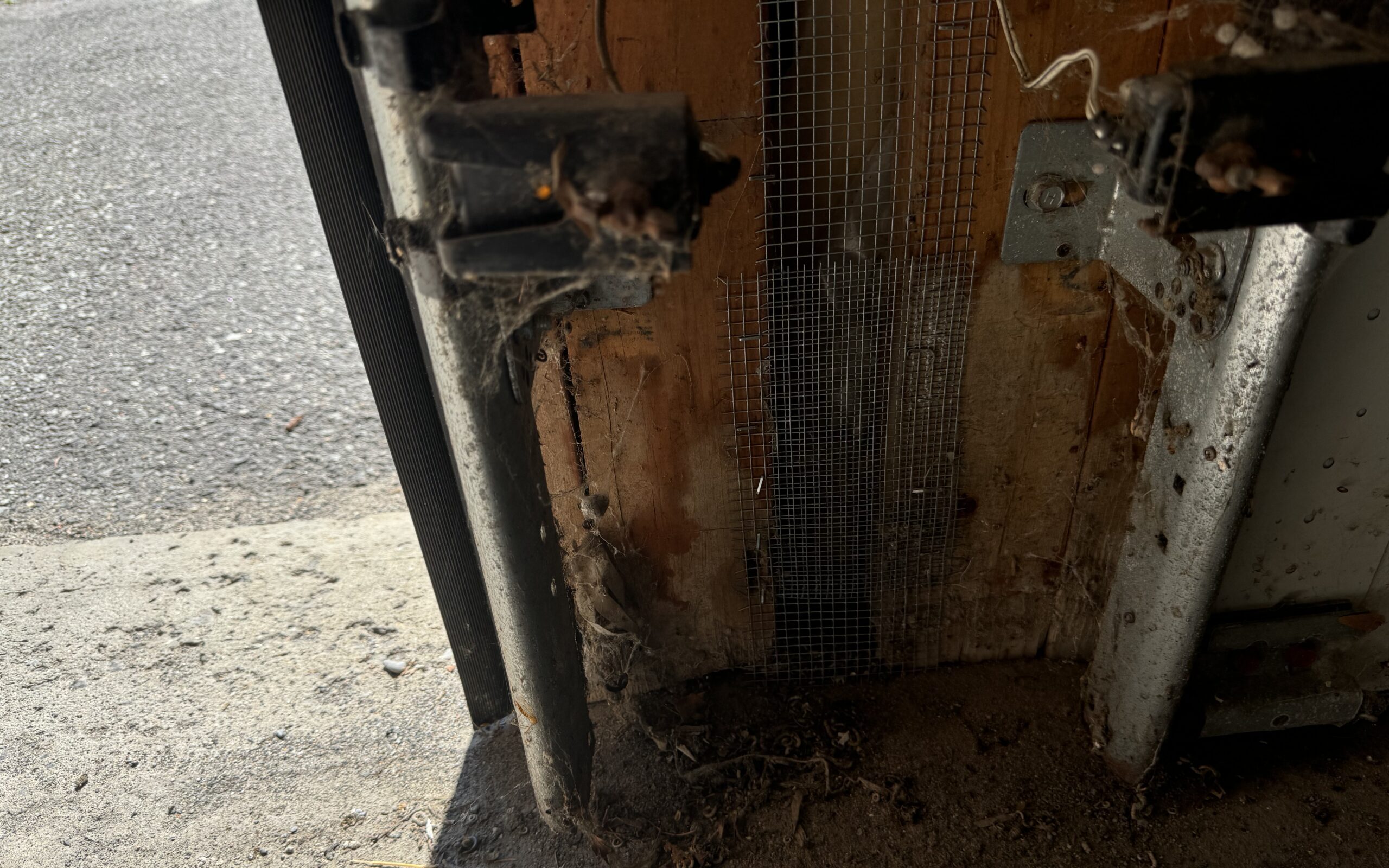
You may think of your attached garage as a separate space, but it can give mice a direct route into your Oakville home. Gaps beneath the overhead door, openings around utility lines, and spaces inside shared walls may connect the garage to living areas. Once these animals enter, they can move into ceilings, basements, kitchens, or attics without being seen.
Garages also provide shelter, food, water, and nesting material. Stored birdseed, pet food, cardboard boxes, paper, and seasonal belongings can support activity for months. A quiet corner behind storage may allow a nest to grow close to the rest of your home.
Homeowners should not touch droppings, move a suspected nest, place poison, or seal an opening. At Skedaddle Humane Wildlife Control in Oakville, we inspect the garage and every connected area, find hidden travel routes, remove mice humanely, and secure their entry points. In this blog, we explain how garage-door gaps, shared walls, food, and clutter can turn an attached garage into a pathway indoors.
Is It Normal to Get Mice in Your Garage?
Mice commonly enter garages, but their presence should not be treated as a harmless or normal part of owning a home. A garage often has more exterior openings than the main living area. The overhead door, side door, vents, foundation, roofline, and utility connections can all provide access.
An attached garage creates more concern than a separate building because it shares walls, ceilings, and service lines with your home. Once inside the garage, these animals may follow pipes, wires, ducts, or wall cavities. They do not always need to pass through the interior door.
Even one sighting can point to hidden activity. Others may remain behind storage, inside insulation, or within a shared wall. Skedaddle inspects the full area before creating a removal, sanitation, and exclusion plan.
Garage-Door Gaps Can Provide the First Opening

The overhead door is one of the largest moving parts of your home. It must open easily while still meeting the floor and frame closely when shut. Small spaces can form without being clear from inside the garage.
- Worn Bottom Seals: Rubber seals can crack, shrink, split, or pull away with age. A narrow opening beneath one corner may provide enough room for entry. Our team checks the complete seal and the floor below it for signs of use.
- Uneven Thresholds: Settling concrete or an uneven floor can leave space beneath a closed door. You may see light under one section even though the door appears fully shut. We inspect the gap and nearby surfaces for tracks, droppings, or rub marks.
- Side and Upper Edges: Weather stripping along the frame may become loose or damaged. A small opening beside a track can be hard to see from the centre of the garage. Our inspection covers every side of the door and its surrounding frame.
- Damaged Corners: Gaps often appear where the bottom seal meets the vertical frame. Leaves and other debris may collect there and hide the opening. We determine whether the corner is active before recommending durable protection.
Cold weather can make these problems worse. Rubber may become stiff, and changing temperatures can affect the fit between the door and floor. A professional inspection can separate ordinary wear from an active entry route.
Shared Walls and Utilities Create Routes Into the Home
An attached garage shares part of its structure with your living space. Entry through the overhead door may therefore be only the first stage of the problem. Hidden wall cavities and service connections can lead farther indoors.
- Shared Wall Cavities: The wall between the garage and home contains spaces around framing and insulation. Mice can travel through these voids without crossing an open room. Scratching inside a wall may be the first sign you notice.
- Pipe and Wire Openings: Electrical cables, plumbing lines, heating equipment, and other services may pass through the shared wall. Small gaps can remain around these connections. Our technicians inspect where each line enters and where it continues.
- The Interior Garage Door: Space beneath or around the door leading into the home may offer another route. A damaged frame or worn sweep can leave a hidden opening. However, activity can also continue through the wall without using the doorway.
- Ceiling and Attic Connections: Some garages share ceiling or roof spaces with the main building. These animals may climb inside a wall and reach an attic or upper floor. We trace the complete path instead of checking only the garage floor.
A mouse seen in the kitchen may have entered through the garage days earlier. The route can cross several hidden spaces before reaching food indoors. Closing only the nearest visible gap will not address that larger pathway.
Stored Food Can Support Regular Activity
Garages often contain food that was never meant for mice. Strong smells can lead them toward stored supplies after they enter. Once they find a steady meal, the garage may become a regular feeding and nesting area.
- Birdseed: Bags of seed release food smells even when they appear closed. Paper and thin plastic packaging can be chewed, while spilled seeds may collect beneath shelves. A small amount left behind can support repeat visits.
- Pet Food: Large bags are often kept in garages because they take up space indoors. One damaged corner may provide food over a long period. Chewed packages or scattered pieces can point to hidden activity nearby.
- Grass Seed and Garden Supplies: Some lawn and garden products contain seeds or other materials that attract attention. Package damage may be mistaken for wear caused by storage. Our team looks for chewing patterns, waste, tracks, and nesting evidence.
- Food Waste and Recycling: Bottles, cans, barbecue supplies, and garbage may hold small amounts of residue. Even limited food smells can encourage continued feeding. We assess how these sources relate to travel routes and nesting areas.
Homeowners should not search through packages surrounded by droppings. Movement can disturb contaminated material or bring you close to a hidden nest. Skedaddle examines these areas with the right training and protective equipment.
Clutter Can Hide Nests and Provide Material
A busy garage contains many quiet spaces that receive little attention. Items may remain untouched for weeks or months, giving mice room to hide. Storage also makes early signs harder to notice.
- Cardboard Boxes: Boxes provide cover and material that can be shredded for a nest. Activity may occur inside or behind a container that is rarely moved. You should not search through boxes near droppings or damaged packages.
- Seasonal Decorations: Holiday items, camping supplies, and winter clothing may stay in storage for much of the year. Fabric, paper, and soft packing material can become part of a nest. Our team checks these spaces without asking you to handle affected belongings.
- Sports and Outdoor Equipment: Bags, furniture covers, helmets, and padded equipment create protected hiding places. Mice may nest behind stacked items or inside soft materials. Chewing and staining may appear before one is seen.
- Floor-Level Storage: Objects placed against walls create covered paths through the garage. These routes can connect food, water, shelter, and openings in the building. We follow that evidence to find where the animals entered and where they are travelling.
A nest does not need to sit beside the food source. These animals may feed in one corner and return to a shared wall or ceiling space. This is why the whole garage must be inspected.
Warning Signs Inside the Garage
Droppings are among the most common warning signs. They may appear along walls, beneath shelves, around food packages, or near utility connections. Homeowners should not touch, sweep, or vacuum the material because disturbing dry waste can create health concerns.
Other clues include scratching, gnawing, shredded paper, damaged insulation, dark rub marks, tracks, and musty odours. A nest may remain hidden behind stored belongings or inside a wall. The area where signs appear may not be the main nesting location.
A daytime sighting can also point to regular activity. One mouse moving through an open space does not reveal how many others remain hidden. Skedaddle compares every sign to determine the likely size and location of the problem.
Why One Garage Sighting May Mean More Are Inside
Mice usually stay close to walls, storage, and other cover. Seeing one cross an open part of the garage may mean that others remain out of sight. Their rapid breeding can allow a small nest to become a larger concern before activity is easy to notice.
The visible visitor may also use several parts of the building. It could feed in the garage, nest inside a wall, and travel into the kitchen through another opening. Removing one individual would not close any of those routes.
A complete response must address the group, nesting sites, contamination, and entry points. Poison does not repair the building and may leave a dead mouse inside an inaccessible wall. Our professional plan deals with the source instead of only the latest sighting.
How Professional Inspection Finds Hidden Routes
Our team examines the exterior walls, overhead door, side door, foundation, vents, siding, roofline, and utility connections. We also inspect the garage and accessible areas connected to it. You will not need to move contaminated belongings or search behind walls.
Droppings, tracks, gnawing, rub marks, food damage, nesting material, sounds, and odours help reveal movement. The strongest signs may sit far from the original exterior opening. Following the full path helps us locate the source.
Our findings show how large the problem is and which areas require sanitation or restoration. They also guide humane removal and exclusion. Similar openings around the garage are included so another route is not left available.
Attached Garages in Newer Oakville Subdivisions
Newer Oakville homes commonly include attached garages, layered rooflines, and several utility connections. These buildings may still contain small gaps around doors, foundations, vents, siding, and service lines. A new home is not automatically mouse-proof.
Concrete can settle, and weather seals can shift or wear. Oakville’s rain, snow, ice, and freeze-and-thaw cycles may also change how closely the overhead door meets the floor. Fall and winter can bring more pressure as mice search for warm, steady shelter.
Oakville’s ravines, creeks, mature neighbourhoods, developing areas, and green spaces support activity close to residential properties. At Skedaddle Humane Wildlife Control in Oakville, we consider the building’s age, design, surroundings, and season. These details help us create a plan for the specific home.
Mice Removal and Prevention with Skedaddle
Our professional wildlife team begins with a detailed inspection of the garage and connected home. We find exterior openings, nesting areas, indoor travel paths, food damage, and contamination. This allows us to build one plan for the complete problem.
We then remove the mice humanely and confirm that hidden spaces have been cleared. One-way doors that allow wildlife to leave but prevent re-entry may be used when suitable for the species and structure. We do not depend on poison as a complete solution.
After removal, our team handles contaminated material, professional sanitation, and damaged areas. We secure garage-door gaps, vents, foundation joints, utility connections, and other weak points. Homeowners are not asked to touch droppings, move nests, enter confined spaces, or complete exclusion work.
Frequently Asked Questions
How do mice get under a closed garage door?
Worn seals, uneven concrete, damaged corners, and loose weather stripping can leave small gaps. The door may look closed while an opening remains along one edge. A professional can inspect the full frame and identify the active route.
Can mice move from a garage into the house?
Yes, attached garages may connect to the home through shared walls, ceilings, utility lines, and the interior doorway. Mice can move through hidden cavities without crossing an open room. A whole-home inspection determines how far the activity extends.
Do mice nest in cardboard boxes?
Cardboard boxes provide shelter and material that can be shredded for nesting. Items left untouched for long periods may allow activity to remain hidden. Homeowners should not open or move boxes surrounded by droppings or other signs.
Does birdseed attract mice to a garage?
Yes, stored or spilled seed can provide a dependable food source. Paper and thin plastic bags may be easy to chew. Our team can determine whether the food is connected to nesting elsewhere in the garage or house.
Should mouse droppings in a garage be vacuumed?
No, homeowners should not vacuum or sweep mouse droppings. Disturbing dry waste may release contaminated particles into the air. Skedaddle assesses the affected space and completes professional sanitation when needed.
Who should inspect mice in an Oakville garage?
Our trained wildlife-control professionals should inspect the garage exterior, interior, shared walls, utilities, and connected home. Skedaddle can locate entry points, nests, travel routes, and contamination. You will not need to handle waste or search hidden spaces.
Close the Route Between the Garage and Home
Your attached garage may offer mice much more than a place to hide. Gaps around the overhead door can provide exterior access, while shared walls, ceilings, and utility lines may lead directly toward the living space. Stored birdseed, pet food, cardboard, fabric, and clutter can then support feeding and nesting.
Droppings, scratching, chewed packages, shredded material, tracks, and unusual odours should receive professional attention. One visible mouse may be only part of a larger problem hidden behind storage or inside a wall. Homeowners should not touch waste, search through contaminated items, place poison, or seal possible entrances.
At Skedaddle Humane Wildlife Control in Oakville, we inspect the complete garage and every connected area. Our team handles humane removal, professional cleanup, restoration, and durable prevention. We find the original exterior gaps and the hidden routes leading farther into the home.
Contact us to request an estimate and learn more about stopping your attached garage from becoming an open pathway into your Oakville home.

 Loading...








