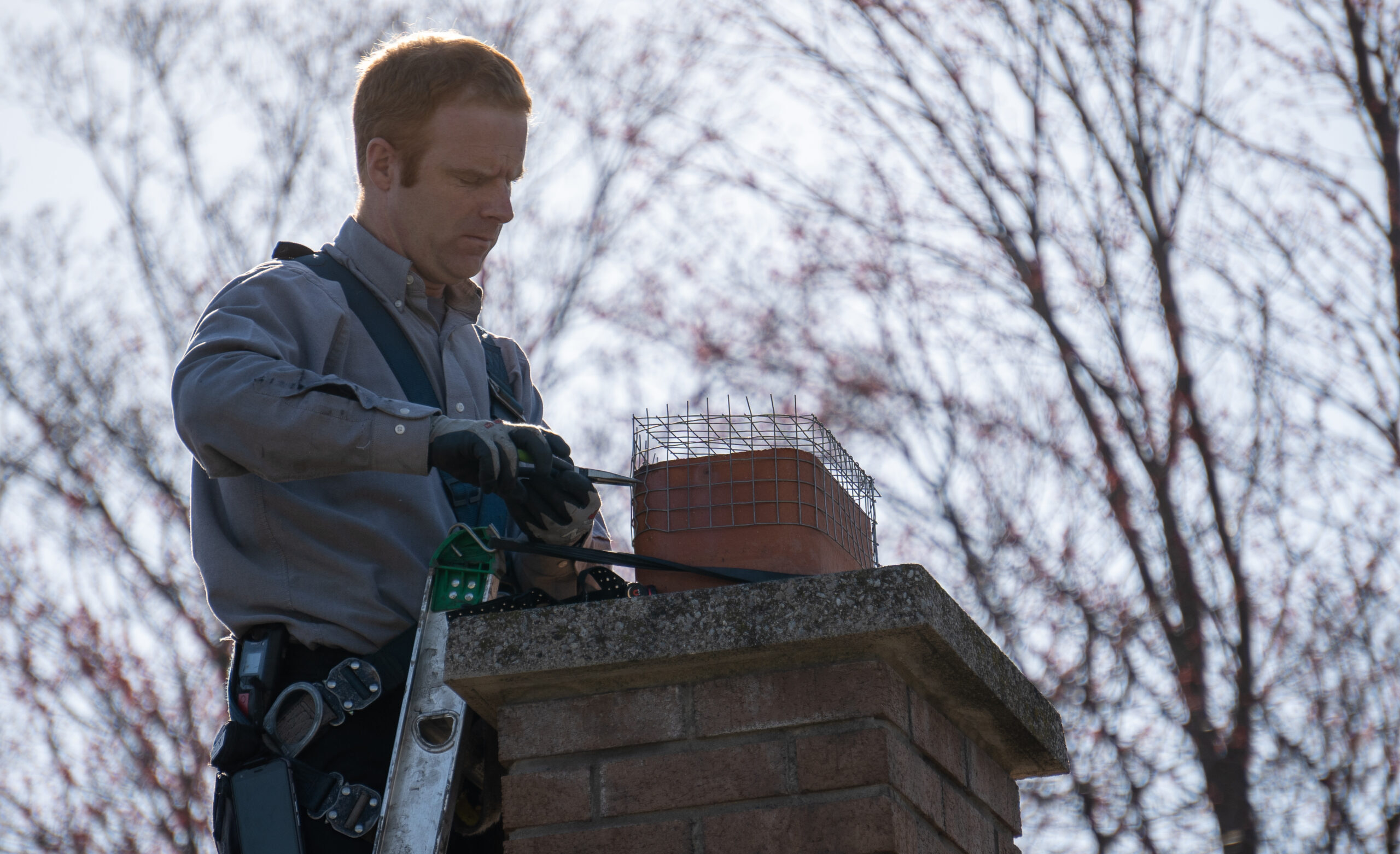
Your chimney may not be ready for fall if it has a missing cap, broken screen, masonry gap, or damaged section of flashing. Raccoons, squirrels, bats, and birds can use these openings to enter the structure. Once inside, the dark and covered space can provide shelter from wind, rain, and falling temperatures.
You may hear scratching, thumping, chirping, or fluttering near the fireplace as the weather cools. Odors, nesting material, falling debris, or repeat activity around the chimney may also point to an occupant. These signs should be checked before you use the fireplace.
At Skedaddle Humane Wildlife Control in Pittsburgh, we inspect the complete chimney and the surrounding roofline to determine what is happening. You should not light a fire, open the damper, climb onto the roof, reach into the fireplace, or touch droppings and nesting material. In this blog, we explain how wildlife can use chimneys for shelter, which signs you may notice, and why professional inspection should happen before the fireplace is used.
How Do I Tell What Animal Is in My Chimney?
Sounds, activity times, and movement patterns may provide clues about what is inside your chimney. Heavy thumping or growling may point to a raccoon, while quick scratching during the day may suggest a squirrel. Chirping and fluttering may come from birds, while light squeaking or movement around dusk may suggest bats.
These clues cannot provide a safe or certain answer. Brick, metal, and open flues can carry sound through the structure. The loudest noise may come from a different part of the chimney than the occupied area.
You should not open the damper or look inside the flue yourself. Our professional team can inspect the chimney, roofline, fireplace area, and nearby attic. We also check for nests and dependent young before planning removal.
Why Chimneys Provide Useful Fall Shelter
A chimney can resemble the hollow trees that several species use outdoors. It is tall, dark, enclosed, and protected from much of the wind and rain. These features become more useful as fall temperatures begin to drop.
Warm air rising from your home may also draw attention to the structure. Even an unused chimney can provide a dry space above the damper. An opening at the top may allow an occupant to enter without passing through a busy part of the house.
Missing caps, torn screens, masonry gaps, and loose flashing can all provide access. An occupant may remain near the top or move deeper into the flue. The chimney should not be covered or sealed until a professional confirms that every section is empty.
Animals That May Use a Chimney for Shelter
Several species may use chimneys, but they do not all behave in the same way. Some are searching for a den, while others need a resting or nesting place. The species and its location must be confirmed before removal begins.
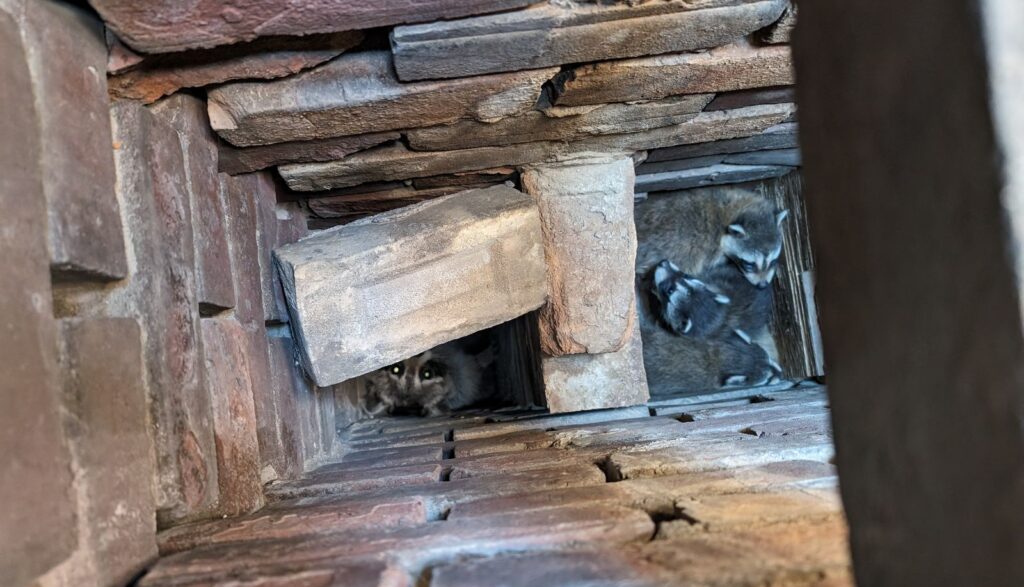
- Raccoons: Raccoons are strong climbers that can reach the roof and enter an open chimney. A female may use the protected flue as a den or a place to raise young. You may hear heavy movement, growling, chattering, or cries from dependent young. Our technicians must inspect the full space before choosing a removal method.
- Squirrels: Squirrels may treat a chimney like a hollow tree. They can carry leaves, twigs, and grass into the flue to create a nest. You may hear quick scratching or movement during the day. A squirrel can also become trapped below the nest if it moves too far down.
- Bats: Bats may rest near the chimney top or inside narrow gaps around the structure. Their light movements and high sounds can be difficult to hear from below. You may notice activity near the chimney around dusk. Seasonal timing and the possible presence of young must be considered before removal.
- Birds: Birds may enter an open flue while searching for shelter or a nesting ledge. Smooth chimney walls can prevent some birds from climbing or flying back out. You may hear chirping, wingbeats, or fluttering near the fireplace. A nest may also block part of the flue.
The sounds alone may not identify the occupant. Young raccoons can chirp, while a trapped bird may create loud bumps against the flue. A professional inspection provides a clearer answer.
Different Parts of the Chimney Can Hide Activity
A chimney includes much more than the opening you can see from the yard. An occupant may stay near the top, move deeper into the flue, or enter a space beside the masonry. Our inspection follows the structure from the chimney cap to the fireplace.
- Chimney Cap and Screen: A missing, bent, or loose chimney cap can leave the flue exposed. A broken screen may create enough room for entry even when the cap remains in place. Bats may also shelter beneath small spaces around the cap. Damage along the rear edge may not be visible from the ground.
- Upper Flue: The upper flue provides height and distance from activity inside your home. Bats or birds may remain close to the top, while squirrels may place nesting material farther down. Sounds can echo through the open space. A noise near the fireplace does not mean the occupant has reached the bottom.
- Smoke Shelf and Damper: Raccoons, squirrels, or trapped birds may reach the lower parts of the chimney. A closed damper may keep them out of the room, but it does not make the situation safe. Waste and nesting material can collect on the surface above it. You should never open the damper to investigate.
- Masonry and Flashing Gaps: Cracks around brick, mortar, flashing, or the chimney’s roof connection may lead into the attic. Movement beside the chimney can sound as if it comes from inside the flue. The occupant may be hidden between structural materials. Both the chimney and surrounding roofline require inspection.
One visible gap may not be the only concern. The top, sides, roof connection, and interior flue can contain separate openings. Sealing the first gap found could leave occupants trapped elsewhere in the structure.
Signs of Chimney Activity as Temperatures Cool
Chimney activity may begin with a sound or smell that seems minor. These signs can become easier to notice when your home is quiet. You should observe them without opening the fireplace or disturbing the affected area.
- Scratching and Scampering: Claws moving against brick, metal, or a flue liner can create sharp sounds. Fast daytime movement may suggest that a squirrel is present. Slower scratching could come from another occupant changing position. Sound alone cannot confirm the species or exact location.
- Heavy Thumping or Movement: A larger occupant may create bumps or slow movement inside the flue. Raccoons may also growl, chatter, or move nesting material. The noise may seem louder near the damper because the flue carries sound downward. Keep the fireplace closed and call our team.
- Chirping and Fluttering: Birds may chirp or beat their wings against the chimney walls. Young raccoons can also make high-pitched calls that sound like birds. The sounds may become more frequent when an adult returns. Our technicians can determine what is making the noise.
- Odors and Falling Debris: Droppings, urine, nesting material, or a trapped occupant can create a strong smell. Leaves, grass, twigs, soot, and small pieces of debris may fall into the fireplace. You should not touch, sweep, or vacuum this material. Professional cleanup may be needed after removal.
- Roof and Chimney Sightings: You may see an animal repeatedly visiting the cap, flashing, or chimney top. One roof sighting does not prove that it entered the structure. Several visits to the same opening provide a stronger warning. You should watch from the ground without approaching the roof.
Some signs may appear in another part of the home. Odors can move through vents, while sounds may travel into the attic or nearby walls. A full inspection helps our team trace the activity to its true source.
Why the Fireplace Should Remain Unused
You should not light a fire when chimney activity is suspected. Heat and smoke can injure occupants or force them farther into the structure. Dry leaves, grass, and twigs inside the flue may also create a fire risk.
Nesting material and waste can restrict airflow. A partial blockage may cause smoke or dangerous gases to move back into the room. The chimney may look open from below even when material is blocking it higher up.
Opening the damper is not a safe way to check the space. A bird, squirrel, bat, or raccoon may fall or move into the living area. Remember, though, professional inspection, removal, and cleaning must happen before the fireplace is used again.
Pittsburgh Chimneys Face Seasonal Risks
Pittsburgh’s fall weather can bring cold nights, rain, wind, and falling leaves. These changes make warm, covered spaces more useful to animals seeking shelter. Storms may also damage caps, screens, flashing, and aging masonry.
The city contains many older brick homes, rowhouses, steep roofs, mature trees, and chimney-heavy buildings. Animals may travel from trees, nearby roofs, utility lines, or connected structures to reach a chimney. Closely spaced properties can make the full route hard to see.
At Skedaddle, our Pittsburgh team inspects the chimney as part of the larger roof and attic system. Activity may be inside the flue, behind the masonry, or within the adjoining roof space. We follow the evidence instead of assuming that the first visible opening is the only one.
Chimney Wildlife Fall Prevention with Skedaddle
Our professional wildlife team inspects the chimney cap, screen, masonry, flashing, roof connection, flue, damper area, attic, and fireplace. We use sounds, damage, nesting material, waste, and exterior activity to identify the species and its location. This complete inspection also helps us find openings beside the chimney that may lead elsewhere.
We check for dependent young before choosing a humane removal plan. When appropriate, our one-way doors allow wildlife to leave while preventing them from getting back inside. We do not use live trapping or relocation.
Prevention begins only after the chimney and nearby spaces are empty. Our technicians remove affected material when needed and secure vulnerable openings with durable materials. You do not need to climb onto the roof, open the damper, reach into the fireplace, or handle droppings and nesting material.
Frequently Asked Questions
Can an animal enter the house through the chimney?
Yes, an occupant may reach the room if it moves below an open or damaged damper. It may also enter the attic through a gap beside the chimney. You should keep the fireplace closed and avoid trying to release it yourself. Our technicians can determine its location and remove it safely.
Should I open the damper to see what is inside?
No, you should not open the damper when activity is suspected. An occupant, droppings, nesting material, or soot could fall into the room. Opening it may also give the occupant a path into your living space. Our team will inspect the chimney from safe access points.
Can I use the fireplace if I only hear occasional sounds?
No, the fireplace should remain unused until the chimney has been inspected. Occasional sounds may still point to nesting, roosting, or a trapped occupant. Material inside the flue may also restrict smoke and gases. Quiet periods do not prove that the chimney is empty.
Does a chimney cap prevent every entry problem?
A secure professional cap can reduce access through the top of the flue. However, gaps may remain around the masonry, flashing, roof connection, or nearby vents. A damaged cap may also look secure from the ground. The chimney must be confirmed empty before a new cap or screen is installed.
Can animals become trapped inside a chimney?
Yes, smooth walls, narrow spaces, nesting material, and a closed damper can prevent escape. A trapped occupant may become tired or fall lower into the flue. It should not be pulled out or released into the room. Professional help protects both the occupant and your household.
Make Sure Your Chimney Is Clear Before Fall Use
Raccoons, squirrels, bats, and birds may use chimneys because these structures provide height, darkness, warmth, and protection. An open flue can resemble a hollow tree, especially as cold and wet fall weather arrives. Missing caps, torn screens, loose flashing, and masonry gaps can make access even easier.
You may notice scratching, thumping, chirping, fluttering, odors, falling debris, or repeat activity around the chimney. These signs cannot safely confirm the species or show whether dependent young are present. You should not use the fireplace, open the damper, climb onto the roof, touch waste, or seal a suspected entrance.
At Skedaddle Humane Wildlife Control in Pittsburgh, we inspect the full chimney and surrounding structure before creating a humane removal plan. Our team identifies the occupants, handles affected material, and secures vulnerable areas after the space is empty. Contact us to schedule a professional chimney assessment or request an estimate to learn more about fall removal and prevention.

 Loading...