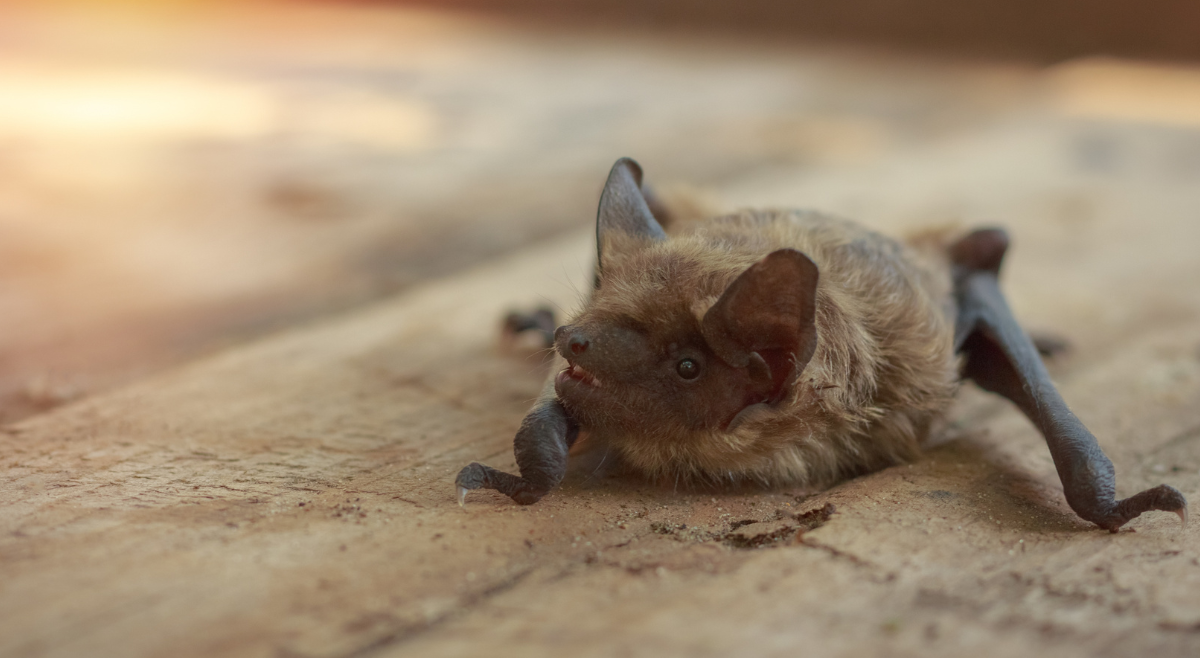
Finding a bat in your home can be unsettling. Whether you’ve discovered a bat in your living space, heard activity in the attic or walls, or noticed bats entering around the roofline, determining the full extent of the problem isn’t always straightforward.
Bat removal is rarely as simple as addressing the animal you can see or the opening you first notice. Bats can squeeze through remarkably small gaps, roost in difficult-to-access areas, and use several different points around a home. Their removal also comes with important health, safety, wildlife, and seasonal considerations.
Successfully resolving a bat problem means determining where bats are getting in, identifying other areas they could potentially use, understanding where they may be roosting, and excluding them without trapping animals inside.
That’s why professional assessment and humane exclusion are so important when bats are found in or around a home.
A Single Bat Can Be a Sign of a Larger Problem
There is an important difference between a bat that has accidentally entered a living space and bats that are roosting somewhere inside the structure of a home. However, it isn’t always easy for a homeowner to know which situation they’re dealing with.
Finding bats repeatedly, hearing activity in walls or an attic, noticing bat droppings, or seeing bats consistently entering and leaving the same area can indicate that bats are using the structure as a roost.
Even a single bat inside the living space deserves careful attention, particularly because of the potential for human or pet exposure.
If there is any possibility that someone had direct contact with a bat, take the situation seriously. Bat bites and scratches can be extremely difficult to see, and may be there without you knowing. Contact your local public health authority or healthcare provider for guidance if a possible exposure has occurred.
Why Common Bat Removal Methods Don’t Solve the Problem
There are plenty of supposed bat removal solutions online, including bright lights, ultrasonic devices, mothballs, sprays, strong smells, expanding foam, and attempts to close the opening where bats have been observed.
The problem is that getting bats to leave one area isn’t the same as keeping them out of the home.
Repellents and deterrents don’t address the openings bats are using to access the building. Even if something temporarily makes one part of an attic uncomfortable, bats may move deeper into the structure or use another area.
Closing an active opening without understanding the full extent of the problem can also make matters worse. A bat colony may be using multiple access points, and not every bat necessarily leaves the roost every night. Closing an active opening at the wrong time can potentially trap bats inside the structure, potentially killing the colony.
By not addressing the entry points, this also leaves room for the colony to return in the future, or another colony to take their place. In other words, even if the colony does leave, without addressing how they got inside, they could easily return.
The Entry Point You See May Not Be the Only One
One of the biggest challenges with bat removal is finding all of the places bats can use to enter a home.
Bats don’t need a large opening. Depending on the species and structure, they can access extremely small cracks and gaps around rooflines, soffits, fascia, vents, flashing, chimneys and other building components. Bats can use structural openings only a fraction of an inch wide, which means even the smallest crack on your property can help them get inside.
Spotting the main entry point might be easier, since the bats often leave behind a stained trail where they slide inside the building. However, finding the alternate entry points they use, or the other entry points they could potentially use, is almost impossible without the trained professional eye to help.
Seeing bats emerge from one obvious opening doesn’t necessarily mean that is their only way into the home. The visible opening may only be one part of the problem.
A trained wildlife technician knows what signs to look for around the entire exterior of the building. That includes active entry points as well as vulnerable areas bats could potentially use after their current access is closed.
This comprehensive inspection is an important part of professional exclusion. Addressing the current entry point without identifying other vulnerable areas can leave opportunities for bats to regain access to the structure. Removing bats permanently means removing all of the potential ways they can get inside of a home.
Bat Removal Isn’t the Same for Every Bat Situation
The appropriate removal strategy can depend on what’s happening inside the roost.
A single bat using part of a structure is very different from an established colony. A maternity colony, where female bats are raising young, introduces additional concerns because young bats may not yet be capable of flying out of the home on their own.
That’s why timing matters.
Excluding adult bats while young are still dependent on them can separate mothers from their pups and leave young bats trapped inside the structure. Wildlife laws and recommended exclusion periods can also vary depending on where you live, but are strict on how and when bats can be removed. The best way to avoid harming the colony and getting into legal trouble is to let the professionals handle it.
A professional wildlife technician can assess the activity, account for seasonal and regulatory considerations, and determine an appropriate humane removal strategy for the specific situation.
Health Concerns Make Professional Bat Removal Important
Bats can carry rabies, which makes avoiding direct contact especially important.
Rabies in humans is rare, but the consequences of an exposure are extremely serious. The Public Health Agency of Canada identifies bats as one of the country’s main wildlife reservoirs for rabies and notes that direct contact with a bat can present a risk even when there isn’t an obvious bite or scratch.
For this reason, it is best to leave the removal to the professionals, who understand bat behaviour and have the tools to handle these animals safely.
If you believe you or someone in your household has had direct contact with a bat, contact your healthcare provider or local public health authority promptly for an exposure assessment. Rabies is almost always fatal after symptoms develop, but appropriate post-exposure treatment can prevent the disease when administered in time.
Bat colonies can also leave behind accumulated droppings and contaminated material, making proper assessment and cleanup another important consideration. Properly disposing of bat guano is not an easy task; it must probably be sealed to be removed without tracing any more bacteria into other areas of the home. PPE is a necessary tool when removing bat guano to protect yourself from the bacteria. Disturbing bat guano can create airborne dust, and contaminated material can contain microscopic Histoplasma fungal spores that can be inhaled. Histoplasmosis is primarily acquired by breathing those spores into the lungs.
Aside from how difficult it is to truly get every bat entry point on a home without professional help, the health concerns alone are reason to never attempt a DIY bat removal. Wildlife technicians have all of the proper protective equipment and methods of disposal to deal with the mess from bat colonies.
There Can Be Legal Consequences to Removing Bats Incorrectly
Bats play an important ecological role, and wildlife laws may protect bats or restrict how and when they can be removed. Improper removal can potentially harm bats or conflict with local wildlife regulations.
The rules aren’t identical everywhere, which makes it important for removal strategies to account for the requirements that apply in a particular region.
Professional wildlife removal companies should understand the regulations and seasonal considerations in the communities they serve and use removal techniques designed to get bats out without unnecessarily harming them.
What Professional Bat Removal Does Differently
Professional bat removal starts with an inspection, not an assumption.
At Skedaddle, our technicians assess the home to determine where bats are entering, where they’re roosting, and what other vulnerable areas could allow them back inside.
From there, we develop a removal and exclusion plan for the property.
The goal isn’t simply to get bats out. It’s to allow them to leave safely and then prevent them from getting back into the structure.
Proper bat exclusion requires careful attention to the entire building envelope. Small gaps that seem insignificant can be exactly what a bat needs to regain access.
This comprehensive approach addresses the entire problem: How did the bats get inside, and what needs to be done to prevent them from coming back?
Signs It’s Time to Call a Professional
Bat activity isn’t always obvious, but certain signs can indicate that bats may be using your home as a roost.
These can include:
- Bat or multiple bats appearing inside the home
- Repeated bat sightings around the property
- Bats entering or exiting around the roofline
- Scratching, squeaking or other activity in walls or the attic
- Bat droppings around the home
- Staining around potential entry points
- Activity around soffits, fascia, vents, flashing or chimneys
Professional inspection can help determine whether bats are roosting in the structure, identify how they are getting inside, and establish an appropriate humane exclusion strategy.
The Goal Isn’t Just to Remove Bats. It’s to Keep Them Out.
When bats are found in or around a home, resolving the immediate activity is only part of the solution.
Professional wildlife removal looks at the entire problem: how bats are getting inside, where they’re living, how to remove them humanely, and how to prevent the same problem from happening again.
If you’ve discovered bats in your attic, walls, living space or roofline, Skedaddle Humane Wildlife Control can inspect your home, identify potential entry points and develop a humane exclusion plan designed for your property.
Because when bats have made your house their home, getting them out is only half the job. Keeping them out is what solves the problem.

 Loading...







