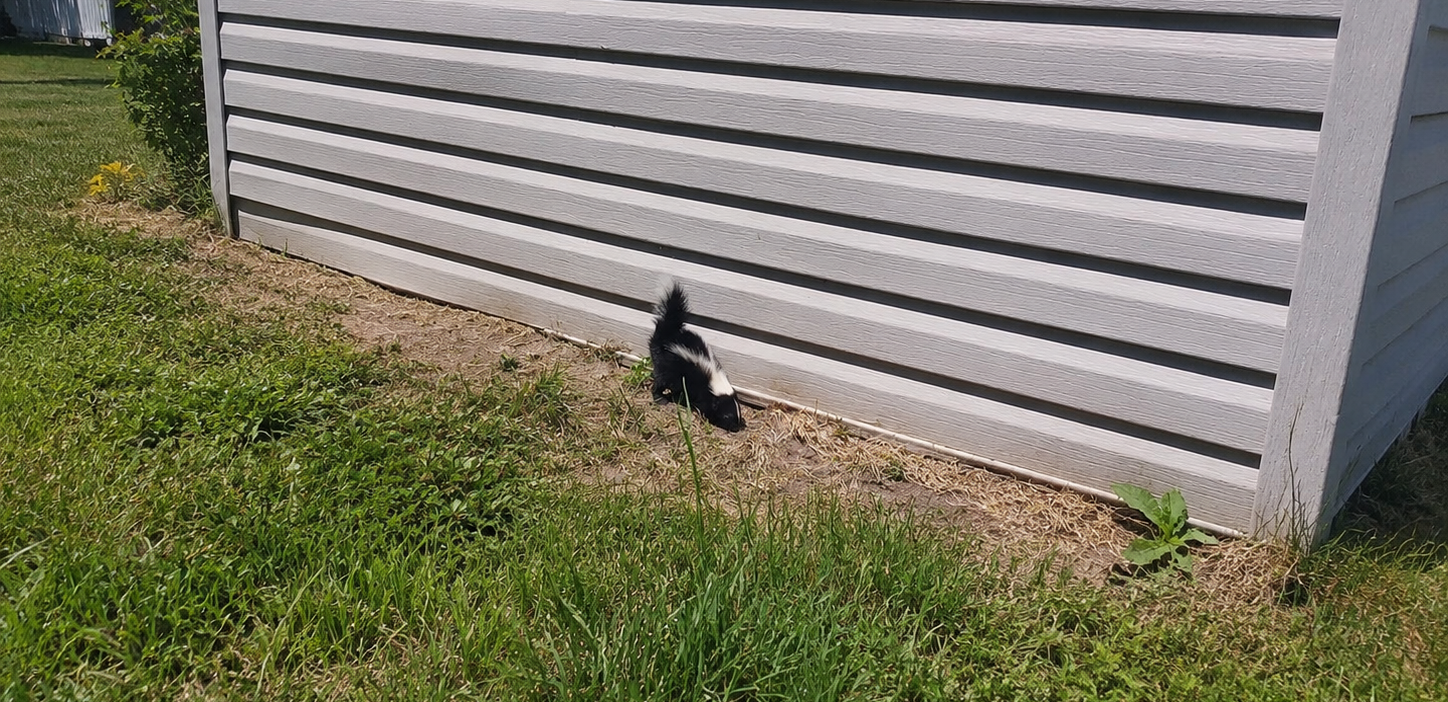
You stepped outside this morning and stopped dead in your tracks. That smell. Sharp, thick, and unmistakable. Your backyard has a new problem, and it didn’t knock before moving in.
When skunks take over your backyard, the smart move is to call a professional wildlife team right away. At Skedaddle Humane Wildlife Control in Anoka County, our technicians inspect your property, safely remove the wildlife, clean up the mess, and put lasting barriers in place so they can’t come back. You don’t have to touch a thing.
In this blog, we’ll walk you through exactly what our team does when skunks move into your yard. From the first inspection to the final prevention step, here’s how Skedaddle Humane Wildlife Control handles a smelly situation, so you don’t have to.
Do Skunks Travel in Packs?
No, skunks do not travel in packs. They are solitary by nature and prefer to live and forage on their own. That said, you might spot more than one in your yard during certain times of year and there is a good reason for that.
During the spring and early summer, a mother will be traveling with her young, called kits. A litter can include anywhere from four to seven kits, so what looks like a group is usually just one family unit. The mother stays close to the kits until they are old enough to find their own territory.
This is important to know because baby removal requires a careful, hands-on approach. If our technicians find kits during an inspection, they handle removal in a way that keeps the family together and avoids any risk of the mother spraying out of fear or distress.
Step 1: Assess and Locate
The first thing our team does is come out and take a careful look at your property. You might know that something is living under your deck or shed, but finding the exact entry point takes a trained eye. Our technicians know where these wildlife tend to hide, and they check every likely spot before doing anything else.
Here is what our inspection covers:
- Identify Entry Points: Our technicians walk the full perimeter of your home, looking for dig marks, disturbed soil, and gaps at the base of structures. These are signs that something has been burrowing underneath. Catching every entry point during this step means nothing gets missed later.
- Check Under Structures: Decks, sheds, porches, and concrete steps are common den sites. Our team inspects underneath and around each one. Because these spaces are dark and sheltered, they make ideal homes, especially for a mother looking for a safe place to raise kits.
- Look for Signs of Activity: Scratch marks, droppings, and cone-shaped holes in your lawn are all clues our technicians look for. These signs tell us how active the wildlife is and how long it may have been living on your property. That information helps us plan the right removal approach.
Step 2: Hands-On Baby Removal
If our inspection turns up kits, we handle that first and we handle it carefully. Baby wildlife cannot be left behind when we remove a mother, and they cannot safely find their own way out. Our trained technicians manually remove the kits from the den by hand and place them into a heated baby box near the original entry point.
The mother will detect her young nearby and come back to collect them, moving the family to an alternate den on her own. This keeps the process calm, keeps the family intact, and removes the risk of a startled spray. It is a step that requires professional training, which is exactly why you should not attempt it on your own.
Once the kits and their mother have moved on, our team is ready to move to the next step. Timing matters here, and our technicians know how long to wait before proceeding to make sure the whole family has cleared out safely.
Step 3: Installing One-Way Doors
For adult skunks, our technicians avoid any method that causes stress or injury. Instead, we install custom one-way doors directly over the entry points we found during the inspection. These doors allow the wildlife to exit the burrow when it leaves to look for food, but they cannot push their way back inside.
Here is why our one-way door method works so well:
- No Stress, No Spray: Trapping a frightened skunk is a recipe for disaster. Our one-way door system lets the skunks leave on its own terms, without feeling cornered or threatened. A calm exit means a much lower chance of anyone getting sprayed in the process.
- Humane and Effective: Our approach is designed to be non-lethal from start to finish. The one-way door guides the skunks out without harm, while making it impossible to return the same way. That is the core of what we do at Skedaddle: remove skunks safely and keep them out for good.
- Covers Every Entry Point: Our technicians install doors on every opening they find during the inspection, not just the most obvious one. If we only cover one hole, the skunks may find another way back in. Covering all entry points is what makes the removal complete.
Step 4: Clear and Clean
Once the skunks has left, the work is not done. A vacated den still contains nesting materials, droppings, and bacteria that can attract other skunks to your yard. Odors left behind can signal that the space is habitable, which is the last thing you want. Our crew takes care of the full cleanup so you do not have to go near it.
Our technicians remove all soiled nesting materials from the den area and apply professional-grade disinfectants and deodorizers. These products are much stronger than anything available at a hardware store, and they are designed to eliminate the bacterial residue that lingers long after the skunks are gone.
Do not attempt to clean a vacated den yourself. The droppings left behind can carry harmful bacteria, and the lingering odor can be deceptively strong even if you think it has faded. Let our team handle it from start to finish. Your job is to stay clear and let us do ours.
Step 5: Prevent and Protect
Removing the skunks is only half the job. Without the right barriers in place, the same space can be claimed by new wildlife within days. Our prevention step is what makes our work last. We install physical barriers that stop future burrowing before it starts.
Here is what our prevention process includes:
- Underground Steel Mesh Barriers: Our technicians dig a trench around the base of the structure (typically about 10 to 12 inches deep) and bury heavy-gauge, L-shaped galvanized steel mesh. This creates a physical underground barrier that skunks cannot dig through or claw apart. It is built to last and backed by a warranty on the materials.
- Full Perimeter Coverage: We do not just protect one side of a deck or shed. Our team installs the barrier along the full perimeter so there is no weak spot for determined skunks to find. A partial barrier leaves room for a partial re-entry, and that is not good enough.
- Warranty-Backed Protection: Our preventative materials come with a warranty, so you are not just paying for a one-time fix. If wildlife manages to get past our work, we come back and make it right. That is the Skedaddle standard, and it is what separates our service from a quick patch job.
Skunk Removal and Prevention with Our Professional Wildlife Team
When you call Skedaddle Humane Wildlife Control, you get a team that has seen this situation many times before. Our technicians are trained specifically for skunk removal in the Anoka County area, and they follow a proven process every single time. You do not have to figure any of this out on your own.
From the first inspection to the final barrier installation, we handle every part of the job. Our removal methods are humane, our cleanup is thorough, and our prevention work is built to hold up season after season. We use one-way doors to allow skunks to exit without stress, then seal the property so nothing can come back in the same way.
The best thing you can do if you suspect wildlife under your deck, shed, or porch is to call us as soon as possible. The longer they stay, the more burrowing and damage can occur and the greater the chance that kits will be born on your property, which adds another layer of complexity to removal. Early action makes the whole process smoother.
Why Anoka County Homeowners Deal With This Every Year
Anoka County is home to a mix of residential neighborhoods, parks, and open green spaces that make it ideal habitat for all kinds of wildlife. The region’s cold winters push skunks to find warm, sheltered spots under homes and outbuildings as early as late fall. By the time spring arrives, they may already be settled in.
Minnesota’s soil type also plays a role. Softer ground in many Anoka County yards makes it easier for skunks to dig and burrow quickly. A small gap under a deck is all it takes for one to move in overnight. Homes with large lawns, gardens, or natural landscaping tend to see more activity because these areas support a higher population of grubs, which are a primary food source.
Our team at Skedaddle Humane Wildlife Control knows the local landscape well. We understand when seasonal activity peaks, which neighborhoods tend to see the most calls, and how the typical home in Anoka County is built, which helps us find entry points faster and install prevention that holds up through all four seasons.
Frequently Asked Questions
What attracts skunks to a backyard?
Skunks are attracted to yards with easy access to food and shelter. Grubs in the lawn, unsecured garbage, pet food left outside, and open spaces under decks or sheds are all major draws. Removing these attractants can make your yard less inviting, but once they have moved in, our professional removal is the right call.
Are skunks dangerous to people or pets?
The biggest risk from skunks is their spray, which can cause temporary eye irritation and a powerful odor that is very hard to remove from skin, fur, and clothing. Skunks can also carry rabies, which makes any close contact risky. Keep pets away from areas where you suspect they are active, and call our team right away.
Can skunks cause damage to my property?
Yes. Their digging can cause serious damage to lawns and garden beds as they search for grubs. Over time, burrowing under a deck or shed can also undermine the structure. The sooner they are removed, the less damage you will need to deal with.
What time of year are skunks most active in Anoka County?
Skunks are most active in the spring and fall in Minnesota. Spring is when mothers are looking for a safe, warm place to raise their young. Fall is when they are building up food reserves before winter. These are the times of year when you are most likely to notice one taking up residence in your yard.
What should I do if I smell a skunk near my home?
If you can smell them but have not seen one, there is a good chance they are already living under a structure on your property. Do not go looking for them yourself. Call us at Skedaddle Humane Wildlife Control and let our technicians inspect the area and confirm what is going on. Acting quickly is always the better move.
Ready to Take Your Backyard Back? We’re Ready to Help
You do not have to live with the smell, the digging, or the worry. Skedaddle Humane Wildlife Control in Anoka County is ready to come out, assess your property, and take care of the problem from start to finish. Our team handles the removal, the cleanup, and the prevention, so you get your backyard back without lifting a finger.
A skunk problem does not get better on its own. The longer they stay, the more damage they can do to your lawn, your landscaping, and the structures on your property. Waiting also raises the chances that a mother will raise her young under your deck, which makes the situation more complicated to deal with. The sooner you call, the easier the whole process will be.
Our technicians know Anoka County, know the local wildlife, and know how to get the job done right the first time. We use humane methods, back our prevention work with a warranty, and make sure you are not left dealing with the aftermath. You deserve to enjoy your yard again without looking over your shoulder every time you step outside.
Request an estimate today and find out how we can help. One call to us at Skedaddle Humane Wildlife Control is all it takes to get started.

 Loading...