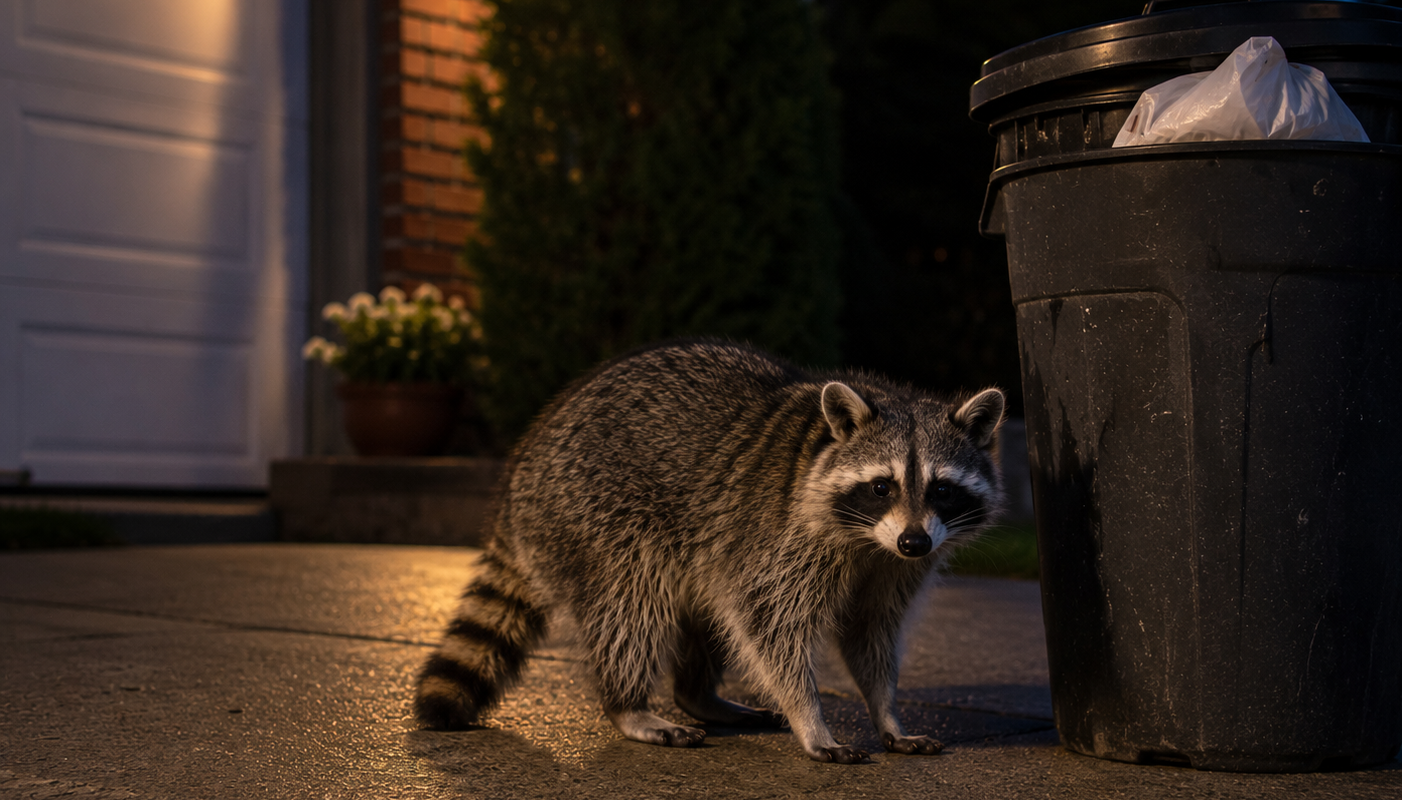
You might wonder why you only hear raccoons scratching in your attic after the sun goes down. These creatures, often known for their distinctive masks, are mostly active during the night. Why? It’s simple, they stay out of sight to avoid predators and go about their search for food under the cover of darkness. Their incredible night vision is one of the many unique traits that help them survive and thrive in nocturnal environments. During the day, they remain hidden, using the dark to their advantage for staying safe and out of harm’s way.
At Skedaddle Humane Wildlife Control, we specialize in understanding raccoons and their habits. Our team is here to explain why these masked bandits prefer the nighttime world and how you can keep them from causing trouble in your home. From their feeding preferences to their physical features, this guide will give you all the details you need. Rest assured, our team focuses on humane, effective solutions to protect your home and keep raccoons safe. You can count on us to handle the job with professionalism and care, providing you with peace of mind in every situation.
In this guide, we will explain exactly why these masked creatures prefer the dark and how Skedaddle Humane Wildlife Control in Anoka County can help. We will break down their nighttime habits, diet, and unique physical features. You can count on our team to keep your home safe.
Are raccoons carnivores?
No, raccoons are not strict carnivores; they are actually omnivores. This means they eat both plants and meat to survive in the wild. You will find that their diet changes depending on the season and what food is easy to find.
During the spring and summer, they often eat insects, worms, frogs, and small fish. They also love to snack on fruits, berries, and nuts found in local yards. You might even notice them digging up your garden to look for grubs in the dirt.
When living near humans, their diet expands even more. They are famous for getting into garbage cans to eat leftover meal scraps. We know that leaving pet food outside is a quick way to attract them to your porch.
Safety and Protection Under the Cover of Darkness
You probably know that the night offers a great place to hide. Raccoons use the darkness as a strong shield against their natural predators. Coyotes, foxes, and larger predators have a much harder time spotting them without sunlight.
The dark fur and classic black mask around their eyes act as natural camouflage. You can barely see them when they stay in the dark shadows of trees or alleyways. This protection lets them move around your neighborhood without drawing any unwanted attention.
We find that feeling safe makes them very confident at night. They can climb onto roofs and tear off shingles without fear of being caught. Once they feel secure, they will easily turn your attic into a warm, safe den.
Foraging Efficiency in Urban Environments
You will notice that city streets are much quieter after dark. Raccoons take advantage of the peace and quiet to safely hunt for meals. Here is how their nighttime food search makes them so highly efficient:
- Less Human Interference: You are usually asleep when they start their nightly food hunt. This means they can explore your yard without anyone chasing them away. They take their time opening trash cans and picking through your gardens. You will only see the messy destruction they leave behind the next morning.
- Easy Access To Leftovers: They know exactly where to find the best meals in your neighborhood. You might accidentally leave a trash bag out or drop food near the grill. These smart animals remember these spots and check them every single night. We often see them returning to the same yards over and over again.
- No Competition: You rarely see other daytime animals looking for food at night. This lack of competition means they get first pick of whatever food is available. They do not have to fight off birds or other daytime foragers. You end up hosting an exclusive midnight buffet for them while you sleep.
Natural Adaptations for Nighttime Survival
You can tell that their bodies are perfectly built for the dark. They have special physical traits that make moving around at night very easy. Check out these amazing adaptations that help them thrive after the sun sets:
- Highly Sensitive Hands: You might be surprised to learn how sensitive their front paws actually are. They have a huge number of nerve endings in their front fingers. This allows them to “see” what they are touching without using their eyes. You will find that they can easily open latches and unlock bins in total darkness.
- Excellent Night Vision: You cannot see well in the dark, but they certainly can. Their eyes have a special reflective layer that boosts any available moonlight. This helps them spot food and avoid danger with incredible ease. We know this perfect vision keeps them active and moving all night long.
- Sharp Hearing: You will rarely sneak up on these creatures because their hearing is incredible. They can hear tiny insects moving in the grass or a predator approaching from far away. This sharp sense of sound keeps them alert and constantly safe. You can expect them to run and hide long before you ever get close.
Optimal Temperatures for Foraging
You know how hot and tiring the daytime sun can be. Raccoons wear thick fur coats that make the summer heat even worse. Here is why cooler night temperatures are better for their daily routines:
- Avoiding The Heat: You would not want to wear a heavy winter coat in the summer heat. They feel the same way, so they sleep during the warmest parts of the day. Waiting for the sun to go down keeps them from getting too hot. You will usually find them resting in a cool, shady spot until dusk arrives.
- Saving Energy: You burn a lot of energy when you work in the hot sun. By resting all day, they save their strength for climbing and hunting at night. This energy conservation is vital for their survival in extreme weather conditions. We know that cooler air makes their nightly activities much easier to handle.
- Comfortable Denning: You want your home to be comfortable, and so do they. During the day, they look for warm, safe places like your attic to sleep. When the evening brings cooler air, they are ready to leave the den. You will start hearing them move around right after the sun sets.
Nocturnal Habits and Urban Life in Anoka County
You might live in a busy neighborhood or a quiet suburb in the area. Either way, raccoons have learned to adapt to the local environment perfectly. They know the neighborhood trash schedules and exactly where to find shelter during cold winters.
We see that our local climate pushes them to find warm indoor spaces. When the weather drops, they use their nighttime hours to break into houses. You will often hear them scratching and walking above your ceiling late at night.
They are very good at finding weak spots on your roof or siding in the dark. Once inside, they cause a lot of damage by tearing up insulation and wires. We know exactly how to handle these unwanted guests so you do not have to worry.
Professional Raccoon Prevention with Our Team
You should never try to handle raccoon issues on your own. Approaching raccoons is dangerous, and cleaning up their mess can make you very sick. We have the proper training and professional tools to safely manage the situation for you.
Our process starts with a full inspection of your home to find how they get inside. We then install special one-way doors over their main entry points. These doors allow the raccoons to leave your house safely, but they cannot get back in.
Once they are gone, we seal up the holes and clean the damaged areas. You can trust our professional team to do the job right from start to finish. We make sure your home stays safe and secure for years to come.
Frequently Asked Questions
Do raccoons ever come out during the day?
Yes, you may sometimes see raccoons during the daytime. This often happens when a mother is searching for extra food for her babies. If food is hard to find at night, they may become active earlier in the day. Sick or injured raccoons may also wander around during daylight hours. Seeing one during the day does not always mean it has rabies, but you should still keep your distance.
Where do raccoons sleep all day?
Raccoons usually sleep in dark, quiet places during the day. Common hiding spots include hollow trees, attics, chimneys, and crawl spaces. They prefer areas that are warm, elevated, and protected from predators. If they find a safe place inside your home, they may stay there for a long time. You might hear scratching or movement while they settle in for the day.
Are raccoons dangerous to pets?
Yes, raccoons can be dangerous to both cats and dogs. They may attack if they feel cornered or threatened near food or babies. Raccoons can also spread diseases and parasites to pets through bites or scratches. Pets that stay outside overnight are at a higher risk of an encounter. It is always safer to keep pets indoors at night and supervise them outside.
What should I do if I find a raccoon in my attic?
If you find one in your attic, stay calm and keep your distance. Do not try to touch the raccoon or clean up droppings yourself. Raccoons can become aggressive when scared, especially in tight spaces. Their waste may also carry harmful bacteria and diseases. Contact our professional team right away so we can remove the raccoon safely and humanely.
How do raccoons get on my roof?
Raccoons are excellent climbers and can reach your roof very easily. They often use nearby trees, fences, or downspouts to climb higher. Even small branches hanging close to your house can give them access. Once they reach the roof, they look for weak spots or openings to get inside. Trimming tree branches and securing entry points can help keep them away.
Let Us Help with Your Nighttime Raccoons
Raccoons may seem harmless, but they can cause serious problems if they decide to move into your home. Scratching noises at night are a sign that they have made your attic or walls their new shelter. They don’t mean to cause trouble, they are just looking for a safe, warm place to hide. But their presence can lead to damage, bad smells, and even health risks from droppings or parasites.
That is why it’s so important to leave it to the professionals. Trying to handle wild raccoons on your own can be dangerous. Raccoons are unpredictable and may bite or scratch if they feel scared. Plus, cleaning up after them without proper tools or training could expose you to harmful bacteria.
At Skedaddle Humane Wildlife Control in Anoka County, we understand the challenges of dealing with wildlife in your home. We focus on safely removing the raccoons and making sure they don’t come back. Our team will clean and repair any damage to restore your home to its original condition. Don’t wait, if you think raccoons are living in your home, call us today for a professional estimate. Together, we’ll keep your home safe and sound.

 Loading...







