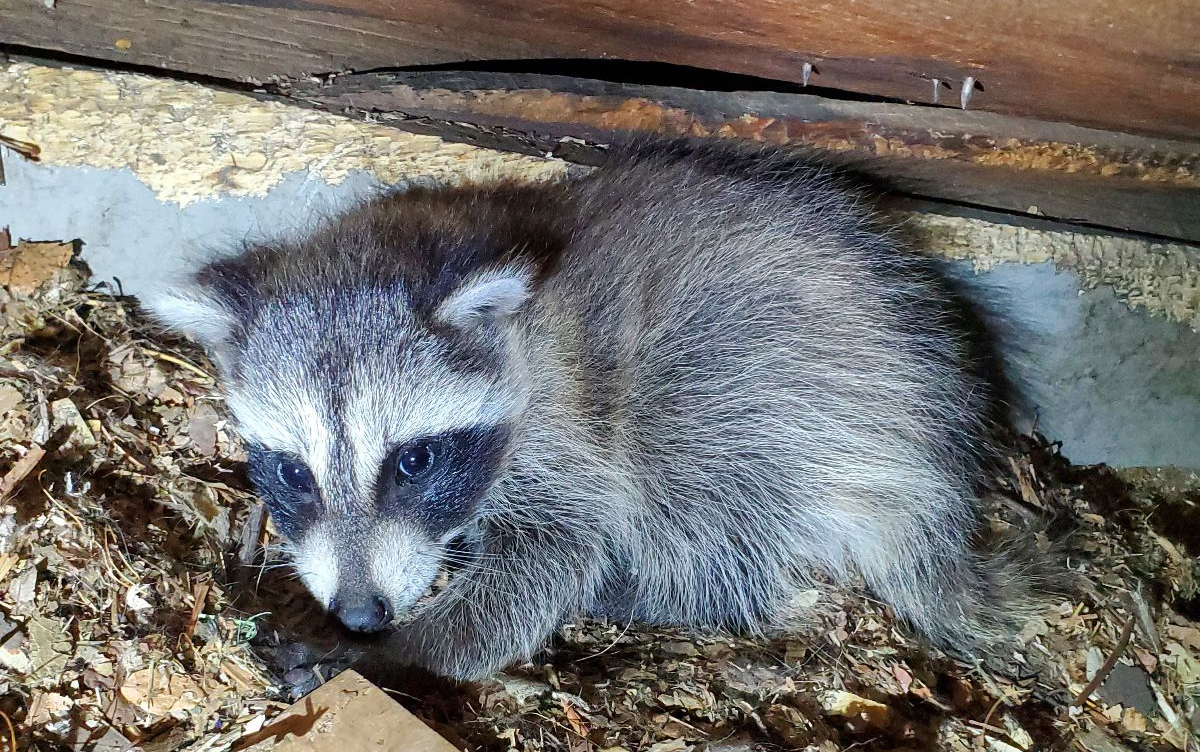
A rabid raccoon could get into your home. An open door may be all it needs, but these animals can also enter through pet doors, chimneys, roof vents, and damaged parts of a roof. Once inside, they may hide in a garage, attic, chimney, or another quiet space.
Baltimore residents saw this risk in October 2025. A raccoon entered Fallstaff Elementary/Middle School through an open door during dismissal. It later tested positive for rabies, but no students or staff were believed to have been bitten or hurt.
You should never assume that one inside your home is healthy or try to remove it yourself. At Skedaddle Humane Wildlife Control in Baltimore, we know how serious an unexpected raccoon encounter can be. In this blog, we explain how these animals get indoors, which warning signs may point to illness, and who to call when you need help.
Do All Raccoons Have Rabies?
No, not all raccoons have rabies. Most do not carry the virus, and you cannot tell whether one has it just by looking at it. Only a lab test can confirm a case.
Rabies can change the way these animals move and act. However, other health problems, fear, or injury may cause some of the same signs. Daytime activity also does not prove that one has rabies. A mother may search for food during the day because she has young to feed.
Every unexpected encounter should still be treated with care. Keep your distance and let trained officials decide what needs to happen next.
How Raccoons Get Into Homes
These animals can climb walls, roofs, trees, and downspouts. They can also pull at weak building materials with their strong paws. Several parts of a Baltimore home may offer a way inside:
- Open Doors: An open front, back, or garage door creates a direct path indoors. The Fallstaff school case showed how quickly one can cross through an unguarded entrance. A confused or sick raccoon may enter even when people are nearby.
- Pet Doors: A pet door is easy for a raccoon to find and push through. Food smells may draw them toward the opening, especially at night. Once inside, they may feel trapped and react in an unsafe way.
- Chimneys: An uncapped or damaged chimney can look like a safe den. A raccoon can climb down and settle above the fireplace. Our professional wildlife team must inspect the full space before any opening is closed.
- Roof Vents: Loose or broken roof vents can provide access to an attic. These animals may pull back a weak cover or enter through existing damage. The opening may be hard to see from the ground.
- Damaged Soffits: Soffits sit below the edge of your roof. Age, storms, moisture, and past damage can leave them loose or broken. A raccoon may push through the weak area and enter your attic.
Baltimore has many older homes with aging roof edges, chimneys, and vents. Rowhouses may also have connected rooflines that make entry damage harder to spot. Seasonal rain, wind, and temperature changes can weaken these areas over time.
Signs of Unusual Behavior
No single behavior proves that a raccoon has rabies. Still, certain signs should be reported to local officials. Keep people and pets far away if you notice any of the following:
- Trouble Moving: A sick raccoon may stumble, fall, circle one area, or seem unable to use its legs. It may also appear weak or confused. Do not move closer to check on it.
- Sudden Aggression or Little Fear: These animals normally try to avoid close contact with people. One that charges, snaps, follows people, or shows no fear may be ill. An unusually friendly response can also be a warning sign.
- Drooling or Strange Sounds: Rabies can affect the throat and jaw. This may lead to heavy drooling or trouble swallowing. You may also hear repeated cries or sounds that seem out of place.
Seeing one during the day does not automatically mean it has rabies. Healthy mothers may leave their dens in daylight when they need more food. Look at the full pattern of behavior and allow trained officials to assess the risk.
What to Do When One Raccoon Gets Inside
You should move away and keep children and pets out of the area. Do not corner, chase, touch, or feed it. A frightened or sick raccoon may bite or scratch when it feels trapped.
If one enters your living space or garage, call Baltimore Animal Control for immediate help. Tell them where it is, what it has done, and whether anyone may have had contact with it. Do not try to trap or contain it yourself.
Contact the local health department and seek prompt medical advice if a bite, scratch, or possible saliva exposure occurred. Rabies can spread when infected saliva reaches broken skin, the eyes, the nose, or the mouth. Public health staff can assess the contact and explain whether medical care is needed.
You should also contact your veterinarian if a pet may have been exposed. Keep the pet away from people and other pets until you receive professional advice. Current rabies vaccines provide an important layer of protection, but every possible exposure must still be reported.
Why Distance and Fast Reporting Matter
Rabies is preventable when possible exposure receives prompt medical attention. However, the illness is almost always fatal after symptoms begin. That is why waiting to see what happens is never a safe choice.
You cannot confirm rabies based on appearance alone. A calm raccoon may still present a risk, while one raccoon acting strangely may have another health issue. Distance protects you from a bite or scratch and gives trained responders room to manage the situation.
Baltimore Animal Control should handle an immediate public safety concern. The Baltimore City Health Department or your medical provider should assess possible human exposure. Skedaddle can then inspect the building, address entry damage, and help prevent another intrusion when the site is safe for our team.
Why Attics and Chimneys Need Inspection Before Sealing
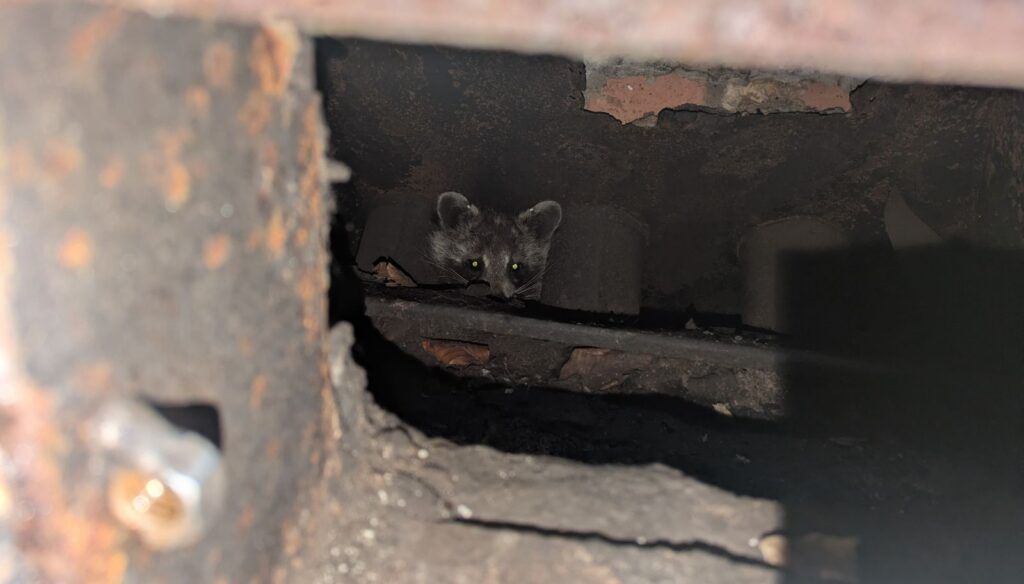
An opening should never be closed until a professional has checked the full space. Sealing too soon can leave a raccoon or its young trapped inside. It can also push them into the living area as they search for another way out.
- Hidden Occupants: An attic or chimney may contain more than the raccoon you saw. Young may stay quiet and remain out of view. Our team checks for signs of activity before choosing a removal plan.
- More Than One Opening: The most visible hole may not be the only access point. Rooflines often contain small gaps hidden behind vents, soffits, or trim. A full inspection helps us find both active and possible entry points.
- Damage Inside the Space: These animals may disturb insulation, stain surfaces, or damage building materials. Contaminated areas can also carry health risks. Our trained team assesses these concerns without asking you to enter the space or clean it yourself.
Common Raccoon Entry Points Around Baltimore Homes
Baltimore has many older homes with roof edges and vents that have worn down over time. A raccoon may enter through a damaged soffit, loose roof vent, or gap where two building materials meet. These openings can be hard to see from the ground, but they may lead straight into an attic.
Chimneys are another common entry point, especially when a cap is missing or damaged. These animals are strong climbers and may use nearby trees, brick walls, or downspouts to reach the roof. Once inside a chimney, they may settle above the fireplace or move into another part of the home.
Open doors and pet doors can also provide a direct path inside. A raccoon may enter a garage while looking for food, shelter, or a quiet place to hide. Baltimore rowhouses can present added concerns because connected rooflines may let them move between weak areas along nearby homes.
When to Contact Animal Control or Local Health Officials
You should contact Baltimore Animal Control when a raccoon is loose inside your home, garage, or another occupied space. Call right away if it acts aggressive, seems unable to walk, drools heavily, or shows little fear of people. Keep everyone away while trained officers respond to the immediate safety concern.
The local health department should be contacted when a person may have been bitten, scratched, or exposed to saliva. Saliva reaching broken skin, the eyes, the nose, or the mouth may count as possible rabies exposure. A health official or medical provider can assess what happened and decide whether treatment is needed.
You should also call your veterinarian if a pet may have had contact with the raccoon. Keep the pet away from people and other pets until you receive professional advice. After the urgent health and safety concerns have been handled, Skedaddle can inspect the home and address the entry point.
How Humane Removal and Exclusion Help Prevent Another Entry
Humane removal begins with finding out how the raccoon entered and whether young are present. Our professional wildlife team checks the building, identifies the active entry point, and creates a plan for the full situation. We do not ask you to climb onto the roof, enter the attic, or approach raccoons.
When appropriate, we install one-way doors that allow wildlife to leave but prevent them from getting back inside. Our team watches for signs that the space has cleared before removing the door. We then secure the opening with strong materials designed to block another entry.
Exclusion also involves checking the rest of the home for weak areas. A repaired hole will not provide lasting protection if another loose vent or damaged soffit remains nearby. By combining humane removal with a full inspection and professional repairs, we help lower the chance of the same problem returning.
Frequently Asked Questions
Can a raccoon open a door?
A raccoon may push through a door that is partly open or not fully latched. Its strong front paws can move light barriers and simple handles. Open garage doors can also provide quick access to food, shelter, and hidden spaces.
Does seeing one raccoon during the day mean it has rabies?
No, daytime activity alone does not mean a raccoon has rabies. A healthy mother may search for food during the day because she has young to feed. Illness is more likely when daytime activity appears with signs such as stumbling, drooling, sudden aggression, or severe confusion.
Can rabies spread through raccoon droppings?
Rabies is mainly spread through infected saliva, often through a bite. Maryland health officials state that the virus is not spread through blood, urine, or droppings. However, waste can contain other health risks, so you should leave all inspection and cleanup work to our trained professionals.
What should you do if one raccoon enters your garage?
Keep people and pets away from the garage and do not approach or corner the raccoon. Contact Animal Control if it remains inside, acts strangely, or presents an immediate safety concern. Skedaddle can inspect the garage and building after the urgent risk has been handled.
Can a raccoon enter through a chimney?
Yes, an uncapped or damaged chimney can provide access to your home. These animals can climb brick walls, trees, and roof edges before moving down the chimney. Our team must inspect the full space before the opening is secured because young or another raccoon may still be inside.
Who should inspect the home after a raccoon gets inside?
Our trained wildlife professionals should inspect the building once any immediate rabies concern has been addressed. Our team can locate the entry point, check for hidden activity, and assess damage inside the space. We can then create a humane removal and exclusion plan based on what we find.
Do Not Let One Open Door Become a Bigger Problem
A raccoon can enter your home through an open door, pet door, damaged soffit, roof vent, or uncapped chimney. The Baltimore school case showed how quickly one can move inside when an entrance is left open. Although not every raccoon has rabies, you should treat any unexpected indoor encounter as a serious safety concern.
Keep people and pets away, and never try to corner, catch, or touch it. Baltimore Animal Control should handle an immediate threat inside an occupied space. Contact the local health department and seek medical or veterinary advice if any possible bite, scratch, or saliva exposure occurred.
Once the urgent concern has been handled, our team at Skedaddle Humane Wildlife Control in Baltimore can inspect your home. Our professional wildlife team checks for hidden activity, young, damage, and every possible entry point. When appropriate, we use one-way doors that let wildlife leave but stop them from getting back inside.
We then secure vulnerable areas to help prevent another entry. You do not need to climb onto your roof, enter the attic, or handle contaminated materials yourself. Contact us to request an estimate and learn how our humane removal and prevention services can help protect your Baltimore home.

 Loading...







