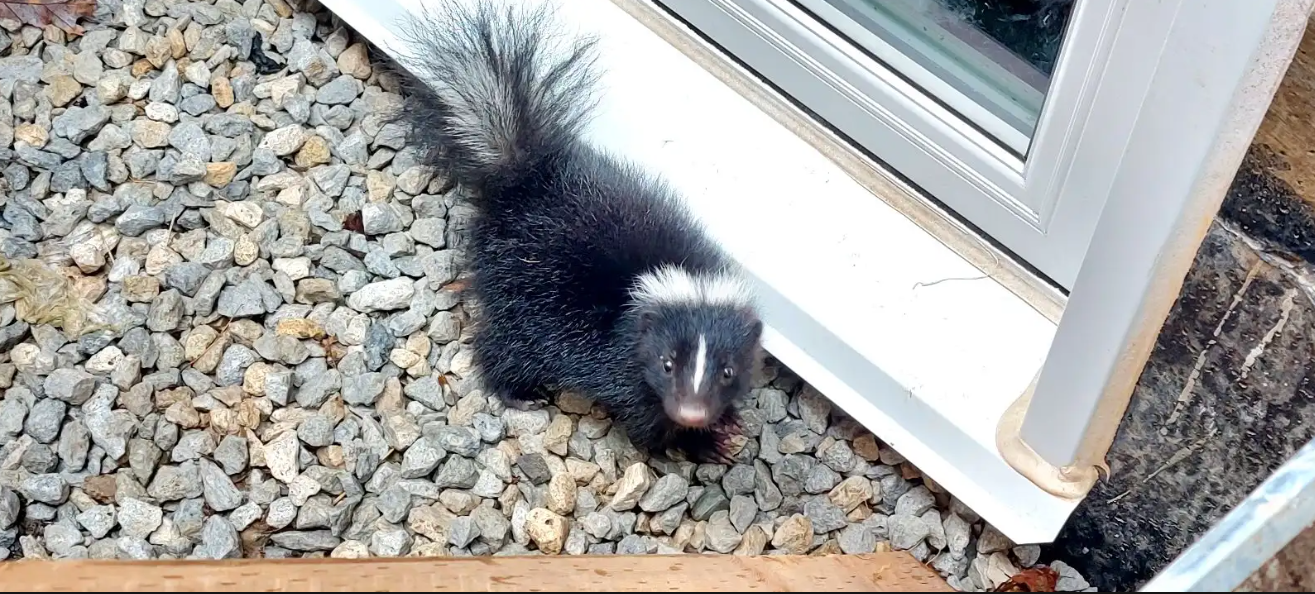
Urban growth in the Okanagan is pushing skunks closer to homes, and it’s happening faster than most people realize. As new neighbourhoods go up and natural habitat gets smaller, skunks lose the spaces they need for food and shelter. Your property with its deck, shed, garden, and garbage bins starts to look like a great option.
You might not think a new subdivision going up across town has anything to do with the smell under your deck. But that’s exactly how it works. The Interior Wildlife Rehabilitation Society received nearly 2,000 wildlife-related calls in 2024 – a clear sign of how often Okanagan residents are now running into skunks in their neighbourhoods. You can learn more here: Interior Wildlife Rehabilitation Society. When natural space disappears, these animals don’t disappear with it, they move to the nearest option.
At Skedaddle Humane Wildlife Control in Okanagan, we see this every season. In this blog, we walk you through why skunks are being pushed toward homes, what draws them to your property, and what our team does to remove them safely and stop them from coming back.
Where Do Skunks Nest?
Skunks nest in dark, low spots that feel safe and covered. In the wild, they use hollow logs, rock piles, and leaf piles. In residential areas, they use the spaces under decks, porches, sheds, and crawl spaces, which offer the same protection with even less exposure to weather and predators.
They don’t build big, complex nests. They dig a simple burrow or move into an existing gap, add a bit of debris, and settle in. The entrance to a den is usually a small, round hole in the soil, often found along the edge of a deck or the base of a shed. These holes are easy to miss, which is why many homeowners don’t know they have one living on their property until they smell it.
In the Okanagan, these animals are most active in spring when females are looking for a safe place to have their young. A den started in early spring can have a full litter of kits inside by late spring. This is why calling our team early gives you the most options for dealing with the situation safely and humanely.
Why Urban Growth Is Pushing Skunks Toward Homes
The Okanagan has grown fast over the past ten years. New subdivisions, commercial buildings, and roads have taken over large areas of natural habitat, and the animals that lived there haven’t gone anywhere. They’ve adapted and moved into residential areas. These creatures are resourceful, and neighbourhoods offer a lot of the same things their natural habitat did: food, shelter, and ground-level spaces to den.
As green space shrinks and new homes get built closer to wild areas, the gap between natural habitat and residential properties gets smaller. Animals that used to den in open fields or wooded lots now find themselves looking at the underside of your deck or the gap at the base of your shed. It’s not that they’ve gotten bolder; it’s that the spaces they used to use are gone.
The Interior Wildlife Rehabilitation Society’s 2024 report of nearly 2,000 wildlife calls shows just how much this contact has grown. These animals are showing up in yards, under structures, and near homes more than ever before. For Okanagan homeowners, the chance of finding one on your property is higher now than it was just a few years ago and that’s not going to change as building continues.
Why They Dig Beneath Decks and Sheds
The space under a deck or shed is one of the best denning spots on any property. Here’s what makes these structures such a regular target:
- Dark, Ground-Level Protection: Skunks like spaces that are low to the ground, dark, and covered on multiple sides. The underside of a deck or shed fits perfectly. It keeps them out of the weather, hides them from predators, and gives them a quiet, stable space to raise young. Once they find a spot like this, they return to it year after year if it hasn’t been sealed.
- Easy Digging at the Perimeter: The soil along the edge of a deck or shed is often softer than open ground, especially in the Okanagan’s drier conditions. These animals dig entrance holes along the perimeter to get under the structure. The holes are usually a few inches wide and can show up overnight. Do not try to fill them yourself before our team has confirmed whether the den is active.
- Away From Regular Human Activity: Sheds at the back of a property or decks that don’t get used every day give these animals the quiet they need to den comfortably. The less foot traffic near a structure, the more appealing it is as a home base. Quiet, low-use structures are the ones we check first during an inspection.
- A Safe Place to Raise Young: Female skunks look for secure, enclosed spaces when they’re getting ready to give birth. The underside of a deck or shed is exactly what a mother looks for, and once young are present, the family stays put until the kits can move around on their own. Early spring is the most important time to have your property looked at.
What Attracts Skunks to Your Property
Before these animals den on your property, something usually draws them there first. Here’s what our team looks for when checking what’s pulling them in:
- Unsecured Garbage and Compost: Skunks have a strong sense of smell, and garbage bins and compost containers carry strong odours that travel far. They’ll tip over bins, dig through bags, and come back to the same spot night after night once they find food. A bin left outside after dark is an easy target.
- Pet Food and Bird Seed: Pet food left outside after feeding time and seed that drops from a bird feeder are both strong draws. These food sources sit at ground level – right where these animals look for food. Even a small amount of leftover food left out overnight is enough to bring them back regularly.
- Lawn Insects and Grubs: Skunks dig for grubs, beetles, and other insects just below the surface of your lawn. If your lawn has a lot of grubs, you may notice small, cone-shaped holes dug into the turf overnight. This digging is a clear sign they’ve found a food source on your property and will keep returning.
- Fallen Fruit and Garden Produce: Fruit that has fallen from trees and vegetables left in the garden are both attractive food sources. Skunks eat a wide variety of things, and ripe produce at ground level is an easy meal. Properties with fruit trees or vegetable gardens are at higher risk during harvest season.
Signs One Is Living on Your Property
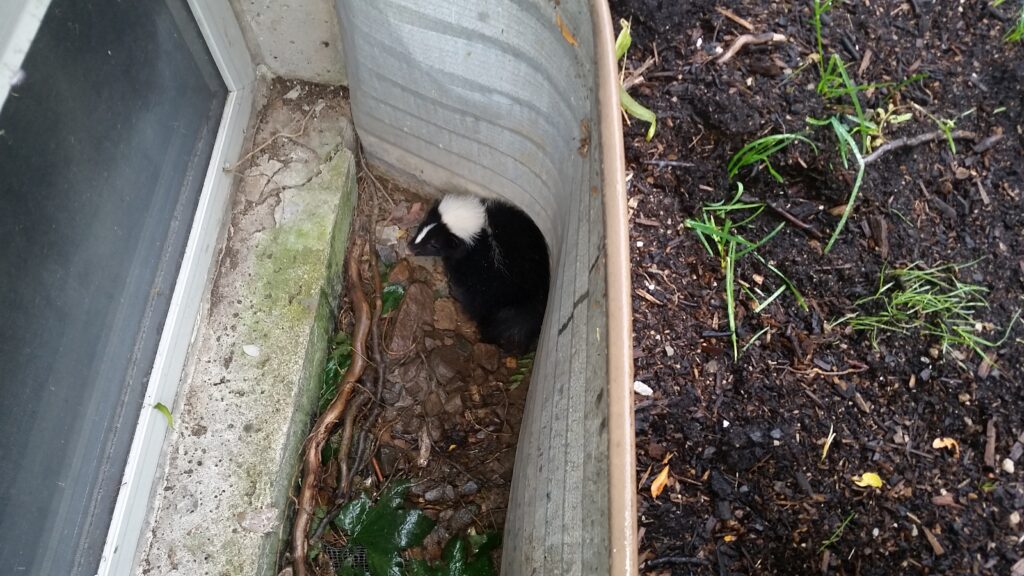
Skunks are mostly active at night and stay quiet, but they do leave signs. Here’s what to look for if you think one may have moved in:
- A Musky Smell Near a Structure: Even without spraying, these animals produce a mild musky odour that you can smell near their den. If you notice a persistent smell near your deck, shed, or porch, especially in the morning, there’s a good chance one is denning underneath. Do not go near the structure or try to investigate on your own.
- Small Holes Along the Perimeter: A round hole – two to four inches wide – dug along the edge of a deck, shed, or retaining wall is the most common sign of an active den. The soil around it is usually loose and freshly dug. If you find a hole like this, call our team right away. Do not try to fill or block it before we’ve confirmed what’s inside.
- Cone-Shaped Holes in the Lawn: Lawn digging for grubs leaves behind small, cone-shaped holes across the turf. This happens overnight and can cover a large area of your lawn in a single evening. It means these animals are actively looking for food on your property and may already be denning nearby.
- Droppings Near Food Sources or Structures: Droppings near garbage bins, garden beds, or along the base of structures are a sign of regular activity. Do not try to clean these up yourself – call our team and let us look at the full situation first.
Why You Should Never Block a Den Without Checking for Babies
Blocking a den entrance is one of the most common mistakes homeowners make and it can make the situation much worse. If young are inside the den when the entrance gets sealed, the mother gets locked out and the young get trapped. A mother that can’t reach her young will dig hard to get back in, causing more damage to your property in the process.
If young get trapped inside without the mother, they don’t survive, which leads to serious odour problems that are very difficult to deal with without opening up the structure. Timing matters a lot here. In the Okanagan, litters are usually born in late spring and young can’t leave on their own until midsummer. Any work done during this window needs to account for whether young are present.
Our team checks for young before we do anything. We look at the den, confirm whether it’s active, and find out whether young are inside before we plan next steps. Removal and exclusion are built around what’s actually there, not just what can be seen from the outside. This is the only way to handle the situation properly without creating a second problem.
Big, Ugly Skunk Problems in the Okanagan
The Okanagan’s warm, dry climate and growing number of homes make it a common area for these animals to cause problems. The mild winters mean they don’t go into full hibernation; they stay semi-active through the colder months. This means den activity and property damage can happen year-round, not just in summer.
Older neighbourhoods in the region tend to have more mature trees, bigger garden beds, and established landscaping – all of which provide food that draws these animals in. Newer developments on the edges of the city put homes right next to the habitat these animals were pushed out of, which increases the chance of conflict on both sides. Properties near the edge of new subdivisions and green space are especially at risk.
Kelowna, Vernon, and Penticton have all seen more skunk-related calls as the region grows. Homeowners who’ve never had a problem before are now reporting activity for the first time, which reflects the growing habitat pressure across the valley. If you’ve noticed a smell, a hole near the deck, or digging in your lawn, don’t wait. Call our team and let us assess the situation before it gets bigger.
How Humane Removal and Exclusion Prevent Them From Returning
When one of the skunks has denned on your property, call our team at Skedaddle Humane Wildlife Control right away. We start with a full assessment of your property, checking every structure, every potential den site, and every food source that may be drawing them in. We look at the whole picture so nothing gets missed.
We use one-way door systems that allow these animals to leave on their own without being able to get back in. This is a humane approach that doesn’t require trapping or relocating animals and it keeps everyone safe from a spray encounter. Once we’ve confirmed the den is empty, we seal every entry point with materials that hold up over time so they can’t get back in through the same spot.
Prevention is the last step. After the animals are gone and the entry points are sealed, we deal with the conditions on your property that drew them in. Gaps under structures, food sources, and soft soil along structure edges all get addressed as part of a complete plan. Our goal is to make your property as unappealing and hard to access as possible and to back that up with work that lasts. We handle all of it so you don’t have to deal with any part of it yourself.
Frequently Asked Questions
How do I know if it's a skunk and not another animal under my deck?
The musky smell near the den is the strongest clue. These animals also leave round entrance holes along the base of structures and cone-shaped holes in the lawn. If you're not sure, call our team; we'll figure out what's there and what needs to happen next.
Are skunks dangerous to people or pets?
They're not aggressive, but they will spray if they feel threatened. Their spray causes intense irritation and is very hard to remove from skin, fur, and clothing. They can also carry rabies. Keep children and pets away from any area where activity has been noticed and call our team right away.
Can skunks damage my deck or shed?
Yes. Digging along the perimeter can shift the soil around the base of the structure over time. A den that's been active for more than one season can cause real soil displacement beneath a deck or shed. The longer they stay, the more impact there is on the structure above.
When are skunks most active in the Okanagan?
They're most active in spring when females are looking for a den and in fall when they're getting ready for colder weather. But the Okanagan's mild winters mean they stay semi-active year-round — there's no season when the risk of a new den forming on your property goes away completely.
Will skunks leave on their own if I stop putting food out?
If they've already started a den, removing food helps, but it won't make them leave right away. A den is a real investment for these animals, and they'll often stay even if the food gets harder to find. Our professional removal is the only reliable way to end the situation.
Should I call animal control or a wildlife removal company?
Animal control handles a limited number of situations and usually doesn't offer the full exclusion work needed to stop skunks from coming back. Our team handles the whole process - removal, exclusion, and prevention - so the problem gets fully resolved, not just temporarily managed.
Don’t Wait for the Smell — Call Us Before They Settle In
Urban growth across the Okanagan is pushing skunks closer to homes and if your deck, shed, or yard has what they’re looking for, they’ll find it. A den that starts in spring can have a full litter of young inside by early summer, which makes the situation harder to fix the longer it goes without attention.
The right time to call is before the smell shows up or the moment it does. Our team will assess your property, confirm what’s there, and handle everything from removal to exclusion so you don’t have to deal with any part of it yourself.
At Skedaddle Humane Wildlife Control in Okanagan, our team is ready to help. Contact us today to request an estimate and find out how we can protect your property from skunks for good.

 Loading...







