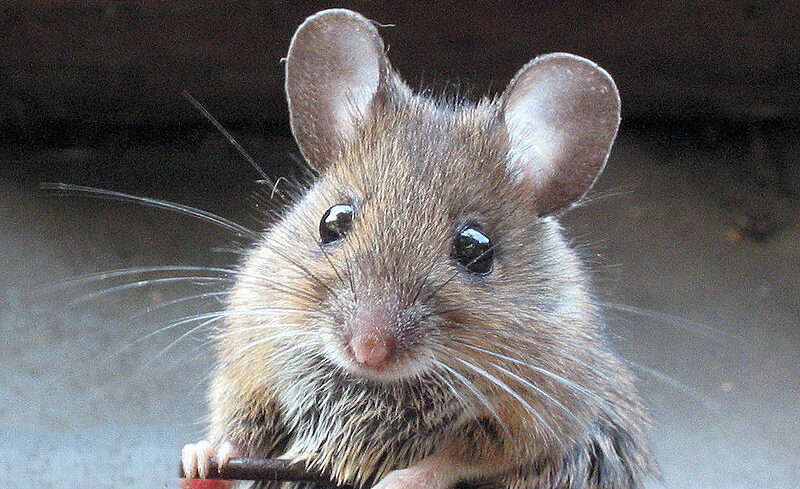
When a homeowner in Maryland discovers a mouse in the basement, the immediate reaction is often a mix of panic and the desire for a quick fix. In the aisles of big-box hardware stores, “sticky traps” or glue boards are often marketed as a simple, inexpensive solution. They look harmless enough, just a piece of plastic or cardboard with a layer of strong adhesive. However, behind that marketing lies one of the most inhumane and ineffective methods of pest control available today.
At Skedaddle Humane Wildlife Control, we see the aftermath of these DIY “solutions” all too often. One recent call in Maryland perfectly illustrated the divide between traditional pest control and the humane, permanent solutions we provide.
A Rescue in the Basement
Technician Isaiah Toler arrived at a local Maryland home where the owner was struggling with a mouse problem. Following the standard DIY route, the homeowner had placed several sticky traps throughout the basement.
Upon inspection, Isaiah found a small mouse firmly stuck to one of the boards.
The mouse was exhausted, having spent hours struggling to break free. This is the reality of sticky traps: they don’t kill instantly. Instead, they catch. What follows is a slow, agonizing process of dehydration, starvation, and extreme physical distress.
Isaiah, committed to the Skedaddle philosophy of humane treatment, didn’t just toss the trap and the living animal into the trash, a common but cruel practice.
Instead, he reached for a surprising tool: peanut butter. The natural oils in peanut butter act as a solvent for the industrial-strength adhesive used on glue boards. By carefully applying the oils around the mouse’s limbs and fur, Isaiah was able to gently break the bond of the glue.
“Pest control should never be about cruelty; it’s about finding smart, long-term solutions that respect the animal and the homeowner,” Isaiah noted after successfully freeing the mouse. “Saving one animal from a trap is a great feeling, but the real goal is making sure no more animals ever have to face that trap to begin with.”
After freeing the mouse, Isaiah didn’t stop there. He transitioned from a rescue mission to a permanent solution: exclusion.
The True Cost of a “Quick Fix”
To understand why sticky traps are so problematic, we have to look at what happens after the “catch.” These traps are designed to hold an animal in place until it dies or is “disposed of.” Because mice are high-stress animals with fast metabolisms, being stuck triggers a frantic fight-or-flight response.
- Physical Trauma: In their desperation to escape, mice often tear their own skin or even chew through their own limbs to get away. The adhesive is so strong that the more they struggle, the more they become entombed in the glue.
- Suffocation: Often, as an animal struggles, its nose or mouth becomes pressed into the glue, leading to a slow death by suffocation.
- Prolonged Suffering: If an animal isn’t checked immediately, it can stay stuck for days, dying slowly from dehydration or exhaustion.
- A Hazard to Non-Targets: Sticky traps are indiscriminate. We have seen cases where songbirds, small reptiles, and even curious family pets become stuck to these boards.
Beyond the ethical concerns, sticky traps are simply a bad strategy for homeowners. They are a “reactive” tool. They catch the mouse that is already in your house, but they do absolutely nothing to address why the mouse was there in the first place or how it got in.
Why DIY Pest Control Often Fails
The temptation to “Do It Yourself” is strong, especially with the abundance of products available at the store. However, DIY mouse control almost always fails because it ignores the biology and behavior of the animal.
When you use a trap—whether it’s a sticky trap, a snap trap, or a poison bait—you are dealing with the “symptoms” of an infestation, not the “disease.” If you have a hole in your foundation the size of a dime, you can catch twenty mice, but twenty-one more are waiting outside to take their place.
Furthermore, DIY methods like poison can create new problems. A mouse that consumes poison often crawls into an inaccessible wall void or attic space to die. This leads to foul odors, fly infestations, and potential health hazards as the carcass decomposes within your home’s structure.
The Skedaddle Solution: The Power of Exclusion
At Skedaddle, we believe in a better way. Our Maryland team focuses on Exclusion, which is the process of wildlife-proofing a home so that animals can’t get in to begin with.
Instead of setting traps and waiting for a catch, our technicians perform a comprehensive 360-degree evaluation of the property. We look for the entry points that homeowners often miss:
- Gaps in the foundation or siding.
- Unscreened vents.
- Entry points where utility lines (gas, electric, AC) enter the house.
- Roofline gaps and chimney openings.
Once these entry points are identified, we use professional-grade, wildlife-proof materials to seal the home. Unlike DIY spray foam, which mice can easily chew through, we use heavy-gauge screening and permanent sealants designed to withstand the elements and the persistence of wildlife.
This method is humane because it keeps the animals in their natural outdoor habitat. It is also the only truly effective long-term solution. When you seal the “door,” the problem stops. You aren’t caught in a never-ending cycle of buying traps and disposing of carcasses.
Choosing a Humane Future for Your Home
The incident Isaiah handled in that Maryland basement highlights a fundamental truth: we can protect our homes without sacrificing our humanity. Watching an animal suffer in a glue trap is a distressing experience for any homeowner, and it’s an experience that can be entirely avoided.
By choosing Skedaddle, you are choosing a team that understands the local Maryland ecosystem and the specific behaviors of the mice and wildlife that call this region home.
We don’t just “get rid of mice”—we restore the integrity of your home’s perimeter.
If you’re hearing scratching in the walls or finding signs of mice in your basement, skip the hardware store aisle.
Avoid the cruelty of sticky traps and the frustration of DIY fixes that don’t last.
Choose humane. Choose prevention. Choose Skedaddle.
Let our experts, like Isaiah, provide you with a permanent, professional solution that keeps the wildlife outside where they belong, and keeps your home safe and sound. Contact Skedaddle Humane Wildlife Control today for an inspection and take the first step toward a mouse-free, trap-free home.

 Loading...







