Mouse Removal in Colorado North | Skedaddle skip to main content
Skip to main content
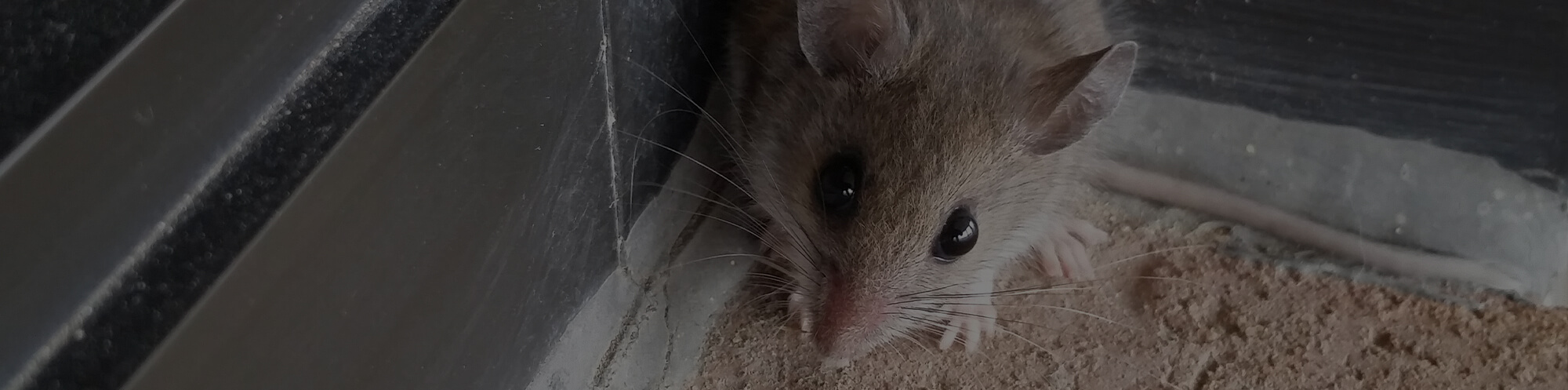
Mouse beside a doorway threshold

Colorado North Mouse Removal

Contact Us
970-289-1322

Monday–Friday: 5:30 AM–7:00 PM

Saturday: 6:00 AM–3:00 PMSunday: 8:00 AM–2:00 PM Mountain Time

Proudly Serving • Fort Collins, Greeley, Loveland, Windsor, Timnath, Severance, Wellington, Estes Park, Berthoud, Johnstown, Evans, Mead
COLORADO NORTH · HUMANE MOUSE REMOVAL

Humane Mouse Removal in Colorado North

Mouse removal for Fort Collins, Greeley, Loveland and nearby communities, from the smallest gap at the foundation to the roofline.

Skedaddle Humane Wildlife Control: Colorado North removes mice from homes in Fort Collins, Greeley, Loveland and nine nearby communities without poison. We inspect from the foundation to the roof to trace every entry point, let mice leave through one-way doors where appropriate and seal the exterior with steel screening and sealant. We then clean droppings and nesting material, with attic restoration where needed.

  • Serving 12 Colorado North communities
  • Part of the Skedaddle network, founded 1989
  • Humane removal and prevention

Why homeowners choose Skedaddle

Mice raise practical questions fast: how many are inside, and how are they getting in? We answer both before any work begins.

An inspection that traces the whole route

Mice can fit through holes as small as a dime, so one visible gap rarely explains the problem. Our technicians go inch by inch around the perimeter and up to the roof to find every entry point, so removal and sealing cover every route mice use.

Humane removal and prevention

We do not rely on poison or traps. Those methods rarely keep up with mouse reproduction and can leave mice to die within your walls. Instead, we install one-way doors where appropriate so mice can leave but not return, then seal the exterior.

Workmanship and materials guarantee

Our exclusion work carries a lifetime guarantee on all workmanship and materials. Your written scope lists every opening we seal, so you know exactly which work the guarantee covers.

Signs of mice and how they get in

The Larimer County Department of Health and Environment describes mouse droppings as looking like black grains of rice, usually near walls and in corners. Signs like these usually show up well before you see a mouse.

Activity signs

Signs worth checking

Chewing in the attic or behind walls after dusk is a leading sign. Indoors, look for droppings, chewed food packaging and the smell of ammonia in enclosed areas. Droppings often collect along walls, in corners and behind appliances.

Nesting and contamination

What the inspection checks for

We check for nests built from twigs, insulation and grass, chewed wiring and soiled insulation in attics, wall voids and garages. In Colorado this matters for health as well as damage: Larimer County notes that deer mice are the most common transmitters of hantavirus.

Not sure what is getting in?

Noises in the walls could be mice, a squirrel or bats. Tell us what you are hearing and finding, and we will confirm the animal and trace its entry points during the inspection.

Understanding mice in Northern Colorado

  • House mice

Two kinds of mice turn up most in and around Colorado homes. The house mouse is light brown to gray with a lighter belly and a naked tail, while the deer mouse has white feet and a gray to brown body that contrasts sharply with its white belly. Utah State University Extension notes that deer mice invade outbuildings in rural areas and are less common in town.

That difference affects safety, not just identification. The Weld County Department of Public Health and Environment reports that hantavirus in the county is mainly carried by deer mice. A homeowner cannot reliably tell which mice left droppings in a garage or attic, so we treat all rodent waste with care.

Season matters too. USU Extension notes that mice are most likely to invade structures in the fall, looking for food and shelter from the cold. In Northern Colorado, the weeks before the first hard freeze are when sealing does the most good.

For your home, that means we trace every opening before sealing, plan safe cleanup of droppings and nesting material and keep removal poison-free.

What to expect from a Skedaddle inspection

Our inspection runs from the foundation to the roofline, since mice can enter at any level. We confirm the animal, find active and potential entry points and check where mice are nesting. Then we explain our findings and each step we recommend before work begins.

  • Activity: We confirm that mice are the animal involved and how active they currently are.
  • Access: We trace active entry points and every other gap that could let mice in.
  • Occupied spaces: We find nesting areas in attics, walls, garages or crawlspaces.
  • Work required: We identify the sealing needed and any droppings, nesting material or insulation that needs attention.

After the inspection, we provide a written quote that separates removal, sealing and any cleanup or attic restoration, so you can see the full scope before work starts. The quote also lists the openings covered by our guarantee.

Skedaddle's Three-Step Wildlife Removal Process

Step 1

Assess and Remove

We trace the entry routes and confirm where mice are active before choosing a method. Where it suits the opening, we install one-way doors over the entry points so mice can leave for food but cannot get back in. Our approach is poison-free, so mice are not left to die inside your walls.

Learn more
Step 2

Clear and Clean

Once the mice are out, we clear droppings, urine-soiled material and nests using the latest safety tools and training for hazardous materials. Heavily contaminated attics may need insulation removal and restoration; smaller areas often need targeted cleaning only.

Learn more
Step 3

Prevent and Protect

We seal every potential entry point with a combination of heavy gauge steel screening and Skedaddle's wildlife exclusion sealant. Foam alone is not enough, as Colorado State University Extension cautions. Your written scope lists each sealed opening covered by our lifetime guarantee on all workmanship and materials.

Learn more

Seasonal activity and removal timing

Mouse pressure on a home changes through the year. In Northern Colorado, fall is when mice push hardest to get inside, but signs and cleanup needs show up in every season.

SeasonWhat may changeWhat it means for the homeowner
Spring(Mar–May) Spring cleaning of garages, sheds and cabins often uncovers droppings, and the CDC warns against sweeping or vacuuming them.Clean droppings safely or call us. We pair cleanup with sealing so mice cannot move back in.
Summer(Jun–Aug) Mice nest outdoors in debris near wood piles and shrubbery around homes and outbuildings.Clearing debris near the foundation helps, and summer is a calm time to seal before fall pressure builds.
Fall(Sep–Nov) Mice are most likely to invade structures in the fall as they look for food and shelter.This is the busiest season for mouse entry. We seal the exterior before mice settle in for winter.
Winter(Dec–Feb) Mice that got in during fall stay indoors for food and shelter from cold, nesting in walls, attics and storage areas.Winter activity means the openings are still there. We trace and seal them so the problem does not repeat next fall.

These patterns describe mouse behavior, not a fixed removal calendar. This fall, we focus on sealing foundations, vents and rooflines before winter.

A humane approach to mouse removal

Humane mouse removal means solving the problem at its source instead of setting traps indefinitely. Mice that can still get in will keep coming back, so sealing matters more than any single removal tool.

Inspection-led removal

We decide how to remove mice only after we know where they enter, where they nest and how active they are. One-way doors are used only where they suit the opening, never as a default step, and we do not use poison inside your home.

Checking connected entry routes

Mice often use several connected gaps, from foundation cracks to utility lines to roof edges. We follow those routes from the foundation right up to the roof, looking for droppings, chewing and staining, so every opening is sealed rather than just the busiest one.

Cleanup and repair

Mice contaminate surfaces with droppings and urine. We remove soiled material, disinfect affected areas and replace insulation only where it is damaged or contaminated, keeping the work matched to what the inspection found.

Long-term exclusion

Steel screening and sealant close each gap with materials mice cannot chew through. Our lifetime guarantee on all workmanship and materials covers the openings we seal. Mice getting in through an untreated part of the building later need a new assessment.

Ready for a property-specific plan?

Every home has its own set of gaps. Book an inspection and we will map the entry points, the nesting areas and the cleanup your home needs, then explain the work before it begins.

Where this service is currently available

Our Colorado North team provides mouse removal in Fort Collins, Greeley, Loveland, Windsor, Timnath, Severance, Wellington, Estes Park, Berthoud, Johnstown, Evans and Mead. If your home is near but outside these communities, call with your address and we will confirm availability.

Mouse entry points can be anywhere from the foundation to the roof. The CDC lists the space between the foundation and the ground, attic and crawlspace vents and holes for utility lines among the places to check. When you book, tell us where you have found droppings or heard activity so we can plan a full inspection.

Frequently asked questions about mouse removal

How much does mouse removal cost?

Cost depends on the size of the home, how many entry points need sealing, how high they are and how much cleanup or insulation work is needed. We inspect the property first and provide a written quote that separates removal, sealing and cleanup, so you see the full price before any work starts.

Can you remove mice the same day?

Same-day service is not guaranteed. We schedule inspections based on availability, and removal and sealing may take more than one visit, since mice need time to leave through one-way doors. Call 970-289-1322 and we will explain the next available appointment and what to expect.

How do you remove mice humanely?

We start with an inspection that traces every entry point. Where it suits the opening, we install one-way doors so mice can leave but not return, then seal the exterior with steel screening and sealant. We do not use poison in your home, so mice are not left to die inside the walls.

Which Colorado North areas do you serve?

Our Colorado North team removes mice in Fort Collins, Greeley, Loveland, Windsor, Timnath, Severance, Wellington, Estes Park, Berthoud, Johnstown, Evans and Mead. Visit our Colorado North wildlife removal page to learn more, or call with your address to confirm availability if you live near these communities.

What does the guarantee cover?

Our mouse exclusion work comes with a lifetime guarantee on all workmanship and materials. It covers the sealed openings listed in your written scope. It is not a promise that a mouse can never enter through any part of the building, and a new gap elsewhere needs its own assessment.

Is cleanup or attic restoration included?

Cleanup is part of our recommended scope whenever mice have soiled a space, and the quote lists it separately. Small areas may need droppings and nests removed and surfaces disinfected, while heavily soiled insulation may need removal and replacement. The inspection findings decide which applies to your home.

Does seeing one mouse tell you how many are present?

No. One mouse can be the only one or a sign of many more, because mice are active at night and stay out of sight. Droppings, chewing and nesting material give a better picture, and our inspection uses those signs together with the entry points we find to judge how widespread the activity is.

How are possible entry points assessed?

We inspect the full exterior from the foundation to the roofline, checking every gap a mouse could fit through, including utility penetrations, vents, eaves and the foundation line. Mice need a gap only about the width of a pencil, so we look for droppings, rub marks and chewing that show which openings are active.

Book your mouse inspection

Droppings in the pantry, chewing in the walls at night or a mouse darting across the garage all deserve answers before winter. Our Colorado North team traces every entry point, removes mice without poison, seals your home with steel screening and sealant and cleans the affected areas, with attic restoration where needed. Every sealed opening is backed by our lifetime guarantee on all workmanship and materials.

menu