

Cats can catch individual mice, but they cannot solve or prevent a mouse infestation in your home.
Here’s why that matters: mice reproduce incredibly fast. Many sources describe female house mice producing multiple litters per year with several pups per litter, and some pest and wildlife references note totals that can exceed 60 babies in a year under favorable conditions.
So even if your cat is a motivated hunter, a mouse problem can outpace them quickly, especially because most of the mouse activity is happening where your cat can’t reach (inside walls, attic voids, crawl spaces, and behind cabinetry).
Still, the belief makes sense: cats are natural predators, and plenty of homeowners hope a “shop cat” solution will keep mice away.
In this article, our Skedaddle team in Columbus will explore whether cats can truly deter mice, why they often fail to resolve infestations, and the risks of relying on them for pest control. We’ll also share effective prevention tips and explain why professional removal is the best solution.
Our focus is on getting rid of mice for good through proven prevention methods and humane wildlife services, not wishful thinking.
Do Cats Actually Keep Mice Away?
Cats are predators, but their real-world effectiveness varies wildly from one cat to another.
Cats don’t all hunt, and some hunt inconsistently
Some cats are avid hunters. Others show little interest, especially if they’re older, indoor-only, well-fed, or simply not wired for it. Research on domestic cats’ hunting behavior points to substantial individual variation; some cats specialize in certain prey and show different hunting efficiency and preferences. (Thomas Newsome)
That means the “we have a cat, so we’re protected” idea is unreliable from the start.
Cat scent isn’t a guaranteed deterrent
You might hear that mice avoid houses with cats because they can smell a predator. In reality, the presence or scent of a cat doesn’t reliably stop mice from entering, particularly when the home offers warmth, shelter, and steady food access.
Mice are excellent at living in hidden travel routes: tight edges, wall voids, and “behind-the-scenes” pathways where your cat’s presence doesn’t matter much.
Even great hunting can’t match mouse reproduction
To understand why cats can’t control mouse populations, it helps to compare rates.
- Female mice can reproduce rapidly, and some references describe up to 10 litters per year with multiple pups per litter, leading to very high annual offspring totals.
Even a cat that catches a mouse occasionally is not addressing the core issue: a breeding colony you rarely see.
“Mouse Math” Infographic: Why cats can’t keep up
Even the best “mouser” can’t keep up with the reproduction reality of a mouse infestation. Mice can produce multiple litters a year, and when you do the simple math, population growth adds up fast.
One breeding female can create dozens of offspring in a year under favorable conditions, meaning that while your cat might catch a mouse here and there, the colony can continue expanding out of sight. That’s why homeowners often feel like the problem is “getting better” after a few catches, only to notice new droppings, noises, or sightings weeks later.
Then there’s the “cat catch” reality: cats can only catch the mice they can reach. Most mouse activity happens in hidden areas like wall voids, attics, crawl spaces, and behind cabinets—places your cat can’t access.
So when you compare mouse population growth (inside a home) vs. cat removal, the imbalance becomes clear: mice can multiply faster than a single predator can reduce their numbers, especially when the nest is protected, and food sources are consistent.
The only lasting solution is to stop the cycle at its source. Exclusion removes the cause by sealing the entry points that allow mice to get inside in the first place. Without exclusion, you’re relying on a temporary fix, and new mice will keep replacing the ones your cat manages to catch.
Learn more about our Skedaddle proven exclusion and removal process.
Will a Cat Fix My Mouse Problem?
No. A cat will not fix an existing mouse infestation.
1) Mice breed too fast
Many pest and wildlife references describe house mice reproducing at high rates, including the potential for multiple litters annually, with enough offspring to rapidly expand a colony.
In plain terms, one hunter can’t keep pace with a fast-breeding population.
2) Mice live where cats can’t go
Most infestations thrive in:
- Wall voids and insulation
- Attics and soffits
- Crawl spaces
- Behind appliances and cabinets
- Garage clutter, storage rooms, and utility chases
These are exactly the areas where cats either can’t access or can’t spend enough time to disrupt breeding.
3) If you see one mouse, there are often more
A common pattern is: homeowners spot a mouse in the kitchen and assume it’s a single intruder. In many real infestations, that sighting is just the tip of the iceberg—because mice spend most of their time avoiding open spaces and traveling in protected routes.
So yes, your cat might catch a mouse in the living area. But the colony continues behind the scenes.
Do Mice Leave If They Smell a Cat?
This is one of the most persistent myths. Reality is more frustrating: mice may change behavior, but they usually don’t abandon a good setup.
Mice can detect predators—but they prioritize survival
Predator scent can make mice more cautious. But if your home offers:
- consistent food (crumbs, pantry goods, pet food)
- water (condensation, leaky plumbing, pet bowls)
- warmth and nesting material (insulation, paper, fabrics)
…mice will often tolerate the risk rather than face harsh outdoor conditions.
Mice adapt instead of leaving
Instead of moving out, mice commonly:
- become more nocturnal
- switch travel routes
- stay tighter to the edges and wall voids
- Reduce time spent in open rooms
So homeowners may think the cat “worked” because sightings drop, while the infestation continues quietly.
Skedaddle Technician Answers the Question: Can You Still Have Mice Even If You Have a Cat?
A common DIY idea homeowners hear is, “Just get a cat—problem solved.” In this short Skedaddle video, Chris explains why that “success story” can be misleading. A cat may stop mice from showing themselves in your kitchen, but it doesn’t remove the infestation or prevent mice from nesting and breeding in hidden areas of your home. The result? The problem often continues, just out of sight.
Chris explains that while mice are naturally wary of cats, the biggest change is usually mouse behaviour, not mouse elimination. After a cat is introduced, mice often avoid open areas like counters and floors and retreat into places a cat can’t reach—such as walls and attics.
So homeowners may think the mice are gone simply because they aren’t seeing them anymore, when in reality the infestation may still be active, and the cat is only prolonging the issue rather than solving it.
The Risks of Relying on Your Cat for Mouse Control
Even if your cat does hunt, turning them into your mouse control plan can create serious risks for your cat, your home, and local wildlife.
Health risks to your cat: disease and parasites
Rodents and their environments can expose pets and people to pathogens and parasites.
- Leptospirosis: Public health guidance notes that rodents can carry and spread leptospirosis, and prevention includes limiting exposure to rodents and controlling rodent problems.
- Veterinary guidance also notes that cats can acquire Leptospira infection from hunting rodents, even if clinical disease is considered uncommon. (ABCD cats & vets)
- Rodent infestations also raise concerns about contamination from urine and droppings; public health agencies warn about exposure risk when cleaning rodent messes. (CDC)
Risk of secondary poisoning from rodenticides
If mice are eating poison elsewhere (neighbors, outbuildings, prior DIY baiting), a hunting cat can be exposed by ingesting affected rodents. Veterinary resources describe secondary (relay) poisoning as possible (even if uncommon), particularly depending on the amount consumed and type of rodenticide.
Injury risk (and not just from mice)
Mice may be small, but many homes with “mouse problems” also have rat activity, especially around garages, sheds, compost, or dense urban zones. Defensive bites can lead to infections, abscesses, and veterinary emergencies.
Wildlife impact: cats don’t only hunt rodents
Outdoor and indoor-outdoor cats often hunt birds and other native animals, not just mice. Even popular science coverage summarizing research has reported average prey returns that can be multiple animals per week for some cats. (Smithsonian Magazine)
Wildlife organizations continue to highlight concerns about free-ranging cats and their impacts on native species.
Cat vs. Skedaddle: What You Risk (and What You Actually Solve)
Relying on your cat for mouse control can create health and safety risks, while still leaving the root cause untouched. Here’s how a cat compares to Skedaddle’s professional mouse removal and exclusion.
| Mouse Control Factor | Relying on Your Cat | Skedaddle Humane Wildlife Control |
| Stops mice from entering | 🚫 Cats can’t seal entry points | ✅ Professional exclusion closes access points permanently |
| Removes hidden nests (walls/attic/crawl spaces) | 🚫 Most nesting areas aren’t accessible | ✅ Technicians identify nesting and harborage areas during a full inspection |
| Keeps up with reproduction | 🚫 One cat can’t match colony growth | ✅ removes the infestation and prevents re-entry to break the cycle |
| Reduces health hazards (droppings/urine/air quality) | 🚫 contamination remains | ✅ Cleanup options may include sanitization, deodorizing, and restoration |
| Protects pets from disease/parasites | 🚫 Hunting rodents increases exposure risk | ✅ reduces rodent activity and contamination in living spaces |
| Prevents secondary poisoning risks | 🚫 risk if rodents consumed poison elsewhere | ✅ avoids poison-based shortcuts; focuses on removal + exclusion |
| Protects your cat from injury | 🚫 bites/injuries can happen (and larger rodents pose risks) | ✅ removes the need for your pet to “do the job.” |
| Protects local wildlife | 🚫 Outdoor hunting can impact birds and native species | ✅ humane, targeted service that doesn’t rely on outdoor predation |
| Delivers long-term results | 🚫 temporary and inconsistent | ✅ long-term prevention through durable repairs + customized plans |
| Works for more than mice | 🚫 limited and unpredictable | ✅ Technicians are trained to handle a wide range of wildlife conflicts |
A cat may reduce sightings, but Skedaddle removes the causes: entry points, nesting areas, and conditions that lead to reinfestation.
What Keeps Mice Away Permanently?
If you want a lasting solution, the focus has to shift from “catching mice” to removing the reasons mice are there.
Permanent mouse control depends on three essentials:
1) Exclusion: stop entry at the source
Mice can squeeze through incredibly small openings—commonly described as “dime-sized” gaps. (pctonline.com)
That means effective mouse prevention requires sealing:
- foundation cracks and gaps
- utility penetrations (pipes, wires, AC lines)
- soffits, roofline returns, vents
- garage door corners and weatherstripping failures
- gaps around doors, windows, and siding transitions
If entry points remain open, you can trap mice forever—and still keep getting new ones.
2) Removal: clear the home humanely and completely
You need all mice out—not just the bold ones wandering into the kitchen. That includes mice nesting in hidden voids.
3) Prevention: reduce attractants and remove “reasons to stay.”
This includes sanitation and storage changes, moisture control, and ongoing maintenance.
Why DIY methods often stay “temporary.”
- Traps can reduce visible activity, but don’t stop new entry
- Poisons can create secondary poisoning risks and don’t solve structural entry points (Vca)
- “Natural deterrents” (peppermint oil, ultrasonic devices, predator scents) are inconsistent and rarely address the colony
If your goal is to get rid of mice permanently, exclusion is the cornerstone.
Why Professional Mouse Removal Is the Most Effective Solution
Professional mouse removal works best because it addresses the entire infestation—not just the mice you happen to see.
At Skedaddle, our trained wildlife technicians don’t rely on quick fixes or temporary deterrents. Instead, we take a whole-home approach that targets the full system behind mouse activity: how they’re getting in, where they’re nesting, how they’re moving through the structure, and what contamination they leave behind.
And because our teams are trained to handle wildlife issues of all kinds, you’re not just getting mouse control, you’re getting expertise that applies to the broader conditions that allow wildlife conflicts to happen in the first place.
1) Assess: A full-home inspection that finds what you can’t see
Mice are experts at staying hidden, which is why a proper inspection is the foundation of long-term results. Skedaddle technicians are trained to identify the subtle signs homeowners often miss and to pinpoint vulnerabilities across the entire exterior. During an assessment, we map:
- Entry points (including high, small, and hard-to-spot gaps)
- Nesting and harborage areas in attics, wall voids, crawl spaces, garages, and storage zones
- Travel routes like rub marks, droppings, gnawing, and pathways along structural edges
- Contamination concerns such as urine, droppings, and soiled insulation
2) Remove: Humane removal that clears the home safely
Our mouse removal methods are designed to remove mice efficiently while reducing risk to your family, pets, and the surrounding environment. Rather than depending on poison-based shortcuts, Skedaddle focuses on solutions that remove mice from the home and support a cleaner, safer outcome—especially important in households with children or animals.
3) Protect: Permanent exclusion that stops the cycle
This is the step that makes the biggest difference, and it’s the part a cat, trap, or repellent simply can’t do. Skedaddle technicians complete professional-grade exclusion using durable materials (like metal screening and wildlife-resistant sealants) to close off the entry points mice use to get inside. By preventing re-entry, we help eliminate the conditions that allow infestations to restart.
Bonus: Cleanup and restoration support
Mouse infestations aren’t just unpleasant—they can create real health and indoor air quality concerns. Public health guidance emphasizes careful handling and cleanup around rodent droppings and nesting materials. Skedaddle can help address the mess and reduce the lingering cues (like odors and scent trails) that may attract future activity. Depending on the situation, services may include:
- Sanitization and deodorizing
- Removal of contaminated insulation
- Attic restoration to help return the space to a healthier condition
Customized to your home and backed by trained professionals
Every home has unique weak points: roofline returns, utility penetrations, garage connections, brick-to-siding transitions, older foundations, deck ledgers, and more. That’s why Skedaddle’s approach is never one-size-fits-all. Our technicians build a plan based on your structure, the level of activity, and the exact access points being used, delivering a long-term solution designed to keep mice (and other wildlife) out.
How to Get Rid of Mice: Prevention Tips for Homeowners
Even if you plan to book professional mouse removal services, taking these steps can help reduce attractants immediately and slow down mouse activity in your home. By addressing food sources and clutter, you can make your space less appealing to rodents while waiting for professional help.
Kitchen + Pantry
- Store all dry goods, including cereals, rice, and snacks, in hard, airtight containers to prevent mice from accessing food.
- Avoid leaving pet food out overnight, as it can be an easy and consistent source of food for mice. If possible, store pet food in sealed containers as well.
- Clean up crumbs and spills as soon as possible, paying extra attention to areas under and around the stove and fridge, where food debris often collects unnoticed.
- Declutter cabinets and pantries by organizing items and removing unnecessary packaging or clutter, making it harder for mice to find hiding spots near food sources.
Garbage + Recycling
- Ensure all trash bags are tightly closed, and use bins with secure lids to keep mice from rummaging through garbage.
- Clean and rinse recyclable containers, such as cans and bottles, to remove food residue, which can attract mice.
- Take out the garbage regularly to prevent smells that could lure rodents into your home.
These steps won’t replace professional services, but can make a significant difference in reducing mouse activity in the meantime.
Signs You Need Professional Mouse Removal
If you notice any of the following, assume you may have more than “one mouse”:
- Droppings (kitchen drawers, pantry corners, under sinks)
- Scratching/scurrying in walls or attic at night
- Chewed packaging or gnawed holes in food bags
- Greasy rub marks along baseboards or edges
- Ammonia-like odor in enclosed spaces
- A single mouse sighting (often indicates others nearby)
Early action matters: mice can contaminate areas quickly, and public health agencies recommend caution when dealing with rodent droppings and nesting material. (CDC)
FAQ: Cats and Mouse Control
Do cats really keep mice away?
Sometimes they catch individual mice, but cat presence is not a reliable deterrent—especially when mice have food, warmth, and hidden nesting space.
Why isn’t my cat catching the mice in my house?
Many cats don’t hunt consistently, and most mice live in voids and tight spaces your cat can’t access. Hunting behavior also varies substantially between individual cats.
What’s the best way to get rid of mice permanently?
Professional mouse removal + exclusion. Sealing entry points is essential because mice can fit through very small openings (often described as dime-sized).
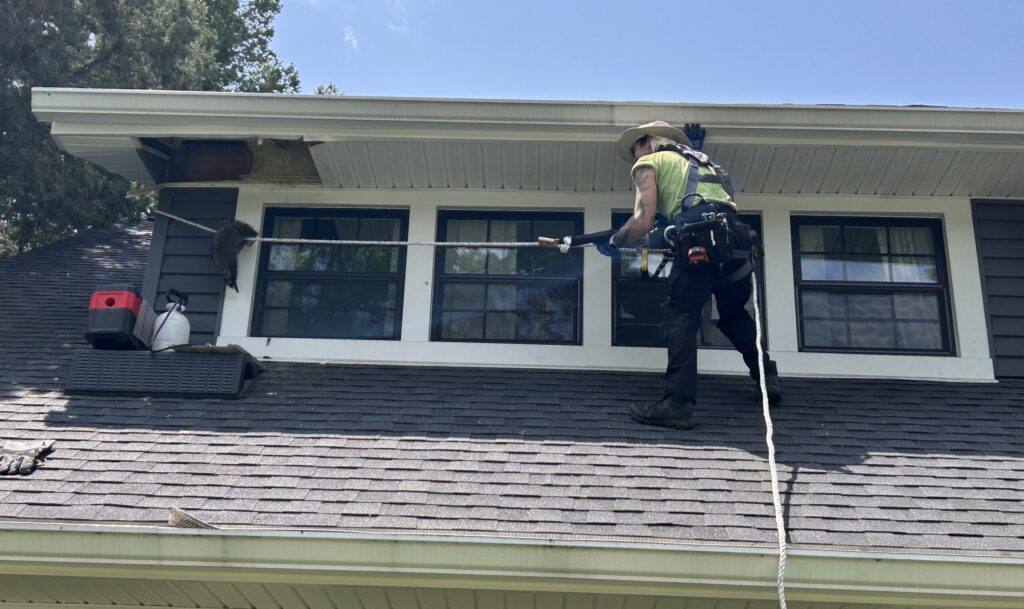
Choose Skedaddle Humane Wildlife Services for lasting results
Cats can catch a mouse. What they can’t do is stop the next one from coming in, or eliminate the breeding colony hidden in your structure.
If you’re serious about how to get rid of mice not just for a week, but for good, the solution is a comprehensive approach:
- remove the mice currently inside
- seal entry points permanently
- reduce attractants and address contamination
Skedaddle’s humane wildlife services in Columbia are designed to do exactly that: protect your family’s health, preserve your home, and keep mice out long-term with professional mouse removal and exclusion-focused prevention.
If you’ve seen signs of mice, even just one, contact Skedaddle for a thorough assessment and a customized mouse removal plan backed by experienced, humane methods.

 Loading...







