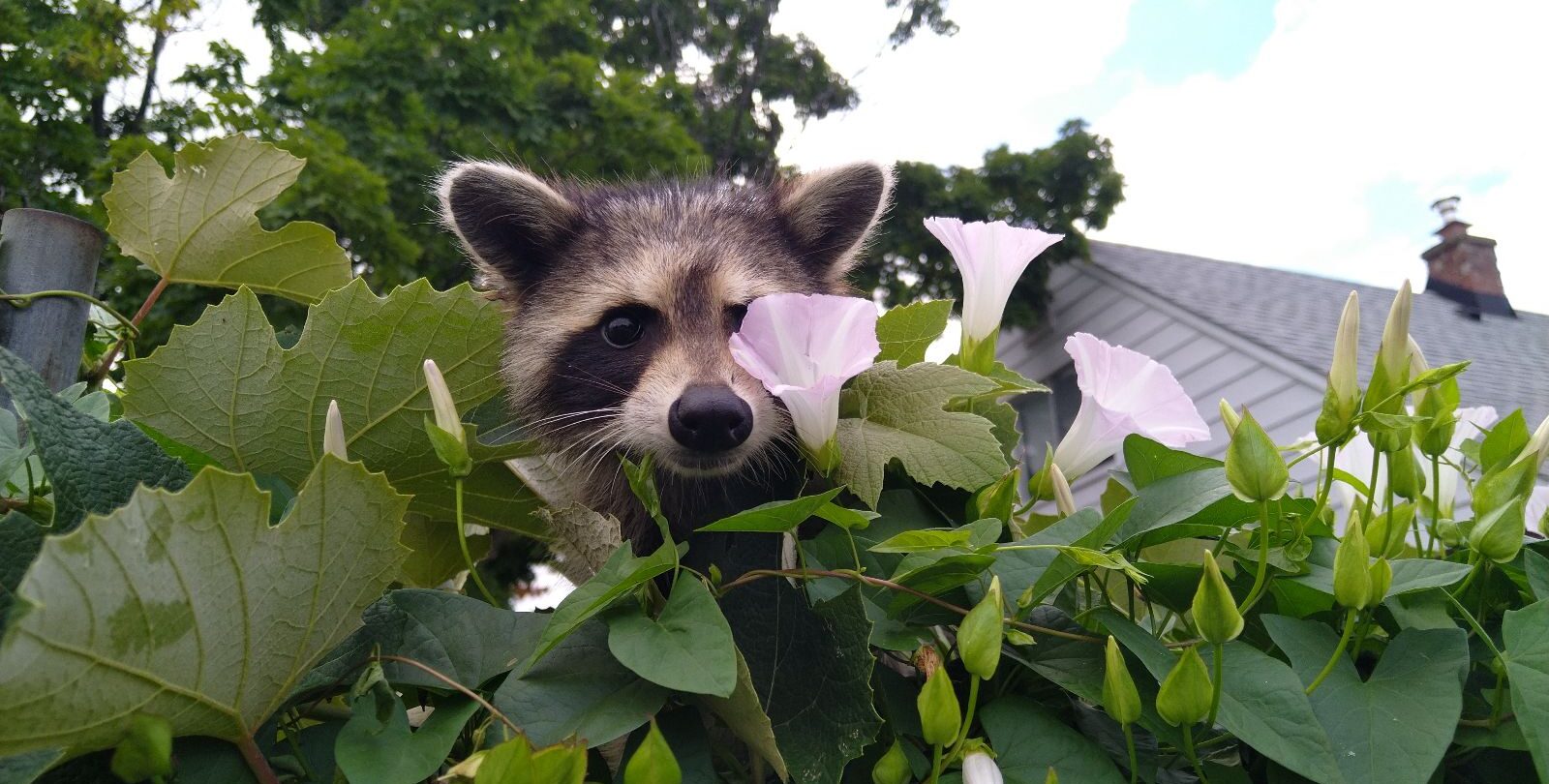
You put your green bin out the night before pickup, and by morning it’s tipped over, torn apart, and spread across the driveway. Sound familiar? Raccoons are one of the most common wildlife problems in Coquitlam, and your garbage routine plays a bigger role in attracting them than most homeowners realize. Summer makes the problem worse – warm temperatures speed up food decomposition, strong smells travel farther, and raccoons are more active than at any other time of year.
Your yard doesn’t have to be messy to become a target. A green bin left out overnight, a compost pile that isn’t properly secured, or a pet food bowl left on the deck after dark is all it takes to bring them in. Once they find a reliable food source on your property, they come back every night and they start looking for shelter nearby too.
At Skedaddle Humane Wildlife Control in Coquitlam, we know exactly what draws raccoons to residential properties and what it takes to stop the cycle. In this blog, we explain why your summer garbage routine matters, what these creatures do once they’ve found a food source, and how our team helps protect your property from repeat visits.
Can Raccoons Open Garbage Bins?
Yes. Raccoons are very good at opening garbage bins, and they get better at it the more they try. They have nimble front paws that work almost like hands, which means standard bin lids, basic latches, and lightweight containers are not much of an obstacle. A raccoon that has figured out how to open a specific type of bin will remember that and use the same technique every time.
Green bins are a particular target because they contain food waste that smells strong and breaks down quickly in summer heat. The smell alone is enough to draw them in from a distance, and once they’ve learned that a green bin in your neighbourhood is accessible, they work through the street systematically. A bin that gets raided once is very likely to get raided again.
The solution isn’t just a better lid. Raccoons that find food in your yard will keep coming back regardless of whether the bin is secured the next time, because they’ve already learned that your property is worth visiting. Our team looks at the full picture during an inspection – what’s drawing them in, how often they’re visiting, and whether they’ve started looking for shelter on the property as well.
Summer Is Their Busiest Season
Raccoons are active year-round, but summer is when their activity peaks. Mothers are nursing and raising their young through the warmer months, which means they need significantly more food than usual and are foraging more aggressively than at any other time of year. A mother with kits nearby is highly motivated and will visit every yard on the street looking for the easiest meal she can find.
Summer heat also works against homeowners when it comes to garbage and compost. Food waste breaks down faster in warm temperatures, which means the smell it produces is stronger and travels farther. A green bin that barely caused a problem in April can become a major attractant by July simply because the heat is accelerating the decomposition inside it.
The combination of increased raccoon activity and stronger food smells makes summer the highest-risk season for garbage-related wildlife problems in Coquitlam. What starts as a tipped bin can quickly become a raccoon family that has decided your property is their regular feeding ground and from there, the step to nesting in your attic or under your deck is a short one.
Odours Drive Foraging
Raccoons have an extremely sharp sense of smell, and in summer that sense works overtime. Warm air carries food smells much farther than cool air, which means the contents of your green bin or compost pile can attract activity from several houses away. Here’s what our team most commonly identifies as odour-related attractants during property assessments in Coquitlam:
- Green Bins Left Out Overnight: The smell from a green bin builds up throughout the week, and by the night before pickup it’s at its strongest. Raccoons follow that smell directly to the bin, and a standard latch is rarely enough to stop them once they’ve decided it’s worth investigating. Our team assesses how bins are being accessed on your property and what changes to placement and timing would reduce the risk.
- Open or Improperly Sealed Compost: Compost combines the smells of rotting fruit, vegetables, and organic material in one concentrated spot, and in summer heat that smell intensifies quickly. An open or loosely covered compost bin is one of the strongest attractants our team finds on residential properties during summer inspections. The smell draws raccoons onto the property, and once they’re there they explore everything else available.
- BBQ Grease and Outdoor Food Residue: The smell of a recently used BBQ, food scraps left on an outdoor table, or grease that hasn’t been cleaned from a grill grate all add to the scent load around your home. These smells mix with garbage and compost odours to create a concentrated attractant profile that makes your property one of the most appealing stops on a raccoon’s nightly route. Our team notes all of these sources during the inspection so the full picture of what’s drawing activity to your yard is clear.
Outdoor Dining and Pet Food
Summer means more time outside – more BBQs, more meals on the deck, and more pet bowls left outside after dark. Each of these things adds to what’s available to raccoons in your yard, and they take advantage of all of it. A pet food bowl left out for even a few nights can establish a regular feeding routine that brings them back to your property every evening. Once they’ve learned your yard offers easy meals, they keep coming back even after the food is gone. Here’s what our team commonly finds contributing to outdoor food-related raccoon activity:
- Pet Food Left Outside After Dark: Raccoons are most active after dusk, which is exactly when outdoor pet bowls tend to be left out. A bowl that’s been available for even a few nights becomes a reliable food source that they’ll return to on a set schedule. Our team identifies all outdoor feeding areas during the inspection and factors them into the full attractant picture for your property.
- BBQ Grease and Leftover Food Scraps: A recently used grill, food scraps left on an outdoor table, or an uncleaned grease trap all add strong smells to your yard that raccoons pick up from a distance. They don’t need a full meal to make the trip worth it — even small amounts of residue are enough to keep them coming back night after night. Our team notes all of these sources during the property assessment so nothing gets missed.
- Outdoor Dining That Pulls Them Closer to the House: The bigger risk with outdoor food sources isn’t just the food itself — it’s where it’s located. A raccoon that’s eating near your deck or back door is also checking the roofline, the garage, and any other structure nearby for a way inside. This is how a pet food or BBQ problem becomes an attic or deck nesting problem, and it’s why our team looks at the full property during every inspection, not just where they got in.
Compost Vulnerability
A compost bin that isn’t properly secured is one of the most reliable raccoon attractants in any residential yard. The contents are exactly what they look for – a mix of food scraps, fruit, vegetables, and organic material that smells strong and offers easy calories. In Coquitlam, where green bin programs and backyard composting are common, this is one of the most frequent attractant types our team identifies during summer inspections.
Here’s what makes compost such a consistent problem and what our team looks for when assessing a property:
- Loose or Standard Lids That Are Easy to Open: A basic lid on a compost bin is no match for a raccoon’s front paws. They can lift, slide, and pry open most standard covers quickly, especially if they’ve had practice with similar containers. Our team identifies how your compost is being accessed and what type of enclosure or placement would significantly reduce the risk.
- Compost Placed Close to the House or Deck: The closer a compost bin is to your home’s exterior, the more likely foraging raccoons are to investigate the rest of the property on the same visit. A bin near the deck or back door means a raccoon is already within a few metres of potential entry points while it’s eating. Our team notes the placement of all food sources on the property as part of the full attractant assessment.
- Food Scraps Added During Peak Summer Heat: Compost that has fresh food scraps added during the hottest part of the day breaks down and smells strongest by evening — exactly when raccoons are most active. The timing of what gets added to compost and when can have a real impact on how strong the attractant is after dark. Our team provides guidance on what’s contributing most to the odour load on your property so you understand the full picture.
What Happens When They Keep Coming Back

A raccoon that finds food in your yard on Monday will be back on Tuesday. And Wednesday. The more times they’re rewarded with an easy meal on your property, the more established the habit becomes, and habits that get reinforced every night are very hard to break. This is why managing attractants matters so much, and why a single tipped bin can turn into a persistent problem quickly.
Repeat visits also increase the risk of property damage and nesting. A raccoon that’s comfortable in your yard starts exploring more of it on every visit. Attic vents, soffit edges, and the space under your deck all get checked and tested. What started as a garbage problem can turn into a structural intrusion problem in a single season if the attractants keep drawing them back.
The pattern our team sees most often in Coquitlam is a simple one – food attracts them, comfort keeps them, and shelter brings them inside. Breaking that cycle early is always easier and less expensive than dealing with a full nesting situation later. If raccoons are visiting your property regularly, call our team before the problem moves from your yard to your home.
How Do You Prevent Raccoons with Skedaddle?
When our team arrives at your Coquitlam property, we start with a full assessment of everything that’s drawing raccoons in. We look at garbage and compost placement, outdoor food sources, and the full exterior of your home for signs of activity and potential entry points. We don’t just address where they got in. We address why they were there in the first place.
If raccoons have already made it into your attic or under your deck, our removal process uses one-way door systems at active entry points. These allow them to leave the structure on their own but prevent them from getting back in. Once the space is confirmed clear, we seal every opening permanently with heavy-gauge materials. All cleanup of droppings and nesting material is handled entirely by our team – homeowners should never go near any of this without proper protective equipment. If you suspect an active nesting situation, call us right away and leave the area alone.
Raccoon Challenges in Coquitlam
Coquitlam’s mix of residential neighbourhoods, green spaces, and creek corridors creates strong year-round conditions for raccoon activity. The city sits alongside Mundy Park, the Coquitlam River corridor, and significant areas of natural habitat that support large, active raccoon populations. These creatures move through residential streets regularly, and a yard that offers food and shelter will be visited consistently.
Summer is the peak season for raccoon calls across Coquitlam, with activity highest from June through August when mothers are raising their young and food competition is most intense. Neighbourhoods with mature trees, large yards, and regular green bin use tend to see the most activity, because each of these factors adds to what’s available to raccoons on a nightly basis.
Green bin pickup schedules also play a role. Bins that go out the night before an early morning pickup are left outside through the most active hours of the night, which is when the risk is highest. Our team understands the specific patterns that drive raccoon activity in Coquitlam and knows what to look for when we assess a property in the city.
Frequently Asked Questions
How do I know if raccoons are getting into my green bin and not something else?
Raccoons leave distinctive signs - tipped bins, scattered contents, and small muddy paw prints around the bin area. They tend to pull food out rather than eat at the bin, so you'll often find scraps spread across a wider area. If you're seeing this regularly, call our team for an assessment.
Do raccoons carry diseases that can affect my family or pets?
Yes. Raccoons can carry rabies, distemper, and raccoon roundworm, which can pose health risks to both people and pets. Their droppings can also contain roundworm eggs that are dangerous if accidentally ingested. This is why our team handles all cleanup - never approach droppings or nesting material without proper protective equipment.
Will raccoons stop coming if I stop leaving food out?
Reducing food sources will reduce how often they visit, but it won't necessarily stop them immediately. Raccoons remember locations where they've found food and will continue checking for a period of time even after the food source is gone. If they've already started exploring your home's exterior for entry points, removing the food source alone won't address the structural risk.
Can raccoons get into my home through the green bin area?
Not directly, but a raccoon that's regularly visiting your bin area is also exploring the rest of your property on every visit. If your green bin is close to your home's exterior, garage, or deck, there's a higher chance they're checking those areas for entry points at the same time. Our team looks at the full property during every inspection, not just the bin area.
What time of night are raccoons most active around garbage bins?
Raccoons are most active from dusk through the early hours of the morning, with peak activity typically between 9 pm and 2 am. This is the window when bins left out overnight are most at risk. Putting bins out in the morning of pickup day rather than the night before is one of the most effective timing adjustments a homeowner can make.
A Tipped Bin Tonight Could Mean an Attic Problem Tomorrow
A raccoon that finds your green bin open on Monday will be back on Tuesday and by the end of the week, your property is part of their nightly routine. Once that habit is established, it’s only a matter of time before they start looking for shelter nearby. The damage that follows – torn soffits, contaminated attic insulation, chewed wiring – is expensive to fix and gets worse the longer it goes unaddressed.
Most homeowners don’t connect the tipped bin in the driveway to the scratching they hear in the attic a few weeks later. But our team sees that pattern all the time in Coquitlam. The food brings them in, the comfort keeps them coming back, and the shelter brings them inside.
At Skedaddle Humane Wildlife Control in Coquitlam, we handle everything from the first inspection to the final seal. Our team assesses your full property, identifies every attractant and entry point, removes any raccoons present using our one-way door system, and closes off your home permanently. You don’t need to do a thing except call us. Request an estimate today and let our team stop the problem before it goes any further.

 Loading...







