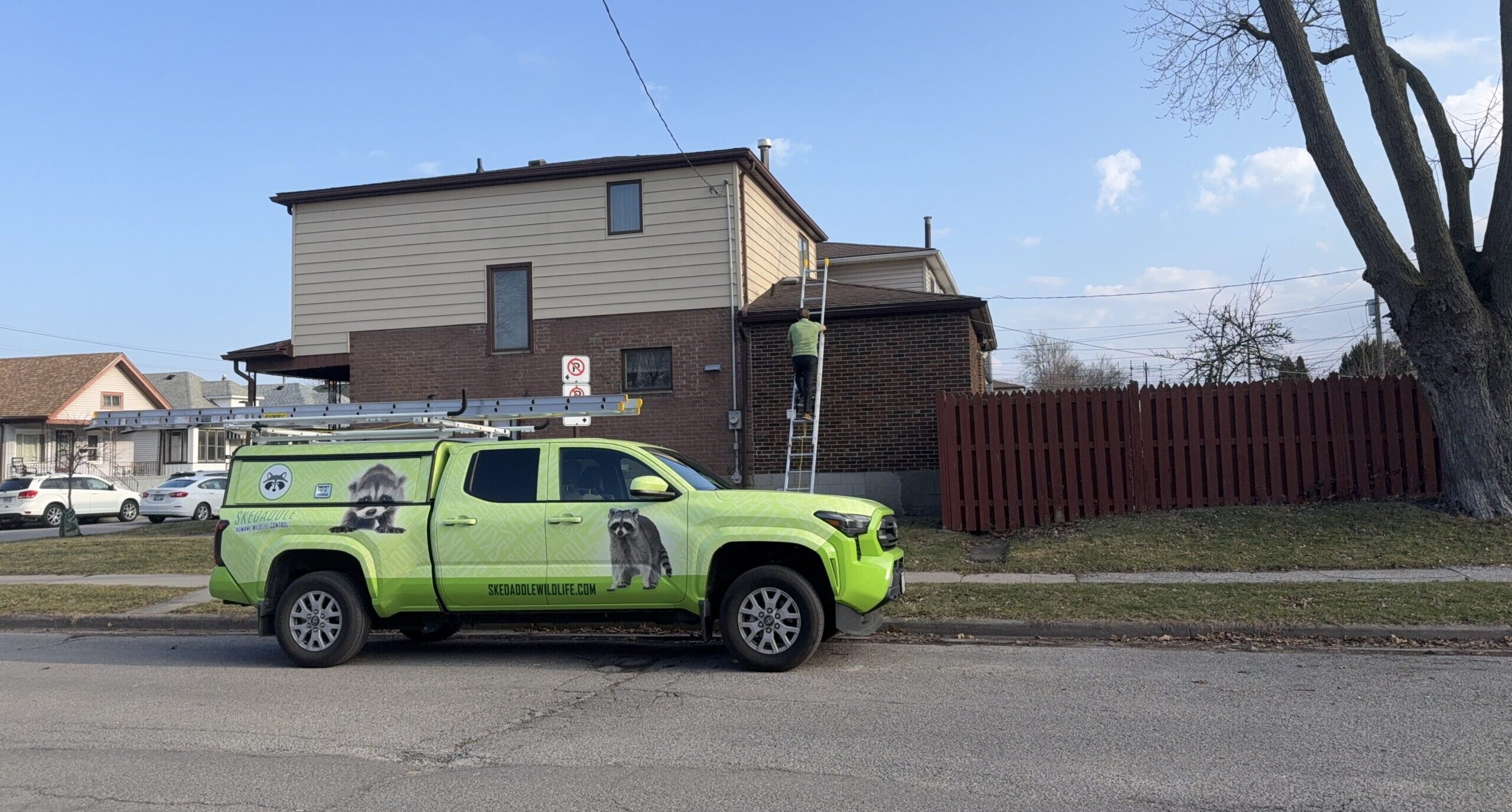
If you’ve heard strange scratching sounds in your attic on a warm Windsor night, you’re not imagining things. Bats are highly active in the Border City during the summer months — and your home may be exactly what they’re looking for. Windsor’s hot summer nights, older brick homes, and location near the Detroit River and local parks create the perfect set of conditions for these flying creatures to move in and stay a while.
So why do Windsor homes attract roosting bats each summer? The short answer is warmth, shelter, and food. Bats look for dark, quiet spaces that hold heat well, like attics, chimneys, and soffits, and Windsor has plenty of those. Throw in a waterfront location teeming with flying insects and you’ve got one of the most bat-friendly cities in Southwestern Ontario.
At Skedaddle, we’ve seen firsthand how quickly a small gap in a roofline or a loose soffit panel can turn into a full summer colony. In this blog, we break down why bats choose Windsor homes as summer roosting spots, what risks come with that, and why you should never try to handle them on your own.
Are Bats Harmful?
This is one of the most common questions we hear, and the honest answer is: it depends on the situation.
Bats themselves play an important role in the ecosystem. They eat thousands of insects every night, which helps keep mosquito and moth populations in check. In that sense, they’re beneficial to have around, just not inside your home.
The concern arises when they roost in your attic or walls. Their droppings, known as guano, can build up quickly and carry fungal spores that cause a respiratory illness called histoplasmosis. The guano can also stain ceilings, damage insulation, and create strong odours that spread through your home. In rare cases, bats can carry rabies, which is why any direct contact should be taken seriously and reported to a medical professional.
The bottom line: bats outside are helpful. Bats inside your home are a health and safety concern that needs professional attention right away. If you think they’ve made it inside, don’t touch them and don’t try to remove them yourself. Call our team at Skedaddle Humane Wildlife Control in Windsor instead.
Why Windsor Homes Attract Roosting Bats
Windsor is one of the warmest cities in Canada, and that warmth is a big part of what draws bats here each summer. But the city’s unique combination of older housing, green space, and waterfront location makes it especially attractive. Here are the main reasons Windsor homes become summer roosting spots.
Older Brick Architecture
Windsor has a lot of older homes, and older homes have a lot of small openings. Aging mortar, loose brickwork, and worn wood trim all create tiny gaps and crevices that bats can squeeze through. You might be surprised how small a gap they need. They can fit through an opening as small as 9.5 mm, which is roughly the width of a finger.
These gaps are often found:
- Along the roofline where the fascia meets the soffit.
- Around aging chimney mortar and flashing.
- Where brick has shifted or settled near windows and vents.
- Along deteriorating wood trim and eaves.
Once they find a small opening, they’ll use it night after night. Without a proper inspection, these entry points are easy to miss.
Warm Summer Nights
Windsor is known for its hot, humid summers and that heat is exactly what bats need. They prefer roosting spaces that hold temperatures above 32°C, which helps their pups (baby bats) develop properly. Your attic absorbs heat throughout the day and holds it into the evening, creating a warm, stable environment that maternity colonies depend on.
This is especially true in Windsor’s older brick homes. Brick holds heat exceptionally well, turning upper floors and attics into ideal nurseries during the summer months. If your attic gets hot in July, it’s already working in their favour.
Attics and Soffits
Your attic checks almost every box for a bat colony: it’s dark, quiet, elevated, and warm. Add in the fact that most attics aren’t regularly disturbed, and you have a space that feels completely safe to these creatures. They can roost there for an entire season without being noticed — at least at first.
Soffits are another common entry point and hiding spot. Loose, warped, or damaged soffit panels create hidden cavities that are easy to slip into and hard to spot from the ground. Many Windsor homeowners don’t discover a problem until they hear sounds in the ceiling or notice droppings near an exterior wall.
Proximity to Parks and Waterfront Areas
Bats need a reliable food source, and Windsor delivers. The city sits along the Detroit River and is home to green spaces like Ojibway Park and Dieppe Gardens — all of which are loaded with flying insects after dark. A home near any of these areas is within easy flying distance of an all-you-can-eat insect buffet.
Parks and waterfront areas near your home increase the likelihood of bat activity around your property, including:
- Large numbers of mosquitoes, moths, and beetles near water.
- Mature trees that offer daytime cover close to your roofline.
- Green corridors that connect natural habitat directly to residential streets.
- Wooded areas that attract insects bats follow right to your neighbourhood.
The closer you are to water or greenery, the more activity you’re likely to see at dusk.
Uncapped Chimneys
A chimney is almost a perfect bat habitat: dark, vertical, sheltered from the weather, and radiating warmth from the brick. An uncapped chimney gives these creatures easy access to a cozy space they can use all summer long.
Older Windsor homes are particularly prone to this issue, especially if the chimney hasn’t been inspected or maintained in a few years. Even a small gap around the chimney cap or deteriorating mortar joints can be enough to let them in.
Why You Should Never Seal Entry Points Without an Inspection
If you spot bats going in and out of your home, it’s tempting to seal the opening yourself. But doing that without a professional inspection can cause serious problems for your home and for the bats.
Here’s why sealing on your own can backfire:
- Trapping Pups Inside: During summer, bats form maternity colonies to give birth and raise their young. If you seal the entry point while pups are still inside, they can’t get out. They’ll die inside your attic or walls, creating odour problems and attracting other pests.
- Guano and Health Risks: A colony that’s been roosting in your attic leaves behind a significant amount of droppings. This material can harbour fungal spores linked to respiratory illness. It needs to be handled and removed professionally, with the right protective equipment.
- Property Damage from Desperate Bats: If their usual exit is blocked, bats will try to find another way out. In some cases, they chew through drywall or squeeze through interior gaps to escape, bringing them into your living spaces.
- Legal Protections in Ontario: In Ontario, bats are protected under provincial wildlife regulations. Sealing them inside a building during an active season can violate those rules. Humane exclusion is not just the right approach, in many cases, it’s the only legal one.
The right move is to call our team first and let us assess the situation before anything is sealed.
Our Humane Approach to Bat Removal
At Skedaddle Humane Wildlife Control in Windsor, we never trap or harm bats. Instead, we use one-way doors and exclusion devices that allow them to leave your home at dusk to go hunt for food, but physically prevent them from getting back in. It’s a humane, effective method that protects both your home and the bats.
Our process starts with a full inspection of your roofline, soffits, chimney, and any other potential entry points. We identify where they’re getting in, assess the extent of the colony, and make sure no pups are at risk before exclusion begins. Once they’ve vacated, we seal the entry points with durable, wildlife-grade materials designed to last.
We also address the cleanup. Guano and contaminated insulation are removed safely by our trained technicians, so you’re not left dealing with lingering odours or health risks after the job is done.
Summer Bats in Windsor: A Local Pattern Worth Knowing
Windsor’s combination of climate, architecture, and green space makes it one of the more active areas for bat calls in Southwestern Ontario. Older neighbourhoods near the riverfront tend to see the highest activity, but newer subdivisions in LaSalle, Tecumseh, and Lakeshore aren’t immune, especially when properties back onto parks or ravines.
Summer is peak season, and the pattern is consistent. A homeowner hears something at dusk, notices small dark droppings near a roofline, and spots movement near a soffit or chimney cap. By the time they call us, a maternity colony has often been using the space for weeks. The earlier you catch it, the simpler the solution and the less cleanup is involved.
Frequently Asked Questions
How do I know if bats are in my attic?
The most common signs are scratching or rustling sounds in the ceiling or walls around dusk and dawn, small dark droppings near the roofline or on exterior walls, and seeing them flying out of a gap in your soffit or fascia at sunset. A strong musty odour in your upper floors can also be a clue that a colony has been roosting for a while.
When is bat season in Windsor?
They typically arrive in late spring and are most active through the summer months. Maternity colonies - groups of females raising their young - are common from May through August. This is the time when exclusion needs to be handled most carefully, since pups may be present and can't fly yet.
Can bats get from the attic into the rest of my home?
Yes, they can. Gaps around light fixtures, plumbing, and electrical runs can allow them to move from the attic into living spaces. If you find one flying around inside your home, don't try to catch it with your bare hands. Call us right away.
How long does it take to remove bats from a home?
It depends on the size of the colony and the number of entry points. The exclusion process itself typically takes a few weeks to confirm that the space has been fully vacated. Our team walks you through the timeline during the inspection.
Will bats come back next year if we remove them now?
They can, if the entry points aren't properly sealed. That's why our process doesn't stop at exclusion, we seal and reinforce every vulnerable area so they can't return next season. Our workmanship is backed by a lifetime guarantee where our products are installed.
Ready to Take Back Your Home?
If you’ve spotted bats flying around your roofline at dusk or heard sounds in your attic that shouldn’t be there, it’s time to call in the professionals. Skedaddle Humane Wildlife Control in Windsor has the training, tools, and experience to handle bat removal safely, legally, and humanely, so you don’t have to.
Bat problems don’t fix themselves. The longer a colony stays in your attic, the more droppings build up, the more damage can occur, and the harder the cleanup becomes. What starts as a few creatures slipping through a small gap can turn into a much bigger problem by the end of summer.
Don’t try to seal entry points or handle this on your own. You could trap pups inside, make the problem worse, or run into legal issues under Ontario’s wildlife regulations. Our team knows exactly how to handle every step of the process, from the first inspection to the final seal.
Call our Windsor team today or request an estimate online. We’ll inspect your home, explain exactly what we find, and take care of the rest. You focus on your summer. We’ll handle the bats.

 Loading...