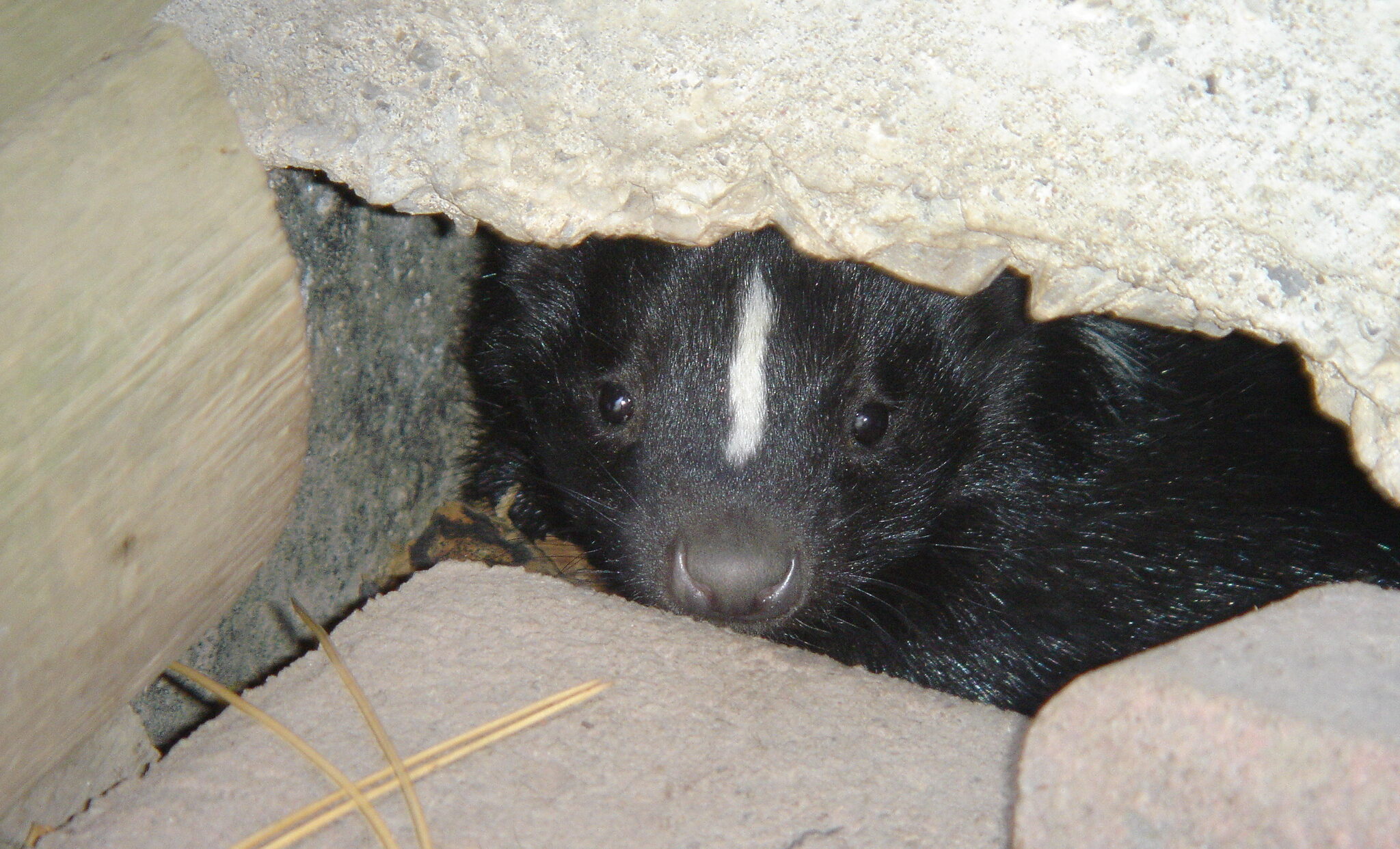
Yes — skunks do return to the same yard year after year, and it’s rarely a coincidence. When a skunk finds a property that offers reliable food, a safe place to sleep, and shelter from the cold, it remembers. That location becomes a priority destination every time it needs a den, every breeding season, and every winter.
Skunks are adaptable animals. Suburban areas like Hamilton provide everything they need — sheds, decks, garages, and grub-rich lawns that make your yard feel just like home to them. Their behaviour follows predictable patterns, driven by food availability, den quality, seasonal changes, and breeding needs.
If you’ve spotted a skunk on your property more than once, the situation is unlikely to resolve itself on its own. In this blog, the team at Skedaddle Humane Wildlife Control in Hamilton walks you through exactly why skunks keep returning, what signs to watch for, and why our professional help is the right call.
When Do Skunks Have Babies?
Skunks breed in late winter, typically between February and March. Females give birth to their young — called kits — roughly 60 to 75 days after mating, usually between April and June. A litter commonly includes four to seven kits.
After birth, the kits stay in the den for about two months before they are mobile enough to follow their mother. By late summer, the young skunks begin to disperse. This means that a skunk living under your deck in spring almost certainly has babies with her — an important reason to call our professionals immediately rather than attempting to handle the situation yourself.
Why Do Skunks Return to the Same Yard?
Skunks are creatures of habit and often return to the same yard due to its appealing environment. Factors such as abundant food sources, shelter options like covered spaces under decks or sheds, and safety from predators make your property an ideal location.
They are particularly drawn to areas where they have previously nested successfully. Understanding why skunks favour certain properties is key to managing and preventing future visits. By addressing these environmental factors, you can reduce the likelihood of skunks returning to your yard.
Shelter and Security
Skunks are drawn to dark, quiet, dry spaces. Under a deck, shed, or porch gives them everything they need — protection from weather, safety from predators, and minimal disturbance. Once a skunk identifies your property as a secure spot, it will keep coming back.
Den sites that have proven to be safe are not easy for skunks to find. A location that worked once will be the first place they check when temperatures drop or when a female is ready to give birth.
- Skunks look for structures close to a food source.
- Low-traffic corners of a yard are especially attractive.
- Disturbed soil or small holes near the base of a deck or shed are common signs of activity.
Easy Food Sources
A yard that feeds a skunk once is a yard they will return to. These animals eat a wide variety of things — grubs, insects, fallen fruit, pet food left outdoors, and the contents of unsecured garbage cans. Urban and suburban yards are full of these opportunities. Let’s break down each one:
- Grub-Filled Lawns: Lawns that contain lots of grubs and insects are a major attraction for skunks. These animals use their strong sense of smell to find insects hiding just below the soil. They will dig small, cone-shaped holes across the grass to reach their meal. If your yard has a steady supply of grubs, these animals may return night after night to feed.
- Unsecured Garbage and Food Waste: Open or loosely closed garbage cans can quickly become a food source for skunks. Leftover food scraps, packaging, and organic waste give them an easy meal without much effort. Once they discover garbage in a yard, it may keep coming back to check for more. Securing trash bins with tight lids helps reduce this attraction.
- Outdoor Pet Food and Bird Seed: Food left outside for pets can easily attract wildlife. Skunks are opportunistic eaters and will gladly eat pet food or spilled bird seed. Even small amounts left on the ground can bring animals into the yard. Removing outdoor food sources at night helps prevent these animals from turning your property into a feeding area.
- Fallen Fruit and Garden Produce: Fruit trees and vegetable gardens can also attract skunks. Fallen apples, berries, or vegetables give off strong smells that animals can detect from far away. These foods are easy for them to find and eat. Cleaning up fallen produce regularly helps keep wildlife from visiting your yard.
Fidelity to Successful Den Sites
Skunks are generally nomadic during the warmer months, moving between multiple dens. But a den site that has proven reliable? They return to it, sometimes for years.
This is especially true of winter dens. Skunks enter a state of torpor during cold months — a light form of sleep that helps them conserve energy. They rely on warm, well-insulated shelter to survive. If your shed or deck provided that once, expect the skunk to return when the weather turns cold again.
These animals are creatures of habit and prefer to have a reliable den site for their survival. As mentioned, they tend to return to the same location year after year, especially during the cold winter months when they enter a state of torpor.
But what makes a den site reliable? Skunks look for specific features in a den site that provides warmth and protection from predators. These features include well-insulated shelter, such as an old shed or under a deck, which helps them conserve energy during their period of torpor.
Breeding Season Behaviour
Late winter brings increased skunk activity across Hamilton. Male skunks travel farther than usual in search of mates, while females scout out secure locations to give birth and raise their young.
- Breeding season runs from February through March.
- Females look for dark, undisturbed spots to raise their kits.
- A location where a litter was raised successfully is likely to be reused the following spring.
Once a female skunk has raised young in your yard, that spot becomes a priority den site. The pattern tends to repeat season after season without intervention.
Social Behaviour in Winter
These animals usually live alone for most of the year. When winter arrives and temperatures drop, their behaviour changes. They often share dens to stay warm and conserve energy.
During very cold weather, several animals may gather in the same den. A space that held one animal in summer may hold several in winter. Sharing body heat helps them survive harsh conditions.
This is why a small problem can grow quickly. A quiet den under a porch, shed, or deck can attract more animals as winter approaches. Addressing potential den sites early helps prevent larger issues later.
Generational Habit
Wildlife often returns to places that worked well before. When young animals grow up in a safe den site, they remember that location. As adults, they may return to the same yard.
Even if the original animal leaves, others may come back later. Over time, the same property can become a familiar nesting area. This pattern is one reason activity may continue for years.
Breaking that cycle requires early action. Removing animals humanely and securing the den site helps prevent repeat visits. When food and shelter are no longer available, wildlife usually moves on.
Skunks in Hamilton: What to Know
Hamilton’s climate makes residential areas attractive to wildlife. Warm summers and cold winters push animals to search for safe shelter. Homes often provide the protection they need.
Older houses may have crawl spaces, decks, or gaps that are easy to access. Even newer homes can have openings that become den sites. These areas offer warmth and protection from predators.
Local regulations require humane wildlife removal. Our professional teams understand these rules and use safe techniques. Working with local experts helps protect both your property and the animals.
Skunk Prevention Starts with the Right Team
Stopping repeat skunk visits requires more than simply chasing wildlife away. Our professional removal ensures animals leave safely and cannot return. Humane one-way doors allow them to exit while preventing re-entry.
Once the space is empty, entry points are secured. Durable materials are installed to block access under decks, sheds, or porches. This prevents other animals from using the same spot.
Prevention also means removing what attracted them in the first place. Food sources, open garbage, and shelter areas are addressed. These steps help make your yard far less appealing to wildlife.
Frequently Asked Questions About Skunks
Are skunks dangerous?
Skunks are generally not aggressive, but they can spray when they feel threatened. Their spray is difficult to remove and extremely unpleasant. More importantly, skunks can carry rabies and other diseases, which is why you should never approach or handle one yourself.
How long will a skunk stay under my deck?
It depends on the season. A skunk passing through may only stay for a night or two. If it has found a reliable food source or is raising young, it could stay for several months.
Can I seal off the entry point myself?
We strongly advise against sealing any entry point without first confirming the skunk has left. Trapping an animal inside can cause serious problems, including property damage, persistent odour, and distress to the animal. Always call our professionals first.
What time of year should I address a skunk problem?
Any time of year — the earlier, the better. Spring and summer mean there may be young skunks present, which adds complexity to the situation. Our team at Skedaddle is trained to handle skunk problems safely in every season.
Do skunks spray inside their dens?
Skunks rarely spray inside their den. Spray is a defence mechanism used when they feel threatened out in the open. However, if a skunk is startled near your home, the odour can easily seep inside through vents and gaps in the structure.
Ready to Reclaim Your Yard? Let Skedaddle Handle It.
Skunks don’t return to your yard by accident. They come back because your property is giving them exactly what they need and without the right intervention, that cycle will continue.
At Skedadde, we specialize in humane and effective skunk removal. Our team of experts will conduct a thorough inspection of your property to identify and seal all entry points, preventing any future skunk intrusions.
But our services don’t stop there. We also offer clean-up and restoration services to eliminate any lingering odours and waste left behind by the skunks. Our priority is not only removing the pests but also ensuring that your property is safe and free from any potential health hazards.
Don’t let skunks take over your yard. Choose Skedaddle for professional, reliable, and service-oriented solutions to your wildlife problems. Contact us today for a consultation and let us help you reclaim your space. Remember, we are just a phone call away!

 Loading...







