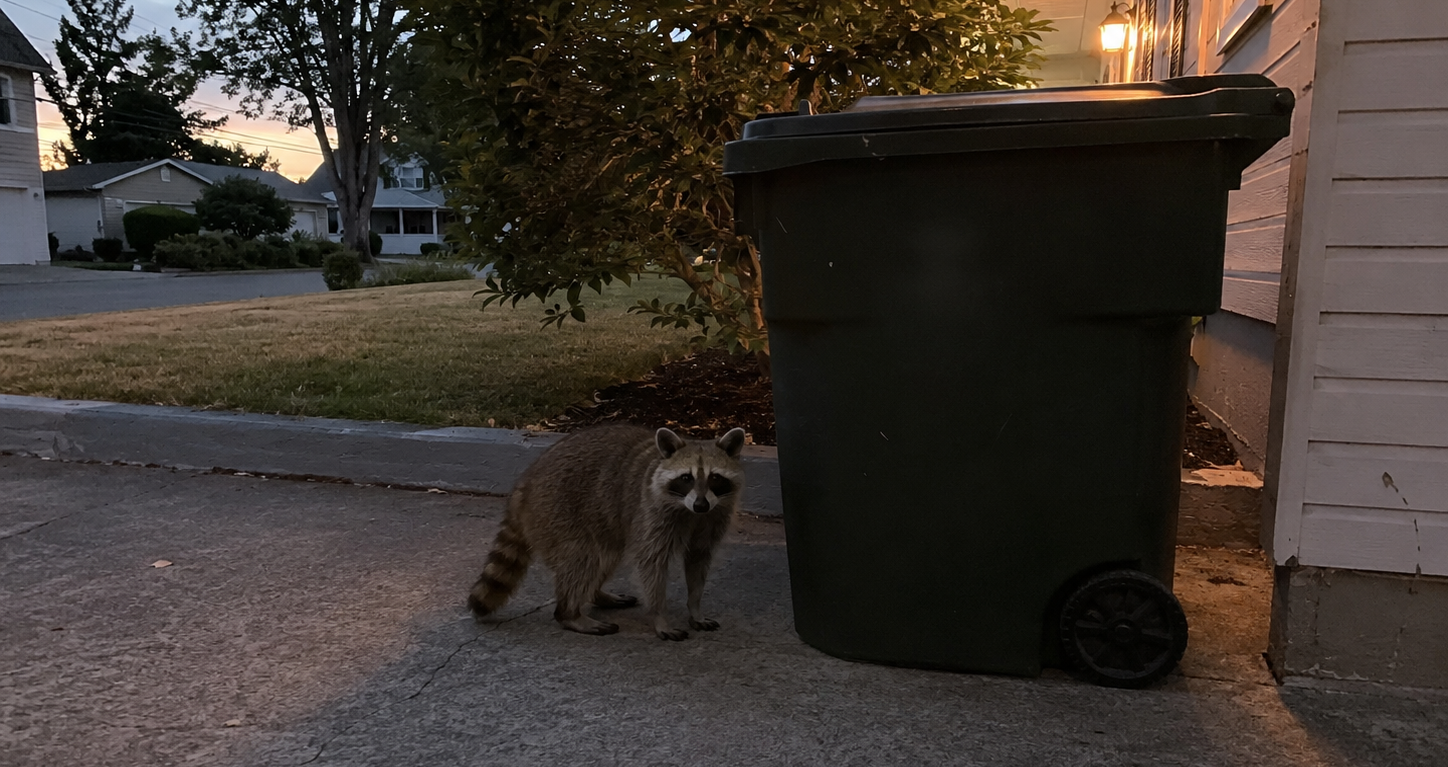
You may be attracting raccoons during fall cleanup without knowing it. Filled garbage bags, open compost, fallen fruit, spilled birdseed, and barbecue grease can turn your yard into an easy place to find food. September is also when cooler Minnesota nights can make decks, garages, sheds, and roof spaces look like safe shelter.
You may only plan to leave a bag or pile outside until collection day. However, these animals have a strong sense of smell and can find food that seems hidden. Once they receive an easy meal, they may return and begin exploring your garage, vents, chimney, soffits, and roofline.
At Skedaddle Humane Wildlife Control in Minnesota, we inspect your complete property and identify how food, shelter, and entry points may connect. We handle the investigation, removal, cleanup, and prevention work, so you do not have to approach an animal or enter a contaminated space. In this blog, we explain how fall cleanup may attract raccoons, which warning signs to watch for, and how our professional wildlife team protects your home.
What Attracts Raccoons to a Yard?
Raccoons are attracted to yards that provide food, water, shelter, or access to a building. Garbage, compost, fruit, seed, and food residue are common sources. Decks, sheds, garages, trees, and open building gaps may provide protected places to rest or hide.
Their strong sense of smell helps them find meals that may not be easy for you to see. A small amount of grease under a barbecue or fruit hidden beneath leaves may be enough to draw attention. They may also remember a dependable food source and include it in a regular nighttime route.
Food often brings these animals into the yard first. Once there, they may explore vents, chimneys, soffits, roof gaps, and garage doors. Our professional assessment can identify how the attractants and possible entry points connect.
Why September Yard Work Can Increase Activity
September yard work often moves fruit, leaves, branches, soil, garbage, and stored items around the property. Filled bags may sit outside while waiting for collection. Compost may also become easier to reach while gardens are cleared and summer plants are removed.
Outdoor dining areas can create another concern. Grease, crumbs, and food smells may remain around barbecues, patios, and outdoor kitchens after summer gatherings end. A grill cover can hide the mess from view, but it does not block the smell.
Minnesota nights also begin to cool during September. Protected spaces under decks, inside garages, or along the roofline may become more attractive. Our professional assessment during early fall can find these conditions before regular yard visits become an indoor problem.
Fall Food Sources Around the Property
Several small food sources can make one property highly attractive. Fall cleanup may collect waste in one place or uncover food that had been hidden during summer. Our team checks each source and determines whether activity has spread toward the home.
- Garbage: Filled bags, loose lids, food packaging, and spilled waste can provide a dependable meal. Strong smells may attract activity from other parts of the neighborhood. We inspect the storage area and nearby routes for signs of regular visits.
- Compost: Fruit scraps, vegetables, and other food waste may create strong smells. A loose lid or damaged container can make the material easier to reach. Our assessment can show whether activity has moved from the compost toward a deck, garage, or foundation.
- Fallen Fruit: Apples and other fruit may remain under trees during late summer and fall. Leaves and thick growth can hide this food from view. Repeated feeding may turn your yard into part of a nightly route.
- Birdseed: Fallen seed can collect beneath feeders and among garden plants. Bags stored inside a garage or shed may also draw attention. Our technicians check nearby climbing routes and possible entry points.
- Barbecue Residue: Grease, scraps, and cooking smells may remain around a grill or outdoor kitchen. Residue can collect beneath the barbecue or inside a covered area. Activity on your deck may place raccoons close to doors, vents, walls, and roof supports.
A Professional September Attractant Audit
Attractants may be spread across several parts of your property. One area may provide food, while another offers shelter or access to the home. Our professional audit connects these separate conditions and shows how activity moves across the property.
- Yards and Gardens: We check fruit trees, garden beds, thick growth, fallen produce, and areas where waste may collect. Tracks, disturbed soil, and worn paths can reveal common travel routes. These signs help us understand how raccoons enter and cross your yard.
- Decks and Patios: Our team examines barbecue areas, outdoor dining spaces, planters, and gaps beneath the structure. A deck may provide both food and a protected resting space. Posts, railings, and nearby trees may also help them reach higher parts of the home.
- Garages and Sheds: We assess stored food, garbage, damaged doors, worn seals, vents, and open wall gaps. A quiet garage or shed may become a stopping point before activity moves into another area. We determine whether the signs suggest occasional visits or an established den.
- Outdoor Kitchens: Our technicians inspect grills, counters, cabinets, garbage storage, and nearby building openings. Grease and food smells may remain even when the area looks clean. These conditions can bring activity close to windows, doors, walls, and vents.
- Garbage-Storage Areas: We look for tipped containers, torn bags, tracks, stains, and damage around lids. The area may sit beside a fence, garage, deck, or foundation. Our findings connect the food source with the route being used to reach it.
Signs Raccoons Are Visiting the Yard
These animals are often active at night. You may notice the results the next morning instead of seeing the visitor directly. Several types of evidence can show that your property has become a regular stop.
- Tipped Containers: Garbage may be scattered across the yard or storage area. A lid may be moved even when the container remains upright. Repeated damage suggests that the food source has become easy to remember.
- Tracks and Disturbed Ground: Their prints often look like small handprints with five long toes. You may notice them in mud, garden soil, or near water. Leaves, grass, and mulch may also be moved while they search for food.
- Droppings: Waste may appear near decks, sheds, woodpiles, roofs, or other raised areas. Raccoons sometimes return to the same location, creating a latrine. You should not touch, sweep, or clean the material yourself.
- Exterior Damage: Loose vents, torn soffits, bent screens, damaged shingles, or marks near a chimney may point to attempted entry. The most visible opening may not be the only weak area. Our professional inspection covers the complete exterior.
- Nighttime Sounds: You may hear movement on a deck, roof, or near the garbage area. Scratching or thumping inside an attic, chimney, or wall may point to indoor activity. A professional should locate the source before any opening is sealed.
Why Raccoons Are Common in Minnesota Communities
Raccoons adapt well to Minnesota’s urban and suburban areas. Neighborhoods provide garbage, compost, gardens, fruit trees, seed, water, and many protected spaces. The Minnesota Department of Natural Resources notes that they readily take advantage of human food sources.
Homes also provide many possible travel routes. Mature trees, fences, garages, decks, sheds, chimneys, and roof edges may help them move across a property. Closely spaced homes can allow one nighttime route to pass through several yards.
The food source may not always be on the same property where you see activity. One yard may offer garbage, while another provides water or shelter. A complete professional assessment is needed to identify the conditions affecting your home.
How Yard Activity Can Lead to Indoor Entry

Food may first bring a raccoon into your yard, but shelter can encourage it to stay. Repeated visits give these animals time to explore decks, roofs, vents, chimneys, soffits, and garage doors. They may notice a weak area that was not easy to find during one quick visit.
Raccoons are strong climbers. Trees, fences, downspouts, deck posts, and other structures may help them reach the roof. A loose vent, damaged soffit, or uncapped chimney may then provide access to an indoor space.
An attic, chimney, garage, or wall can become more attractive as Minnesota nights grow colder. You should not seal a suspected opening before it is inspected. An adult or dependent young may still be hidden inside.
Why Removing One Visitor May Not Stop the Problem
Removing one visible raccoon does not correct the food or shelter that brought it to the property. Another may follow the same nighttime route while those conditions remain. The first visitor may also be only one member of a hidden family.
One tipped garbage container may seem like the full problem, but several attractants can work together. Food may be available near the deck, while shelter exists beneath a shed. A roof opening may create another concern that cannot be seen from the yard.
A longer-term plan must address the current activity, contaminated areas, shelter, and building access. The entire property must be considered instead of only the place where one was seen. Skedaddle handles each part of that process professionally.
How Skedaddle’s Professional Removal and Exclusion Provide Longer Protection
Our team begins by finding active entry points, den areas, travel routes, damage, and contamination. We also determine whether dependent young are present. That information guides the humane removal plan.
When appropriate, we may install one-way doors that allow wildlife to leave but prevent re-entry. Removing the current visitors is only one part of the service. We confirm that the space is clear before permanently securing vulnerable openings.
Our technicians also remove contaminated nesting material and complete professional sanitation when needed. We use durable materials to secure vents, chimneys, soffits, roof gaps, and other access points. Inspection, humane removal, cleanup, restoration, and exclusion work together to reduce repeated activity.
Fall Raccoon Problems in Minnesota
Raccoons remain active during Minnesota’s fall season as they search for dependable food and shelter. September cleanup can provide temporary access to garbage, compost, fallen fruit, birdseed, and barbecue residue. One easy meal may lead to several return visits.
Minneapolis and nearby communities provide mature trees, decks, garages, sheds, outdoor kitchens, chimneys, and roof openings. These features can support movement between the yard and the building. Tipped garbage, droppings, nighttime sounds, or roof damage may be the first signs you notice.
Removing attractants will not remove a raccoon that is already inside your home. It will not close an entry point or address dependent young and contamination. Our team finds the source, completes humane removal and professional cleanup, and secures vulnerable areas.
Frequently Asked Questions
Why do raccoons visit yards in the fall?
Fall yards may provide food, water, and protected resting areas. Garbage, compost, fruit, seed, and barbecue residue can offer easy meals. Cooler weather may also make sheltered spaces more attractive.
Do raccoons return to the same food source?
Yes, they can remember dependable feeding areas. These locations may become part of a regular nighttime route. Visits may continue while food or shelter remains available.
What do raccoon tracks look like?
Their tracks often look like small handprints with five long toes. They may appear in mud, garden soil, or near water. Our professionals can compare tracks with other signs to confirm activity.
Are raccoon droppings dangerous?
Droppings may contain harmful germs or parasites. Waste that collects in a repeated latrine area requires special care. You should not touch, sweep, or clean the material.
Can a raccoon enter through a roof vent?
Yes, a loose or damaged vent may provide access to an attic or wall. These animals can pull at weak materials to make an opening larger. Our professionals should inspect the area before it is repaired.
Should an entry hole be sealed right away?
No, an adult or dependent young may remain hidden inside. Closing the hole could trap them or separate the family. Skedaddle must inspect the structure and complete the correct removal plan first.
Who should inspect a Minnesota property for raccoons?
Our trained wildlife professionals should assess the complete home and yard. Skedaddle can locate attractants, trace travel routes, identify entry points, complete humane removal, clean contamination, and prevent re-entry. You do not need to approach these animals or enter unsafe areas.
Stop Fall Cleanup From Becoming an Invitation
September yard cleanup may leave garbage, compost, fallen fruit, birdseed, and barbecue residue within reach. Yards, decks, garages, outdoor kitchens, and garbage-storage areas can provide both food and shelter. Repeated visits may eventually bring raccoons close to vents, chimneys, soffits, garage doors, and roof openings.
Tracks, droppings, tipped containers, damage, and nighttime sounds may point to a larger problem. You should not approach a raccoon, clean its waste, inspect a den, or seal an opening yourself. Our professional inspection is especially important because an adult or dependent young may be hidden inside.
Skedaddle Humane Wildlife Control in Minnesota handles the full process for you. Our professional wildlife team completes the property assessment, humane removal, sanitation, restoration, and exclusion. We also identify the conditions that attracted the activity and secure vulnerable areas against another entry.
If fall activity has reached your yard or home, contact us before it grows into a larger problem. Request an estimate to learn more about professional raccoon removal and prevention.

 Loading...