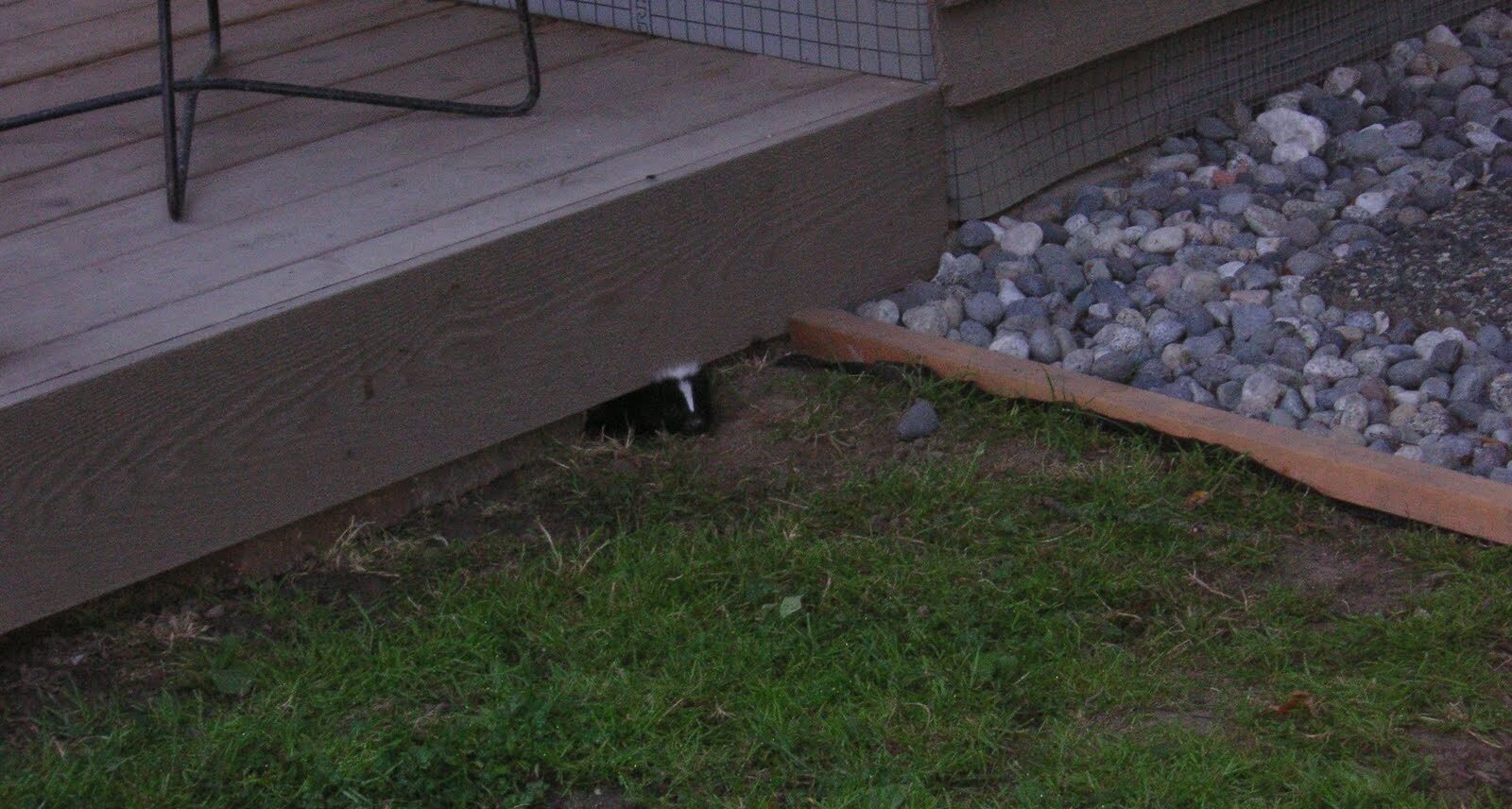
You could have skunks or raccoons sheltering beneath your backyard deck if the space is accessible and protected. Low decks can offer cover, quiet corners, and room to rest or raise young. A visitor crossing your yard does not prove that the deck is occupied, but repeated movement through the same opening deserves attention.
You may first notice scratching beneath the boards or disturbed soil beside the steps. An unusual smell or regular evening visits can add to the concern. These signs need to be considered together because none confirms the occupant on its own. Seeing an adult leave also does not mean the space is empty, especially when dependent young may remain inside.
At Skedaddle Humane Wildlife Control in Kitchener, we inspect the deck and surrounding property to identify what is happening. You should not crawl underneath, touch droppings, disturb suspected dens, or close an opening yourself. Our team assesses occupancy before planning humane removal and prevention. Below, we explain why decks provide shelter, which warning signs matter, and why vacancy must be confirmed before access is secured.
How Can You Tell if an Animal Is Living Under Your Deck?
You may notice repeated entrance use, disturbed soil, sounds, odours, or droppings already visible near the deck. Several signs appearing together can suggest that the space is being used for shelter. For example, regular movement through one gap is more useful evidence than a single sighting in the yard. A professional inspection is still needed to confirm the source.
Fresh activity and older damage can look similar from a distance. An opening beneath the skirting may have existed for years without being occupied. Digging nearby may involve a search for food rather than access to a den. An odour can also come from another part of the property.
Our team compares these clues with the condition and layout of the deck. We identify possible entrances, assess the concealed space, and check whether dependent young are present. You can tell us what you have already noticed during normal use of your yard. Leave closer investigation to us rather than reaching underneath or removing deck materials.
Why Low Decks Can Become Sheltered Den Sites
The space beneath a low deck may provide more protection than its appearance suggests. Access, ground conditions, and disturbance all affect whether it is suitable. Our inspection looks at those conditions without assuming that every low deck contains a den.
- Cover From Weather and Exposure: Deck boards overhead can create sheltered areas beneath the structure. Some corners may offer protection from wind and direct exposure, even when rain passes through gaps between the boards. The whole space does not need to be dry for one protected section to receive attention. Our team assesses the actual conditions rather than judging shelter from the deck’s appearance above.
- Quiet Spaces With Limited Disturbance: You may use the deck often while the area below remains largely untouched. Supports, steps, and enclosed corners can keep activity out of view. These animals may rest during periods when the yard is quiet or return after people have gone indoors. Normal use of the deck therefore does not confirm that its underside is empty.
- Accessible Ground-Level Openings: Gaps beneath skirting, beside steps, or along uneven ground may provide access. Digging can also create a route where soil meets the edge of a barrier. A small visible entrance may lead to a larger sheltered area farther inside. We inspect the route before recommending any work that would block it.
How Skunks and Raccoons Use the Space Differently
Skunks commonly seek suitable ground-level shelter, making accessible spaces beneath decks worth assessing. A protected area can provide a place to rest or establish a den. Digging near the perimeter may be one clue that the space is receiving attention. However, disturbed soil alone does not identify the species or confirm occupancy.
Raccoons may also use sheltered spaces beneath structures, even though they can climb to elevated locations. A deck can offer cover without requiring access to a roof or attic. The choice depends on the conditions around the property and the space available. Our inspection considers evidence at ground level rather than assuming they only shelter above the house.
Both may leave temporarily while continuing to use the same resting place. During certain seasons, an adult may also leave dependent young behind. That makes the timing and pattern of activity important to the removal plan. We assess what is present instead of treating a visible departure as proof that the den is vacant.
Warning Signs Around Deck Edges and Steps
You may notice changes near the deck before seeing an occupant. Repeated patterns help us decide where closer inspection is needed. Share existing observations without approaching an entrance or disturbing the concealed space.
- Fresh Digging or Repeated Entrance Use: Soil that keeps being disturbed beside one gap may suggest ongoing activity. You might also notice regular movement beneath the same step or section of skirting. Yard foraging and den access can leave different patterns, so digging alone is not enough to identify the cause. Our team checks whether the route leads to an occupied shelter.
- Sounds Beneath the Boards: Scratching, shifting, or calls may come from a hidden area below the deck. Sounds can travel through supports and boards, making the source seem closer than it is. A quiet stretch does not prove that the space has been abandoned. Do not lift boards, remove skirting, or reach beneath the structure to locate the noise.
- Odours, Waste, or Disturbed Materials: Persistent smells, droppings already visible, or material moved near an opening can provide further clues. A skunk odour alone does not confirm that one is living beneath your deck. The source may be elsewhere, and waste may remain after earlier activity. Leave affected materials untouched while our team assesses the area.
Food Sources That Can Support Repeat Visits
Food and shelter do not have to sit in the same part of your yard. A deck may provide cover while nearby areas offer something to eat. Our assessment considers both without assuming that one food source caused the problem.
- Accessible Garbage and Food Waste: Food within reach around bins or outdoor eating areas can encourage return visits. An occupant may use the deck for shelter while feeding somewhere else on the property. That means attention to the den alone may leave another reason for activity overlooked. We assess these conditions without asking you to handle waste or clean a suspected contaminated area.
- Spilled Seed and Fallen Produce: Edible seed beneath feeding stations or produce around a garden may provide food. These sources can support visits even when the resting place is on another property. A garden or feeder does not automatically cause occupancy beneath a deck. We compare available food with entrance use and other signs before recommending a plan.
- Several Attractants Across the Property: More than one food source may support activity around a sheltered structure. A visitor can move between feeding locations while returning to the same protected space. Looking only at the deck may therefore miss part of the pattern. Our team considers the wider property and identifies any areas that require professional attention.
Reducing access to food can support prevention, but it does not confirm that a den is empty. An occupied shelter still needs assessment even when feeding conditions change. Removal and exclusion should be based on what our team finds beneath and around the structure.
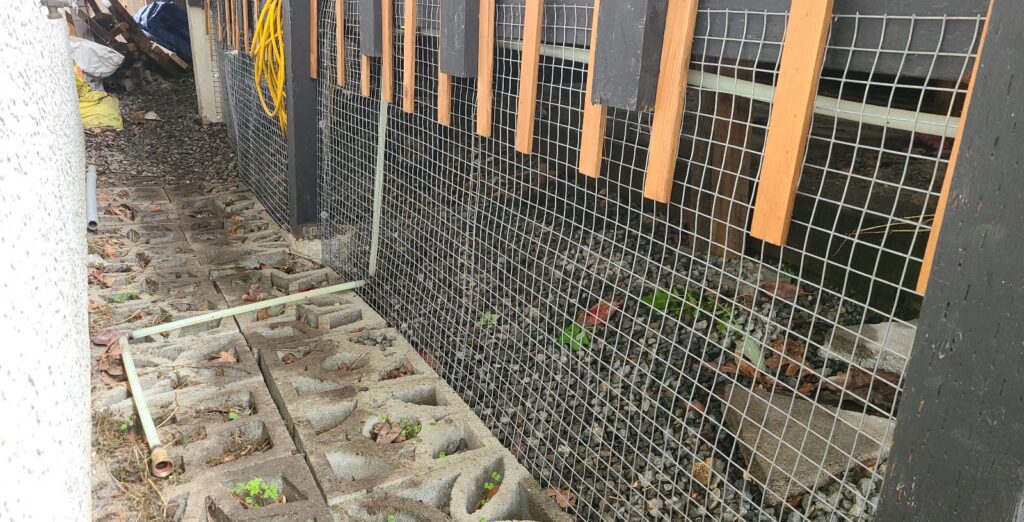
Why Vacancy Must Be Confirmed Before Access Is Closed
Closing a gap may look like a quick way to protect the deck. However, an adult seen leaving or a quiet evening does not establish that every occupant is outside. Our team must assess the space before installing barriers or securing entrances.
- Dependent Young May Remain Inside: Adults can leave a den to search for food while young stay sheltered. If the entrance is closed during that absence, the family may be separated. Young that cannot leave on their own may remain trapped behind the new barrier. Our inspection accounts for dependent young before prevention work blocks access.
- More Than One Opening May Exist: The most obvious gap may not be the only route beneath the deck. Access can occur beside steps, at corners, or along another section of skirting. Closing one opening may leave the occupied space accessible from elsewhere. We assess the perimeter and relevant concealed areas to plan more complete protection.
- Silence Does Not Prove an Empty Space: Resting periods and temporary departures can create long quiet stretches. You may hear nothing while an occupant remains farther inside or behind a support. One night without visible movement is not reliable confirmation of vacancy. We establish clearance through the professional assessment and removal process before completing exclusion.
The goal is to protect the structure while avoiding harm to anything still beneath it. That requires knowing which areas are occupied and how they connect with the entrances. You should leave suspected routes open and contact us rather than testing them by adding a temporary barrier.
Deck Shelter Concerns Around Kitchener Homes
Decks beside gardens, fences, sheds, and established planting can sit close to sheltered travel routes. These features may allow movement through the yard without much time in open areas. Their presence does not prove that the deck contains a den. We assess the structure and evidence at your property rather than making assumptions from the surroundings.
Older skirting, additions, uneven ground, and gaps around steps may create access points. Newer decks can also have openings beneath their edges or around supports. Age alone does not tell us whether the space is protected. The construction, condition, and ground beneath the deck are more useful during inspection.
Seasonal shelter needs and the presence of young can affect the removal plan. Wet conditions or changes in soil may also alter openings around the perimeter. An area that once appeared closed can become accessible over time. Our team assesses the current conditions and plans prevention suited to the deck’s layout.
Let Skedaddle Clear the Space and Protect the Perimeter
At Skedaddle, we begin by inspecting the deck perimeter and relevant sheltered areas. We check steps, skirting, ground-level gaps, and signs of repeated entrance use. Our assessment identifies occupants and accounts for dependent young. You do not need to remove materials or search beneath the structure before contacting us.
When removal is needed, we choose humane methods suited to the species and occupied space. Our one-way doors allow wildlife to leave but prevent re-entry where this method is appropriate. Their use follows an assessment rather than replacing the need to check for young. We plan the process around the conditions found at your property.
After the required clearance, we install suitable protection to address access around the deck. Durable barriers may need to extend below the edge where digging is part of the concern. Our team also assesses whether waste or other affected materials require professional cleanup. You can leave the removal and prevention work to us without handling contamination or disturbing the shelter.
Frequently Asked Questions
Does a skunk smell mean one is living beneath the deck?
No, a skunk smell does not automatically confirm a den beneath your deck. The odour may come from a nearby encounter or another location around the property. Repeated entrance use, sounds, and other evidence help us assess whether the space is occupied. You should not crawl underneath or disturb materials to locate the source yourself.
Can a deck still provide shelter if people use it every day?
Yes, the space below may remain sheltered even when people regularly use the deck above. Quiet corners behind supports or steps can stay out of view and largely undisturbed. Activity may also occur when you are indoors or away from home. Our inspection determines whether normal use of the surface is happening above an occupied space.
Does lattice prevent all access beneath a deck?
No, lattice does not automatically provide complete exclusion. Damaged sections, loose edges, or gaps beneath the covering may leave routes inside. Decorative panels can hide the space without securing the whole perimeter. Our team checks the condition and access points before recommending suitable protection.
Will a den always be visible from the deck edge?
No, a den or resting place may sit farther beneath the structure. Supports, steps, stored items, and the deck’s layout can conceal activity from outside. Seeing an empty patch near the edge does not confirm that the whole space is vacant. Leave the inspection to our team rather than crawling underneath or reaching into hidden areas.
Should a damaged deck barrier be repaired immediately?
A barrier that may be part of an active entrance should be assessed before the repair closes access. Adults or dependent young may still be beneath the deck. Blocking the gap without checking can trap occupants or separate a family. Our team can plan suitable removal and prevention before the damaged area is secured.
Keep the Space Beneath the Deck Protected
You may have more than an occasional yard visitor when the same opening receives repeat use. Low decks can provide protected shelter, while nearby food helps support continued activity. Sounds, odours, waste, and disturbed soil can offer clues. None should be treated as a reason to enter the space or attempt removal yourself.
Do not crawl beneath the deck, remove skirting, touch droppings, or close a suspected entrance. An adult may be away while dependent young remain sheltered inside. Quiet periods and brief departures do not establish vacancy. Inspection must guide removal and confirm clearance before barriers prevent re-entry.
At Skedaddle Humane Wildlife Control in Kitchener, we assess the deck and surrounding property for you. Our team provides suitable humane removal, uses one-way doors where appropriate, and protects vulnerable access points with durable materials. We also identify professional cleanup needs so you can leave affected areas untouched. Contact us to schedule a professional assessment or request an estimate to learn more.

 Loading...