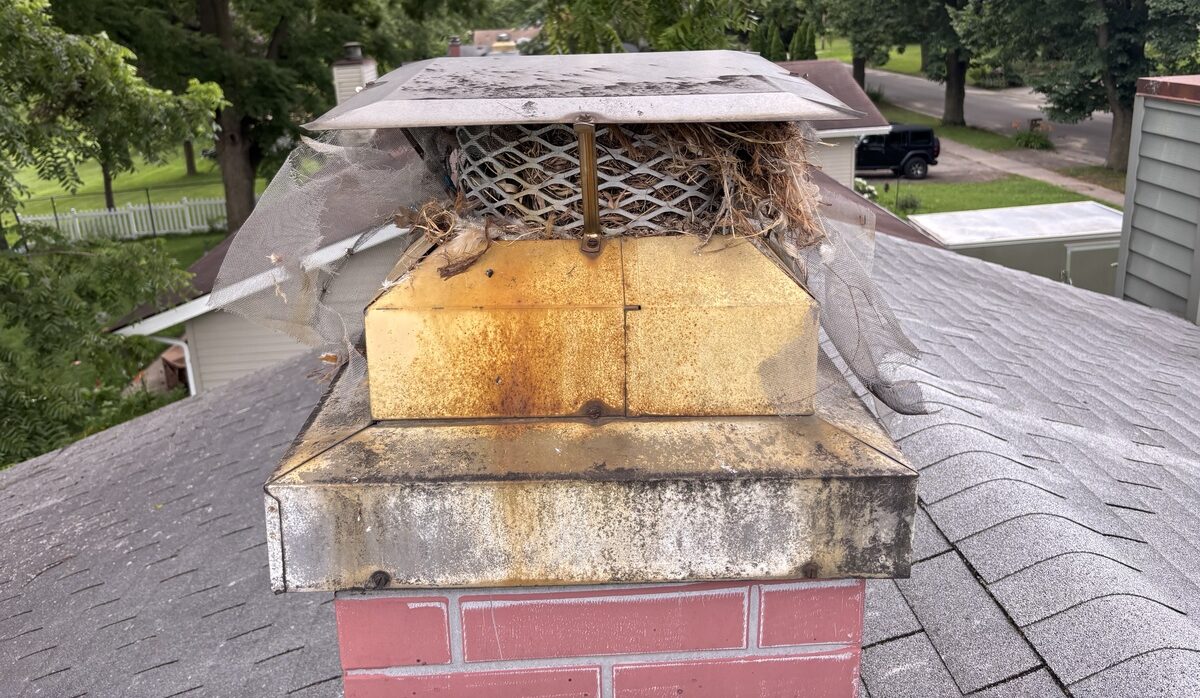
Birds and raccoons may use a chimney for shelter, and signs of their activity should be checked before you light a fire. You might hear scratching near the fireplace, notice a strange smell, or find bits of nesting material below. These clues do not always mean an animal is inside the flue, which is the passage that carries smoke outside. Still, they give you a good reason to leave the fireplace unused until the source is clear.
The first cool evening can make a warm fire sound welcome, especially after months without using the fireplace. During that break, wildlife may have found a way into the chimney or a space beside it. An adult could be resting inside, young may be hidden nearby, or old nesting material could remain after they leave.
At Skedaddle Humane Wildlife Control in Niagara, we help find the source of that activity and plan the right next step. You do not need to climb onto the roof, reach into the fireplace, or cover an opening. A careful inspection helps us protect the animals, address their entry route, and explain what other chimney work may be needed.
How to Tell if an Animal Is in Your Chimney?
Repeated scratching, calls, unusual smells, falling debris, and regular visits to the chimney top can all suggest wildlife activity. You may hear the same sound each morning or notice it when the house becomes quiet. A bird or raccoon that keeps entering the same opening gives us another useful clue. No single sign, though, tells us the full story.
Sounds can travel through brick, framing, and nearby walls, making their source hard to judge from the room below. What seems to come from the flue may start in a space around the chimney or in the attic. Old leaves or twigs can also remain long after an animal has left.
Our team compares these signs with what we find during an inspection. We look for the entry route, the space being used, and any young that depend on an adult. We also check for waste, nesting material, and damage that may need attention. Until the source is known, keep the fireplace unused and leave the area alone.
Warning Signs Near the Fireplace and Chimney Top
Wildlife activity is often easier to spot when several clues appear together. You may notice sounds first, followed by a smell or a few pieces of fallen material. Tell our team what you have seen or heard from the rooms and ground-level areas you normally use.
- Scratching, Thumping, or Calls: Scraping, fluttering, or heavier bumps near the fireplace may come from an animal moving inside or beside the chimney. Calls can suggest birds or young animals, but sound alone cannot tell us which kind is present. Pay attention to when the noise happens and whether it returns in the same place. Share that pattern with our team without tapping on the walls or trying to force a response.
- Unusual or Lasting Odours: A smell near the fireplace may come from waste, damp nesting material, or another chimney issue. The smell can change with the weather or become more noticeable after the fireplace sits unused. Its strength does not tell us how many animals are present or whether they are still there. We check the source so the next step fits the problem.
- Twigs, Leaves, or Other Debris: Bits of material below the chimney may suggest that birds or raccoons have used a nearby space. Some debris may also have fallen in from outside, so a few leaves do not prove there is a nest. Even old material deserves attention before the fireplace returns to use. Leave it untouched so our team can check it and explain what cleanup is needed.
- Repeat Visits Near the Chimney Top: A single bird resting on the chimney does not mean it has a nest inside. Repeat entry into the same opening is a stronger sign that the structure is being used. Raccoons may also return to a familiar shelter spot or explore a gap near the roof. Our inspection helps separate passing roof activity from an entrance that needs attention.
How Birds and Raccoons May Use the Chimney
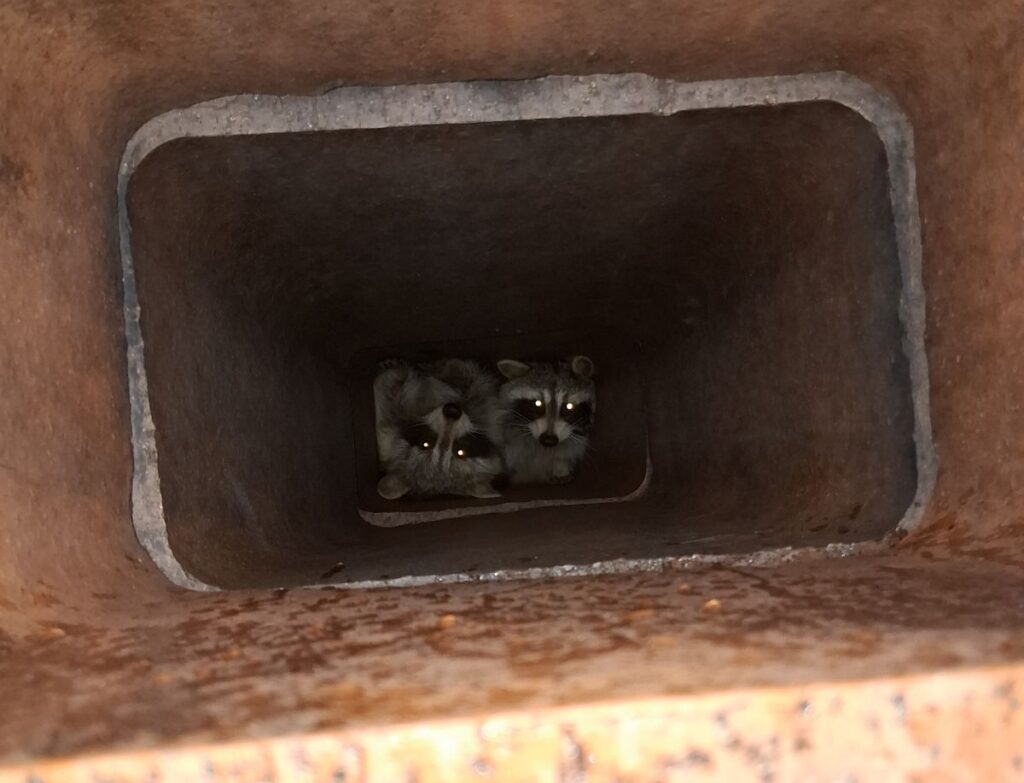
A chimney can offer cover from wind, rain, and nearby activity. Raccoons may use a reachable space as a resting place or a den for their young. An open top or a gap around the structure can give them a way in. The place they choose may be hidden well above the fireplace.
Birds may use certain chimneys to nest or rest, while others enter by mistake and become trapped. These are different problems that need different plans. A bird caring for chicks cannot be treated the same way as one that has fallen into a space it cannot escape.
We also need to know which part of the structure is being used. The flue, the space around it, and a nearby attic are not always connected. An animal beside the chimney may never have entered the smoke passage. That is why we inspect the route instead of choosing a removal method based only on where you hear noise.
Why the Fireplace Must Stay Unused Until Inspection
Lighting a fire is not a safe way to find out whether the chimney is occupied. Heat and smoke can harm animals and leave hidden debris unchecked. Keeping the fireplace unused gives the right professionals time to find the problem and address it.
- Debris May Interfere With Venting: Nesting material or other debris may affect the path that smoke and gases use to leave the home. The amount and location matter, and you cannot judge either from a few pieces near the fireplace. Some material may also create a fire risk when the system heats up. Our qualified chimney professionals should check any concerns about blockage, cleaning, or safe fireplace use.
- Adults or Young May Be Unable to Escape: An animal inside the structure may have no clear route away from a fire. Young may be too small to move on their own, even when an adult can leave. Smoke can reach hidden spaces that are not easy to see from below. Our team checks for these needs before deciding how the wildlife issue should be handled.
- A Quiet Chimney May Still Need Work: Silence can mean that an animal is resting, away for a short time, or no longer present. It does not show whether nesting material, waste, or damage remains. A chimney may need cleaning or repairs after the wildlife concern is resolved. Removal and safe fireplace use are separate questions, and each needs the right check.
What Our Team Checks Before Removal
A useful inspection does more than confirm that something is making noise. We need to know where the animal is, how it entered, and what could be affected by closing that route. Those details help us choose a humane plan that fits the home.
- The Occupied Space and Entry Route: We check the chimney and nearby parts of the building for signs of use. A gap beside the structure may lead into an attic rather than the flue itself. We also look for other weak areas that could become entry points later. Finding the full route helps us avoid treating one visible opening while missing the main problem.
- Dependent Young or Trapped Occupants: Before removal begins, we check whether young are present or an animal is unable to leave. An adult may be away during part of the inspection, so a quiet space needs a careful look. The plan must account for every animal using that space. We do not seal a route simply because nothing is visible at the opening.
- Debris, Waste, and Damage: We look for material left behind and damage linked to repeated use. These findings help show whether cleanup, wildlife prevention, or another type of repair is needed. Some chimney concerns fall within the work of a qualified chimney or roofing professional. We explain those needs so you have a clear path forward.
Why Species and Timing Affect the Next Step
The kind of animal present shapes what we can do and when we can do it. Raccoons with young need a plan that keeps the family’s needs in mind. Birds may be nesting, resting, or trapped, and each case calls for a careful check. A method that suits one problem may be wrong for another.
Chimney swifts need special care because they are protected birds that may use chimneys as nest or resting sites. Federal rules protect these birds, their nests, and certain sites they use. An empty-looking chimney or a quiet day does not give a homeowner permission to remove a nest or install a cap.
Our team must identify the species and any rules that affect the work before moving ahead. Some cases may require guidance from wildlife authorities or a change in timing. We explain how those limits affect the plan rather than promising the same quick fix for every chimney. Keep the fireplace unused while the concern is being resolved.
Protecting the Chimney After the Space Is Clear
Prevention starts with knowing why the structure was easy to enter. Once the wildlife issue is resolved and the work is allowed, the next step is to address those weak areas. The protection must fit the chimney and allow it to work as designed.
- Fit Suitable Chimney Protection: Where allowed, a properly chosen cap or other suitable protection can help keep wildlife from entering. It must fit the structure and leave the correct path for smoke and gases. A loose cover or a makeshift piece of mesh can create new problems. We identify the wildlife prevention needs and explain when a chimney professional should handle the fitting or design.
- Address Gaps Around the Structure: The chimney top may not be the only route into the home. Gaps where the chimney meets the roof can lead to nearby sheltered spaces. Worn materials around these joins may need repairs as well as protection from wildlife. We identify the entry points and explain which work our team can complete and which needs another trade.
- Arrange Cleanup and Operating Checks: Wildlife can leave waste and nesting material even after the space is empty. Our team identifies affected areas and explains the cleanup needed within the scope of our work. The flue may also need a sweep, repair, or safety check by our qualified chimney professional. Finish the required work before using the fireplace again.
Chimney Concerns Around Niagara Homes
Niagara homes have many different roof shapes, chimney styles, and fireplace systems. Some chimneys sit close to trees, while others stand above open roof areas. A nearby branch may offer a route onto the roof, but access does not prove that animals have entered. We check the signs at each property instead of making that link too quickly.
An unused fireplace can still have a chimney that offers shelter. From outside, the opening may look much the same whether the homeowner lights a fire each week or never uses it. Wildlife responds to the space it can reach, not the way the room below is used.
Wear and changes to the building can also affect possible entry routes. A damaged cap or a gap near the roof may go unnoticed until sounds begin. Older debris and protected bird sites need care too, even when current activity seems low. A property inspection helps us sort out those details before work begins.
Let Skedaddle Resolve the Activity and Protect the Chimney
Our work begins with a close look at the signs and the parts of the home they point to. We identify the entry route, check the space being used, and look for young or trapped animals. We also consider the species and any rules that affect removal. These steps give us the facts needed to build a humane plan.
Where suitable, our one-way doors allow wildlife to leave while stopping it from getting back in. Other cases need a different approach because of young, trapped animals, or protected bird use. We explain the method that fits the findings rather than treating every chimney the same way.
After the wildlife concern is resolved, we address vulnerable entry areas and explain any cleanup needs. We also point out work that calls for a chimney or roofing professional. Our Skedaddle Niagara team provides humane wildlife removal, cleanup, and prevention based on a detailed inspection of the property.
Frequently Asked Questions
Does a chimney cap guarantee that nothing can enter?
No, a cap needs to be the right type, fit well, and remain in good condition. A damaged or loose cap may leave a route open, while gaps beside the chimney can lead into other parts of the home. We check the wider area so the plan covers the routes being used. Any new cap must also suit the chimney system and meet rules that apply to the site.
Does silence mean the chimney is empty?
No, animals may rest quietly or leave for part of the day. Young can also remain hidden while an adult is away. Silence does not tell you whether old nesting material or waste is still inside. Our team uses the inspection findings, along with the pattern of activity, to decide what happens next.
Can an unused fireplace still have an occupied chimney?
Yes, wildlife may use a chimney even when you never light the fireplace. An open or damaged area can offer cover without any link to your heating habits. You may first notice the problem when preparing to use the fireplace after a long break. Have the concern checked before starting a fire or arranging work that closes an opening.
Do sounds near the fireplace prove something is inside the flue?
No, sounds can travel from nearby walls, the attic, or a space around the chimney. Fluttering or scratching heard below may seem closer than it is. We need to find the actual space being used before choosing a removal plan. That check helps avoid work on the wrong part of the structure.
Does wildlife removal mean the fireplace is ready to use?
No, wildlife removal does not confirm that the chimney is clean, sound, and ready for a fire. Waste, nesting material, or damage may need more work after the animals are gone. Our qualified chimney professional may need to inspect, clean, or repair the system. Follow our guidance before putting the fireplace back into use.
Clear the Concern Before the First Fire
Before you light the fireplace, take scratching, calls, odd smells, falling debris, and repeat chimney visits seriously. These signs may point to birds or raccoons inside the structure, but they can also come from a nearby space. A quiet period does not prove the chimney is empty or ready to use. An inspection helps turn those clues into a clear plan.
Leave the fireplace unused while the concern is checked, and keep your observations to places you can safely reach during normal use. Do not climb onto the roof, reach into the opening, handle waste, or seal a suspected entrance. A fire must never be used to drive animals out. Hidden young, trapped occupants, and protected birds all need care before any work begins.
At Skedaddle Humane Wildlife Control in Niagara, we help find the source, choose a humane response, and protect suitable entry areas once the work can proceed. We also explain cleanup needs and when a qualified chimney professional must check the fireplace system. Contact us to schedule a professional assessment or request an estimate to learn more.

 Loading...