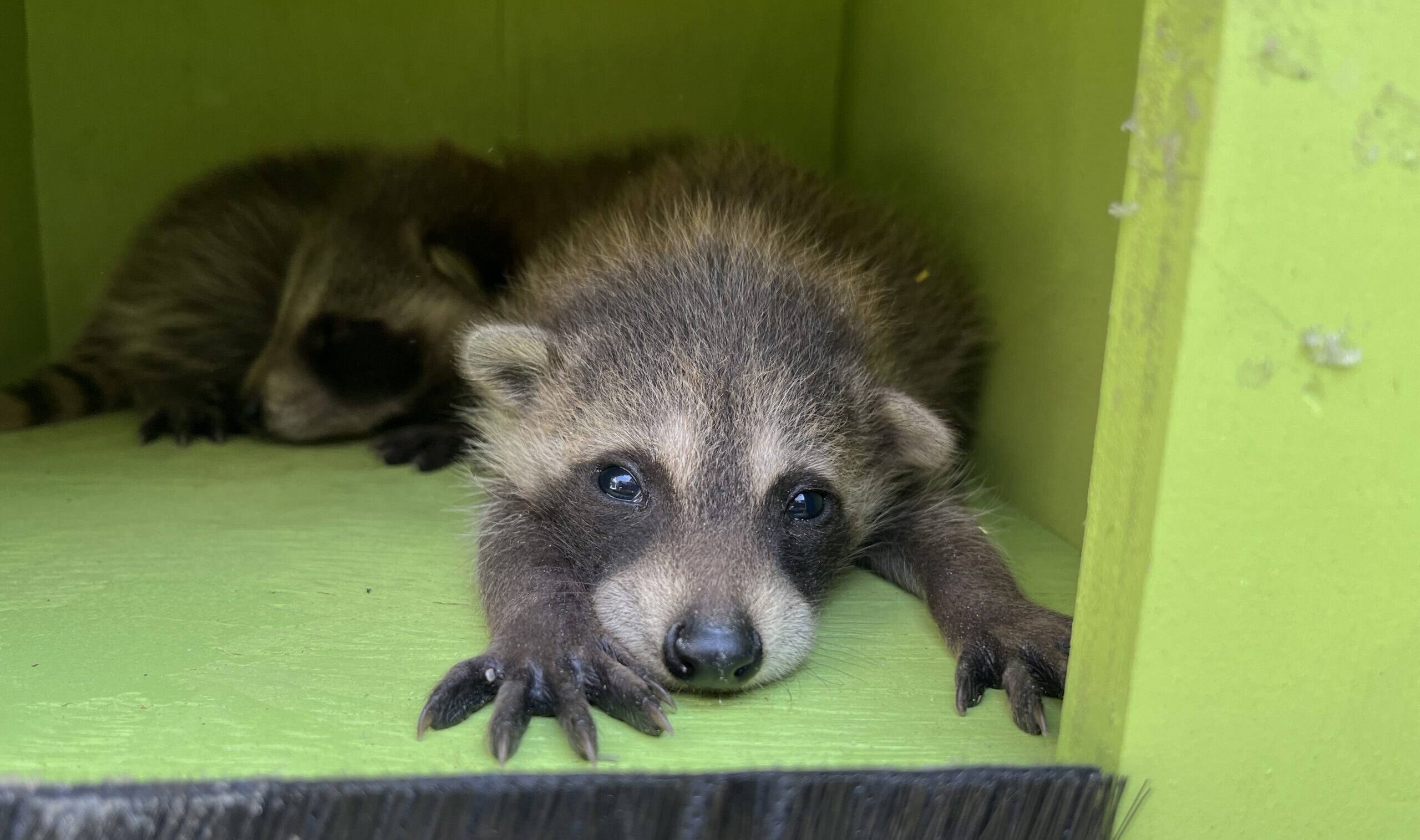
You start hearing thumping above the ceiling every night. You notice a gap along the soffit that was not there last season. You catch a musky smell coming down from the attic. Then one morning you hear something that sounds like a small animal crying. That is when it becomes clear: there is not just one raccoon in your attic. There is a whole family.
A mother raccoon will usually stay in your home with her babies for eight to twelve weeks. She gives birth in spring, usually April or May, and the young cannot do anything on their own at first. They cannot see, hear, or move for the first several weeks of their lives. The mother stays close, nursing them and keeping them safe inside your attic until they are old enough to travel with her. By mid to late summer, the family usually moves on. But by then, months of damage have already been done.
At Skedaddle Humane Wildlife Control in Kitchener-Waterloo, we handle raccoon family situations in attics every spring and summer. In this blog, you will learn how the family timeline plays out inside your home, why waiting for them to leave on their own is almost never the right call, and what our team does to get the situation resolved safely and completely.
Do Raccoons Come Back to the Same Place Every Night?
Yes, these animals are creatures of habit and come back to the same den site every night. Once a mother picks your attic as her nesting spot, she treats it as home. She comes back after foraging each night and stays committed to that location for as long as her young need it. That reliable pattern is part of what makes an attic situation so hard to resolve without our professional help.
Raccoons also remember den sites from past seasons. A female that used your attic successfully one spring is very likely to come back to the same spot the following year. Even if she moves on in late summer, the scent signals she leaves behind tell her and other animals that your attic is a safe, proven location. Without our professional exclusion and cleanup after she leaves, the same situation starts all over again next spring.
This is one of the main reasons to call our team rather than simply waiting for the family to leave. Getting rid of them is only part of the job. The entry points need to be sealed and the attic needs to be treated to remove the scent signals that keep pulling animals back to the same spot every year. Our team takes care of all of that as part of every job we do.
Weeks 1–6: Newborn Stage
The first six weeks after birth are when the family is most settled into your attic. The young are fully dependent on their mother during this period, and she is not going anywhere. Here is what is happening during this stage:
- The Kits Are Born Blind, Deaf, and Completely Helpless: Newborn kits cannot see, hear, or move on their own for the first few weeks of life. They need constant warmth and nursing from their mother to survive. Your attic — warm, dark, and quiet — is exactly the environment she picked because it gives her young the best chance of making it through those first weeks. During this stage, the family is not going anywhere.
- The Mother Only Leaves at Night to Find Food: During the day, the mother stays in the attic with her young almost the whole time. At night, she leaves briefly to find food and water, then comes back before dawn. That nightly exit and return is often when homeowners first hear heavy movement above the ceiling. The sounds at dusk and again in the early morning are the mother coming and going while her young wait in the nest.
- Damage Is Already Building Up Before Anyone Notices: Droppings, urine, and disturbed insulation are building up from day one. During the newborn stage, most homeowners do not yet know the full extent of what is happening above them. The sounds may seem minor, and the temptation to wait it out is strong. But the contamination and structural damage are already happening, and they do not stop while you decide what to do.
Weeks 6–8: Exploratory Stage
Around six to eight weeks after birth, the kits start to develop and become more active. The situation inside your attic changes a lot during this period. Here is what to expect:
- The Kits Open Their Eyes and Start Moving Around: By around six weeks, the young have opened their eyes and started crawling around the nesting area. They are not yet mobile enough to follow their mother outside, but they are moving around the attic and exploring the area near the nest. That increased movement means more sounds from above, more areas of the attic getting disturbed, and more insulation being affected as the kits spread out from the original nest spot.
- The Mother May Begin Moving the Family to Backup Dens: If the mother feels that the den has been disturbed by noise, nearby construction, or any attempt to interfere, she may start moving her kits one by one to backup den sites. These secondary spots can be other attics in the neighbourhood, under decks, or in other sheltered areas she has found nearby. A family that has been partially disturbed is often harder to remove cleanly than one that has been left alone until a professional can assess the full situation.
- This Is a Key Time for Professional Help: The exploratory stage is when our team checks how mobile the young are as part of the removal planning process. Young that cannot yet exit on their own need a different approach than a fully mobile family. Our team figures out the stage of development during the inspection and plans the removal timing and method from there. Acting during this window, rather than waiting for the family to leave on their own, can significantly cut down on the total damage to your attic.
Weeks 10–12: Weaning and Leaving
By ten to twelve weeks, the young are weaned and mobile enough to travel with their mother. The family starts spending more time outside the attic and less time inside. Here is what happens during this final stage:
- The Young Are Fully Weaned and Begin Foraging With the Mother: Around ten weeks of age, the kits are eating solid food and following their mother out of the attic at night to forage. The den is no longer a full-time nursery — it becomes one stop on a wider nightly route. The family may still come back to the attic between foraging trips, but the intensity of the occupation eases as the young become more independent.
- The Family Typically Leaves the Indoor Nest by Late Summer: By mid to late summer, most families have moved on from the indoor nest completely. The young are mobile, the mother no longer needs the attic for nursing, and the warmer outdoor temperatures reduce the need for the enclosed shelter the attic provided in spring. For homeowners who have been waiting, this feels like the problem has fixed itself. But it has not — the entry points are still open, and the damage from the full occupation is sitting in the attic waiting to be dealt with.
- The Attic Stays a Target Even After They Leave: When the family leaves, they leave behind droppings, soiled insulation, chewed materials, and scent signals that tell future animals your attic is a safe and proven den site. The same mother is likely to come back the following spring. Her grown young will also look for attic spaces of their own when they reach breeding age. Without professional exclusion and decontamination, the cycle repeats every year.
Why Waiting Is Not the Answer
The most common thing homeowners do when they find a family in the attic is wait. It feels like the logical thing to do – the family will leave on its own eventually, and then the problem is over. But that is not how it works, and the cost of waiting is almost always higher than the cost of acting early.
From the time the kits are born in April or May to the time the family fully leaves in late summer, you are looking at three to four months of active use. During that whole time, a mother and her growing young are tearing through insulation, leaving droppings and urine all through the attic, and wearing down the structural materials around them. The longer the family is present, the more widespread the contamination becomes, and the more insulation needs to be replaced. A situation caught early costs a lot less to resolve than one that has run its full course.
Waiting also means leaving the entry points open. Those open gaps let rain and wind in alongside the animals, adding water damage and moisture problems to an already contaminated attic. And when the family finally leaves at the end of summer, the scent signals and open entry points make your attic an immediate target again the following spring. Our team at Skedaddle resolves the current situation and seals the home against future entry – the only way to break the cycle, not just pause it.
Raccoon Issues in Kitchener-Waterloo
Kitchener-Waterloo has a large and active raccoon population, and the region’s mix of older residential neighbourhoods, mature trees, and plenty of food creates ideal conditions for these animals to move into homes in spring. These animals are active throughout the Waterloo Region all year, and the shift from late winter to early spring is when females are most actively searching for enclosed, elevated spaces to give birth. Residential attics are at the top of that list.
Older homes in Kitchener-Waterloo are especially at risk. Original wood soffits, aging rooflines, and vent covers that have never been replaced give these animals multiple potential entry points along the roofline. Mature trees that have grown close to rooflines over the years give them direct access to the roof. Our team works across the region every spring and finds that the most heavily impacted properties are almost always older homes with significant tree cover right above or beside the structure.
Spring is the most important time of year for homeowners in Kitchener-Waterloo to pay attention to attic sounds and roofline damage. April and May are when the vast majority of nesting situations get started in the region. A call to our team early in the season means a faster resolution, less damage, and a lower cost than a call that comes in July after months of occupation have already taken their toll.
Raccoon Removal and Prevention with Skedaddle
When you call our team at Skedaddle, we start with a full inspection of your attic, roofline, and exterior. We find every active entry point, check for the presence of young and assess how mobile they are, and look at the full extent of the damage before any work begins. Knowing whether we are dealing with newborn kits, partially mobile young, or a fully mobile family is essential – the approach and timing of the removal depend on it.
Once we have a full picture of the situation, we act on it. Where young are present but not yet mobile, we use a humane process that keeps the family together while getting them out of your home. Where the family is fully mobile, we put one-way doors at the active entry points so they can exit on their own but cannot get back in. After the attic is confirmed clear, we seal every entry point permanently with materials that hold up against future attempts to re-enter. Homeowners should never try to seal entry points on their own, especially in spring when young may still be inside.
Cleanup, decontamination, and long-term prevention finish the job. Our team removes droppings and soiled nesting material safely, treats the attic with professional-grade enzyme cleaners that remove the scent signals pulling future raccoons back, and replaces damaged insulation where needed. You do not need to go into the attic, handle any materials, or figure out what stage the family is at. Call our team at Skedaddle Humane Wildlife Control in Kitchener-Waterloo the moment you hear sounds from your attic in spring and let us handle every step safely and completely.
Frequently Asked Questions
How do I know if there are baby raccoons in my attic?
The most telling signs are the time of year - spring and early summer - and the types of sounds you are hearing. High-pitched chattering, crying, or chirping from the attic alongside the heavier sounds of the mother moving around are strong indicators that young are present. If you hear these sounds in April, May, or June, call our team right away.
Is it safe to go into my attic if raccoons have been living there?
No. Attics with active or recent raccoon occupation contain droppings and urine that carry harmful bacteria and a roundworm parasite. Disturbing dried droppings releases airborne particles that can be inhaled. You should not enter an attic with active or recent wildlife activity without proper protective equipment. Call our team and let us assess the space safely.
Can I seal the entry point myself once the family leaves?
You can spot the entry point, but sealing it on your own without a professional inspection carries real risk. If the family has not fully left, sealing traps young inside. Even if they have gone, standard caulk and foam sealants are not built to resist future entry attempts. Our team uses professional-grade materials and checks the full roofline for all secondary entry points before sealing.
Will the damage to my attic fix itself after they leave?
No. Soiled insulation, droppings, chewed materials, and scent markers all stay in the attic after the family leaves. Contaminated insulation cannot be cleaned and usually needs to be removed and replaced. The scent markers pull future animals to the same spot. Our professional cleanup and decontamination are needed to fully resolve the situation.
What happens if I disturb the nest while the kits are still young?
A mother that feels her nest has been disturbed will often move her young to a backup den site. While this may seem like a good outcome, a partially disturbed family is harder to remove cleanly, and the mother is more likely to find another entry point back into your home or a neighbouring structure. Leaving the situation to a professional from the start is always the better approach.
How much damage can a raccoon family cause in one season?
A lot. A mother and a litter of four or five kits active in an attic from April through July can destroy large sections of insulation, leave significant droppings and urine all through the attic, and cause chewing damage to structural wood and wiring. The cost of repair after a full season of occupation is almost always higher than the cost of early professional intervention.
The Longer They Stay, The More It Costs: Call Skedaddle Now
Every week a family is in your attic is another week of droppings building up, insulation getting damaged, and the problem getting harder and more expensive to fix. Waiting for them to leave on their own is understandable, but it is almost never the right call.
The damage does not pause while you wait. It keeps building day after day, and by the time the family finally leaves in late summer, months of contamination and structural damage are already done. Acting early in the season is always simpler and less costly than acting later.
At Skedaddle Humane Wildlife Control in Kitchener-Waterloo, our team handles the entire process: inspection, humane removal, entry-point sealing, cleanup, and decontamination. You do not need to go into the attic, figure out how old the kits are, or manage any part of this yourself. Request an estimate today and let our team resolve the situation completely before another week of damage goes by.

 Loading...