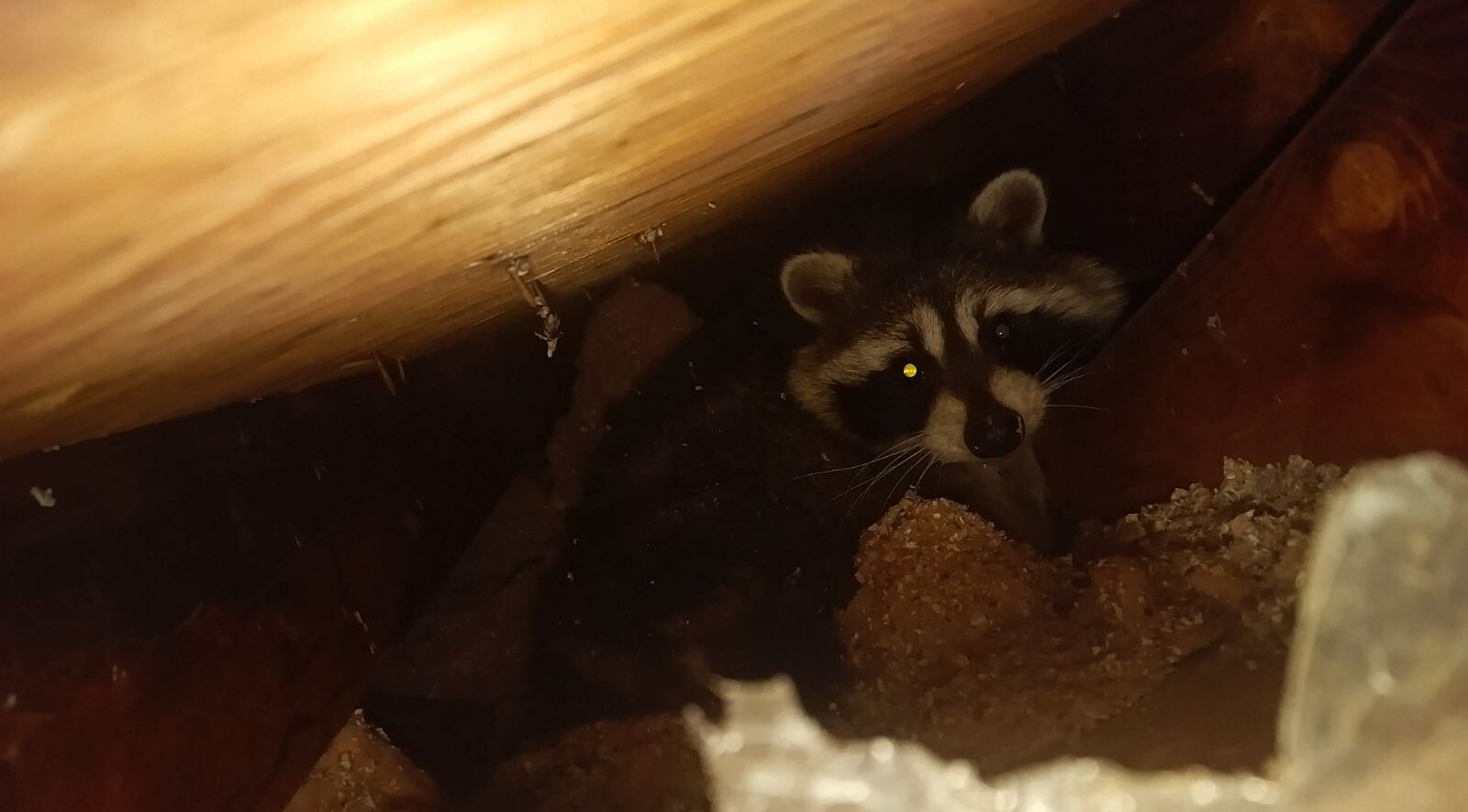
You spend the last weekend at the cottage, pack everything up, lock the doors, and head home. It feels like everything is taken care of. But while you are back in the city living your life, something may be moving into your attic. And when you come back next spring, you may find a lot more happened over the winter than you thought.
You should check the attic before closing your cottage because wildlife moves in fast once a property goes quiet. Raccoons, squirrels, mice, and bats are all looking for warm, enclosed spaces as it gets cold in fall. A cottage that sits empty all winter is one of the most attractive targets in the area. These animals do not need a big opening to get in, a gap the size of a coin is enough for a mouse, and a loose soffit edge is enough for a raccoon. Once they are inside, months of damage pile up with no one there to see it.
At Skedaddle Humane Wildlife Control in Niagara, we inspect cottages and seasonal properties across the region every fall and spring. We see the same thing all the time: owners who closed without checking the attic and came back to find serious damage. In this blog, you will learn what to look for before you close for the season and why our professional inspection is the most important step you can take before leaving.
What Is the Best Way to Identify What Animal Caused a Wildlife Problem in a House?
The best way to find out which animal has been in your attic is to have a professional come in and look at the signs left behind. Droppings, nesting materials, the size of entry points, chew marks, and where the damage is located all tell a clear story to someone who knows what to look for. Different species leave very different signs, and knowing which animal was involved is important before any removal or prevention work starts.
Raccoon droppings are large and usually found piled up in the same spot. Squirrel droppings are smaller and scattered along their travel paths. Mouse droppings are tiny and show up in large numbers near food or along walls. Bat droppings, called guano, are small, dark, and crumble easily, and they pile up right below the spot where the bats roost. The size of entry points also gives clues, a large, forced gap in the soffit points to a raccoon, while a small clean hole in the fascia or vent cover points to a squirrel.
Our team looks at all of these signs together during an inspection to figure out which species was present, how active the situation was, and whether more than one type of animal was involved. A cottage that has been closed for a full winter without being checked may show signs of several different animals at once. Finding each one is what lets us build a plan that actually deals with everything going on inside.
Droppings
Droppings are one of the first and most reliable signs that something has been living in your attic. Knowing what to look for and knowing not to touch anything is important. Here is what different types of droppings tell our team during an inspection:
- Large Droppings in Concentrated Spots Point to Raccoons: Raccoons pick specific spots in the attic to use as a bathroom and keep going back to the same place. These spots build up fast and leave large piles of droppings in corners, along walls, or near the entry point. The amount of waste in one of these spots is significant and needs professional cleanup. Anyone who goes into an attic with raccoon droppings without the right protective gear is at real risk from the bacteria and roundworm parasites they carry.
- Scattered Small Droppings Along Walls and Beams Point to Squirrels or Mice: Squirrel droppings are small and dark and tend to be spread out along the paths these animals take through the attic. Mouse droppings are even smaller and show up in very large numbers near nesting material and food. Both types show that the attic has been actively used and need a professional check to figure out how far the activity has spread.
- Small Dark Crumbling Droppings Below the Roofline Peak Point to Bats: Bat droppings pile up right below where these animals roost, which is usually near the highest point of the attic. The droppings are small, dark, and turn to powder when touched, which releases spores that can cause a serious lung illness when breathed in. If you see this type of material in your cottage attic, do not touch it. Call our team right away and let us handle it safely.
Nesting Materials
A nest in the attic is a clear sign that these animals have been using the space as more than just a place to stay, they have made it their home. Here is what different types of nesting materials mean:
- Piles of Leaves, Grass, and Insulation Point to Raccoons or Squirrels: Both raccoons and squirrels build nests from whatever is available in the attic or accessible from outside. Shredded insulation, dried leaves, twigs, and other debris are all common nesting materials. A raccoon nest is large and bulky, often taking up a big portion of a corner or eave space. A squirrel nest is smaller and more tightly built. Either way, nesting material packed against wood or near electrical wiring creates a fire risk that needs to be dealt with right away.
- Shredded Insulation and Fabric in Small Spaces Points to Mice: Mice build nests in the smallest, most sheltered spots they can find, inside wall cavities, under insulation, behind stored items, and in any enclosed corner. Their nests are made from soft material they can gather, insulation pieces, fabric scraps, paper, and other debris. A single mouse nest may not look like much, but it is a sign that a colony is active. Where there is one nest, there are almost always more nearby.
- Nesting Material Near Wiring or Vents Needs Urgent Attention: No matter which species built it, a nest near electrical wiring or inside a duct creates an immediate fire and health risk. Dry organic nesting material packed against an exposed wire or inside an exhaust vent is exactly the kind of condition that starts attic fires. Our team notes the location of every nest found during an inspection and treats any nest near electrical or mechanical components as a top priority.
Damaged Insulation
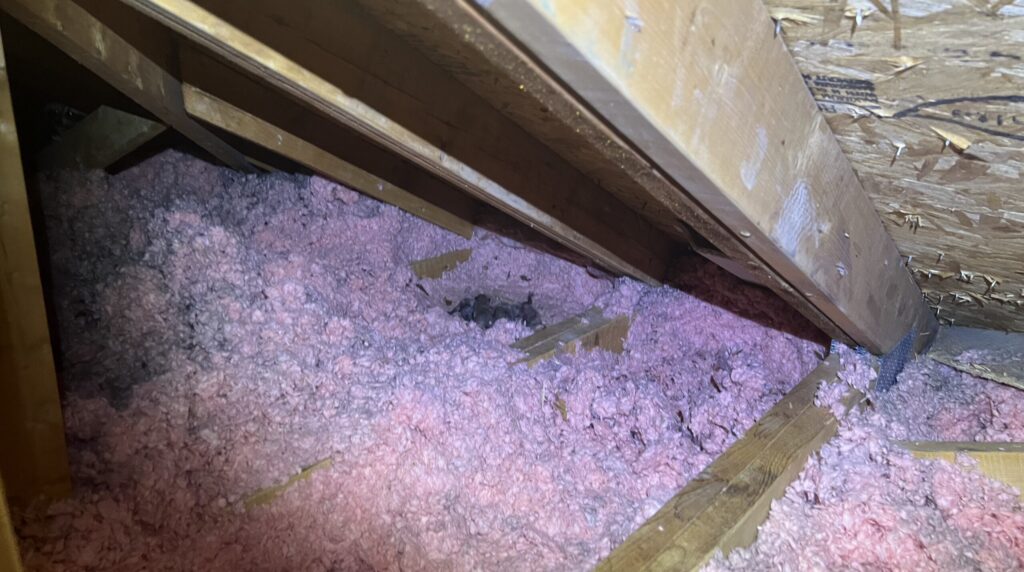
Insulation damage is one of the most costly and hardest-to-spot results of wildlife activity in a cottage attic. It builds up quietly over a winter, and by the time you notice it on your energy bills or feel that the cottage is not holding heat the way it should, the damage is usually already significant.
These animals disturb insulation in different ways. Raccoons walk and flatten large areas as they move through the attic. Squirrels tunnel through it and pull sections apart to build nesting spots, leaving gaps and flat patches across the attic floor. Mice nest inside insulation, hollowing out sections and soiling the material with droppings and urine. Each of these behaviours reduces the insulation’s ability to do its job and leaves parts of the attic floor without proper protection.
The contamination that comes with wildlife activity often means the insulation cannot just be repaired; it has to be fully removed and replaced. Insulation soaked with urine carries bacteria and parasites that create health risks for anyone who enters the space. Insulation that has been heavily disturbed by nesting and movement has also lost its ability to regulate your cottage’s temperature properly, no matter how it looks on the surface.
Odours
The smell in your attic when you return to the cottage in spring can tell you a lot about what happened over the winter. Different types of wildlife activity produce very different smells, and knowing what each one means is the first step toward getting the right help.
A strong ammonia-like smell when you open the attic hatch is almost always urine, from raccoons, squirrels, or mice. Raccoon urine has a heavy, sharp quality that most people notice right away. Mouse urine builds up more slowly but gets very noticeable in an enclosed space over a long period. Either smell is a sign that significant waste has built up in the insulation and wood above you, and neither one goes away on its own without professional cleaning and treatment.
A musty, earthy smell that is different from a sharp ammonia smell is usually a sign of bat activity or mould growth. Bat droppings produce a distinct musty odour that gets stronger as the colony grows and the droppings pile up. Mould that has grown on insulation or wood from moisture caused by wildlife waste adds another layer to the smell. If the attic smells like a mix of different odours when you open it in spring, that is a strong sign that more than one type of activity happened over the winter.
Sounds
You may not be at the cottage during the winter, but if you arrive to close the cottage and hear sounds from the attic, that is a clear sign that something is already active. Here is what different sounds mean:
- Heavy Thumping and Movement at Night Points to Raccoons: Raccoons are large and heavy, and their movement in an attic is hard to miss. Heavy footsteps, thumping, and the sound of something being dragged or pushed around are all signs of raccoon activity. These sounds are loudest at dusk and dawn when these animals are most active. If you hear this kind of sound when you arrive to close the cottage in fall, do not go into the attic. Call our team and let us check the situation before you do anything else.
- Lighter Scratching and Scurrying Points to Squirrels or Mice: Squirrel sounds are quicker and lighter than raccoon sounds, a fast scurrying or scratching that moves across the attic floor and then stops. Mouse sounds are even lighter and tend to happen more at night when these animals are most active. Both types of sound show that the attic is being actively used and mean a professional inspection should happen before the property is closed for the season.
- Chirping, Squeaking, or High-Pitched Sounds Point to Bats: If you hear high-pitched chirping or squeaking from the attic, especially in the evening when these animals fly out, a bat colony is likely roosting somewhere in the upper part of the structure. In Ontario, bats are protected under the Endangered Species Act, which means exclusion work has to follow specific timing rules. Our team knows these rules and handles all bat situations in full compliance with provincial regulations.
Visible Entry Points
Visible damage on the outside of the cottage is one of the most important things to check before closing. Here is what to look for along the roofline and exterior walls:
- Chewed or Pried-Open Soffit Edges and Vent Covers: A soffit panel that has been pushed in from outside, a vent cover that has been bent back or removed, or a fascia board with chew marks along the edge are all signs of active or past entry. These damage patterns are most often caused by squirrels and raccoons. Our team checks every soffit panel and vent cover during an exterior inspection because these are the entry points most likely to be missed during a casual walkthrough.
- Gaps Where Different Building Materials Meet: Where the soffit meets the brick, where the fascia board meets the gutter, or where roofing materials overlap, these spots develop gaps over time as materials age and shift. A cottage that has gone through many freeze-thaw cycles may have significant gaps in these areas that were not visible a few seasons ago. These gaps do not need to be large; a gap the width of a thumb is enough for a squirrel, and anything larger is accessible to a raccoon.
- Fresh Digging or Disturbed Soil Around the Foundation: Digging or disturbed soil along the foundation line, under the deck, or beside the cottage can be a sign of skunks or groundhogs looking for a den spot under the building. The digging these animals do under the foundation can weaken the structural stability of the building over time. Our team checks the full perimeter of the property during an inspection, not just the roofline, because wildlife activity at the base of the structure is just as important to find as activity above.
Wildlife Issues in Niagara
The Niagara region has wooded properties, waterfront cottages, and seasonal homes that sit empty all winter. That mix creates the perfect setup for wildlife activity. Raccoons, squirrels, mice, and bats are all active in the area throughout the year. Fall is when these animals are most actively searching for a warm place to stay. A cottage that closes in October and does not open again until May gives them seven full months to move in, nest, and cause damage with no one around to notice.
Older cottages in the area have their own set of problems. Many Niagara-area cottages were built a long time ago, before modern construction standards were in place. Years of seasonal use, with materials expanding in the heat of summer and shrinking in winter cold, have opened up gaps that were not there when the building was new. Rooflines on older cottages often have several entry points that you cannot see from the ground and would never find without getting up close.
Spring is when our team in the Niagara region gets the most calls from cottage owners who found wildlife damage after opening for the season. By that point, a full winter of damage is already done, soiled insulation, chewed wood, piled-up droppings, and sometimes active nesting with young that showed up in spring. Checking the attic before you close in fall is the single best thing a cottage owner can do to avoid that situation.
Wildlife Removal and Prevention with Skedaddle
When you call our team at Skedaddle, we start with a full inspection of the cottage attic, roofline, and exterior before you close for the season. We look for every sign of current or past wildlife activity, droppings, nesting material, insulation damage, odours, and visible entry points, and check whether any animals are currently inside the structure. That full picture is what lets us fix the situation before you leave, not after you come back to months of damage in the spring.
Where these animals have gotten in or where weak spots exist, we seal every opening with strong materials that hold up through a full winter. Where active animals are present, we put in one-way doors that let them get out on their own but stop them from coming back in. Cottage owners should never try to seal entry points on their own before leaving for the season. Sealing an active opening without checking for animals inside traps them, and that creates a much bigger problem than leaving the opening alone.
Cleanup and decontamination are part of every job we do. Our team removes nesting material and droppings safely, treats contaminated areas with professional-grade cleaners, and gets the attic back to a safe condition. You do not need to go into the attic, handle any materials, or figure out what has been living up there. Call our team at Skedaddle Humane Wildlife Control in Niagara before you close the cottage this fall and let us make sure the attic is clean, clear, and sealed before you head home for the winter.
Frequently Asked Questions
How do I know if wildlife got into my cottage attic over the winter?
The most common signs when you open in spring are a strong smell when you enter, droppings or nesting material near the attic hatch, sounds of movement or chirping from above, staining on the ceiling, and visible damage to soffit panels or vent covers on the exterior. Any of these signs means you need a professional inspection before you use the cottage.
Is it safe to go into the attic myself to check for wildlife?
No. An attic that has had wildlife activity may contain droppings and urine that carry bacteria and parasites. You should not enter the attic without proper protective equipment. Call our team and let us assess the space safely before anyone goes up there.
Can mice get into a well-sealed cottage?
Even a very well-maintained cottage can have small gaps around utility lines, foundation cracks, or gaps under doors that mice can squeeze through. These animals can fit through a gap the size of a dime. Our professional inspection finds these weak spots and seals them before the property is closed for the season.
What happens if wildlife is trapped inside a sealed cottage over winter?
An animal trapped inside a sealed space will cause significant damage trying to find a way out, chewing through walls, wiring, and structural materials. It will also contaminate a large area with droppings and urine. This is why our team always checks for active animals before any sealing work is done.
Are bats in a Niagara cottage a protected species concern?
Yes. Several bat species in Ontario are protected under the Endangered Species Act, and exclusion work cannot be done during maternity season when young are present. Our team handles all bat situations in full compliance with provincial regulations and will advise on the correct timing and approach for your specific cottage.
How long does a professional cottage attic inspection take?
A thorough inspection of the attic, roofline, and exterior of a typical cottage usually takes between one and two hours, depending on the size of the property and how easy it is to access the attic. Our team gives you a full report of what was found and what we recommend before any work begins.
Don’t Leave the Cottage Without Checking the Attic First, Call Skedaddle
Closing the cottage without checking the attic first is one of the most common mistakes seasonal property owners make. The damage that builds up over a full winter of wildlife activity- contaminated insulation, chewed wiring, piled-up droppings, and structural damage- is always more expensive and more stressful to deal with in spring than it would have been to prevent in fall.
These animals do not wait long once a property goes quiet. Within days of closing, they are checking every gap and weak spot on the exterior. By the time you come back in May, months of damage may already be done, and you will not know until you open the door and smell it.
Our professional inspection before you leave takes the guesswork out of closing. You get peace of mind knowing the attic is clear, sealed, and safe for the winter ahead.
At Skedaddle Humane Wildlife Control in Niagara, our team inspects cottage attics, finds every sign of wildlife activity, seals every entry point, and handles all cleanup safely. You do not need to go into the attic or deal with any of this yourself. Request an estimate today and let our team make sure your cottage is properly closed before winter sets in.

 Loading...