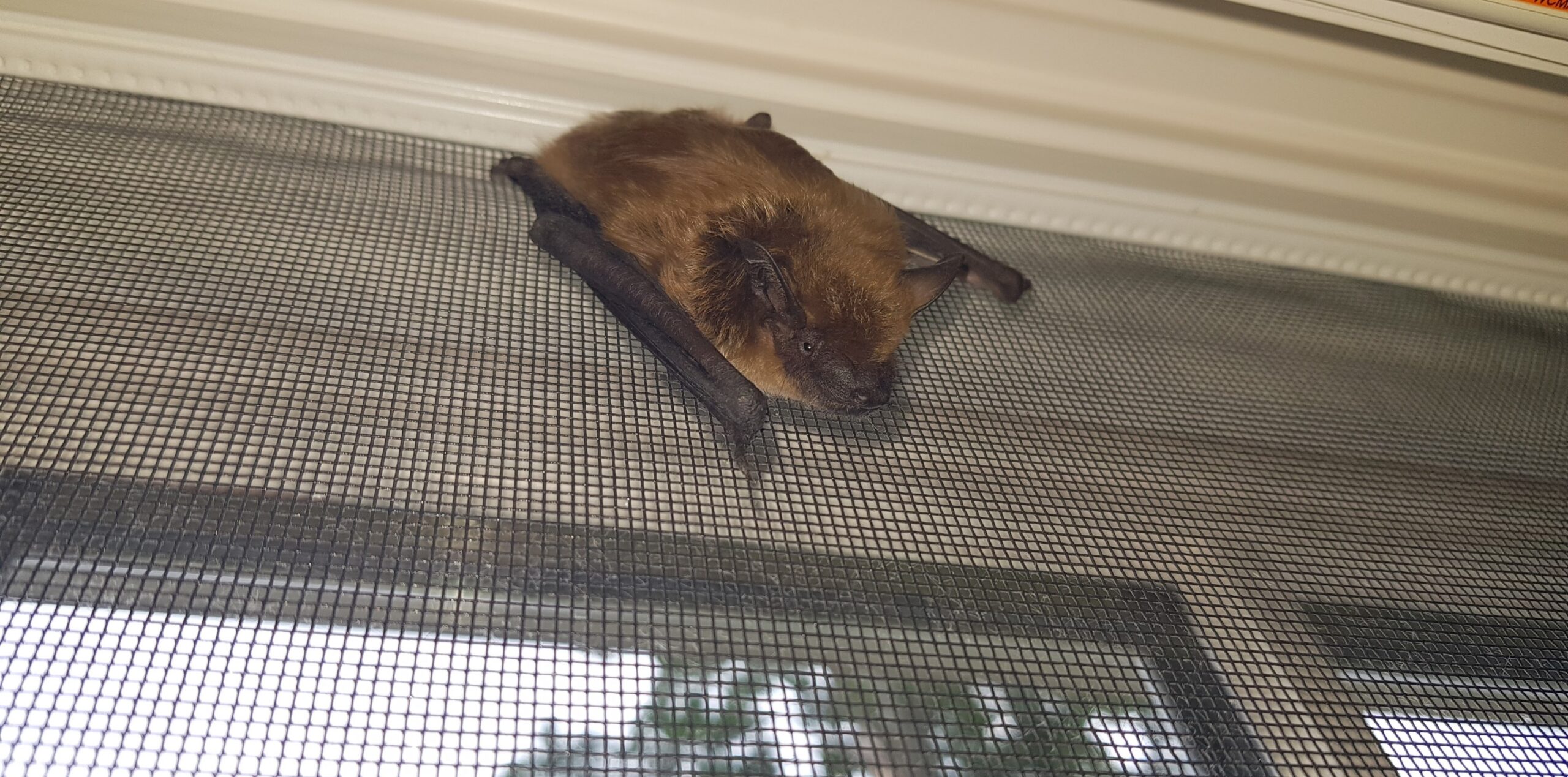
A large bat condo was recently installed near Penticton to give female bats a safe place to raise their young. The project was launched because habitat loss has pushed some local species to use buildings as roosting sites instead of their natural environment. It’s a reminder that when natural spaces disappear, these animals look for the next best option, and sometimes that option is your home.
You might not think of your attic or the space behind your siding as prime real estate. But to a bat looking for a warm, sheltered spot to roost, your Okanagan home can look just as good as a hollow tree or a rocky cliff face. Once they find a way in, they settle in quickly — and a small group can become a maternity colony before most homeowners even realize it.
At Skedaddle Humane Wildlife Control in Okanagan, we help homeowners deal with these situations safely and humanely. In this blog, we walk you through why these animals choose homes over natural roosts, what the signs look like, and how our team handles removal and exclusion in a way that protects both your property and the local population.
Do Bats Bite?
Yes. They can and do bite, especially when they feel cornered, threatened, or handled by a person. Their teeth are very small, which means a bite can happen without you feeling it or seeing a mark. This is one of the most important reasons why you should never try to pick up, catch, or handle one on your own.
Rabies is the biggest health concern associated with these bites in Canada. They are one of the most common carriers of rabies in B.C., and any direct contact, including a scratch you may not have noticed, should be treated as a possible exposure. If you find one in your bedroom, or if there’s any chance someone in your home had contact with one, call HealthLink BC at 8-1-1 right away.
These bites are not something to wait and see about. Because the bite can be so small, people often don’t realize contact occurred, which is why health authorities treat potential exposures seriously regardless of whether a wound is visible. Keep everyone away, call our team to handle containment, and contact health authorities if any contact may have occurred.
Why Habitat Loss Sends Bats Toward Buildings
These animals have been roosting in natural spaces for thousands of years: hollow trees, rock crevices, and cliff faces are their first choice. But as the Okanagan grows and develops, those natural spaces are disappearing. Trees get cut down, rocky areas get cleared, and the habitat that used to support large roosting populations shrinks season by season. When that happens, these animals adapt — and buildings become the next option.
The Penticton Indian Band recently installed a large bat condo near Penticton specifically to give female bats a secure place to roost and raise their young. Organizers noted that habitat loss has led local species to increasingly use buildings instead. You can read more about that project here: Castanet — Penticton Bat Condo. It’s a clear sign that the pressure these animals face is real — and that it’s driving them toward residential properties in growing numbers.
Your home offers many of the same things a natural roost does: warmth, shelter from the weather, and a dark, quiet space to rest and raise young. A gap along your roofline, a space behind your siding, or an opening near your soffit checks every box. The Okanagan’s warm summers make the region especially attractive during maternity season, which is when these animals are most actively looking for a safe place to settle in with their young.
Where They Settle in Okanagan Homes
These animals don’t need much space to get inside – a gap as small as half an inch is enough for most species. Once they’re in, they tend to settle in specific areas of the home. Here’s where our team finds them most often:
- Behind Siding: The space between your siding and the exterior wall of your home is a common roosting spot. It’s dark, sheltered, and holds warmth, which makes it attractive for maternity colonies. These groups can grow quickly in this space without making much noise, which is why many homeowners don’t notice until the colony is well established.
- Beneath Roofing and Shingles: Gaps where roofing material has lifted, warped, or pulled away from the structure below create entry points that lead to the space beneath. Once inside, these creatures move along the roofline and settle into any dark, undisturbed area they can find. Lifted shingles or loose flashing near the roofline are signs our team flags during every inspection.
- In the Attic: Attics are one of the most common roosting spots in Okanagan homes. They’re warm, dark, and usually undisturbed, which is exactly what a maternity colony needs. A roost in the attic can go unnoticed for weeks or even months, growing steadily until the signs become obvious. Droppings, sounds at dusk, and staining around entry points are the most common clues.
- Along Soffits and Roofline Gaps: Gaps where soffits meet the fascia board, or where different sections of the roofline come together, are frequent entry points. These spots can be hard to see from the ground, which is one reason professional inspections are so valuable. Our team checks the full roofline and soffit line as part of every call.
Signs of a Maternity Colony in Your Home
A maternity colony is a group of females that roost together to raise their young. These colonies can grow large quickly and the signs they leave behind are worth knowing. Here’s what to watch for:
- Droppings Accumulating in the Same Spot: Guano (bat droppings) piles up beneath active roost sites. You’ll often find it on the ground below a roofline gap, on your deck or windowsill below a soffit entry point, or accumulated in the attic. Do not touch or disturb droppings. They can carry a fungal condition called histoplasmosis. Call our team right away if you find them.
- Sounds at Dusk and Dawn: Maternity colonies are noisier than a single roosting animal. You may hear soft squeaking, scratching, or fluttering near the roofline or in the attic, especially at dusk when the adults leave to feed and at dawn when they return. These sounds are easy to mistake for other things, but if they happen at the same time every day, they’re worth taking seriously.
- Staining Around Entry Points: The oils in their fur leave dark staining around the gaps they use repeatedly. Look for brown or black marks around small openings along the roofline, soffits, or behind siding. This kind of staining is a reliable sign that the same spot has been used many times, which points to an established roost rather than a single passing animal.
- Increased Activity Around the Roofline at Dusk: If you watch your roofline at dusk during summer and see multiple small animals flying in and out of the same spot, you’re likely looking at a maternity colony using your home as a roost. This is the most visible sign, and the clearest signal to call our team right away.
Why You Should Never Block an Active Opening
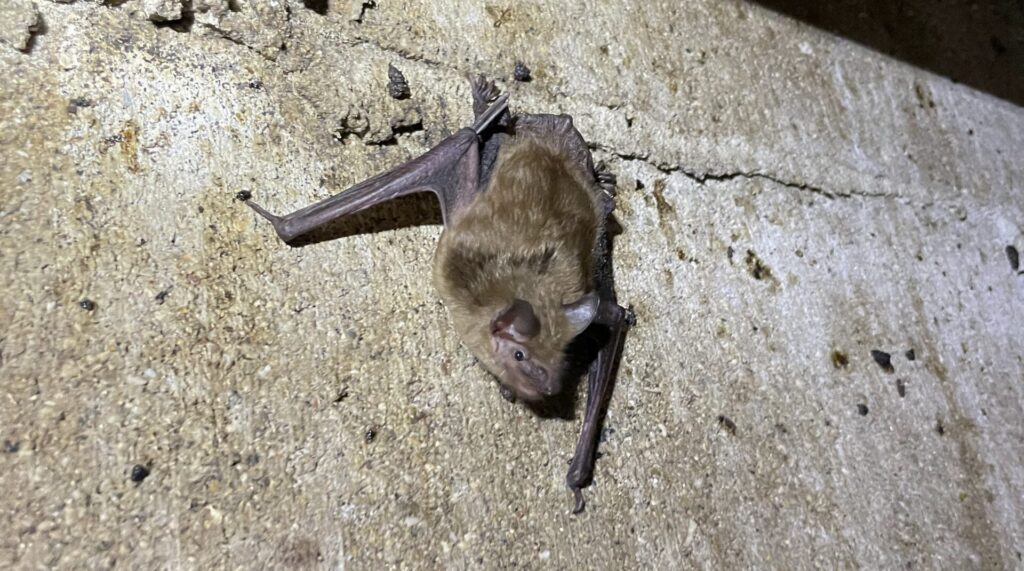
When homeowners spot an entry point, the first instinct is to seal it. But blocking an active opening while these animals are still inside creates a much bigger problem than the one you’re trying to fix. Here’s what can go wrong:
- Bats Get Trapped and Die Inside: Sealing an active opening traps the roost inside your walls or attic. Trapped animals push deeper into the building looking for another way out – sometimes ending up in your living spaces. Those that don’t find an exit die inside the wall, creating serious odour problems that are difficult and expensive to fix.
- Young Ones Can’t Fly Out on Their Own: Maternity season in B.C. runs roughly from May through August. During this time, young that can’t yet fly are present in the roost. Sealing an entry point during maternity season traps flightless young inside with no way to leave. Our team always checks for the presence of young before any exclusion work begins.
- One Sealed Gap Doesn’t Solve the Problem: Bats typically use more than one entry point. Sealing the most obvious gap without finding and addressing the others just changes which route they use. Our team inspects the full exterior before any sealing work begins so every entry point is found and addressed at the same time.
- You Could Create a Health and Safety Risk: Trapping bats inside your home increases the chance of one making its way into your living space as they search for another exit. Any time one enters your living area, the risk of contact, and potential rabies exposure, goes up. Calling our team before sealing anything is always the right move.
How Humane Exclusion Protects Your Home and Bats
Humane exclusion is the safest and most effective way to deal with a roosting situation – for you and for these animals. Our team installs one-way door systems at active entry points that let them fly out on their own at night but stop them from getting back in. This clears the roost out over time without trapping anyone inside and without causing harm.
Timing is everything. We never start exclusion work during maternity season when young ones are still in the roost and can’t yet fly. Starting too early means flightless young get trapped inside with no way out, which is a problem for them and for you. Our team checks the situation first, confirms whether young are present, and picks the right time to begin so the work gets done properly.
Once the roost is confirmed empty, we seal every entry point with materials that hold up over time. This isn’t a quick fix – it’s a complete closure of every spot that has been used or could be used in the future. Our goal is to make sure your home stays protected going forward, with no gaps left open that could bring a new roost back the following spring.
Roosting Activity in the Okanagan
The Okanagan’s warm, dry summers are perfect for roosting. Several species are common in the region, and many of them time their maternity season with the warmest months, which is also when homeowners are spending the most time outdoors. The mix of older homes, rural properties, and new developments across the region means there are plenty of buildings with gaps, worn soffits, and aging rooflines that these animals can use.
Habitat pressure in the Okanagan has been building for years. Development along lakeshores, in valley areas, and in forested land has reduced the number of natural roosting spots available. As those spots disappear, more animals turn to buildings as the next option, which is exactly what led to the bat condo project near Penticton. Homeowners in the Okanagan are more likely to find roosting activity on their property than in many other parts of B.C.
Older homes are especially at risk. Gaps along aging rooflines, worn soffits, and deteriorating seals around vents and chimneys all give these animals an easy way in. Even newer homes can have entry points that aren’t visible without a close look. Our team works with homeowners across the Okanagan and knows exactly what to look for in both older and newer construction.
Bat Removal and Prevention with Skedaddle
When bats are in your home, whether it’s one in your living space or a full maternity colony in your attic, call our team at Skedaddle Humane Wildlife Control right away. We start with a full inspection of your property, checking the roofline, soffits, behind the siding, vents, and any other area where they may be getting in or roosting. We look at the whole picture before we do anything else.
We use one-way door systems that allow these animals to leave on their own without being able to get back in. It’s a humane approach that respects both your home and the local population. We never seal an entry point until the roost is fully vacated and we time our work carefully to avoid maternity season so no young animals are affected.
After the roost is empty and every entry point is sealed, we assess the full exterior of your home for any remaining vulnerabilities. Guano cleanup, if needed, is also handled by our team with the proper protective equipment – do not attempt to clean up droppings yourself. We handle everything from the first call to the final seal so you don’t have to deal with any part of it on your own.
Frequently Asked Questions
How do I know if it's a maternity colony or just one animal?
A single animal makes very little noise and leaves minimal signs. A maternity colony is noisier - you'll hear squeaking and movement at dusk and dawn - and leaves more droppings concentrated in the same spot. If you're seeing or hearing repeated activity in the same area, a colony is likely. Call our team for an inspection.
Is it legal to remove them from my home in B.C.?
Yes, but it must be done humanely and at the right time of year. Disturbing a maternity roost during the season when young are present is not permitted. Our team follows all provincial guidelines and handles every situation in full compliance with B.C. wildlife regulations.
Can they damage my home?
Yes. Droppings accumulate quickly in an active roost and can damage insulation, wood surfaces, and drywall over time. The guano also carries health risks. The longer an active roost is left in place, the more extensive the cleanup and repair work becomes.
How do these animals get in through such small gaps?
Most species in the Okanagan can squeeze through a gap as small as half an inch. Gaps along rooflines, soffits, behind siding, and around vents are all common entry points that look much smaller than they are. Our team checks the full exterior so nothing gets missed.
What time of year is exclusion work done?
Exclusion work is typically done in early spring before maternity season begins, or in late summer and fall after the young have learned to fly. We never start exclusion work between May and August when young ones may be present and unable to leave on their own.
Will they come back after exclusion?
If every entry point is properly sealed, they should not be able to get back in through the same spots. Our team inspects the full exterior so nothing gets missed and the work holds up over time. We also address the conditions that made your home attractive in the first place.
Your Home Isn’t a Bat Condo: Let’s Keep It That Way
These animals are an important part of the Okanagan ecosystem, and habitat loss is a real problem, which is exactly why projects like the Penticton bat condo matter. But your home isn’t a substitute for natural habitat, and a maternity colony in your attic or behind your siding is a situation that needs professional attention.
The right response is to call our team before sealing anything, before disturbing the roost, and before anyone in your home comes into contact with one of these animals. We handle all of it safely, humanely, and in a way that protects both your property and the local population.
At Skedaddle Humane Wildlife Control in the Okanagan, we have the right team for the job. Contact us today to request an estimate and find out how we can protect your home while doing right by the animals that share your neighbourhood.

 Loading...







