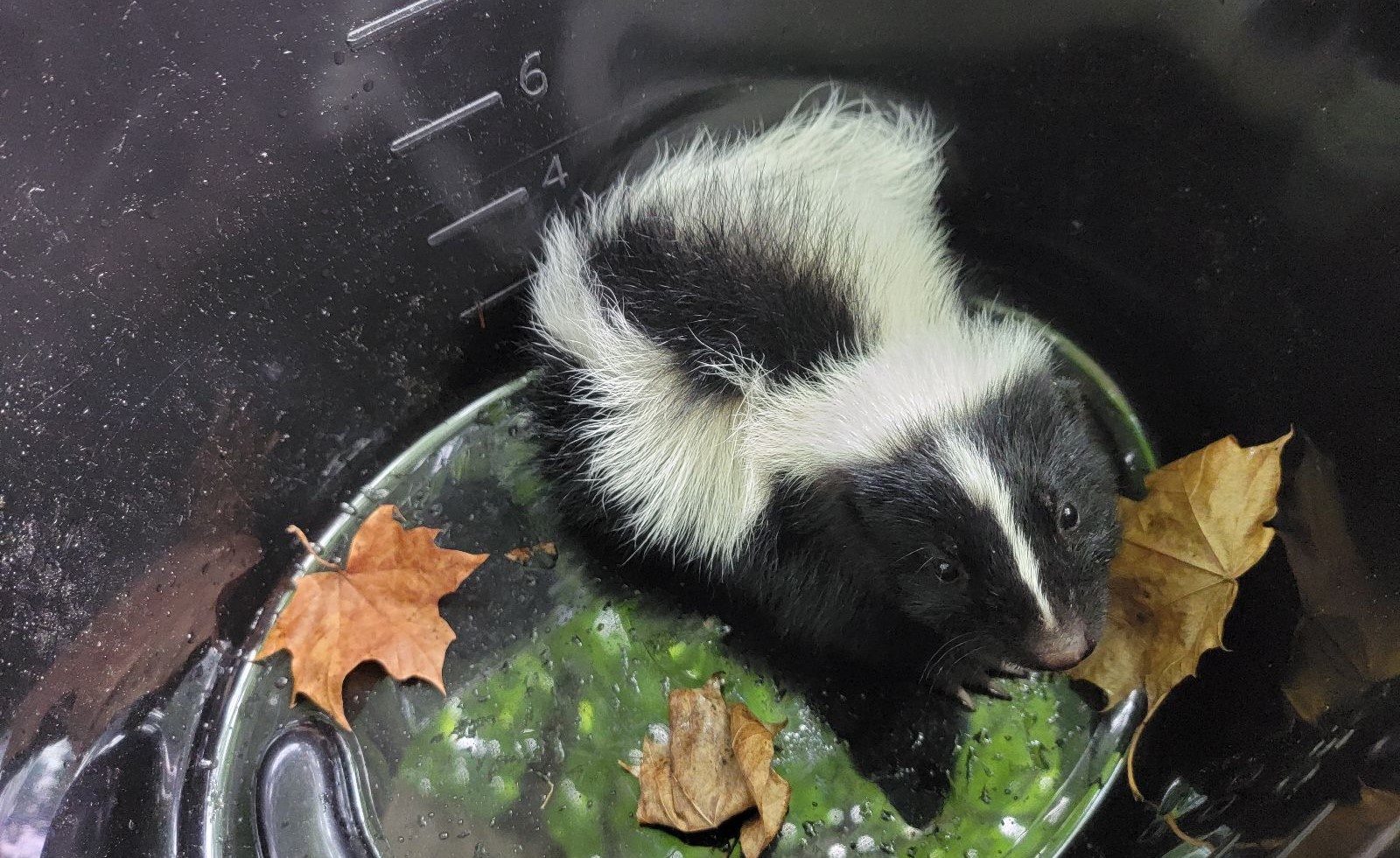
You may notice more movement around your yard as winter fades. Snow melts, soil softens, and nights grow warmer. Spring is when animal activity increases, and spring skunk activity becomes easier to spot around homes and neighbourhoods.
During this season, skunks in the spring are focused on three main things: mating, nesting, and finding food. Skunk mating season begins early, followed by skunks nesting in spring as females prepare to raise young. These natural behaviours explain why sightings, digging, and strong smells often increase at the same time each year.
In London, we see this seasonal pattern every spring at Skedaddle Humane Wildlife Control. Below, you’ll learn what skunks are up to in the spring, why their behaviour changes, and when professional support becomes important.
Skunk Mating Season Brings Increased Movement
As winter ends, movement becomes harder to miss. Early spring is when skunk mating season begins, and animals start covering more ground than usual.
This search for mates drives much of the sudden activity people notice in yards, along roads, and near buildings. It is often the first clear sign that spring skunk activity is underway and increasing quickly. What will you see?
- Increased Travel Across Neighbourhoods: Males travel farther than usual while searching for females. This leads to more sightings near roads, yards, and open spaces. Because movement increases, encounters become more common. This roaming behaviour explains why skunks in the spring seem to appear suddenly.
- More Daytime and Early Evening Sightings: While usually active at night, mating season can change behaviour. You may see skunks moving at dusk or early morning. This does not mean something is wrong. It simply reflects the urgency of the mating season.
- Stronger and More Frequent Odours: Competition between males and rejected mating attempts often leads to defensive spraying. As a result, smells may linger longer in the air. This is a common part of skunk activity. Odours are often strongest during the mating phase.
Skunks Nesting in Spring Focus on Shelter
After mating season ends, behaviour shifts toward finding shelter. Skunks nesting in spring are focused on safety, warmth, and quiet spaces. This stage is about preparing for birth and protecting the area where the young will be raised. Activity may slow down, but it becomes more concentrated in specific locations. There are a few things that happen.
- Searching for Protected Den Sites: Pregnant females seek dry, dark spaces that stay hidden. Areas under decks, sheds, and porches are common choices. These spots offer warmth and protection from predators. Once chosen, the den is used daily.
- Digging Under Structures: Skunks are natural diggers and may dig shallow tunnels to reach den spaces. Small piles of dirt or cone-shaped holes often appear nearby. This digging supports both shelter and food searching. Yard disturbance is common during this stage.
- Settling Close to Food Sources: Den sites are often chosen near areas with easy access to food. This reduces travel once babies arrive. Staying close to the den helps limit risk. This is why activity often stays in one area for weeks.
Raising Young Changes Behaviour Patterns
By late spring, babies are born, and daily routines change again. Mothers shift their focus to feeding and protection, which alters movement patterns.
Activity may seem quieter at firs,t but becomes more noticeable over time. This stage explains why spring skunk activity can feel steady and persistent. What are the signs you’ll notice?
- Increased Defensiveness Near the den: Mothers become more protective once young are present. They may spray more easily if startled. This behaviour is meant to protect the den. Defensive reactions are more likely during this phase.
- Limited Movement Away from the Nest:
Mothers leave the den mainly to feed. Trips are short and direct. Staying close reduces risk to the young. This creates consistent activity patterns near the nesting site. - Young Remain Hidden for Several Weeks: Babies stay in the den for about six to eight weeks. During this time, the den becomes the centre of daily activity. Movement may be subtle at first. Activity increases as the young grow.
Spring Foraging Supports Energy Recovery
As winter ends, finding food becomes a daily focus. Skunks come out more often because the stored fat from winter runs low. Spring nights are spent searching for easy meals that help rebuild strength and support the season ahead.
This increase in movement is a key part of spring skunk activity and often explains why lawns and yards show sudden signs of disturbance. Here’s what to look for.
- Digging for Insects and Grubs: Lawns and soft soil provide easy access to insects. Digging often appears overnight. These feeding spots may repeat in the same areas. This behaviour supports recovery after winter.
- Searching Near Residential Areas: Residential spaces often have reliable food sources. Gardens, lawns, and waste areas attract attention. This keeps skunk activity close to homes. Feeding patterns usually follow a routine.
- Activity Peaks at Night and Early Morning: Feeding mainly happens after dark. Early morning sightings are also common. Occasional daytime movement may occur during feeding. This does not automatically signal illness.
When Spring Activity Becomes a Problem
Spring behaviour is normal, but it becomes a problem when nesting happens too close to buildings. As skunks search for shelter, they may choose areas under porches, decks, or sheds. Once a den is established, activity increases and becomes harder to manage. What starts quietly can turn into visible damage or strong smells.
Timing plays a major role once nesting begins. If access points are closed too early, mothers may try to force their way back in. This can lead to digging, spraying, and damage to nearby structures. These reactions are driven by instinct and the protection of the young, not aggression.
This is why careful planning matters during skunk nesting in spring. The right timing allows animals to exit safely without causing added problems. When handled properly, the situation stays controlled and does not escalate. Our professional coordination helps protect the space while respecting the natural seasonal cycle.
Skunk Removal With Our Professional Wildlife Team
When removal is needed, assessment comes first. Nesting status, den location, and behaviour patterns are reviewed carefully. This prevents rushed decisions.
One-way doors may be used to allow skunks to leave without returning. These doors are temporary and only installed when conditions are right. This method avoids panic and reduces damage. Then our technicians secure the structure with steel screening that skunks can not dig under or through. Whether they have denned under a deck, shed, extension or porch, our team can secure high quality exclusion screening that skunks can not get through.
Once activity stops, access points are secured to prevent future nesting. This keeps removal humane and controlled.
A Seasonal Pattern You Can Recognize
Spring follows a predictable cycle that includes mating, nesting, feeding, and raising young. This pattern explains why movement and sightings increase quickly as temperatures rise. Recognizing skunk activity early helps prevent problems from growing larger and harder to manage.
When activity is ignored, skunks can settle in and return to the same areas night after night. Seasonal awareness allows the situation to be addressed at the right time, before damage or strong odours appear.
Spring Skunk Activity Needs the Right Timing
Spring brings change, movement, and nesting behaviour. Knowing what skunks are up to this spring helps explain why activity increases and why timing matters when problems start close to home.
You may begin to notice signs of spring skunk activity as animals move more often and spend time searching for shelter. During skunk mating season, movement increases even more, especially at night. Later in the season, skunks nesting in spring can create ongoing activity around decks, sheds, and other protected areas.
When these signs appear, professional support helps ensure the situation is handled safely and at the right time. Our team at Skedaddle Humane Wildlife Control in London provides humane solutions designed to protect homes through every stage of the season. Request an estimate to learn more.

 Loading...