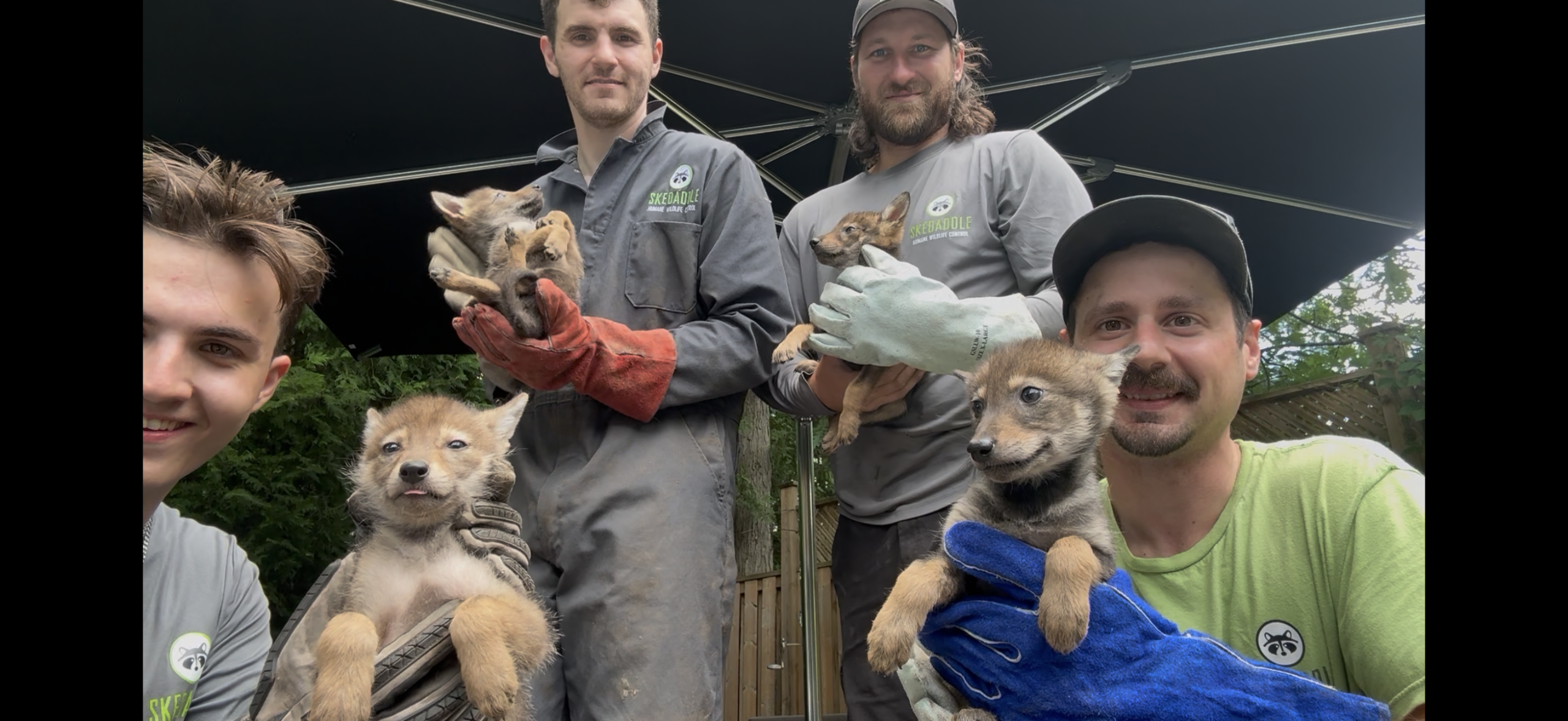
Seeing a coyote pass through a neighbourhood is becoming increasingly common in Mississauga and communities across the Greater Toronto Area. Finding an entire family living underneath your backyard deck is another story.
That’s exactly what happened recently when Mississauga homeowners discovered six juvenile coyotes had been living beneath their deck after a mother coyote turned the sheltered space into a temporary den.
The unusual discovery highlights how well coyotes have adapted to urban environments—and how features of an ordinary backyard can provide wildlife with the shelter, food and water they need to make themselves at home.
The Homeowners Started Noticing More Coyote Activity
The homeowners had been seeing increased coyote activity around their property, but they didn’t immediately know what was attracting the animals to their yard.
Eventually, they began noticing several young coyotes repeatedly emerging from underneath the deck.
The pups would venture into the yard to drink rainwater that had collected on top of the family’s pool cover before disappearing beneath the deck again.
At that point, it became clear that the coyotes weren’t simply passing through the property. They were living there.
With multiple young coyotes regularly entering the yard, the homeowners became concerned about safely using their outdoor space and contacted Skedaddle Humane Wildlife Control for help.
Six Young Coyotes Were Living Under the Deck
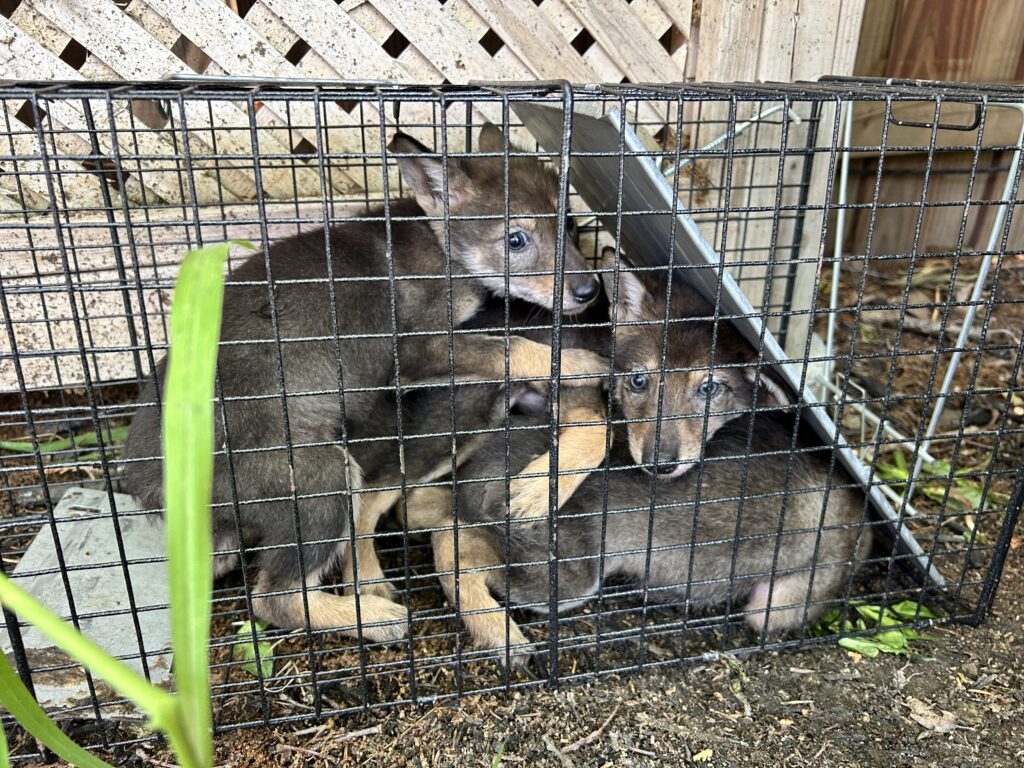
When Skedaddle technicians arrived and inspected the property, they found evidence that a mother coyote had burrowed underneath the deck and created a denning area for her pups.
The protected space provided an ideal temporary nursery.
Technicians also discovered bones beneath the structure, suggesting that the mother had been regularly returning with food for her young. Based on the activity and evidence around the den, it appeared the family had been using the space for more than a week.
For homeowners, a deck might simply be a place to relax or entertain. For wildlife, the space underneath it can look very different.
Low, protected areas beneath decks, sheds and other structures can offer shelter from weather and human activity while giving animals quick access to the surrounding neighbourhood.
Two Pups Knew Exactly Where to Go
To safely reach the coyotes, technicians carefully removed several deck boards to access the denning area below.
As they began investigating, two of the juvenile coyotes suddenly emerged from beneath the deck and ran across the yard.
Rather than moving around unpredictably, the pups took a direct route out of the property.
That behaviour provided the technicians with valuable information.
“We could tell the pups were already old enough to be moving around on their own and had an established route in and out of the yard,” said Joe Blackborow, Assistant Manager at Skedaddle Humane Wildlife Control. “When two of the juveniles bolted and followed that trail on their own, it confirmed they were familiar with the area, and could safely move to a new den.”
The remaining coyotes were carefully removed by hand and released where they had been entering the property, allowing them to reunite with their siblings and return toward nearby habitat.
Once the animals were safely out, the technicians repaired and secured the deck to prevent wildlife from moving back underneath it.
Why Would Coyotes Choose a Backyard?
Coyotes are highly adaptable animals.
As development continues to reshape natural landscapes across Mississauga and Peel Region, coyotes have learned to live alongside people and take advantage of the resources urban and suburban environments provide.
A residential property can unintentionally offer all three things wildlife needs: food, water and shelter.
In this case, the space underneath the deck provided a protected place for the mother to raise her young, while accumulated rainwater on the pool cover gave the pups a convenient source of water.
Food can be just as easy to find in residential areas. Garbage, compost, fallen fruit, pet food, bird feeders and rodents can all attract wildlife to properties. Even when homeowners aren’t intentionally feeding coyotes, a yard can contain resources that encourage them to return.
Why Coyote Pups Can Suddenly Appear Around Homes
Spring and summer are important periods for coyote families.
Coyotes typically raise their young in protected den sites. As the pups grow, they begin venturing farther from the den and exploring the surrounding area.
That’s often when homeowners begin noticing them.
Young coyotes that were previously hidden beneath a deck, shed or other protected location may suddenly start appearing around a yard as they become more mobile.
In the Mississauga case, the pups had reached the point where they weren’t simply remaining underneath the deck. They were regularly coming out for water and had learned how to navigate in and out of the property.
That mobility was an important consideration when determining how the situation could be resolved humanely.
Finding Coyote Pups Doesn’t Mean They’ve Been Abandoned
Seeing young coyotes without an adult nearby can lead homeowners to assume they’ve been abandoned. That’s not necessarily the case.
A mother coyote doesn’t remain beside her pups every moment of the day. She may leave the den to find food or avoid attracting attention to where her young are hiding.
The bones found beneath the Mississauga deck were one clue that an adult had continued caring for the juveniles even when she wasn’t visible.
This is one reason homeowners shouldn’t attempt to capture, relocate or interfere with coyote pups themselves. Understanding their age, behaviour and family situation is important when deciding how to proceed.
What Should You Do If Coyotes Are Living on Your Property?
If you discover coyotes denning underneath a deck, shed or another part of your property, keep your distance and avoid attempting to reach into the den or remove the animals yourself.

Keep children and pets away from the denning area and supervise pets while they’re outdoors.
Homeowners should also look at what may be attracting wildlife to the property. Secure garbage and compost, don’t leave pet food outside, clean up fallen fruit and other potential food sources, and eliminate unnecessary sources of standing water where practical.
Most importantly, don’t intentionally feed coyotes. Feeding can encourage coyotes to associate residential properties and people with food, increasing the likelihood of future conflicts.
If animals have established a den immediately beside your home or in an area your family regularly uses, contact a qualified wildlife professional for advice.
Preventing Wildlife From Moving Under Your Deck
Once wildlife has left, simply covering the most obvious hole may not be enough.
Decks and sheds can have multiple accessible areas around their perimeter. If one opening is closed but another remains, wildlife may simply find a different way underneath.
Before securing the area, it’s also critical to make sure no animals are still inside.
A professional wildlife inspection can identify how animals are accessing the space, determine whether young are present and recommend an appropriate approach for securing the structure.
In the Mississauga case, once the young coyotes were safely removed, the deck was repaired and secured to help prevent another animal from establishing a den beneath it.
Coyotes Are Part of Life in the GTA
Coyotes living in urban environments aren’t necessarily animals that have “lost their way.” They have become remarkably successful at adapting to landscapes shared with people.
Still, finding six pups beneath a residential deck isn’t an everyday occurrence.
“While coyotes are becoming more common in our neighbourhoods, it’s still rare to find them denning this close to a home,” said Blackborow. “We were happy to give the homeowner peace of mind and ensure the situation was resolved safely and effectively.”
As communities throughout Mississauga and the GTA continue to grow, encounters between homeowners and wildlife will continue.
The goal isn’t to eliminate wildlife from our communities. It’s to understand why animals are being attracted to our properties, remove those opportunities where possible, and respond appropriately when wildlife gets a little too close for comfort.
For these Mississauga homeowners, that meant safely helping six young coyotes move on—and making sure the space beneath their deck wouldn’t become the next family’s nursery.

 Loading...







