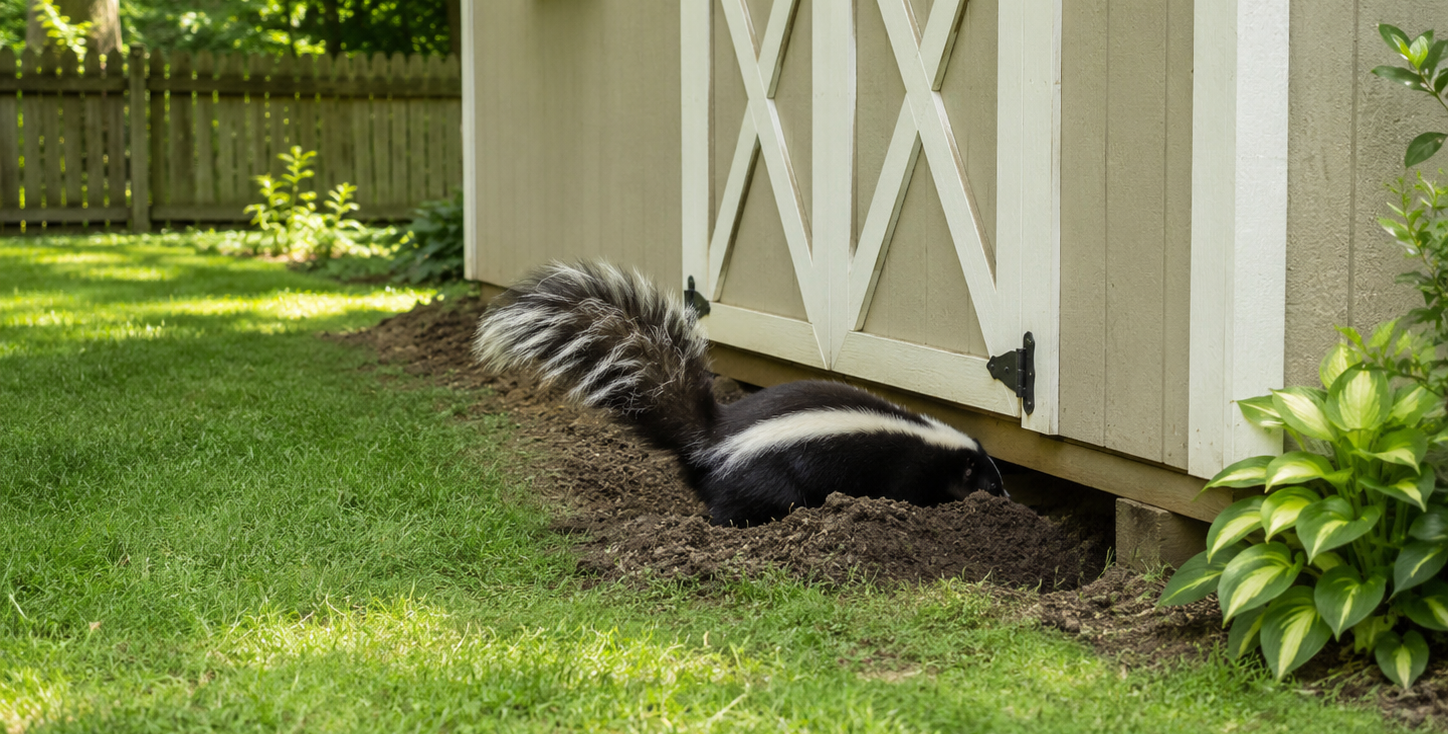
You should take fresh digging, strong odors, tracks, or disturbed lattice around your shed seriously this fall. These signs may mean a skunk is exploring or living beneath the structure. You should not approach the opening or block it because an adult or dependent young may still be inside.
You may notice more activity as September nights become cooler in St. Paul. Spaces beneath sheds, decks, porches, garages, and homes offer protection from wind, rain, and cold. Nearby garbage, water, loose soil, or food may make one of these spaces even more attractive.
At Skedaddle Humane Wildlife Control in St. Paul, we inspect the den and surrounding property for you. We determine what is using the opening, whether young are present, and which areas require protection. In this blog, we explain pet safety, signs of a hidden den, why the opening must remain clear until inspection, and how professional removal and exclusion can help.
Can a Skunk Harm My Dog?
Yes, a skunk can harm your dog through defensive spray, bites, scratches, or possible disease exposure. Most would rather move away than fight. However, a curious dog may approach too closely and leave the skunk feeling trapped.
A direct spray can harm more than your dog’s sense of smell. It may cause burning, redness, and heavy tearing when it reaches the eyes. VCA Animal Hospitals warns that a direct hit may damage the cornea and cause temporary blindness.
Spray in the mouth may cause heavy drooling, nausea, or vomiting. VCA recommends immediate veterinary treatment if it reaches your dog’s eyes or mouth. You should also contact a veterinarian after a bite, scratch, or possible physical contact.
The safest response is to keep your family and dog away from a suspected den. Do not send your dog near the opening to see whether anything is inside. Our professional wildlife team can inspect the area without creating a close encounter.
Why Sheltered Spaces Become Attractive in the Fall
September brings cooler nights and changes in outdoor food supplies. Skunks spend more time searching for dependable food and a protected place before winter. They do not fully hibernate, but they may remain inside a den for longer periods during very cold weather.
A space beneath a shed, deck, porch, garage, or home can block wind and rain. It may also stay warmer and drier than an open part of the yard. Low openings and loose lattice can provide access without requiring major damage.
The Minnesota Department of Natural Resources notes that skunks thrive in rural and urban settings. The agency also identifies spaces beneath porches, decks, sheds, and similar structures as possible den sites. These features are common around St. Paul properties.
One nighttime visit does not always mean that a den has been established. Repeated digging, tracks, odors, or sounds provide stronger evidence. A professional inspection can identify whether the activity is new, ongoing, or connected to dependent young.
Sheltered Areas That May Be Investigated
Skunks prefer low, quiet, and protected spaces. A small opening can lead to a much larger area beneath a structure. Our team examines the full perimeter because the most obvious hole may not be the only access point.
- Beneath Sheds: A raised shed may provide a dry and quiet space away from regular activity. Loose soil around its base can make digging easier. We inspect every side and determine whether the opening is active.
- Under Decks and Porches: Deck boards offer cover, while damaged lattice or open edges may provide access. Food smells from outdoor dining or garbage can add to the attraction. Our technicians check the den opening and nearby conditions.
- Beside Garages: Gaps near a concrete slab, damaged trim, or loose material may lead under the structure. Garbage or stored food may bring activity close to the garage. We trace the signs without asking you to enter a tight space.
- Below Additions and Steps: Home additions, exterior stairs, crawl spaces, and low foundations may contain hidden gaps. A skunk can move beneath these areas without reaching the living space. Inspection is needed before any opening is secured.
- Near Outdoor Storage: Woodpiles, stacked materials, and yard equipment can provide cover close to a den. These items may also hide tracks and disturbed soil. Our team assesses how the storage area connects with the nearby structure.
Signs of Activity Beneath a Structure
Skunks often stay hidden during daylight hours. You may notice changes around your shed or deck before seeing one. These signs can help our team locate the active area.
- Fresh Digging: Loose soil may appear around the base of a shed, porch, or deck. A shallow-looking hole may lead to a much larger space. We determine whether the opening is active and what is using it.
- Five-Toed Tracks: Prints may appear in mud, dust, or soft garden soil. Tracks leading toward and away from one opening may show regular use. Our technicians compare them with digging and other evidence.
- Strong Odors: A lasting smell may point to repeated visits or a nearby den. It may become stronger around one side of the structure. Odor alone cannot confirm whether the space is still occupied.
- Disturbed Lattice: Lattice may look bent, broken, shifted, or pushed away from the soil. A small damaged section may serve as the main entrance. You should not repair it before the area is inspected.
- Nighttime Sounds: You may hear scratching, digging, or movement beneath a floor, shed, porch, or deck. These noises often become easier to notice after dark. Skedaddle can locate the source without asking you to investigate.
Why the Opening Must Not Be Blocked Right Away
You should not assume that a quiet opening is empty. A skunk may rest beneath the structure during the day and leave only after dark. Another adult or dependent young may also remain hidden inside.
Blocking the entrance may trap them beneath the shed. A trapped skunk may dig toward another area, damage the structure, or spray when stressed. It could also move toward a crawl space or another part of the property while searching for a way out.
Closing the hole while the adult is away can create a different problem. Dependent young may be left behind and unable to leave. The returning mother may then dig around the barrier or damage another part of the structure while trying to reach them.
The visible opening may not be the only route beneath the shed. Our team must confirm occupancy and inspect the full edge before planning exclusion. Permanent work begins only after we know the space is clear.
Why People and Pets Should Keep Their Distance
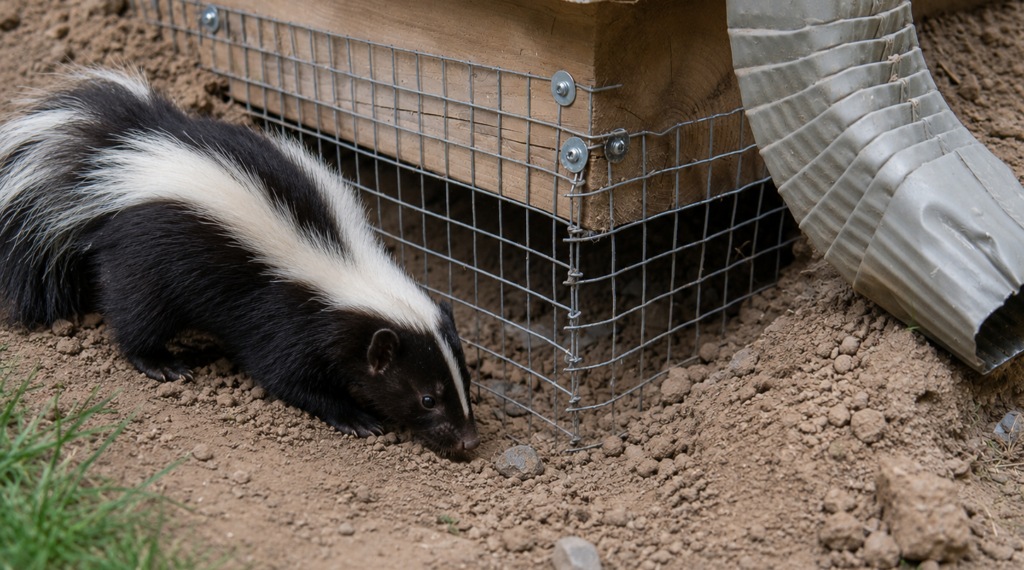
Skunks use spray as a defense when they feel cornered or threatened. An excited dog may ignore warning signs such as foot stamping, hissing, or a raised tail. A narrow den entrance can also leave little room for the skunk to escape.
A close encounter may expose your dog’s eyes, mouth, nose, and skin to spray. Bites and scratches can create further health concerns. Possible rabies exposure makes prompt veterinary advice especially important after physical contact.
You should not approach the den to retrieve a dog or check whether anything is inside. Keep people and pets away from the area while waiting for professional help. Contact your veterinarian if your dog has been sprayed in the face, bitten, scratched, or may have made direct contact.
Our technicians handle the inspection while you remain at a safe distance. We identify the den and watch for signs that it is active. This avoids forcing a defensive response.
How Professional Inspection Finds the Full Problem
One hole beneath a shed does not reveal the full situation. Our team considers occupancy, possible young, entry routes, food sources, contamination, and structural damage. These findings allow us to create a removal and prevention plan for the complete property.
- Occupancy Assessment: We examine digging, tracks, odors, sounds, and movement patterns. These signs help us decide whether the den remains active. We also assess whether dependent young may be present.
- Structure Inspection: Our technicians check sheds, decks, porches, garages, steps, additions, and nearby foundations. We locate the main opening and secondary gaps. This prevents the plan from focusing on one visible hole.
- Property Assessment: We look for garbage, stored food, fallen produce, water, loose soil, and protected travel routes. These conditions may explain why the location was selected. Our findings guide removal and future prevention.
- Damage and Contamination Review: We check for waste, disturbed materials, odor, and damage near the den. Some affected areas may require professional cleaning or restoration. You do not need to crawl beneath the structure or touch anything.
- Removal and Exclusion Plan: We use all inspection findings to plan the next steps. The plan covers humane removal, possible young, cleanup, repairs, and long-term protection. Skedaddle completes the work instead of leaving it with the homeowner.
Skunks Under Sheds in St. Paul
St. Paul contains many older neighborhoods with mature yards, porches, decks, garages, and sheds. These features can provide protected spaces close to food and water. Cooler fall nights may increase interest in quiet den locations.
Loose soil, damaged lattice, slab gaps, and openings beneath sheds or additions may provide access. Digging, five-toed tracks, strong odors, disturbed materials, and nighttime sounds can point to activity. You may notice these signs even when no skunk is visible during the day.
Blocking the hole does not prove that the den is empty. An adult or dependent young may remain inside and create a larger problem if trapped. At Skedaddle, we identify the source, completes humane removal and cleanup, and protects the structure against another entry.
How Humane Removal and Exclusion Provide Lasting Protection
Humane removal begins after our team identifies the active den. We must also determine whether dependent young are present. A family requires a different professional response than a single adult that can leave on its own.
When appropriate, we may install a one-way door. It allows wildlife to leave but prevents re-entry. We then confirm that the space is empty before permanently securing it.
Waste, nesting material, and odors may remain after removal. Our technicians complete professional cleanup and deodorizing when needed. You should never enter the den or handle contaminated soil and material yourself.
Exclusion protects more than the main opening. We reinforce vulnerable areas around the structure with durable materials designed to stop future digging. Inspection, humane removal, cleaning, restoration, and exclusion work together to reduce the chance of another den.
Frequently Asked Questions
Why do skunks go under sheds in the fall?
The space can provide shelter from wind, rain, cold, and other outdoor threats. Loose soil and a low opening may make access easy. Nearby food and water can add to the attraction.
What does a skunk den entrance look like?
The entrance may be beneath lattice, stairs, a foundation edge, or the base of a shed. Fresh soil and tracks may appear around it. Our professionals should confirm what is using the opening.
Do skunks stay under sheds during the day?
Yes, they are often active after dark and may rest in the den during daylight hours. A quiet opening should not be assumed empty. Our team can assess whether the space is active.
Will a skunk spray near its den?
A skunk may spray when it feels trapped or threatened. A person or dog approaching the entrance can cause a defensive response. Everyone should remain away while a professional inspects the area.
Can skunk spray injure a dog’s eyes?
Yes, a direct spray can cause burning, redness, and heavy tearing. It may also damage the cornea or cause temporary blindness. Contact a veterinarian promptly when the eyes or mouth have been exposed.
Can a skunk dig back under a shed?
Yes, these animals are capable diggers and may return if weak areas remain. Protecting one visible opening may leave other gaps available. Our professional exclusion secures the full edge of the structure.
Who should inspect a den in St. Paul?
Our trained wildlife professionals inspect the den and surrounding property. Skedaddle can confirm occupancy, check for young, complete humane removal, clean affected areas, and prevent re-entry. You do not need to approach the den or handle contaminated material.
Keep a Hidden Fall Den From Growing Into a Bigger Problem
Skunks may investigate sheds, decks, porches, garages, and homes as St. Paul nights become colder. Digging, tracks, strong odors, disturbed lattice, and nighttime sounds may show that a protected space is being used. You should not assume that a quiet opening is empty.
Keep your family and dog away from a suspected den. A close encounter can cause a defensive spray, while direct exposure may harm your dog’s eyes or mouth. Bites, scratches, or other physical contact also require prompt veterinary guidance.
Do not approach the opening, inspect beneath the structure, or block the entrance yourself. An adult or dependent young may remain hidden inside. Sealing the hole too soon can trap them and lead to damage or another opening.
At Skedaddle Humane Wildlife Control in St. Paul, we handle the inspection, humane removal, professional cleanup, deodorizing, restoration, and exclusion. Our team completes the work while you remain safely away from the den. Contact us and request an estimate to learn more about protecting your property this fall.

 Loading...