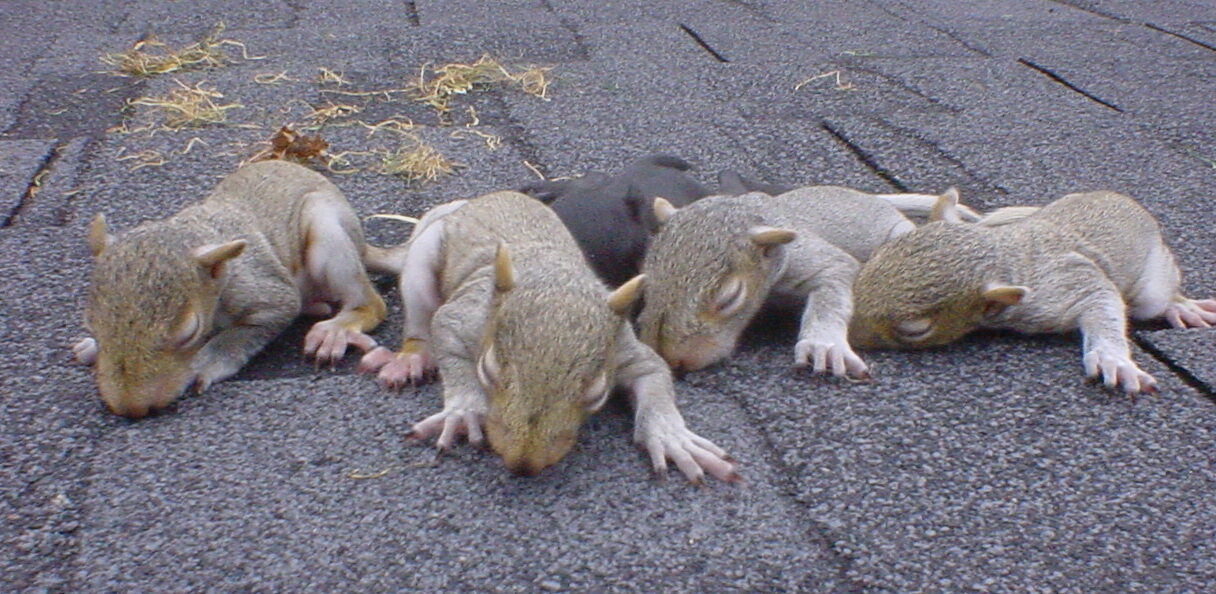
Hearing persistent noises in your attic during the summer months usually means a mother squirrel has given birth to a litter of babies inside your home. These sounds range from high-pitched chirping and squeaking to rapid scampering, heavy thumping, and constant chewing. When you hear these specific noises, it indicates a growing squirrel family is actively using your attic as a safe nesting space, and professional removal is necessary.
You might be wondering what is causing that sudden racket above your ceiling. Summer is a peak time for wildlife activity, and mother squirrels often seek out warm, dry, and safe spaces away from predators to raise their litters. Your attic provides the perfect environment for these animals to build a nest and care for their young. As the babies grow, the noise level increases significantly, making their presence impossible to ignore.
You do not have to live with these disruptive sounds. At Skedaddle Humane Wildlife Control in Okanagan, we specialize in identifying and resolving these exact situations. Our expert team knows how to locate the nest, safely remove the mother and her babies, and secure your home against future wildlife intrusions.
In this article, we will explain exactly why those specific attic noises point to summer squirrel babies. You will learn how to identify the different sounds these animals make, understand what their activity means for your property, and discover how our professional removal process works to protect your home.
What do baby squirrels sound like in an attic?
Baby squirrels sound like a series of high-pitched chirps, squeaks, and crying noises coming from a specific area in your attic. You will often hear these vocalizations most clearly in the early morning or late afternoon when the babies are hungry and calling out for their mother. Because squirrels are active during the day, these sounds differ from the nighttime noises made by nocturnal animals like mice or raccoons.
As the babies get older and more active, the sounds change and become much louder. You will start hearing rapid scampering, wrestling, and heavy thumping as the young squirrels play and explore the space inside your insulation. Additionally, you will likely hear scratching and chewing sounds as their teeth develop and they begin gnawing on the wooden structures of your home.
Pitter-Patter and Scampering Sounds
When a mother squirrel establishes a nest, she does not stay still for long. She constantly moves back and forth to bring food to her babies. Our team at Skedaddle knows that understanding these movement patterns is key to identifying an infestation.
You will notice these noises are highly distinct and follow a specific daily schedule. Squirrels are diurnal, meaning they sleep at night and move around during the day. Because of this, the pitter-patter sounds will wake you up right as the sun rises.
You will also hear intense bursts of movement as the mother travels through the attic space. This rapid scurrying is a classic sign of a mother animal managing her summer squirrel babies.
- Signs of Daytime Movement: You will hear fast-paced footsteps directly above your ceiling during daylight hours. The mother squirrel moves quickly to gather food and return to her young safely. Because she is navigating through insulation and over wooden beams, the scampering sounds echo loudly through the house. Our technicians use these specific daytime noise patterns to track the mother’s main travel routes.
- Constant Foraging Activity: You might hear the sounds of scratching as the mother digs through insulation to secure her nest. She is constantly bringing new materials inside to keep the babies warm. This continuous back-and-forth travel creates a predictable pattern of noise every single morning. We evaluate these travel paths to understand exactly how the animals are utilizing your attic.
- Early Morning Commutes: You will often be woken up by the mother leaving the nest at the break of dawn. She needs to forage for food early in the day before temperatures get too hot. The fast scurrying sounds as she exits the attic are a clear indicator that she is leaving a litter behind. Our wildlife specialists monitor these exit routes to plan a safe removal strategy.
High-Pitched Chirping or Squeaking Points
A quiet attic can become surprisingly lively when summer squirrel babies begin their constant chirping. These sounds, often confused with birds, are a key indicator of a squirrel nest in the home. Baby squirrels depend entirely on their mother, and their vocalizations are vital for communication. By understanding these noises, the location and condition of a hidden nest can often be determined accurately.
- Communication With the Mother: High-pitched chirps are a strong sign that the babies are hungry and trying to attract their mother’s attention. These sounds often mimic bird calls but resonate from deep within attics or walls. Such vocalizations ensure the mother knows when to return and provide care. Monitoring these squeaks helps locate the nest and identify times when the mother is away.
- Distress Calls and Crying: Loud cries signal that the mother has been away from the nest for an extended period. When frightened or cold, baby squirrels make persistent distress calls to summon their mother’s return. These cries serve as a natural survival mechanism to ensure their immediate needs are addressed. Specialists often use these calls to verify the presence and activity level of a nest before proceeding with removal.
- Feeding Time Noises: The most intense bursts of squeaking occur immediately after the mother returns with food. These vocalizations peak as the litter competes for nourishment in a frenzy of activity and noise. Such sounds indicate that the babies are thriving under the mother’s care and guidance. Listening to these feeding noises provides valuable insight into the health and size of the family.
Heavy Thumping and Wrestling
Throughout the summer, young squirrels grow quickly and their energy levels soar. What starts as soft squeaking soon turns into much louder disturbances. Our team at Skedaddle recognizes that these changes indicate the babies are becoming more mobile. Their increased activity often leads to heavy thumping sounds as they begin exploring areas beyond their nest.
When young squirrels chase and wrestle with each other, it creates rapid footsteps and sudden, startling thuds throughout the attic. This playful behaviour is a key part of their development, helping them build survival skills like climbing and agility. However, the constant playing can damage your home, compressing important insulation and weakening its thermal efficiency. Our experts assess the condition of your attic and identify areas impacted by their activity.
Loud bangs are often heard when young squirrels jump from high rafters and land heavily on your ceiling. Their still-developing balance and coordination make their movements clumsy, causing unpredictable impacts throughout the day. These sudden jumps can lead to damage if left unchecked. At Skedaddle, we carefully inspect your attic for any structural issues caused by these impacts.
As the young squirrels grow braver, they begin spreading out across the attic, venturing far from their original nest. The noise becomes more widespread, and their movement signals that they are almost ready to leave your home. Our team uses specialized tools to locate every individual squirrel and ensure no animals are left behind, avoiding further noise or damage to your home.
Constant Gnawing and Chewing Sounds
Squirrels belong to the rodent family, which means their front teeth never stop growing. To keep their teeth filed down, they must chew constantly on hard surfaces. Our technicians have seen firsthand the severe damage this biological need can cause.
You will hear repetitive grinding, scraping, and chewing noises coming from your walls or ceiling. These sounds are often the most destructive, as the animals are actively destroying the materials that make up your home.
You must take these sounds seriously, as they chew on everything from wooden support beams to dangerous electrical wiring. This chewing behaviour increases as summer squirrel babies grow teeth of their own.
- Chewing on Wood: You will hear loud scraping sounds as the animals gnaw on your wooden roof trusses. They chew on these hard surfaces to file down their teeth and expand their living space. This constant damage weakens the structural integrity of your roof over time. Our experts identify these chewed areas to assess the full extent of the structural damage.
- Gnawing on Wires: You might hear subtle grinding noises near your light fixtures or electrical outlets. Squirrels frequently chew the plastic casing off electrical wires, exposing the dangerous live copper beneath. This creates a severe fire hazard that puts your entire property at risk. We carefully inspect all wiring near the nesting site to ensure your home remains safe.
- Expanding Entry Points: You will hear scratching from the outside walls as they chew holes through your fascia or soffits. As the babies grow larger, the family needs wider access holes to get in and out of the attic. They will aggressively chew through aluminum and wood to make these doorways bigger. Our team locates and permanently seals every chewed entry point to secure the building.
Challenges with Squirrel Babies in the Okanagan
Squirrel babies can create significant challenges for homeowners in the Okanagan region. When squirrels nest in attics or walls, they often have litters of three to six young, who grow quickly and become more active. These baby squirrels can cause noise, damage property, and affect the safety of your home as they explore their surroundings and learn to climb and chew.
A common issue with squirrel babies is the wear and tear they cause. Juvenile squirrels are curious and will gnaw on wood, insulation, and wiring as they grow. This chewing not only causes visible damage but can also lead to fire hazards if electrical wiring is exposed or severed.
Another challenge is safely removing squirrel babies without harming the animals or the home. Baby squirrels rely on their mothers for milk and care, which means removing the young too early can lead to further complications. Professional wildlife removal teams understand how to handle these situations, ensuring the babies and the family are relocated humanely and your home is properly secured against re-entry.
How Professional Squirrel Baby Removal and Prevention Works
When you are dealing with summer squirrel babies, a professional approach is the only safe and effective solution. Our trained wildlife specialists at Skedaddle handle the entire process from start to finish. We begin by conducting a comprehensive inspection of your attic to locate the mother and carefully extract the babies by hand. We place the babies in a specialized, heated reunion box outside the home, allowing the mother to safely relocate her family to an alternate den in the wild.
Once the babies are safe, we focus on securing your home. We install specialized one-way doors over the main entry points. These doors allow any remaining adult wildlife to safely exit the attic, but they completely prevent the animals from getting back inside. After we confirm all animals are gone, we remove the doors and seal the entry points with heavy-gauge, galvanized steel mesh. This guarantees that no animals can chew their way back into your home in the future.
Frequently Asked Questions
What time of day are squirrel noises most common?
You will mostly hear squirrel noises during the daytime. They are diurnal animals, meaning they are most active just after sunrise and right before sunset. If you hear noises specifically during these daylight hours, it strongly points to a squirrel infestation rather than nocturnal animals like mice.
Do baby squirrels cause damage to an attic?
Yes, baby squirrels cause significant damage as they grow. They compress your insulation by wrestling and playing, and they leave behind hazardous droppings and urine. As their teeth develop, they will also begin chewing on wood and electrical wiring inside the space.
Will the mother squirrel leave the babies alone?
The mother squirrel leaves the nest daily to forage for food and water. However, she does not abandon the babies permanently and will return frequently to nurse them. If you hear crying noises, it usually means the mother is currently out foraging and will be back soon.
Can squirrels chew through my ceiling?
While it is rare for them to chew completely through drywall into your living space, squirrels do chew extensively on the wooden joists above the ceiling. They can chew through fascia, soffits, and roof vents to create entry points. This gnawing behaviour is very loud and destructive.
How do professionals know where the nest is located?
Our professionals use a combination of auditory tracking, visual inspections, and thermal imaging cameras to pinpoint the exact location of the nest. We look for heavy tracks in the insulation and listen for the distinct chirping sounds of the babies to guide us directly to them.
Summer Squirrel Babies? We Can Handle It!
Living with wildlife in your home can quickly turn into a stressful situation. The sounds of squirrels moving, chewing, and squeaking can disrupt your daily life and pose risks to your property. Over time, squirrels may cause serious damage, such as chewing wires, tearing insulation, and harming structural components of your home. Ignoring the problem won’t make it go away. In fact, it could lead to bigger issues, including health risks caused by the hazardous waste animals leave behind.
At Skedaddle Humane Wildlife Control in Okanagan, we understand how overwhelming this can be. That’s why we’re committed to providing a reliable, professional, and humane solution. Our trained technicians specialize in safely removing wildlife from your home, ensuring every animal is carefully handled and relocated. Once the animals are gone, we thoroughly clean and decontaminate the affected areas, leaving your home safe and secure. To prevent future invasions, we also seal entry points, providing you with long-term peace of mind.
Don’t wait for the problem to worsen. Contact us at Skedaddle Humane Wildlife Control today. Request your estimate, schedule an inspection, and take the first step towards a quiet, stress-free, and wildlife-free home. We’re here to help you every step of the way.

 Loading...