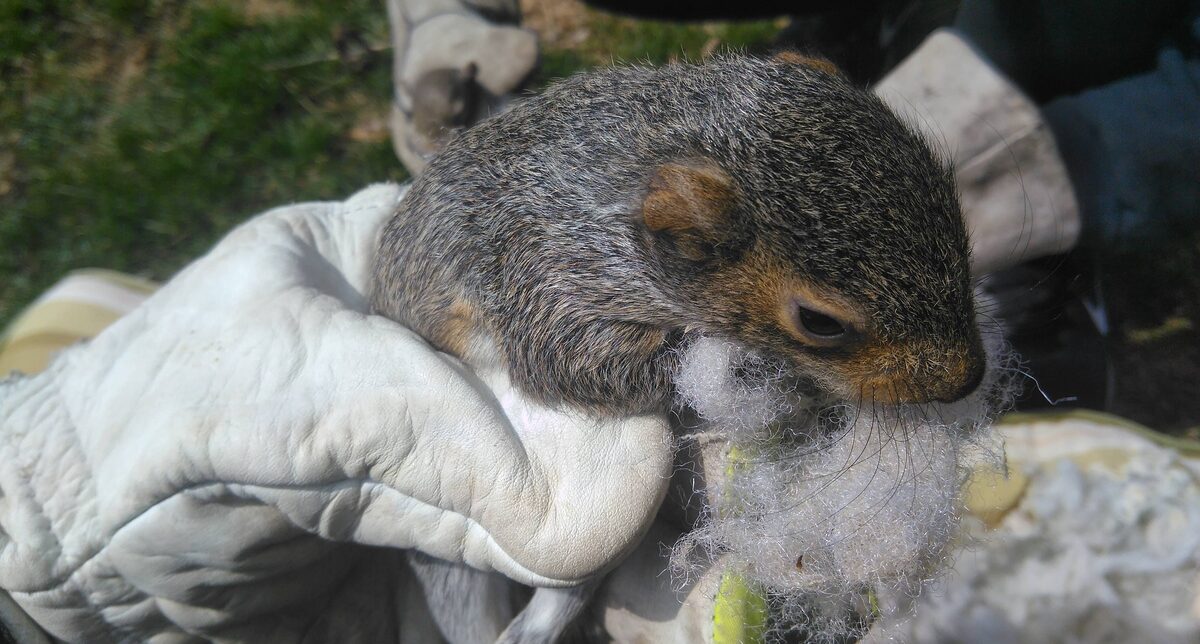
You may hear scratching above the ceiling before you realize squirrels have entered the roof space. Once inside, they may build nests, move insulation, leave waste, and chew vulnerable materials. The amount of damage varies, so entry does not mean the whole attic has been affected.
Morning scurrying or repeated visits to one roof corner can be early clues. However, sound alone cannot confirm the occupant, locate the nest, or show what has been damaged. A quiet period also does not prove that the space is empty.
At Skedaddle Humane Wildlife Control in the Okanagan, we inspect the occupied area and the route used to reach it. You should not enter the attic, handle affected materials, or seal a suspected opening. We explain what can happen after entry, how our team assesses noise and damage, and why removal, cleanup, and prevention need to address more than the first visible hole.
What Damage Do Squirrels Cause in an Attic?
Squirrels in attics compress insulation, chew wiring or wood, and leave waste. They can also damage exterior roof materials while entering or widening access points. These effects may be concentrated near nesting spots or along travel paths. Rather than assuming the entire space is ruined, our team assesses the actual extent of damage to determine where targeted cleanup or repairs are required.
Movement Can Become Noticeable Before Damage Is Seen
Noise may be the first sign you notice from the rooms below the roof space. Its timing and character can help guide an inspection, especially when the same pattern returns. Our team compares those sounds with physical evidence rather than using them to estimate numbers or diagnose damage.
- Morning Scurrying: Tree squirrels are commonly active during daylight hours, and early movement may be noticeable as they leave shelter or travel through the roof space. Footsteps across hard surfaces can sound louder than expected in the room below. You may hear one route clearly while movement elsewhere goes unnoticed. We use the timing and apparent location to guide our inspection without treating them as proof.
- Scratching and Rustling: Movement near framing, insulation, or sheltered corners may create scratching or rustling sounds. The loudest spot may be where sound carries well rather than where the nest sits. Repeated noise in one place can also reflect a frequently used travel route. Our team checks connected areas to establish how the space is being used.
- Chewing or Scraping Sounds: Chewing sounds deserve attention, but they do not reveal which material is being worked on. A noise above the ceiling cannot confirm that wiring or structural wood has been damaged. Framing may also carry the sound away from its source. We assess the materials directly and explain any concerns requiring further inspection.
Insulation Can Be Changed in Several Ways
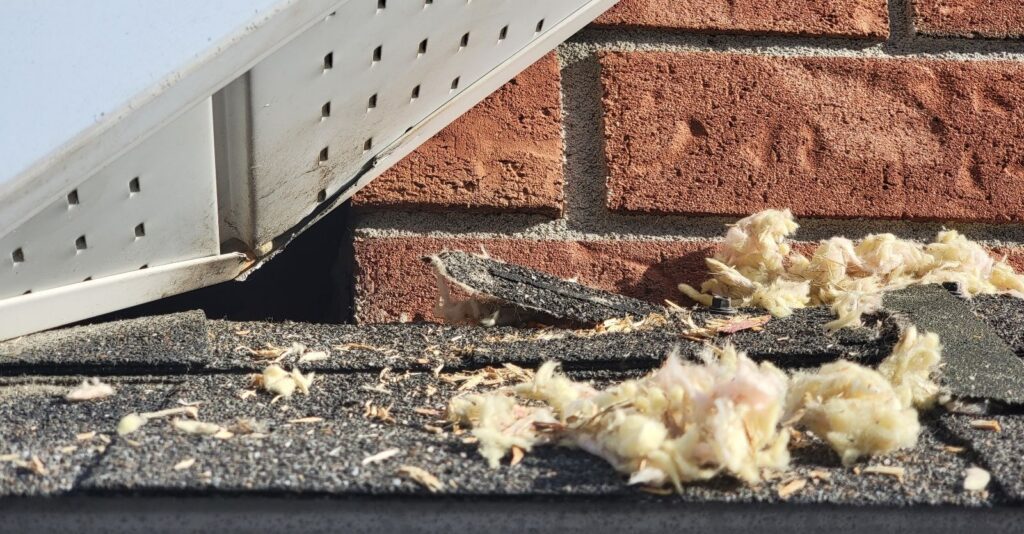
Insulation may be affected where occupants travel, rest, or gather material for a nest. The changes can vary between small, disturbed patches and wider areas needing attention. Our team checks the condition before recommending cleanup or restoration work.
- Compressed Travel Paths: Repeated movement can flatten insulation along routes through the attic. Compression may reduce its effectiveness in those areas, depending on the material and the extent of disturbance. This does not mean every part of the attic has lost its insulating value. We assess the affected paths and compare them with the surrounding coverage.
- Material Pulled Into Nests: Insulation may be torn or moved into a sheltered resting area. That can leave uneven coverage, with material piled in one place and reduced in another. The visible nest may not show the full extent of the disturbance. Our professionals assess both the gathered material and the areas from which it was taken.
- Waste in Resting and Travel Areas: Droppings and urine may affect insulation near occupied spaces. The amount and location of contamination need assessment rather than assumptions about the whole attic. Some materials may require professional removal, while other areas may remain unaffected. You should leave the space and its contents untouched so our team can assess appropriate handling.
- Restoration Needs After Removal: Cleanup and restoration depend on what is found after the occupied space is cleared. Work may involve affected material, disturbed coverage, or insulation replacement where needed. Full attic replacement is not an automatic result of entry. We explain the findings and recommend work suited to the actual condition.
Nesting Material Can Gather in Sheltered Corners
Leaves, twigs, grass, paper, and disturbed indoor material may be gathered into a nest. The contents depend on what is available and how the space is used. Not every nest contains the same materials or occupies a large area.
A nesting place may sit near a roof edge or another sheltered corner. It can also be some distance from the visible entrance. The opening where you see activity therefore does not establish where occupants rest.
Our team assesses the nesting area and nearby materials or services. We also check whether dependent young are present before choosing a removal approach. Homeowners should not disturb the nest or move insulation to see what is underneath it.
Chewing Can Affect the Entrance and Materials Inside
Chewing may enlarge an existing weak point around the roofline. A loose cover or vulnerable edge can become an opening that is easier to use. The speed and extent of the damage vary, so there is no fixed timeline for how quickly a gap grows.
Inside, accessible wood edges and wiring insulation may also be affected. However, marks on a material do not automatically establish serious structural damage. Our team assesses visible concerns and explains when another qualified professional should investigate.
Damage to electrical wiring can present a fire risk if insulation has been compromised. A qualified electrician should assess that concern when it is suspected or found. You should not enter the attic to check wiring or handle damaged materials yourself.
Quiet Periods Do Not Show How the Space Is Being Used
Occupants may leave to feed, rest quietly, or move through a different part of the roof space. You could hear activity in one room on some days and nothing on others. Silence does not confirm that the building is empty.
Feeding, resting, and travelling may occur in separate areas. A sound above a bedroom might come from a route leading towards a nest elsewhere. The first noise you notice may reveal only one part of the activity.
Dependent young may also remain while adults are away. One departure through an opening does not establish that every occupant has left. Our team checks the occupied spaces before choosing removal and exclusion methods.
The Route In Can Be Far From the First Noise
Finding the occupied area is only part of the investigation. The entrance may sit at another roof corner or connect through hidden spaces above the room where you hear movement. We follow physical evidence and assess nearby vulnerabilities before deciding how to secure access.
- Damaged Roof Vents: Broken covers, chewed edges, or loose components may provide access into a roof space. The damage could be old or no longer active, so its appearance alone does not confirm current use. A vent may also need protection even when it is not the main entrance. Our team checks the connection and evidence before planning removal or exclusion.
- Soffit and Fascia Gaps: The soffit forms the underside of the roof overhang, while fascia runs along the outer roof edge. Displaced panels and gaps beside these materials may create access to sheltered spaces. Weather wear or weakened supports can contribute to the opening before chewing occurs. We assess the cause, the route, and the condition of surrounding materials.
- Roof Joints and Additions: Dormers, additions, and changes in roof height create places where building materials meet. Some openings at these transitions are hard to see from normal ground-level use. The route may connect with an attic area well beyond the visible gap. You should leave close inspection to our professionals rather than climbing or approaching the roofline.
Prevention Must Address More Than the Visible Hole
Permanent protection should follow humane removal and an assessment of relevant access routes. Closing one opening too soon can leave occupants inside, while overlooking nearby weaknesses may allow continued entry. Our team considers how the roofline works as a connected part of the building.
- Check for Remaining Occupants: One visible departure does not prove that the roof space is clear. Adults may use different routes, and dependent young may remain in a nest. A quiet opening also does not confirm that all occupied areas are empty. We account for those needs before permanent closure is completed.
- Assess Nearby Vulnerabilities: Other vents, loose edges, and roofline gaps may need attention alongside the confirmed entrance. A vulnerable opening is not necessarily an active route, and we explain that difference during the assessment. Protecting only the most obvious hole may leave another weakness available. Our prevention plan addresses the relevant findings across the structure.
- Protect Without Blocking Ventilation: Some roof openings form part of the home’s ventilation system. Exclusion materials must preserve the intended airflow while limiting access. Simply covering every opening can create a different building concern. Our team chooses protection suited to the feature and completes the screening or sealing work professionally.
Okanagan Roof Spaces Need an Individual Assessment
Homes near trees and established green spaces may see regular squirrel movement around the roofline. That activity provides context but does not prove that the roof space is occupied. A sighting on the roof and confirmed attic entry remain different findings.
Seasonal changes can influence shelter use, but roof spaces are not equally comfortable throughout the year. Summer heat, cold conditions, and ventilation affect the environment inside. The building’s design and available resting areas help shape how it is used.
Older and newer properties can both have vulnerable openings. Detached structures and additions may also create routes needing assessment. Our team checks the individual property rather than judging the problem by age, neighbourhood, or one roof sighting.
Clear the Roof Space and Protect It with Skedaddle Humane Wildlife Control
Our professional wildlife team inspects the entry routes, occupied spaces, and affected materials. We assess nesting evidence and check for dependent young before squirrel removal begins. The plan follows the findings rather than the first sound reported.
Where suitable, our one-way doors allow wildlife to leave but prevent re-entry. Young or other occupants unable to exit independently require an appropriate approach. We confirm that the space is clear before completing permanent exclusion.
Our team assesses professional cleanup, sanitation, and insulation restoration needs. We then secure vulnerable access points with durable materials suited to the structure. At Skedaddle Humane Wildlife Control in the Okanagan, we explain what each part of the work addresses so you know how the roof space is being protected.
Frequently Asked Questions
Can one squirrel disturb insulation?
Yes, one occupant can disturb insulation while travelling or gathering nesting material. Repeated use of the same route may affect a particular area over time. The extent cannot be established from a sighting or sound alone. Our team assesses the insulation before recommending cleanup or restoration.
Does loud movement mean the attic contains several occupants?
No, loud movement does not reliably show how many occupants are present. Hard surfaces and framing can amplify footsteps and scratching. A single occupant may therefore sound more substantial than expected. We compare physical evidence and occupied spaces rather than estimating numbers from volume.
Does attic entry always mean wiring has been damaged?
No, wiring damage is a possibility rather than an automatic result. The risk depends on which materials are reached and whether chewing has occurred. Scratching or chewing sounds cannot confirm the condition of electrical wiring. Any suspected electrical concern needs assessment by a qualified electrician.
Will activity end when nesting season is over?
The end of a season does not guarantee that the space will be abandoned. Useful shelter and accessible routes may support continued use. Quiet periods may also reflect a change in activity rather than departure. Our team assesses occupancy before deciding when an entrance can be secured.
Address the Activity Before More Materials Are Affected
You may notice noise first, but attic entry can also involve nesting, disturbed insulation, waste, and chewing damage. The actual effects vary between properties and need assessment. A loud sound does not establish the number present or prove that wiring has been damaged.
Repeated scratching, roofline visits, or visible damage deserve professional attention. You should not enter the attic, handle affected materials, or seal a suspected entrance. Adults or dependent young may remain inside even when the opening appears quiet. Our team checks the occupied space and access routes before removal and permanent closure.
At Skedaddle Humane Wildlife Control in the Okanagan, we explain what the inspection reveals and which work is needed. We provide humane removal, professional cleanup, restoration assessment, and exclusion suited to the property. The plan addresses both the activity inside and the openings that made it possible. Contact us to schedule a professional assessment or request an estimate to learn more.

 Loading...