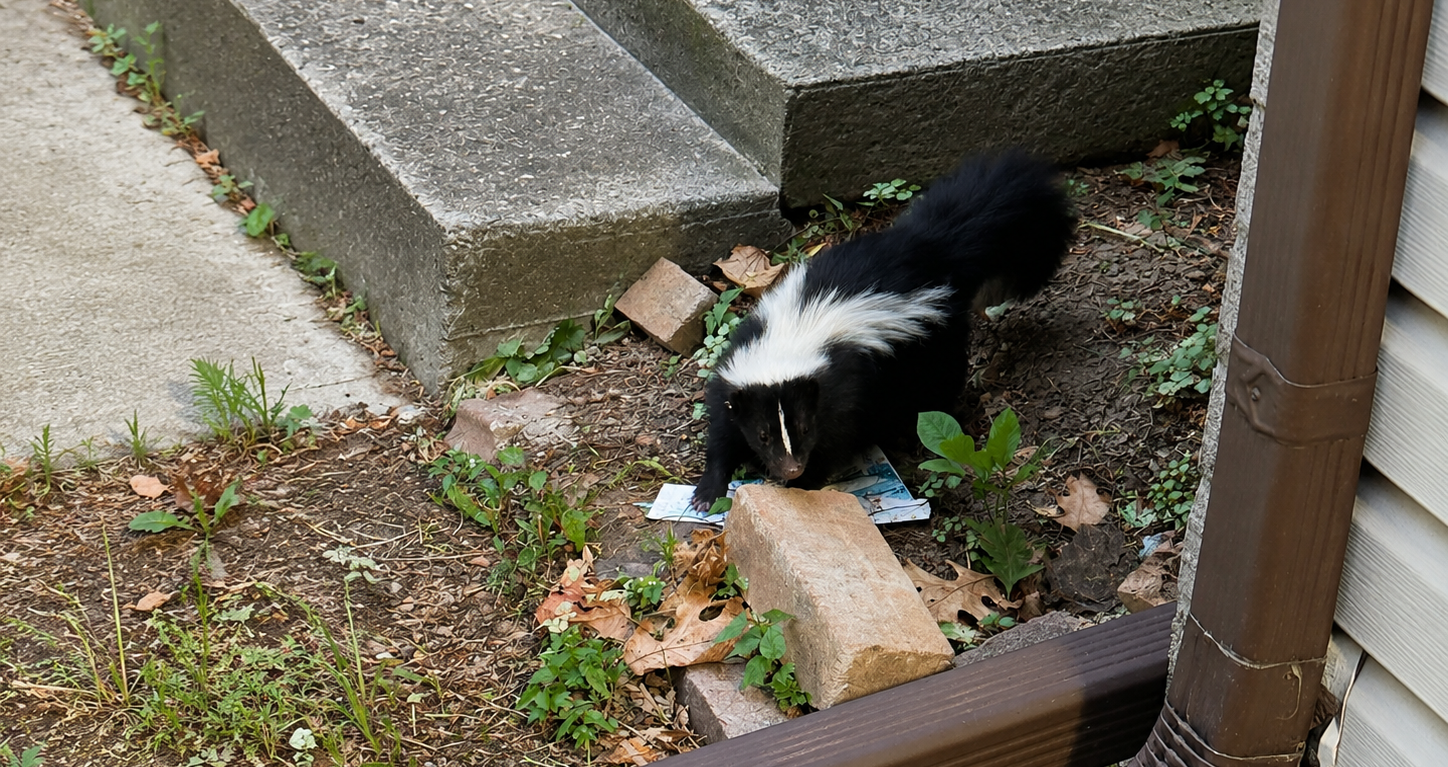
You could have a skunk sheltering under your front steps if a gap or dug entrance leads to a covered space. Fresh soil beside the steps, repeated movement through an opening, and odour near the area can all provide clues. These animals may use the space to rest, find cover from weather, or raise young. One hole or a passing smell, though, does not confirm an occupied den.
You might notice disturbed soil while leaving home in the morning or see movement near the steps at dusk. It can be tempting to cover the gap before anything returns. That opening may lead to a resting adult or young hidden farther inside. Closing it too soon could trap an occupant or separate a family.
At Skedaddle Humane Wildlife Control in Montreal, we check the entrance and sheltered space before planning removal. Our team compares the signs, confirms what is present, and assesses suitable protection. You do not need to reach beneath the steps or disturb the soil. Here is what digging, odour, and repeat visits may mean, and why inspection must come before blocking an opening.
How Do You Know if a Skunk Is Living Under Your Steps?
Fresh digging, repeated activity, and localized odours near steps suggest a skunk may be sheltering underneath. However, small lawn holes often stem from feeding, and smells can drift from elsewhere. Because adults may forage while young remain hidden, seeing an animal outside does not guarantee the den is empty. Professional inspection of all access routes is essential before confirming occupancy or planning humane removal.
Why the Space Beneath Front Steps May Offer Shelter
Some front-step designs leave a covered space underneath or along one side. That area may provide shelter from rain, wind, and daily disturbance. A low opening can make it reachable from the ground. The structure does not need to be heated to offer useful cover.
A gap may already exist beneath skirting or beside the edge of the steps. Soil around the structure may also allow digging toward a sheltered area. These animals can use an opening already present rather than create a new passage from scratch. Our inspection checks how the entrance developed and where it leads.
Not every set of steps has an accessible space beneath it. Solid construction, drainage, ground conditions, and repairs can change what is available. A hole beside the steps may stop short of any den space. We assess the actual layout instead of assuming that every gap is occupied.
Digging and Entry Holes That Deserve Attention
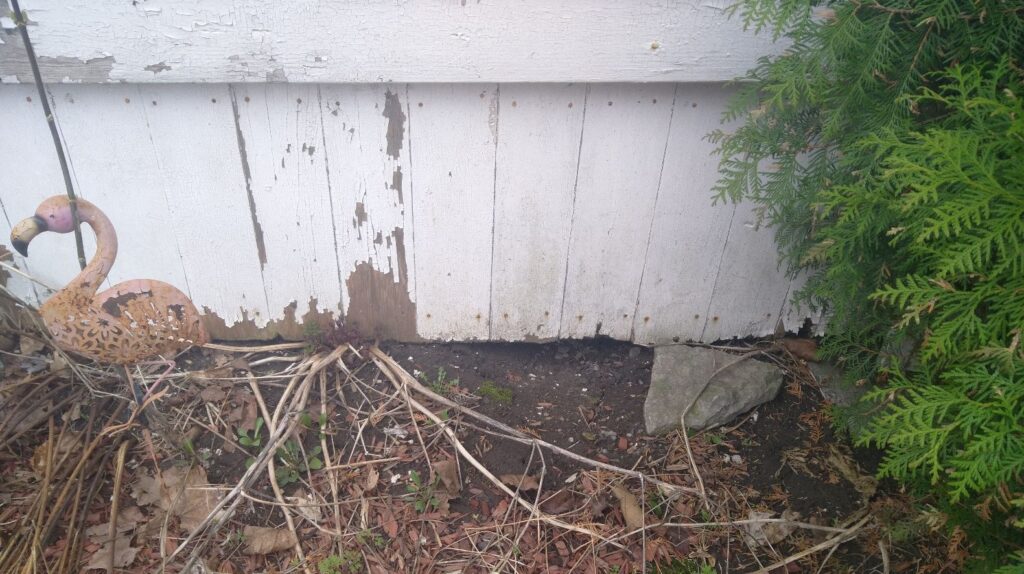
The location and pattern of digging matter more than the size of one hole. Disturbed soil may relate to feeding, access beneath a structure, or another property issue. Our team checks the route before deciding what the digging shows.
- Fresh Soil Beside the Steps: Recently displaced soil near a lower edge or sheltered corner may suggest digging toward a covered space. You might notice that the same area changes again over several days. That pattern gives us a reason to inspect, but fresh soil alone does not identify the occupant. We compare it with the opening, movement, and signs within the sheltered area.
- An Opening Leading Beneath the Structure: A gap or dug passage may provide access beyond what can be seen from the walkway. Its shape and size do not offer a reliable species test on their own. The route may also connect with another opening around the steps. Leave it undisturbed so our team can assess the space without a blockage hiding the entrance or trapping anything inside.
- Small Holes Elsewhere in the Yard: Shallow holes scattered across grass or garden edges may relate to feeding. They do not prove that a skunk is resting under the front steps. The feeding area and shelter location may be on different parts of the property or farther apart. Our inspection compares those yard signs with evidence at the structure before linking them.
What Odour and Repeat Visits May Reveal
A recurring smell or regular movement near the steps can provide useful context. Some occupied spaces may have little noticeable odour, while a strong smell may come from elsewhere. We compare both clues with the entrance and the sheltered area beyond it.
- Odour That Keeps Returning Near the Steps: A smell noticed several times near the same part of the entrance deserves a closer check. It may come from nearby activity, a spray event, or affected material beneath the structure. The strength of the smell does not tell us how many occupants are present or whether they remain there. Our team investigates the source before recommending removal or cleanup.
- Regular Entry or Exit Around Dusk: Evening movement can fit the usual activity pattern of these animals. You may see an adult leave the same opening on more than one occasion. Timing can vary, so dusk is not a firm rule or a diagnosis by itself. Repeated use of a specific passage gives us stronger evidence than a brief sighting in the yard.
- Movement Focused on One Sheltered Corner: Regular attention to the same edge, gap, or passage may show where access is occurring. An adult might disappear beneath the steps or return along a familiar route. That observation does not reveal whether young or another occupant remain farther inside. Our team checks the occupied space rather than treating the visible adult as the whole concern.
Why an Occupied Opening Must Stay Unblocked
Blocking a hole before inspection can turn a shelter concern into a more difficult removal problem. The opening and the space beyond it need to be assessed together. A quiet period does not confirm that closing the route is safe.
- An Adult May Be Resting Inside: These animals may remain quiet while resting beneath the steps during the day. You could see no movement for hours even though the space is occupied. A blockage would prevent normal exit if that opening is the available route. Our team checks for occupants before deciding when and how the entrance can be secured.
- Dependent Young May Remain Hidden: An adult can leave to feed while young stay inside the den. Those young may be unable to travel out on their own, even when the entrance is open. Closing the hole after seeing the adult leave could separate the family. Our removal plan accounts for their location and needs before the final barrier is completed.
- A Blocked Occupant May Try Another Route: An occupant unable to leave may dig or push at nearby weak areas in an attempt to escape. This can create further disturbance around the structure and complicate the work. Defensive behaviour is also possible if it feels threatened, though spraying is not a certain result. Leaving the route alone gives our team a chance to handle the situation carefully.
- Trapping Can Create Further Cleanup Needs: An occupant that cannot escape may suffer harm beneath the steps. That can lead to added odour, affected material, and a harder-to-reach cleanup concern. A simple-looking closure can therefore leave a much larger problem unresolved. Inspection and proper removal planning help prevent that outcome before protection is installed.
What Our Team Checks Before Removal
Our inspection begins by finding the entrance and the sheltered area it reaches. We check the edges of the steps for other openings or signs of digging. The hole visible from the walkway may not show the full layout. More than one route can be present around the same structure.
We also assess whether adults, dependent young, or occupants unable to leave independently are inside. An adult may be away during part of the inspection, so a quiet entrance still needs care. The method must account for the whole occupied space. We do not close the route simply because nothing is visible at the opening.
Ground conditions and the structure help shape the prevention plan too. Soil, drainage, access, and the way the steps meet the ground can affect suitable barrier work. If the steps appear unstable or need major repairs, a qualified contractor should assess that concern. We explain the wildlife-related work and any separate repairs needed.
Front-Step Shelter Concerns Around Montreal Homes
Montreal homes have many different entrance designs, from compact front steps to larger porches. Some leave an open or partly enclosed area below, while others are solid. Small front yards and close-set buildings can place those sheltered areas near regular travel routes. The design of the steps matters more than their appearance from the street.
Weather, soil movement, and worn materials may expose or widen existing gaps. Covered spaces can remain useful during cold or wet conditions, while warmer-season use may involve young. The season gives our team context, but it does not confirm occupancy. Current signs at the property must guide the inspection.
An older entrance is not automatically a den, and a newer one is not always protected. Repairs, skirting, and ground conditions can vary even between neighbouring homes. You may notice one opening while another stays hidden along the side. Our team checks the steps and nearby ground before recommending removal or protection.
Let Skedaddle Clear the Den and Protect the Steps
Our work starts with identifying the occupied area, access routes, and any dependent young. We also assess affected materials and the condition of the steps. These findings guide a humane plan that fits the property. The visible hole is only one part of that assessment.
Where suitable, our one-way doors allow wildlife to leave but prevent re-entry. Young must be accounted for before using a method that depends on independent exit. Our team chooses the approach around the occupants and the route available to them. We confirm the removal needs before completing the final protection.
Our Skedaddle Humane Wildlife Control team in Montreal can install suitable buried screening or other durable barriers around vulnerable areas. The layout depends on the structure, soil, and access conditions rather than one fixed measurement. This protection helps reduce digging routes into the sheltered space. We also explain cleanup needs and any building repairs that require another qualified professional.
Frequently Asked Questions
Does a skunk smell mean there is a den beneath the steps?
No, the smell may drift from another location or remain after a passing visit. A spray event nearby can be noticeable without an occupant using your steps for shelter. The smell alone cannot identify a den or show whether it is active. Our team compares it with entry signs and inspection findings.
Can the space be occupied without a strong smell?
Yes, an occupant does not need to spray for the space to be in use. You may notice digging or repeated movement without any clear odour. A lack of smell does not show that the area is empty. We assess the entrance and sheltered space before deciding what is present.
Do small holes in the lawn prove it is living under the steps?
No, shallow digging may involve feeding elsewhere in the yard. The shelter location can be separate from the place where food is found. Those holes provide context but do not confirm a den beneath the entrance. Our team checks whether a passage actually leads into an occupied space.
Is it safe to close the hole after seeing an adult leave?
No, young or another occupant may remain beneath the steps. The adult you see may be leaving only briefly to feed. Closing the route could trap those inside or prevent the adult from returning. Our team must confirm the removal needs before securing the entrance.
Will removing the occupant stop future digging beneath the steps?
Not necessarily, because the sheltered space may remain accessible afterward. Another attempt to use it could occur if vulnerable edges are left open. Removal and prevention address different parts of the concern. Our team assesses suitable barriers alongside the humane removal plan.
Keep the Space Beneath the Steps From Becoming a Den
You could have a skunk sheltering beneath the front steps if an opening leads to a protected space. Fresh digging, repeated entry, and recurring odour can suggest use, but each clue needs context. Lawn holes may involve feeding, and a passing smell may come from elsewhere. Our professional inspection confirms whether the space is occupied and what work is needed.
Leave the entrance and nearby material alone while the concern is checked. Do not reach beneath the steps, disturb waste, or fill a suspected route after seeing an adult leave. Young or another occupant may remain hidden inside. Inspection must come before removal, cleanup, and the final barrier work.
At Skedaddle Humane Wildlife Control in Montreal, we identify the occupied area and plan humane removal around its occupants. Our team assesses affected materials and installs suitable protection after removal is confirmed. We explain any further structural repairs needed so the full concern is addressed. Contact us to schedule a professional assessment or request an estimate to learn more.

 Loading...