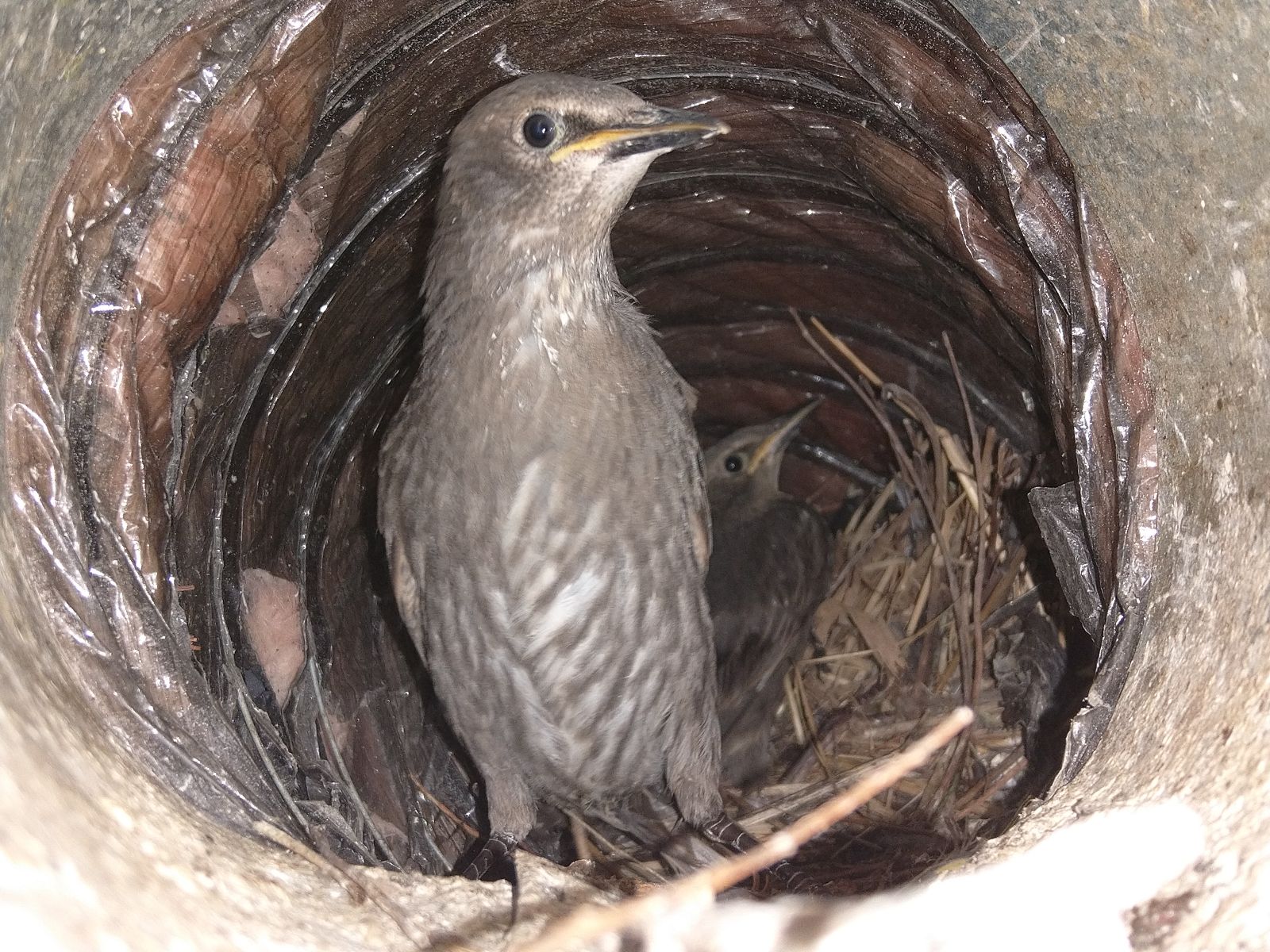
If you’ve noticed rustling sounds or chirping coming from your chimney, you might have unexpected guests. Birds nesting in chimneys are surprisingly common in Thornhill and surrounding areas. Certain species, like chimney swifts, love using chimneys for shelter, and other birds such as starlings, pigeons and sparrows may find their way in while seeking warmth or protection from predators. While it might seem harmless at first, a bird taking up residence in your chimney can lead to health risks, structural damage, and safety concerns.
Keep reading as we explore which chimney bird species you’re likely to encounter and what you should do if you suspect they’ve found a home in your chimney. Here at Skedaddle Wildlife Control in Thornhill, we are experienced in bird removal and can offer expert advice.
How Birds End Up in Chimneys
Bird nests in chimneys are often a result of birds seeking the ideal environment for shelter or breeding. Chimneys provide a cozy spot that mimics their natural habitats, such as hollow trees or cliffs. Unfortunately, by entering chimneys, birds create problems for both themselves and homeowners.
Damaged chimneys, broken caps, or missing chase covers provide easy access for birds. Once inside, they may build nests using twigs, grass, and other materials, creating blockages that can lead to a fire hazard.
Even more problematic are bird droppings, which can carry diseases like histoplasmosis and be harmful if inhaled. On top of that, some birds, such as chimney swifts, are protected by laws that prevent removal until they vacate naturally—which further emphasizes the importance of prevention.
Chimney Bird Species You Might Encounter
If you’re wondering what types of birds are most likely to nest in your chimney, here’s an overview of the most common species spotted in this area.
Chimney Swifts
Known as one of the few species perfectly adapted to urban environments, chimney swifts are frequent visitors to chimneys across North America. These birds have a distinctive “cigar-shaped” body and are often identified by their rapid, twittering calls. Unlike other species, they actively seek out chimneys for nesting and roosting. Chimney swifts use their saliva to adhere their nests to vertical walls, and during the breeding season, they may remain in your chimney for several weeks or even months.
Fun fact: Chimney swifts are protected under federal law, meaning you can’t remove them until after they migrate south for the winter.
European Starlings
Another common culprit is the European starling, an invasive species known for squeezing into tight spaces. Starlings often use chimneys to build nests with twigs and grass, filling cavities completely. Their nests can create serious blockages that increase the risk of a chimney fire.
These birds are loud and social, often travelling in flocks. If you’ve noticed lots of chatter alongside fluttering sounds, European starlings might be the issue.
House Sparrows
House sparrows are opportunistic nesters that take advantage of nearly any available shelter, including chimneys. These small, adaptable birds construct densely packed nests made from grass, feathers, and other soft materials. They tend to coexist well with humans but can still lead to chimney vent blockages and unwanted noise.
Pigeons
Though pigeons are more likely to roost on rooftops or window ledges, there are occasions where they’ve been known to enter chimneys. Their bulky size and messy droppings can cause sanitation issues and damage to ventilation systems.
Local Species in Thornhill
While chimney swifts, European starlings, and house sparrows are most common, homeowners in Thornhill may also encounter regional bird species depending on the area’s vegetation and urban density. Birds like robins or wrens may accidentally stumble into chimneys while searching for shelter.
The Risks of Bird Nests in Chimneys
While it might feel like an innocent visit from nature, having birds in chimneys can lead to numerous issues for both humans and the birds themselves.
- Fire Hazards: One of the biggest risks is the possibility of fire. Materials used in bird nests are extremely flammable. When chimneys are blocked and homeowners light a fire without realizing, the heat and smoke can ignite the nest.
- Structural Damage: Bird droppings are acidic, and over time, they can degrade brick, mortar, and other materials in your chimney. Nesting activities can also weaken chimney vents or liners.
- Health Risks: Bird droppings carry illnesses like histoplasmosis, salmonellosis, and psittacosis, which can pose serious risks to your family, especially if contaminants enter the air. Birds also invite pests such as mites, fleas, and ticks into your home.
- Blocked Ventilation: A bird nest may block proper ventilation, forcing smoke and carbon monoxide back into your home. This creates a severe health and safety problem, requiring immediate attention.
- Legal Restrictions: If you’re dealing with protected species like chimney swifts, you may encounter delays in removal. This can extend the time harmful contaminants are building up in your chimney.
Tips for Preventing Birds from Nesting in Chimneys
Rather than dealing with the challenges of removal, prevention is always the best course of action. Here are a few simple yet effective strategies to bird-proof your chimney.
- Install a Chimney Cap: A sturdy, professionally installed cap acts as a barrier that prevents birds from entering your chimney while still allowing smoke to escape.
- Maintain Chimney Covers: Inspect your chimney regularly to ensure your chase cover or crown is fully intact and free of damage that could create openings.
- Seasonal Maintenance: Schedule annual chimney inspections and cleanings to clear debris and identify vulnerabilities before birds find them.
- Repel Birds Safely: Use humane deterrents like reflective tape or noise devices to discourage nesting near your chimney.
- Monitor Nearby Activity: Pay attention to bird activity near your home during peak nesting seasons, typically in spring and summer.
Following these measures will drastically reduce your risk of uninvited guests in your chimney.
What Do If You Suspect Bird Nests in Your Chimney
If you believe birds are already nesting in your chimney, it’s important to act quickly while following legal and humane procedures.
- Listen and Observe
Pay attention to scratching, rustling, or chirping sounds. Also, look for visible feathers or nesting materials around your chimney.
- Close the Fireplace
To prevent birds from accidentally entering your home, ensure your fireplace doors or flues are closed.
- Call a Professional
Birds can be difficult and dangerous to remove without the right expertise. Our trained technicians at Skedaddle specialize in humane bird removal and prevention services. We’ll assess the situation, identify the species, and recommend the safest course of action for your home and the birds.
- Repair & Restore
After removal, it’s crucial to clean and repair your chimney thoroughly. This process removes harmful contaminants and ensures your chimney is ready for safe use again.
Keep Your Chimney Clear and Your Home Safe
Birds nesting in chimneys can pose significant challenges, but with preventive measures and expert help, you can protect your home and ensure a bird-free chimney year-round. At Skedaddle, we’re dedicated to providing humane and reliable wildlife solutions tailored to your needs.
If you think you might have birds in your chimney, don’t wait for the problem to escalate. Contact us for professional assistance to keep your chimney clean, safe, and bird-free. Your home deserves no less.

 Loading...







