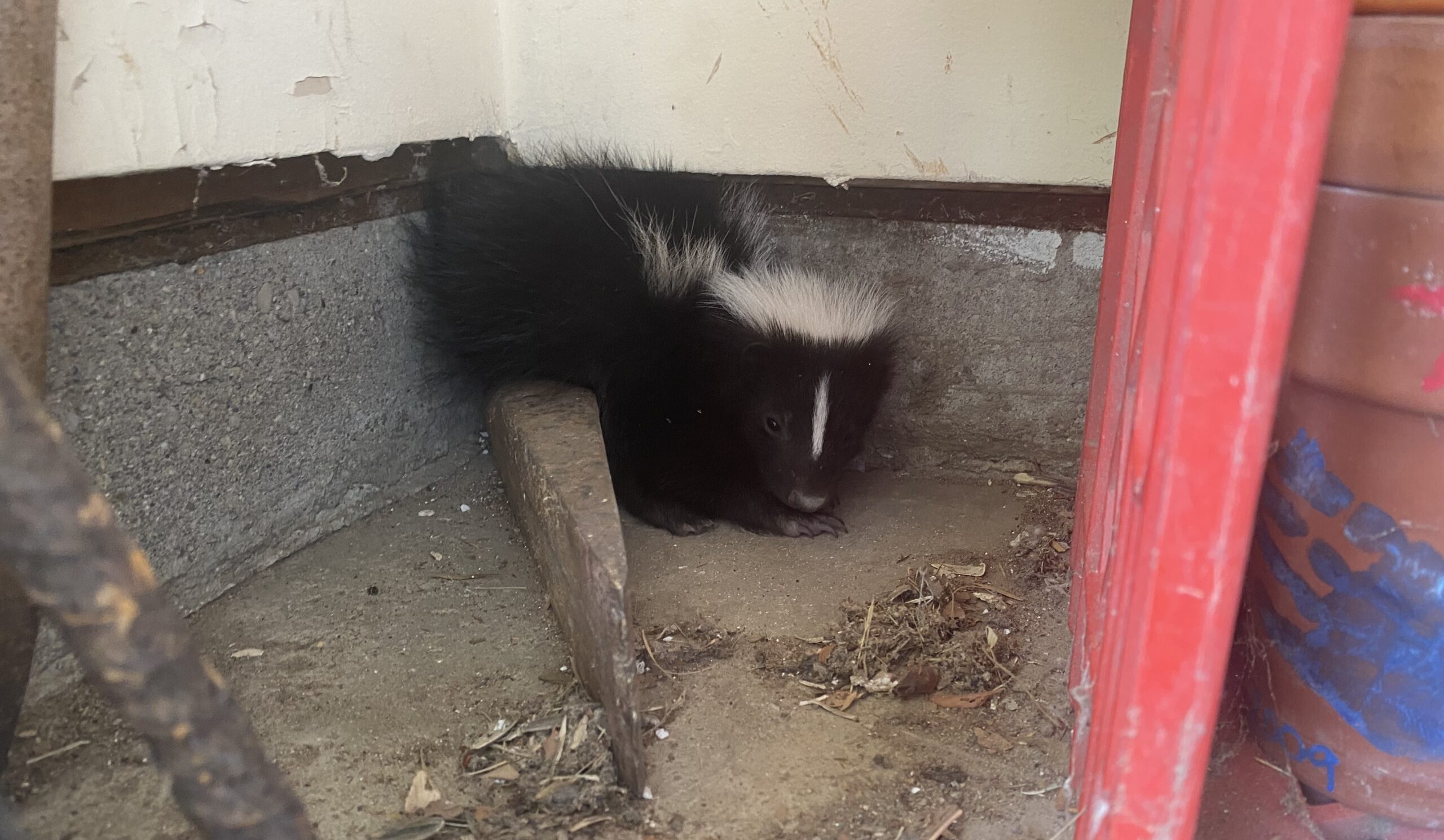
You know spring has arrived when the snow melts, the birds start singing, and the flowers begin to bloom. But there is another sign of spring that is a little less pleasant for your nose. You might catch a whiff of a familiar, musky scent drifting through your neighbourhood. That smell is a sure sign that skunk activity this time of year is on the rise.
As the weather warms up, animals that have been quiet all winter are starting to wake up and move around. If you live in a city or a suburb, you might be wondering what exactly is going on in your backyard.
You might see holes in your lawn or hear scratching under your deck. Understanding skunk behaviour spring patterns can help you know when it is time to call for help. At Skedaddle Humane Wildlife Control in Toronto, we know that this season is one of the busiest times for wildlife.
In this blog, we will explore the common spring behaviours of skunks, signs of their activity on your property, and effective, humane solutions to keep them at bay.
Waking Up and Looking for Food
During the cold winter months, these animals spend most of their time sleeping. They don’t hibernate completely like bears, but they enter a deep sleep to save energy. They stay in their dens and wait for the temperatures to rise. When spring arrives, they are ready to stretch their legs.
The first thing on their mind is food. After a long winter without much to eat, they have lost a lot of body weight. They are very hungry and need to find a meal quickly. You might notice signs of their hunger right in your own yard. They are omnivores, which means they will eat almost anything.
Here are some of the things they are looking for right now:
- Insects and Grubs: As the ground thaws, beetles and worms come to the surface. These animals have strong claws perfect for digging them up.
- Small Rodents: They will hunt for mice or voles that are also becoming active in the spring.
- Leftover Garbage: If your trash bins aren’t secured, a hungry animal will easily knock them over to find scraps.
- Pet Food: Leaving a bowl of cat or dog food on the porch is an open invitation for a midnight snack.
You might wake up to find small, cone-shaped holes in your lawn. This is a classic sign of skunk behaviour, spring feeding. They push their noses into the soil and dig with their front paws to find grubs. While they are just trying to eat, this can ruin the look of your grass very quickly.
The Search for a Mate
Once their bellies are full, their focus shifts to something else: finding a partner. Spring is the primary mating season for these striped animals. This is one of the main reasons you might smell them more often right now.
Male animals become very active during this time. They will travel long distances—sometimes up to several kilometres in a single night—just to find a female. They are on a mission, and they don’t let much get in their way. Because they are moving around so much, they are more likely to run into trouble. This could be a dog, a predator, or a car. When they get scared or startled, they spray.
Females, on the other hand, tend to stay closer to their dens. They are not interested in traveling far. If a male approaches a female and she isn’t interested, she might spray him to make him go away. This is why the smell of musk is so common in the air during the early spring months. It is a busy time for them, and all that movement increases the chances of an encounter near your home.
Finding the Perfect Nursery
After mating, the female has a very important job to do. She needs to find a safe, warm place to have her babies. Skunks’ nesting season is a critical time. The mothers are looking for a den that is dark, quiet, and protected from the weather and predators.
In the wild, they might use a hollow log or an abandoned burrow from another animal. But in the city, your home offers much better options. Man-made structures are perfect for a nursery. They provide a solid roof and are usually close to food sources like your garden or garbage cans.
You might find them trying to move into these areas of your property:
- Under the Deck: The space beneath a low wooden deck is dark and dry, making it a favourite spot.
- Beneath the Porch: Concrete steps or wooden porches often have gaps underneath that are easy to squeeze into.
- Inside the Shed: If your garden shed is raised off the ground, the space underneath is very attractive.
- Under Concrete Slabs: Extensions or sunrooms built on slabs can have soil underneath that is easy to dig out.
They are excellent diggers. Even if you think a space is closed off, they can often dig a hole to get under a fence or a wall. If you see fresh piles of dirt next to your porch or deck, it is a strong clue that someone has moved in.
The Arrival of the Babies
Late spring is when the babies, called kits, are born. A mother can have a litter of anywhere from three to ten babies. When they are born, they are very small, blind, and helpless. They rely completely on their mother for everything.
This is why skunks nesting season is so important. The mother needs to stay in the den to nurse and keep her babies warm. She will leave the den to forage for food, but she won’t go far. She is very protective of her young. If she feels that her den is threatened by you or your pets, she will defend it.
You might not see the babies for several weeks. They stay deep inside the den until they are old enough to walk and see. This usually happens around six or seven weeks of age. Once they are ready, you might see a line of tiny black and white kits following their mother through your yard in the evening.
While they might look cute, having a family of wild animals living under your steps is a problem. As the babies grow, so does the amount of waste in the den. The smell can become overpowering and seep into your home. They can also carry parasites like fleas and ticks that can spread to your pets.
How We Handle Spring Wildlife Issues
At Skedaddle, we understand exactly what skunks are doing this time of year. We know that they are just looking for a safe place to survive. Our goal is to remove them from your home without hurting them and to keep your family safe from conflicts.
Our process is hands-off for you. We do all the work so you don’t have to worry.
Here is how our professional team handles the situation:
- Complete Assessment: We start by looking at your entire home. We find the entry point where the animal is getting in. We also look for other weak spots that could be used in the future.
- Baby Removal: If there are babies, we carefully remove them by hand. We place them in a heated reunion box outside the entry point. This keeps them safe and warm.
- One-Way Doors: For the adult, we install a special one-way door over the entry hole. This allows the animal to leave the den to look for food, but it cannot get back in.
- Family Reunion: Once the mother leaves and realizes she can’t get back in, she will find her babies in the box. She will then move them one by one to a backup den she has already picked out.
- Securing Your Home: After the animals are gone, we dig a trench and install heavy-gauge screening deep into the ground. This prevents them from digging back under your deck or porch ever again.
We believe in long-term solutions. Trapping and relocating animals doesn’t work well because it causes them stress, and they often don’t survive in a new place. Plus, it doesn’t stop a new animal from moving into the empty den. Our method teaches the animal that your home is not a place to live, and our screening makes sure they stay out for good.
Protect Your Home From Spring Skunks!
Spring is a time for new beginnings, but that shouldn’t mean a new family of wild animals living under your house. As the weather gets nicer, keep an eye out for signs of skunk activity this time of year. Look for the holes in the grass and listen for noises under your deck.
If you suspect you have guests, don’t wait. The longer they stay, the more damage they can do. And remember, skunk behaviour spring patterns mean babies are likely present, so specialized care is needed.
Protect your property and let the wildlife stay in the wild where they belong. If you need help with skunk behaviour spring, skunks nesting season, or general skunk activity this time of year, we are here for you.
Request an estimate today to learn more about how we can help. Trust the experts at Skedaddle Humane Wildlife Control in Toronto to handle the dirty work so you can enjoy a fresh, smell-free spring.

 Loading...







