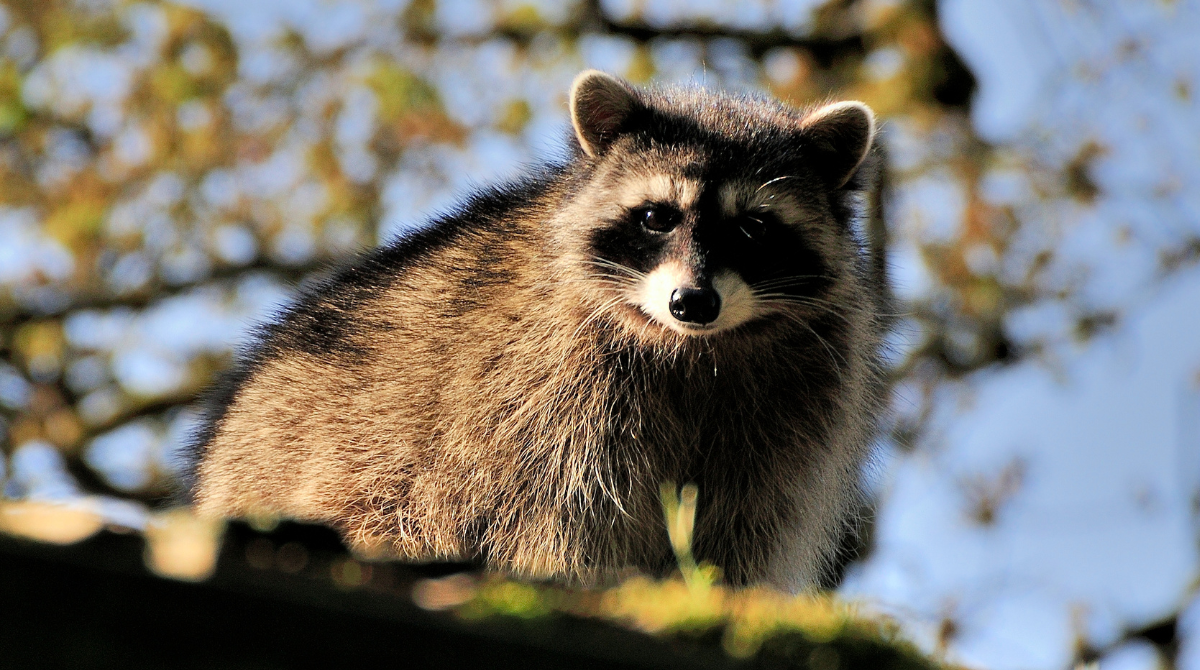
You hear the thumping on your roof late at night. You look out the window and see a dark shape moving along your roofline. If you live in Toronto, you already know what it is. Toronto is home to one of the largest urban raccoon populations in the world, and summer is when they are most active, most visible, and most likely to find their way into your home.
Toronto raccoons love summer in the city because the city gives them everything they need all in one place. Mature trees connect directly to rooflines and give them easy paths from the street to the top of your house. Attics, chimneys, and the space under decks offer warm, sheltered spots to nest and raise their young. Green bins, fruit trees, and backyard gardens keep them fed all season long. You don’t have to do anything to attract them; the city is already set up perfectly for them.
You should never try to deal with a raccoon problem on your own. These animals are strong, smart, and protective of their young. Our team at Skedaddle Humane Wildlife Control in Toronto handles the whole process safely and humanely so you don’t have to go near any of it. In this blog, we explain exactly why these masked neighbours love the city in summer and what happens when they decide your attic is the perfect place to raise a family.
What to Do If I See a Raccoon on My Roof?
If you see one on your roof, the first thing to do is call our professionals. Do not try to scare it away, block entry points, or approach it yourself. A raccoon on your roof is almost always looking for a way into your attic, and if it has been up there before, there is a good chance it has already found one.
Seeing one on your roof during the day is especially worth paying attention to. These animals are mostly active at night, so a daytime sighting can mean the population on your property is large enough that some are being pushed into activity at unusual hours. It can also mean a mother is nearby and protecting her young, which makes her bolder than usual.
The right step is to call our team as soon as you spot one on your roof. We can assess your home, find every entry point being used, and put a plan together before the situation goes from one visitor to an established family living in your attic.
Toronto’s Mature Tree Canopy — The Raccoon Highway
Toronto’s tree canopy is one of the things that makes the city beautiful and one of the main reasons raccoon activity on rooftops is so common here. Mature trees with large overhanging branches give them a direct route from the ground to your roofline without ever needing to climb a wall. They use tree branches like roads, moving through neighbourhoods at night along connected paths most homeowners never think about.
Once a branch gets close enough to a roofline, the rest is easy. They jump across, land on the roof, and start looking for weak spots. Loose soffits, damaged fascia boards, open vents, and gaps around chimneys are all things they investigate the moment they land. A branch that hangs over your roof by even a small amount is enough of a bridge.
Summer makes this even more active because this is when females are raising their young and need to find a safe, protected den. A mother with kits to care for is highly motivated and will make the trip to your roof night after night until she finds a way in or until that way in gets properly sealed by our team.
Attics: The Summer Den of Choice
An attic is just about the best possible spot a raccoon can find in the middle of a city. It is warm, dry, dark, away from predators, and filled with soft insulation that is perfect for building a nest. During the summer, when females are raising their young, an attic in a quiet Toronto home is exactly the kind of protected space they look for.
The damage an established family causes in an attic builds up quickly. Insulation gets ripped apart and used as nesting material. Droppings and urine soak into the wood and contaminate the space. The longer they stay, the more extensive the damage becomes and the more expensive the cleanup and repairs.
Here is what makes attics so attractive during the summer months:
- Warmth and Protection for Raising Young: An attic is one of the safest places a mother can find in a busy city. It is out of reach of most threats, protected from rain and wind, and quiet during the day when she and her young are resting. A female with kits will defend this space aggressively, which is one reason homeowners should never try to remove them on their own.
- Soft Insulation as Ready-Made Nesting Material: Attic insulation is perfect for building a nest. It holds heat, is easy to pull apart, and provides exactly the kind of soft, warm environment a mother wants for her young. The damage done to insulation during a single nesting season can reduce your home’s energy performance significantly, and all contaminated material needs to be professionally removed and replaced.
- Roofline Vulnerabilities Make Entry Easy: A loose soffit, a damaged roof vent, or a gap where two roof sections meet is all it takes to get inside. These animals are strong enough to pull materials apart and widen small openings, which means a minor weakness on your roof can quickly turn into a full entry point. Our team finds and seals every one of these during the inspection.
Flat Roofs and Chimneys
Toronto’s older homes and semi-detached properties often have flat or low-slope roofs that make navigating across rooftops very easy. Unlike steep pitched roofs, flat surfaces are simple to walk across, which is why you often see them moving confidently along rooflines in older Toronto neighbourhoods. A flat roof also creates level surfaces where they can rest, investigate, and look for entry points without struggling to hold on.
Chimneys are another favourite target. An open or uncapped chimney flue looks exactly like a hollow tree from above, a tall, dark, sheltered shaft that stays dry and protected from the elements. Without a cap in place, a chimney is one of the easiest ways into a home. Females in particular are known to climb down open flues to den and raise their young, leaving behind droppings and nesting material that can build up in the flue over an entire season.
Here is what makes flat roofs and chimneys easy access points:
- Flat Roofs Give Easy Access Across Whole Blocks: In many older Toronto neighbourhoods, connected rooflines allow them to move across multiple properties without ever coming back to street level. This gives them a huge range to explore from a single starting point and makes it much easier to check out every rooftop entry point along the way. Homes on connected rooflines are at higher risk simply because of the volume of traffic moving across them.
- Open Chimney Flues Mimic Hollow Trees: A chimney without a cap is one of the most appealing spots on any rooftop. The enclosed, vertical shaft feels safe and hidden, which is exactly what a nesting female looks for. Once she climbs down and settles in, the activity continues for weeks and the contamination left behind requires professional cleanup before the chimney can be safely used again.
- Damaged Flashing and Roof Junctions: The spots where different roof sections meet, or where a roof meets a wall, often have flashing that can come loose or gaps that develop over time. These junctions are common entry points that are easy to miss from the ground but easy for a persistent animal to find from above. Our team checks all of these during the inspection.
Green Bins, Fruit Trees, and the Urban Food Supply
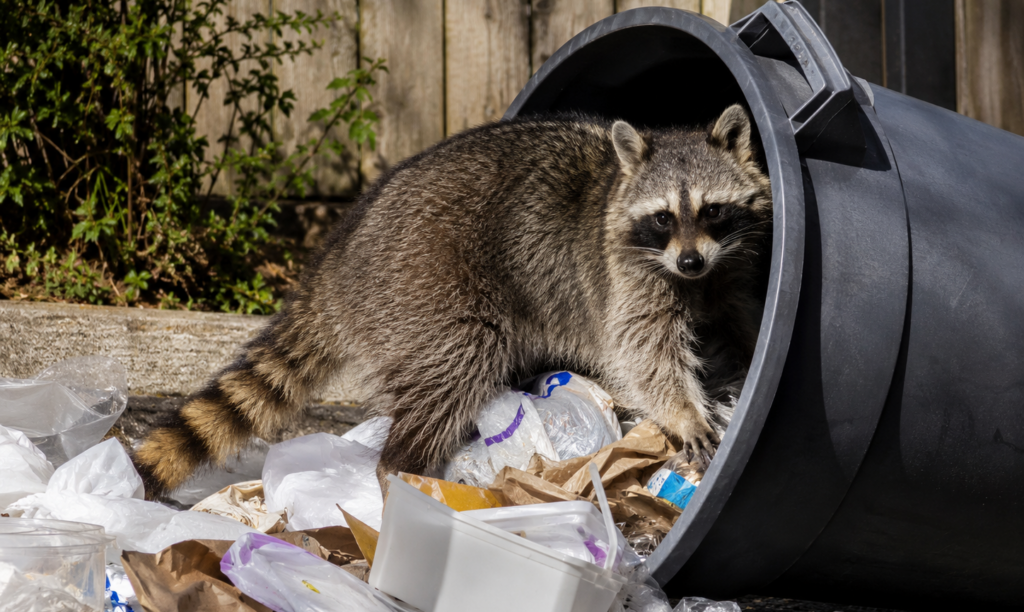
Toronto’s green bin program is one of the main reasons the city has such a large and well-fed raccoon population. These animals figured out how to open standard bin lids a long time ago, and even newer bin designs can be cracked open by a determined one. A green bin sitting on the curb the night before pickup is one of the most reliable food sources in any Toronto neighbourhood. Once they find it, they come back for it every single week.
Summer makes the food supply even better. Backyard fruit trees drop ripe fruit all season long, vegetable gardens produce fresh food, and bird feeders pull in insects and seeds that are easy to pick through. The combination of easy food close to homes and good shelter nearby makes residential Toronto one of the best places these animals can be during the summer months. Here is how the urban food supply keeps them coming back to your property:
- Green Bins as a Weekly Food Source: Toronto’s organic waste bins smell strongly, especially in warm weather, and that smell travels far enough to pull these animals in from a wide area. Once a bin on your street becomes a regular stop on their nightly route, they don’t wander far from that area, which means your home’s roofline, deck, and yard are all getting looked at too. A green bin that keeps getting raided is a clear sign that the activity around your property is regular and worth having our professionals take a look at.
- Backyard Fruit Trees and Gardens: A fruit tree dropping ripe food or a vegetable garden producing fresh food throughout the summer is a steady, natural food source that draws them into yards night after night. Once they are comfortable in your yard and feeding regularly, they start exploring the rest of the property, including the spaces under your deck and the weak spots along your roofline. The closer the food is to your home, the more likely they are to find a way inside.
- Food Sources that Keep Them on your Property: The more reliable the food near your home, the less reason they have to go anywhere else. A property that offers both a steady food supply and good shelter nearby becomes a place they return to every night, not just every now and then. Our team looks at the full picture during an inspection — not just where they are getting in, but what is drawing them to your property in the first place.
Decks and the Space Below Them
The space under a deck is one of the most popular denning spots in Toronto during the summer. It offers shade from the heat, protection from rain, and a quiet, enclosed area away from foot traffic. A deck with even a small gap at ground level is easy to dig under and settle into, and once a family moves in beneath your deck, the smell and the activity build up quickly.
Decks are also used as launching points to reach the rest of the property. Animals that den under a deck often move up onto the deck surface at night to forage, investigate the home’s exterior, and find paths to the roof. A deck attached to your home creates a direct connection between ground level and your roofline that is easy for them to use every night.
The combination of ground-level shelter and elevated access is what makes decks so significant during the summer season. Addressing denning activity under a deck without also sealing the roofline entry points above leaves the problem only partly solved. Our team looks at the full picture of how they are using your property, not just one part of it.
Raccoon Removal and Prevention in Toronto
When our team shows up at your home, the first thing we do is a full check of the whole property. We look at the roofline, the attic, the chimney, the deck, and any other spot where activity has been happening or where weak points exist. Getting that full picture is what lets us build a plan that actually fixes the problem instead of just dealing with the most obvious sign.
Our removal process uses one-way door systems at the spots where they are getting in. These let the animals leave on their own but stop them from getting back inside. Once the home is clear, we seal every opening with tough, long-lasting materials that hold up over time. All cleanup, from droppings, contaminated insulation, and nesting material, is handled by our team. Homeowners should never go near any of this material without the right protective gear, so we take care of all of it.
For Toronto homeowners who deal with regular rooftop activity, we also check the area around the home during the inspection. We look at tree branches hanging over the roofline, gaps in nearby structures, and other things that make the property easy to reach. Sealing the home is the most important step, but knowing why the property keeps getting visited helps make sure the problem doesn’t come back.
Raccoon Challenges in Toronto
Toronto’s raccoon population is one of the most talked-about urban wildlife issues in North America. The city has been dealing with this for decades, and these animals have gotten very good at living alongside people. They have figured out green bins, they walk along rooftops with confidence, and they know exactly which parts of an older Toronto home are most likely to give way.
Older Toronto neighbourhoods like the Annex, Roncesvalles, Leslieville, East York, and others like them tend to see the most activity. These areas have mature trees, connected rooflines, older building materials, and a lot of green bins packed close together. That combination creates the perfect setup for high activity levels. Homes in these neighbourhoods should be checked regularly, especially heading into summer when nesting season is at its busiest.
The summer season runs from late spring through early fall, with the busiest stretch from May through August when females are raising their young. This is when our team gets the most calls from Toronto homeowners dealing with attic noise, rooftop thumping, and damage along the roofline. Acting early in the season gives you the best chance of dealing with the problem before a family gets fully settled in.
Frequently Asked Questions
How do raccoons get onto my roof?
They almost always use trees; branches that overhang or touch the roofline give them a direct bridge from the ground to the top of your house. They can also climb downspouts, fences, and exterior walls to reach the roof. Once up there, they move along the roofline looking for weak spots to push through.
Can raccoons cause serious damage to my roof?
Yes, they are strong enough to pull back soffits, tear open roof vents, and widen gaps in building materials to create or enlarge entry points. The damage from getting in is often just the beginning. Once inside an attic, the combination of nesting, droppings, and urine contamination causes significant damage that requires our professional remediation to address properly.
How do I know if there is a family of raccoons in my attic?
Common signs include heavy thumping or rolling sounds from the attic, especially at night or in the early morning. You may also notice scratching or chattering sounds if young are present, a strong ammonia smell, or visible damage around the roofline such as bent soffits or torn vent screens. If you notice any of these signs, call our team right away.
Is it legal to remove raccoons in Toronto?
Yes, but there are rules around how it can be done. In Ontario, these animals are protected under provincial wildlife legislation, which means removal must be done humanely and in compliance with local regulations. Our team follows all provincial and municipal guidelines and uses humane exclusion methods that meet these requirements.
Do raccoons come back to the same property every year?
Yes, they have strong memory and return to locations where they have successfully found food or shelter in the past. A property that had attic activity one summer is at higher risk of repeat activity the following year if entry points are not properly sealed. Our professional sealing after removal is what prevents the cycle from repeating.
Tired of Thumping on the Roof? Call Skedaddle Today
Toronto raccoons are smart, persistent, and very good at finding their way into homes. Summer gives them every reason to be active – plenty of food, warm temperatures, and a need to find safe places to raise their young. Your attic, chimney, deck, and roofline are all things they assess on their nightly rounds through your neighbourhood.
The longer the activity goes unaddressed, the more settled it becomes, and the more damage accumulates. A single visitor investigating your roofline can become an established family in your attic within weeks if entry points are not closed off.
At Skedaddle Humane Wildlife Control in Toronto, we’re ready to help. Our team inspects your full property, excludes any animals present using one-way doors, seals every entry point professionally, and handles all cleanup so you don’t have to go near any of it.
Request an estimate today and let our team deal with the masked neighbours before they make themselves at home.

 Loading...







