If your neighbour is feeding wildlife, you’re probably already dealing with the consequences. Raccoons, squirrels, and birds don’t stay in one yard, they roam, they explore, and they follow food sources right onto your property. What starts as a bowl of scraps next door can quickly turn into a wildlife problem at your front door.
You didn’t create the problem, but you’re living with it. Animals that get fed regularly stop being cautious around people and homes. They get bold. They start looking for other food sources, warm spots to nest, and easy ways into nearby properties, including yours. The longer the feeding continues, the more established the wildlife activity in your neighbourhood becomes.
At Skedaddle Humane Wildlife Control in Toronto, we help homeowners deal with exactly this kind of situation every day. In this blog, we walk you through how a neighbour’s feeding habit affects your property, what the risks look like, and what our professional team can do to protect your home, even when the source of the problem isn’t on your side of the fence.
Is It Illegal to Feed Wildlife in Canada?
In Toronto, it is against the city’s bylaws to feed wildlife or leave food out in a way that attracts them, on both public and private property. The only exception is a properly maintained songbird feeder. Feeding raccoons, squirrels, or other wildlife can result in fines under the city’s Animal Bylaw.
Many people who feed wildlife don’t realize they’re breaking the law. They think they’re being kind, but what they’re actually doing is making animals dependent on humans for food and drawing them into residential areas in large numbers. Animals that associate people with food lose their natural wariness, which creates conflict and safety concerns for the whole neighbourhood.
If your neighbour is feeding wildlife, you have grounds to report it to the City of Toronto. Our team can document the wildlife activity on your property and help you understand what steps can be taken. While we don’t handle bylaw enforcement directly, we can make sure your property is protected while the situation gets sorted out through the proper channels.
How Feeding Wildlife Affects Your Property
When a neighbour feeds wildlife regularly, the animals don’t stay contained to that one yard. Raccoons in particular have large home ranges and will move through multiple properties looking for food, shelter, and nesting spots. If your home has any gaps in the roofline, soffits, or foundation, those animals will find them, and they’ll move in.
The damage that follows can be significant. Raccoons and squirrels chew through wood, insulation, and wiring when they get inside your attic or walls. Birds nesting in vents create blockages that affect your home’s ventilation and air quality. None of this has anything to do with what you’ve done on your property; it’s the result of wildlife being drawn into the area by a food source nearby and then spreading out from there.
The frustrating part is that you can do everything right on your end and still end up with a wildlife problem because of what’s happening next door. That’s exactly why calling our team makes sense. We assess your property, find out what’s getting in and where, and put measures in place to protect your home, regardless of what’s happening on the other side of the fence.
What Happens When Wildlife Gets Comfortable in Your Neighbourhood
When wildlife is fed consistently in a neighbourhood, their behaviour changes in ways that affect everyone nearby. Here’s what that looks like in practice:
- They Stop Being Cautious: Animals that are fed by humans quickly lose their natural fear of people and residential spaces. They get comfortable walking up to homes, onto porches, and into yards without hesitation. This makes them much more likely to try to get inside your home, and much harder to discourage once they’ve decided your property is worth visiting.
- They Start Nesting Close By: A reliable food source means animals will want to stay in the area year-round. Raccoons and squirrels will look for warm, sheltered spots to nest nearby, and your attic, soffit, or wall cavity is exactly what they’re looking for. Once they’ve nested, they’re much harder to remove and much more likely to cause serious damage.
- They Attract More Animals: One fed raccoon becomes two, then five, then a whole family group moving through the neighbourhood regularly. Other animals follow the same food trail. Before long, a single neighbour’s feeding habit has created a local wildlife population that’s significantly larger and bolder than it would naturally be.
- Droppings and Disease Spread Across Properties: Where wildlife goes, droppings follow. Raccoon and bird droppings carry bacteria and parasites that can be harmful to people and pets. These don’t stay in your neighbour’s yard, they end up on your lawn, your deck, and near your home’s entry points. This is not something you should try to clean up yourself. Call our team if you’re seeing droppings on your property.
How a Professional Assesses the Situation
When you call Skedaddle, we don’t just look at the most obvious problem, we look at the full picture. Here’s what our assessment covers:
- A Full Exterior Inspection: Our team walks the entire perimeter of your home looking for entry points, damage, and signs of wildlife activity. We check the roofline, soffits, vents, foundation, and any gaps around windows, doors, and utility lines. We’re looking for anywhere an animal has gotten in or is likely to try.
- Signs of Active Nesting: We look for nesting material, droppings, chew marks, and other signs that wildlife has already made its way inside. These signs aren’t always obvious, but our team knows exactly where to look and what to look for. Finding a nest early makes the whole process faster and less disruptive.
- Identifying What’s Attracting Wildlife to Your Property: Even if your neighbour is the main source of the problem, your property may have things that are drawing animals in too, such as unsecured garbage, accessible roof lines, or gaps in the exterior that make your home an attractive option. We identify all of it so nothing gets missed.
- A Clear Plan Before Any Work Starts: After the inspection, we explain exactly what we found and what needs to happen. You’ll know what’s there, how it got there, and what our team will do to fix it. There are no surprises, just a clear, straightforward plan to protect your home.
How a Professional Protects Your Property
Once the assessment is done, our team gets to work making sure your home is protected. Here’s what that looks like:
- Sealing Every Entry Point: We identify and seal every gap, crack, and opening that wildlife could use to get into your home. This includes areas around the roofline, vents, soffits, and foundation. Sealing entry points properly is the most important step in making sure animals can’t get in or get back in after they’ve been removed.
- Using One-Way Doors for Humane Removal: If animals are already inside your home, we install one-way door systems that allow them to leave on their own but prevent them from coming back in. It’s a humane approach that doesn’t involve trapping or relocating animals. Once they’re out, we seal the entry point permanently so the space stays clear.
- Protecting Vulnerable Areas Around Your Home: Some parts of your home are more vulnerable than others, especially if wildlife is active in your neighbourhood due to a nearby feeding source. We focus extra attention on those areas and make sure they’re reinforced against future entry attempts. This includes roof vents, chimney caps, and any gaps in the building exterior that could be exploited.
- Ongoing Protection So the Problem Doesn’t Come Back: Protecting your home once isn’t enough if the conditions that attracted wildlife in the first place haven’t changed. We make sure your home stays protected going forward, even if your neighbour continues to feed wildlife nearby. Our goal is to make your property as unattractive to wildlife as possible, so they move on and stay gone.
Wildlife Problems in Toronto
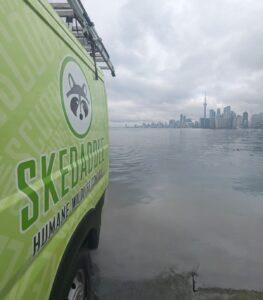
Toronto has one of the largest urban raccoon populations in the world. The city’s ravine system, mature tree canopy, and older housing stock create ideal conditions for raccoons, squirrels, and birds to thrive in residential neighbourhoods. Add a consistent food source from a neighbour’s yard, and you have the perfect recipe for a serious wildlife problem that spreads across multiple properties fast.
Older homes in Toronto are especially vulnerable. Aging soffits, worn rooflines, and gaps around older windows and doors give wildlife easy access points that they’re quick to find and exploit. Even a small opening is enough for a squirrel to get inside, and raccoons are strong enough to create their own entry points if they’re motivated enough to get in.
Seasonal patterns make things worse at certain times of year. Spring brings nesting season, when raccoons and squirrels are actively looking for sheltered spots to raise their young. Fall pushes wildlife to find warm shelter before winter. If your neighbour is feeding wildlife year-round, these seasonal peaks hit harder because there are more animals in the area to begin with, and they’re all looking for somewhere comfortable to stay.
Wildlife Removal and Prevention with Skedaddle
When wildlife activity in your neighbourhood is being driven by a neighbour’s feeding habit, the best thing you can do for your own property is call our team at Skedaddle Humane Wildlife Control. We can’t control what happens next door, but we can make sure your home is as protected as possible. Our inspections are thorough, our exclusion work is built to last, and we handle everything so you don’t have to deal with any of it yourself.
We use one-way door systems to remove any wildlife that has already made its way inside your home. These doors let animals leave on their own without being trapped or relocated, it’s a humane approach that gets results without causing unnecessary stress to the animals. Once they’re out, we seal the entry point so they can’t come back in through the same spot.
Prevention is always the last step, and it’s just as important as removal. After the animals are gone and the entry points are sealed, we make sure the conditions that made your home attractive are addressed. Your property should be a place wildlife passes through, not a place they settle into. That’s the standard we work toward on every job, and it’s what we’ll work toward on yours.
Frequently Asked Questions
Can I report my neighbour for feeding wildlife in Toronto?
Yes. Toronto's Animal Bylaw prohibits feeding wildlife or leaving food out that attracts them on public or private property. You can report it to 311, and a bylaw officer will follow up. The only exception under the bylaw is a properly maintained songbird feeder.
Will the wildlife go away on their own if my neighbour stops feeding them?
It depends. Animals that have been fed for a long time may continue to visit the area out of habit, and any that have already nested nearby will stay until they're removed. Stopping the food source helps, but it doesn't fix a wildlife problem that's already established on your property.
What if wildlife has already gotten into my home because of the neighbour's feeding?
Call us right away. Don't try to handle it yourself or block entry points on your own without knowing what's inside. Our team will inspect your home, identify what's there, and put a plan in place to remove them safely and seal your home against future entry.
Can wildlife damage my home even if they haven't gotten inside yet?
Yes. Raccoons and squirrels can damage soffits, shingles, vents, and roof edges just by trying to get in even if they haven't succeeded yet. Regular wildlife activity around your home's exterior is worth taking seriously before it becomes an interior problem.
Is it my responsibility to deal with a wildlife problem caused by my neighbour's actions?
When it comes to your own property, yes, you're responsible for protecting your home regardless of where the wildlife is coming from. The good news is that our team can put measures in place to protect your property effectively, even if the source of the problem next door hasn't been resolved yet.
How quickly can Skedaddle respond if I'm dealing with an active wildlife problem?
We respond as quickly as possible and prioritize situations where wildlife has already gotten inside a home. Contact us to discuss your situation, and we'll get someone out to your property as soon as we can.
Your Property Deserves Protection, Let’s Make It Happen
A neighbour feeding wildlife is frustrating, especially when the consequences land on your property. Damaged soffits, animals in your attic, droppings on your deck. None of that is your fault, but it is your problem to deal with. The good news is that you don’t have to figure it out alone, and you don’t have to wait for your neighbour to change their habits before you take action.
Wildlife problems don’t fix themselves. The longer animals are active around your home, the more likely they are to find a way inside. Every season that passes without protection is another chance for something to go wrong, and the damage adds up faster than most people expect. Getting ahead of the problem now is always the smarter move.
Our team at Skedaddle Humane Wildlife Control in Toronto is ready to help. We’ll inspect your property, find out what’s getting in and where, and put the right measures in place to keep wildlife out for good. You won’t have to touch anything or deal with any part of it yourself. You focus on enjoying your home; we’ll handle the rest. Contact us today to request an estimate and find out what we can do for your property.

 Loading...