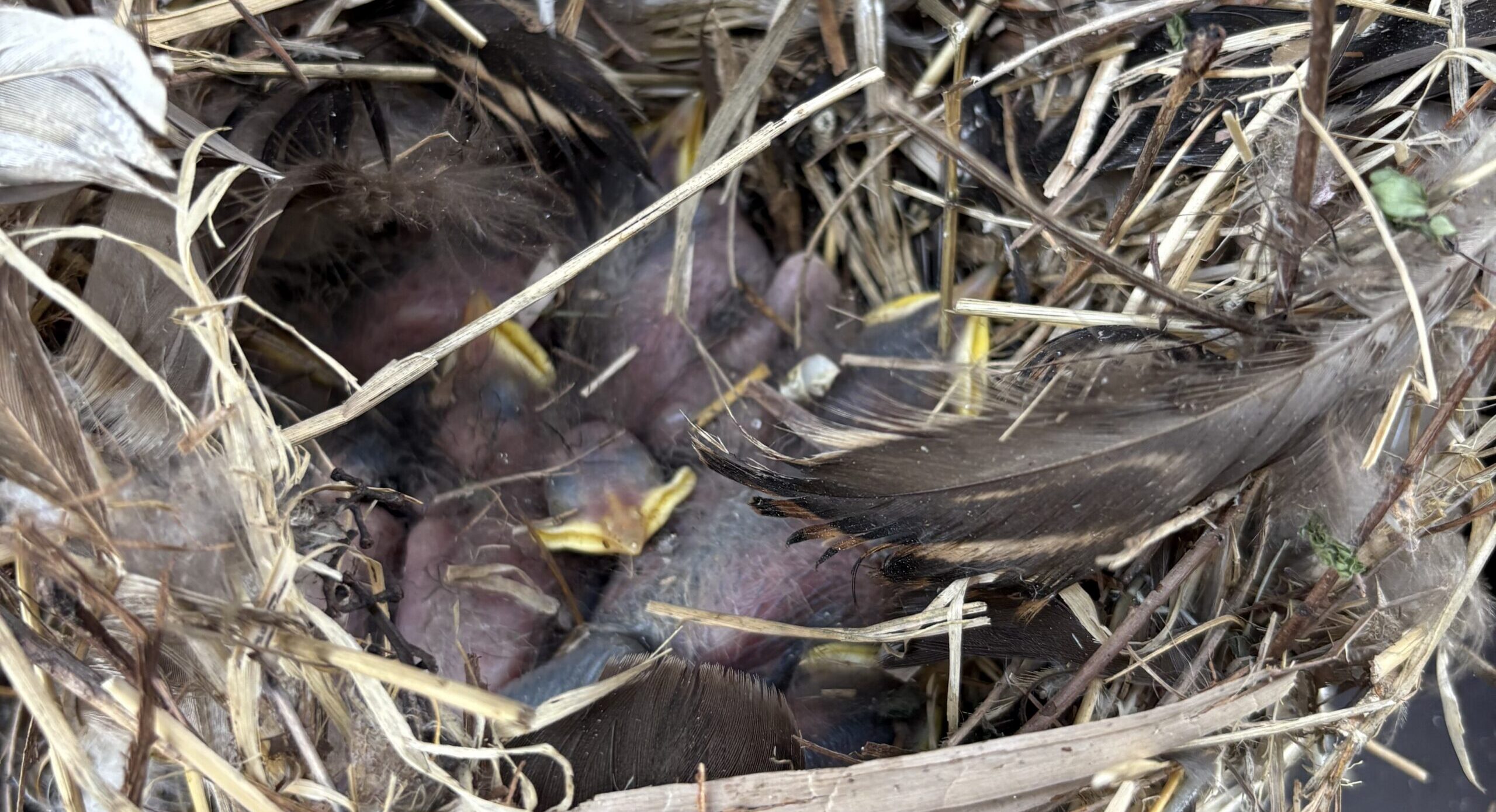
What does your home look like to a nesting bird? To them, it’s a haven – a place of safety, warmth, and abundant resources for raising their young. Birds aren’t just seeing shingles and gutters; they see a solid roof to shield them from predators and the weather, a secluded vent or soffit for building their nest, and often, a yard filled with opportunities like food and water. Your home has everything they need to thrive, making it even more attractive than the trees in your backyard.
Birds nest in houses because those little nooks and crannies—under your roof, in your eaves, or even behind shutters—offer the ideal environment. Their instinct is to look for quiet, protected spaces where they can hide from harm and lay their eggs. When it comes to birds nesting on homes, roofs are particularly appealing. They’re high off the ground, providing a natural sense of safety, while attics or chimneys can act as perfect substitutes for tree cavities. If you live in Westerville or the surrounding areas, you’ve likely seen this firsthand.
At Skedaddle Humane Wildlife Control, we specialize in humane bird removal and prevention methods that keep your home safe while respecting the wildlife around us. In this blog, you’ll learn why birds are so drawn to specific parts of your house and how we can help you protect your property without harming these nesting visitors. Understanding what attracts birds to roofs and other spots on your house is the first step toward solving the issue. Keep reading, and we’ll guide you through everything you need to know.
Why Do Birds Nest in Houses Instead of Trees?
You might wonder why a bird would choose your vinyl siding or gutter over a nice, leafy oak tree. The answer is usually safety and stability. In the wild, trees can sway in the wind, lose branches during storms, and offer easy access to predators like snakes, raccoons, and cats.
Your house, on the other hand, is solid. It doesn’t sway in the wind. It has overhangs that protect nests from rain and snow. The heat escaping from your attic or vents can provide extra warmth for fragile eggs and chicks. For a bird, your home is a high-quality, protected habitat, particularly in spring when they are searching for secure, dry locations for their young.
In nature, good nesting spots are hard to find. Old trees with hollow cavities are rare, and there is a lot of competition for them. Your home offers dozens of nooks and crannies that mimic these natural hollows. Plus, vertical walls are much harder for some predators to climb than tree bark, offering a higher level of security for the nest.
A High-Rise Protective Shelter
When a bird flies by your house, it doesn’t see windows and doors. It sees a cliff face full of safe ledges and caves. These spots are perfect for keeping babies safe from bad weather and hungry animals.
Here is what your home looks like to a nesting bird seeking shelter:
- The “Perfect” Cavity: Gaps in your siding, spaces under roof eaves, open dryer vents, and the area behind loose shutters look just like natural tree hollows. These are seen as safe, dry, and secure places to raise chicks away from the rain and wind.
- Elevated Nesting Sites: Flat surfaces are prized real estate. Ledges on windows, the top of outdoor light fixtures, or even empty hanging planters offer a solid foundation. These spots are high up, which offers protection from ground predators like cats.
- A “Fortress” Against Weather: If you have thick ivy growing on your walls or dense hedges right against the house, birds see this as a fortress. It is considered ideal for protection against cold wind and heavy rain, while still being close to the warmth of the house.
- Chimneys: To a bird like a chimney swift, an uncapped chimney looks exactly like a hollow tree trunk. It is deep, dark, and sheltered—a perfect spot to build a nest attached to the vertical walls inside.
A Source of Building Materials
Your home isn’t just a place to live; it’s also a hardware store. Birds need all sorts of materials to build strong, warm nests, and your yard and exterior often provide everything they need within a short flight.
Birds view your yard and exterior as a treasure trove of construction supplies:
- The Garden: A well-kept lawn or garden is full of shredded grass, dead leaves, and mud. These are prime materials for cup nests, like those built by robins.
- Outdoor Textiles: If you have patio furniture with loose threads, an outdoor rug, or even a clothesline, birds will take advantage. Threads pulled from outdoor rugs, string, and yarn are often scavenged to weave nests together.
- Debris & Pet Fur: Do you brush your dog outside? That fur is highly prized for lining nests because it is soft and warm. Even human hair or dryer lint found near a vent can be used.
- Structural Elements: Dried twigs from your landscaping, spiderwebs (which are used to bind nests like glue), and even small pieces of trash or plastic can be repurposed to strengthen the nest structure.
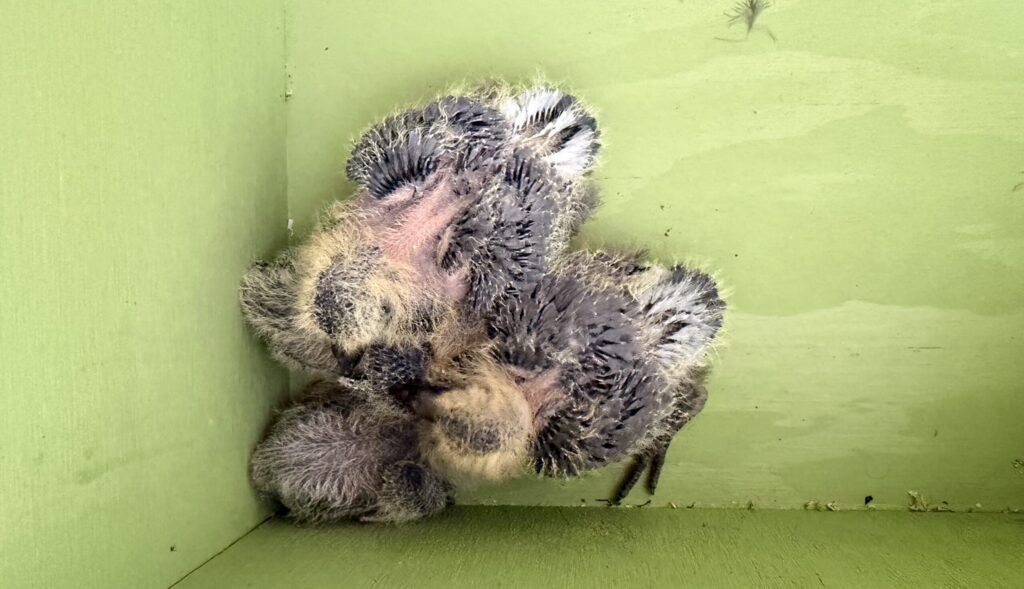
A Prime Real Estate Market
Just like people look for specific features in a house, different bird species look for specific features in your home. They are very picky about where they settle down.
Here is why your home is such a popular market for them:
- Cavity Specificity: Size matters. A 1.5-inch hole in a piece of rotting fascia board looks like a prime, single-family home to a starling or swallow. Smaller holes, around 1 inch, are ideal for smaller birds like chickadees. They measure these gaps carefully to make sure they fit, but their predators don’t.
- “Fixation” Areas: Have you ever seen a bird flying back and forth to the same corner of your roof? When you see a bird repeatedly visiting a specific, non-obvious spot, it is likely evaluating the space for a future nest. It might be testing if its body fits in the gap or checking if the spot stays dry during a rainstorm.
- Warmth: In the early spring, nights are still cold. Birds can feel the heat escaping from poorly insulated attics or bathroom vents. This warmth can be the deciding factor for a bird choosing a nesting site, as it helps keep the eggs warm when the mother has to leave the nest to find food.
A Source of Foraging
A safe nest is only part of the story. Parent birds also need food and water close by. When your home provides both, it becomes the perfect place to raise a family.
Leaky hoses, birdbaths, clogged gutters, and even small roof puddles give birds easy access to water. Food is often nearby too. Insects around porch lights, spiders in eaves, and berries or seeds in gardens create steady meal options.
When food and water are steps away from the nest, birds save energy. They can feed their babies more often and stay close to shelter. That convenience makes your home an ideal nesting spot.
Keep Birds Out the Right Way
When birds build a nest, especially with eggs or babies inside, you often cannot remove it yourself. Laws like the Migratory Bird Treaty Act protect many species. That is why handling bird problems on your own can lead to legal trouble and bigger issues.
At Skedaddle Humane Wildlife Control in Westerville, we begin with a full assessment of your home. We inspect rooflines, vents, and high peaks to find entry points and nesting spots. If birds are inside, we use one-way doors that let them leave safely but stop them from coming back.
After the birds are gone, we clean and sanitize the area to remove droppings and parasites. Then we seal entry points with strong screening and install protective vent covers. This keeps your home secure and helps prevent the problem from returning.
Frequently Asked Questions
Why do birds keep coming back to my house?
Birds are creatures of habit. If they successfully raised a family in a spot on your house last year, they will try to come back to that exact same spot this year. They also leave scent markers that tell other birds, "This is a good home." Professional cleaning and exclusion are the only ways to break this cycle.
Can I just plug the hole with foam?
No. Birds can peck through spray foam very easily. Also, if you plug a hole while birds are still inside, they will be trapped and die, causing a terrible smell and more problems. You need professional-grade materials like steel screen and a proper exclusion process.
Is it safe to remove a nest myself?
It is not recommended. First, it may be illegal depending on the bird species. Second, nests contain parasites and bacteria that you don't want to breathe in or touch. Third, nesting birds can be aggressive and may dive-bomb you to protect their young. It is always safer to call Skedaddle.
How do birds get into the attic?
Birds usually enter attics through damaged vents, loose soffit panels, or gaps in the roofline. They don't need a big hole; a sparrow can fit through a gap the size of a quarter. Regular roof inspections can help catch these small openings before birds find them.
Protect Your Home with Skedaddle
Your home is your castle, not a bird sanctuary. While birds are a beautiful part of nature, they belong in trees, not in your vents or attic. Understanding what your home looks like to a nesting bird helps you see the vulnerabilities in your property. From high-rise shelter to easy building materials, your house is a magnet for wildlife.
If you notice birds gathering nesting material, hanging around your roofline, or if you hear scratching and chirping in your walls, don’t wait. Why birds nest in houses is simple: it’s safe for them, but it’s not safe for your home.
Residents in Westerville and the surrounding areas can trust Skedaddle Humane Wildlife Control to handle the situation safely and effectively. We protect your home and family while respecting the wildlife.
Contact us today to request an estimate and let our professional team secure your home against nesting birds.

 Loading...







