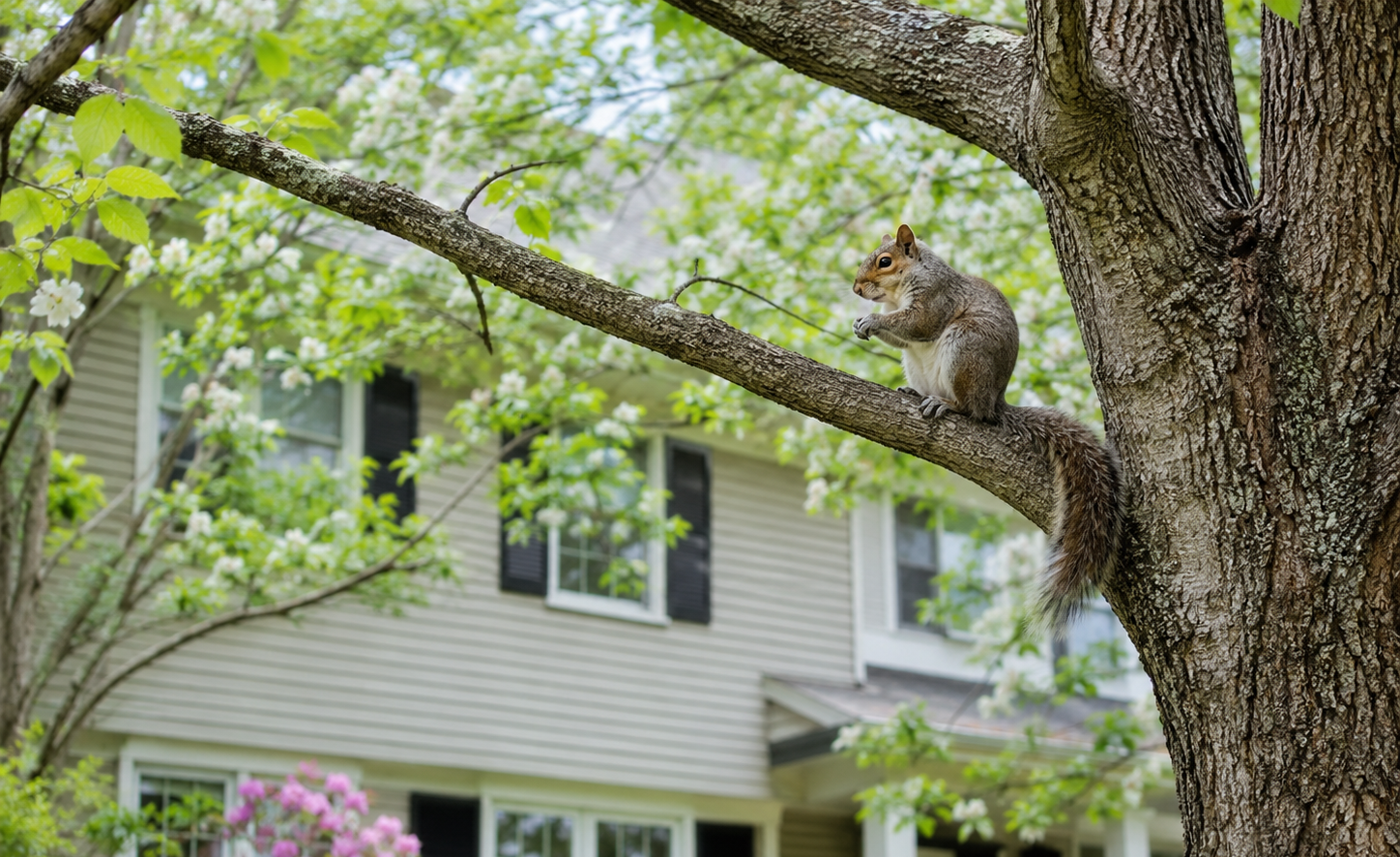
Windsor’s tree-lined streets are one of the things that make this city such a great place to live. But those same mature trees are also one of the biggest reasons squirrels end up in attics every summer. When branches hang close to a roofline, they act as a direct path onto your roof and from there, it doesn’t take much to find a way inside.
Your attic checks every box a squirrel is looking for in summer. It’s warm, it’s quiet, it’s hidden from predators, and it’s the perfect place to raise young. Older homes in Windsor’s established neighbourhoods give them even more to work with – complex rooflines, aging soffits, and worn vents that are easy to chew through or pry open.
At Skedaddle Humane Wildlife Control in Windsor, we see this pattern every summer across the city’s oldest neighbourhoods. In this blog, we explain exactly why Windsor’s trees and rooflines make attics such an attractive target, what these creatures do once they’re inside, and how our team handles the problem so your home stays protected.
How Do Squirrels Get Into an Attic?
Squirrels get into attics by finding weak spots on the exterior of your home and chewing or pushing their way through. The most common entry points are damaged roof vents, gaps along the soffit and roofline, and spots where the fascia board has softened from water damage. They don’t need a large opening – a gap the size of a golf ball is enough to squeeze through.
What makes Windsor homes especially vulnerable is the combination of mature trees and older construction. Overhanging branches give them easy rooftop access, and once they’re up there, they walk the full perimeter of your roof looking for any weak spot they can use. Older homes in areas like Walkerville and South Walkerville often have roofline details – dormers, valleys, and multiple peaks that create small construction gaps squirrels know exactly how to find.
The chewing doesn’t stop at the entry point. Once inside, they continue to gnaw on wood framing, insulation, and wiring because their front teeth never stop growing and need to be worn down constantly. This is what makes an attic intrusion so damaging and why calling our team early makes a real difference in how much repair work is needed afterward.
Windsor’s Tree Canopy: A Highway to Your Roof
Windsor has one of the most beautiful tree canopies in Ontario, with mature elms, maples, and oaks lining streets in established neighbourhoods across the city. For squirrels, these trees aren’t just habitat, they’re a transportation network. Branches that hang within a few metres of your roofline give them a direct jumping path onto your home without ever touching the ground.
It’s not just trees either. Fences, hydro lines, sheds, and garages all act as stepping stones that bring them closer to your roofline. A squirrel that climbs a fence to reach a garage roof and then jumps to the main house is following a route it may use every single day. The more of these access points your property has, the more frequently your roofline gets visited and tested for weak spots.
Our team looks at the full picture during an inspection, not just the entry point on your roof, but every tree, fence, and structure nearby that’s giving them a path to get there. Understanding how they’re reaching your home is part of figuring out how to keep them from coming back.
Older Rooflines and Why They’re So Vulnerable
Windsor’s older homes are full of character, but they also come with roofline features that create easy entry points for squirrels. Dormers, multiple peaks, roof valleys, and intersecting rooflines all create small gaps and corners where materials meet imperfectly or have shifted over time. These spots are often impossible to see from the ground, but squirrels find them on every visit.
Here’s what our team commonly finds when inspecting older Windsor homes for squirrel entry points:
- Gaps at Roofline Intersections and Dormers: Where two roof slopes meet or where a dormer joins the main roofline, small gaps often open up as the home ages and materials shift. These gaps are a direct path into the attic and are one of the most common entry points our team finds on older Windsor homes. They aren’t always obvious from the ground, but our team knows exactly where to check.
- Softened Fascia Boards from Water Damage: Windsor’s humid summers and heavy rain can cause water to collect along the roof edge, softening the wood behind the eavestrough over time. Once the fascia board has started to rot, it takes very little effort to chew through it. Our team replaces damaged fascia material and seals the area with durable materials that won’t soften or break down the same way.
- Worn or Missing Soffit Panels: Soffits that have cracked, warped, or pulled away from the roofline leave gaps that are easy to push through or widen with chewing. These are especially common on homes that haven’t had recent exterior work done. Our team checks every soffit panel during the inspection and replaces or reinforces anything that’s been compromised.
- Construction Gaps that Were Never Fully Sealed: Many older Windsor homes have small gaps left over from original construction or past renovations that were never properly closed off. These gaps sit along the roofline for years without causing a problem until a squirrel finds one. Our team seals every gap we find with heavy-gauge materials built to hold up against chewing and weather.
Nesting and Raising Young in Summer
Summer is one of the two main breeding seasons for squirrels in Ontario, with a second litter typically born in late summer around August. This means that from June through August, mothers are actively searching for the safest, most secure spot they can find to give birth and raise their young. Your attic fits that description perfectly.
A mother squirrel looking for a nesting spot is highly motivated and very persistent. She’ll test the same weak spot on your roofline repeatedly until she finds a way in, and she’ll choose an attic over an outdoor nest every time if the option is available. Once she’s inside with her young, the situation becomes more complicated because the babies can’t leave on their own.
This is where our one-way door system is essential. It allows the mother to leave the attic on her own but prevents her from getting back in. Our team places any young that can’t yet move on their own in a heated reunion box just outside the entry point, giving the mother a chance to gather them and relocate. You should never attempt to block an entry point yourself when young may be present, call our team and let us handle it the right way.
The Role of Arboreal Instinct
Squirrels are built to live high up off the ground. In the wild, they nest inside hollow tree trunks, high above predators, with a small entrance and a warm, enclosed interior. To a squirrel, a dark attic feels almost identical to that hollow tree, only larger, warmer, and more secure.
This instinct is part of why attic intrusions happen even on homes that seem well-maintained. It’s not just about finding a gap or a weak spot. These creatures are actively drawn to elevated, enclosed spaces, and your attic is one of the best versions of that they’re ever going to find. Windsor’s mature tree canopy brings them onto your roof regularly, and once they’re up there, the attic is exactly what their instincts are telling them to look for.
Predator pressure in Windsor’s urban neighbourhoods also plays a role. Hawks, owls, and other predators are active across the city, and an attic offers complete protection from all of them. Once a squirrel has raised a successful litter in your attic, there’s a strong chance it or its offspring will return to the same spot the following year unless our team has sealed it properly.
Ventilation Weak Spots
Attic vents are one of the most common entry points our team finds on Windsor homes. Roof vents, gable vents, and soffit vents all provide ventilation that the attic needs — but they also represent openings in the exterior of your home that squirrels actively look for and test. Plastic and aluminum vent covers weaken over time from sun exposure and temperature changes, and a motivated squirrel can chew through them quickly.
Summer heat makes this worse. As temperatures rise, squirrels seek out shade and cooler spots during the hottest parts of the day. Attic vents that release warm air from inside the home send a signal that there’s a cool, shaded space on the other side, which draws them directly to the vent opening. Here’s what our team typically finds and addresses during vent inspections on Windsor properties:
- Chewed or Pried Plastic Vent Covers: Plastic covers on roof and gable vents are easy targets. Squirrels chew through the material or pull the cover away from the frame to create an opening. Our team replaces all compromised vent covers with heavy-gauge steel versions that can’t be chewed through or pulled apart.
- Damaged Soffit Vents Along the Roofline: Soffit vents that have cracked or warped over time leave gaps that are easy to push through. These are especially common on Windsor homes built before the 1980s, where original vent materials have had decades of wear. Our team checks every soffit vent on the property and replaces anything that has been weakened.
- Unsealed Gaps Around Vent Pipes and Plumbing Stacks: Where pipes pass through the roof, small gaps often exist around the seal. These gaps look and feel like hollow tree openings to a squirrel and are a very common starting point for chewing and entry. Our team seals all of these points with durable materials as part of the full exclusion process.
The Second Breeding Season
Most homeowners don’t realize that squirrels have two breeding seasons each year, not just one. The second litter is typically born in late summer around August, which means pregnant females are actively scouting for secure nesting spots during June and July. Your attic is exactly what they’re looking for: warm, hidden, and completely protected from the elements. By the time you hear something in the attic, a mother may already be well into setting up her nest. Here’s what this means for your home during summer:
- Active Scouting From June Through July: Pregnant females begin testing rooflines and looking for entry points weeks before they’re ready to give birth. They’re persistent and will return to the same weak spot on your roof repeatedly until they find a way in. Our team finds and seals these vulnerable points before they become a problem.
- A Second Wave of Attic Intrusions in Late Summer: The second breeding season creates a spike in attic intrusion calls across Windsor every August. Homeowners who made it through spring without a problem sometimes assume they’re in the clear — but the second breeding season brings a fresh wave of motivated mothers looking for a safe place to raise their young. If you haven’t had your roofline inspected this year, summer is the right time to call us.
- Young That Can’t Leave on Their Own: When a mother gives birth inside your attic, the babies stay hidden and immobile for several weeks. Simply blocking the entry point at this stage traps them inside, which creates a more serious and more costly situation to resolve. Our team handles active nesting situations using our one-way door system and makes sure any young present are safely reunited with the mother before the attic is sealed.
Summer Squirrel Prevention with Skedaddle
The best way to deal with a squirrel problem is to stop it before it starts. Summer is the most active season for attic intrusions in Windsor, and the conditions that make your home a target don’t go away on their own. Our team looks at the full picture during every inspection, not just where they got in, but everything that brought them to your roofline in the first place. Overhanging branches, worn vent covers, softened fascia boards, and construction gaps all factor into what we assess and address.
Weak spots along the roofline don’t have to be open yet to be a problem. Worn soffit panels, aging vent covers, and small construction gaps are all things squirrels will find and test on every visit to your roof. Our team identifies these vulnerable points during the inspection and seals them before they become entry points, using heavy-gauge steel and durable sealants that hold up through Windsor’s humid summers and cold winters. Every vent, every soffit edge, and every roofline gap gets checked, not just the spots that already show obvious damage.
If squirrels are already inside when we arrive, our one-way door system lets them leave the attic on their own but stops them from getting back in. Once all activity has cleared and our team has confirmed the attic is empty, we seal every opening permanently. All cleanup of droppings, nesting material, and contaminated insulation is handled entirely by our team, homeowners should never go near any of this without proper protective equipment. If you hear scratching or thumping in your attic, call us right away and leave the area alone until we arrive.
Summer Squirrel Challenges in Windsor
Windsor’s warm, humid summers create strong conditions for squirrel activity from June through August. The city’s mature tree canopy, particularly in older neighbourhoods like Walkerville, Ford City, and Riverside, gives these creatures rooftop access on almost every residential street. Combined with the older housing stock that’s common across Windsor, the conditions for attic intrusions are about as ideal as they get.
Windsor also sits in one of the warmest climate zones in Ontario, which means summer breeding season starts earlier and lasts longer than in other parts of the province. Mothers begin scouting nesting sites in late spring and may attempt to enter attics as early as May. By the time a homeowner hears scratching in the attic, a nest is often already well established.
High humidity levels in Windsor’s summers also accelerate wood rot along the roofline, which creates new entry points faster than in drier climates. Our team understands the specific conditions that drive squirrel activity in Windsor and knows exactly what to look for when we inspect a property in the city’s older neighbourhoods.
Frequently Asked Questions
How do I know if there's a squirrel in my attic and not something else?
Squirrels are active during the day, so scratching, scurrying, or thumping sounds in the attic during daylight hours are a strong sign. Their movements tend to be fast and back-and-forth rather than slow and random. Our team can confirm the species during an inspection.
Can squirrels damage my roof from the outside before they get in?
Yes. Squirrels chew along the roofline, fascia boards, and vent covers before they break through. You may notice chew marks, wood shavings, or small piles of debris near the roof edge before any interior signs appear. If you see this kind of damage, call our team before they make it all the way inside.
Do squirrels in the attic attract other wildlife?
Yes. The entry points they create can be used by other creatures, and the nesting material and waste they leave behind can attract insects. Our team addresses all of these factors during the cleanup and sealing phase so the problem doesn't continue after they've been removed.
Why do squirrels keep coming back to the same house every year?
Once a squirrel has successfully nested in your attic, it and its offspring remember that location and return to it. This is why proper sealing after removal is so important, patching a gap temporarily won't stop a motivated animal that knows exactly where it's going. Our team seals every entry point with materials that hold up long-term.
Is it safe to stay in the house while squirrels are being removed from the attic?
Yes, in most cases. You should avoid the attic and the area directly below any active entry point during the removal process. Our team will advise you on what to stay away from during the visit. Once the attic is clear and sealed, normal use of the full home can resume.
How long does a typical squirrel removal take in Windsor?
The inspection and one-way door installation can usually be completed in a single visit. The removal itself takes a few days as the squirrels exit on their own through the one-way door. Sealing and cleanup follow once our team has confirmed the attic is empty. The timeline depends on the size of the infestation and the number of entry points involved.
Your Attic Shouldn’t Be Their Summer Home
Squirrels don’t leave on their own once they’ve found a warm, safe attic to nest in. The damage they cause – chewed wiring, torn insulation, contaminated spaces – gets worse every week they’re left alone. Windsor’s mature trees and older rooflines make this a common problem across the city, but it’s one our team deals with every day.
Most homeowners don’t realize how bad things have gotten until our team does the inspection. By then, the squirrels have often been there for weeks, sometimes longer. The good news is that you don’t have to wait for the damage to pile up before you call us. If you hear scratching or thumping in your attic, that’s the right time to pick up the phone.
The longer the problem goes without being addressed, the more it costs to fix. Chewed wiring is a fire hazard. Contaminated insulation needs to be replaced. These are not small repairs, and they only get bigger with time.
At Skedaddle Humane Wildlife Control in Windsor, we handle the full process from start to finish. Our team inspects the property, removes any squirrels using our one-way door system, cleans the affected areas, and seals every entry point permanently. You don’t need to do a thing except call us. Request an estimate today and let our team make sure your attic stays yours all summer long.

 Loading...







