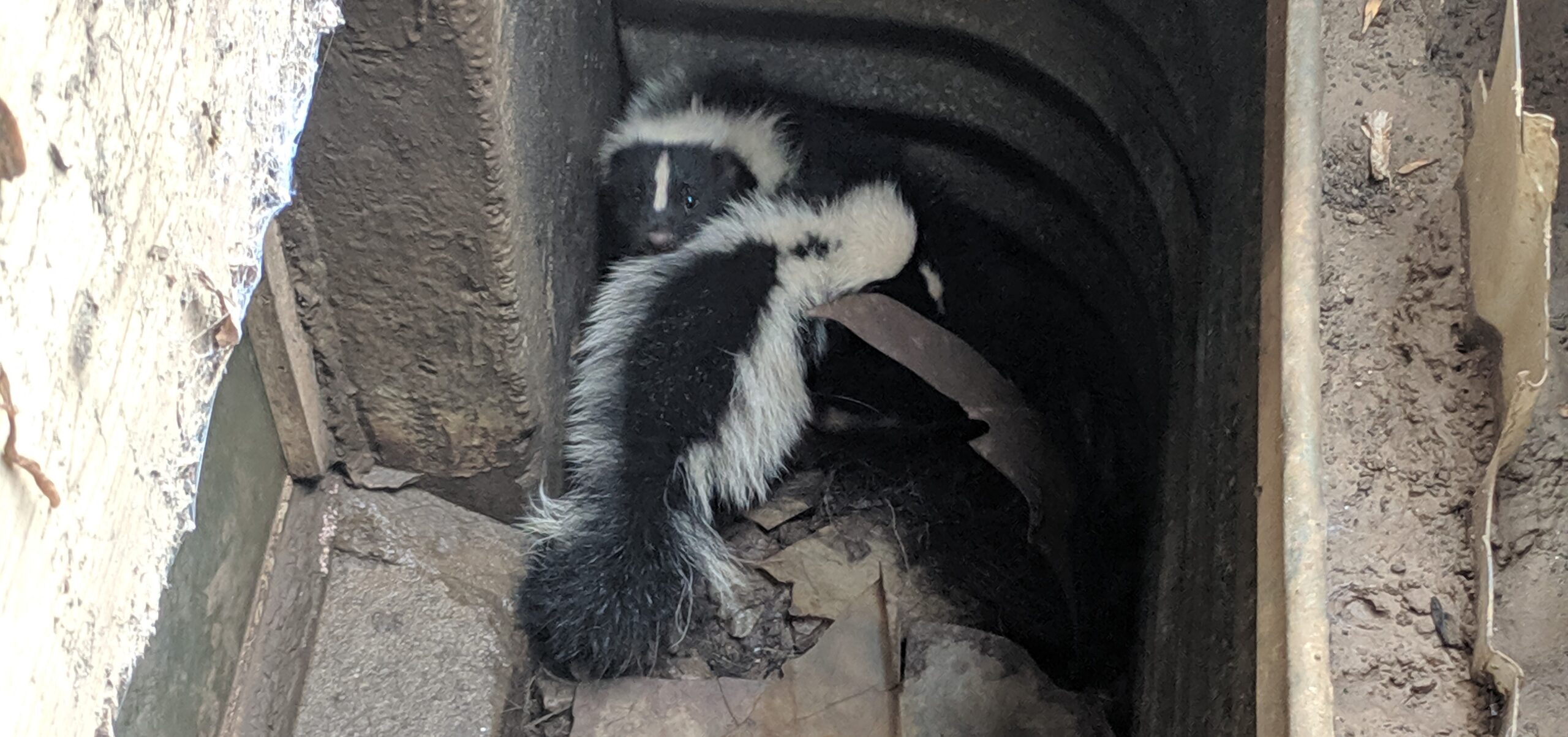
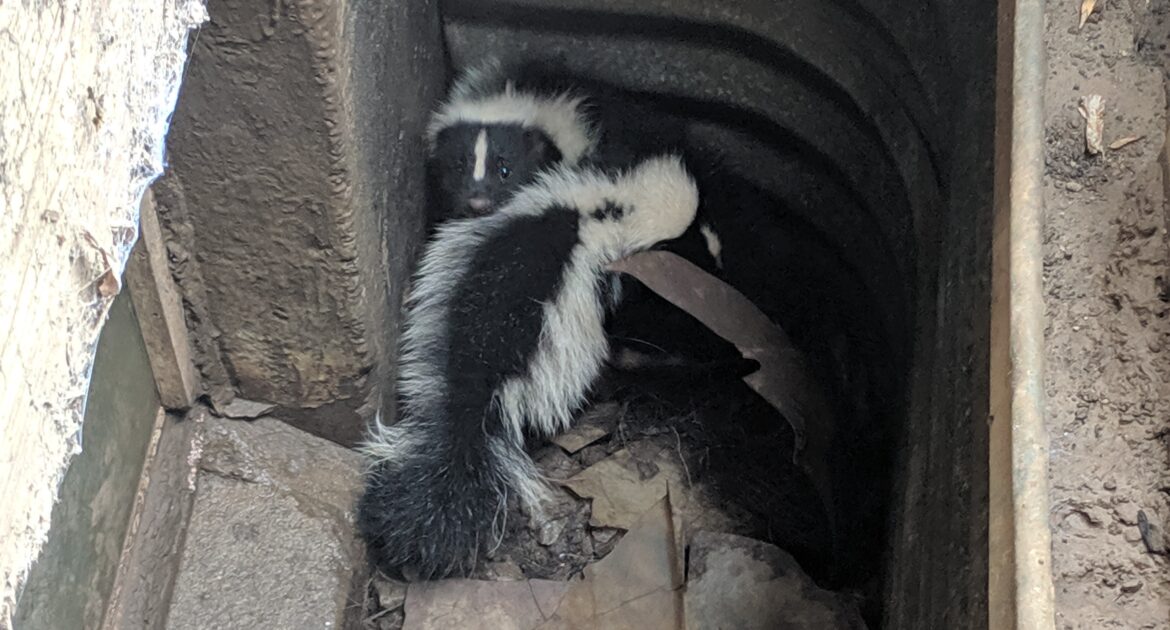
As winter grips York Region and the ground hardens, homeowners often wonder where skunks go and how these adaptable animals survive the cold months. Skunks have developed effective strategies to cope with freezing conditions, often spending winter in burrows, hollow logs, or dens dug into soft soil, sometimes sharing spaces with other wildlife. While sightings may decrease, homeowners may still notice their distinctive scent or evidence of digging near porches, sheds, or gardens.
In this article, we explain skunk winter behaviour, reveal where they shelter during the coldest months, and share how our team in Woodbridge can help protect your property.
How Skunks Adapt to Frozen Ground in Winter
Skunks are natural survivors. The bitter Canadian winters can be harsh—especially when the ground is frozen solid. Skunks leverage several survival strategies to endure until spring’s thaw.
Dormancy, Not True Hibernation
A common question we hear is, “Do skunks hibernate in winter?” The answer is no—skunks do not fully hibernate. Instead, they enter a state called torpor. During torpor, skunks remain inactive for long periods to conserve their energy and body fat, emerging only occasionally when temperatures rise.
This behaviour means that even in the coldest weeks, a skunk may spend several days or even weeks in its winter den before venturing outdoors. Skunks rely on:
- Stored body fat accumulated during late summer and autumn.
- Deep burrows, often dug below the frost line for insulation.
- Natural and man-made shelters, such as areas beneath decks, sheds, or porches.
By entering torpor, skunks avoid the toughest parts of winter, reducing their need to search for food on icy ground.
Adapting Dens for Protection
Because the earth can freeze multiple feet deep, skunks must choose their dens carefully to survive the winter. The insulation provided by a den dug below the frost line is crucial for warmth. Additionally, skunks look for:
- Sheltered spots under homes, decks, or outbuildings.
- Abandoned burrows left by other animals.
These dens provide skunks with protection from both the elements and predators. This need for warmth and security explains why skunk activity shifts closer to human habitation during winter—a trend we see annually throughout Woodbridge as the ground freezes.
Next, we’ll discuss how winter skunk behaviour changes with the season and how these animals go about their lives when food and mobility are limited.
Skunks and Human Habitats: Why Your Property Is at Risk
As many residents wonder, “Where do skunks go in winter?”, it’s important to understand why these animals are drawn to human spaces—especially in Woodbridge and throughout our service area.
Signs of Skunks Near Your Home
Early detection can make all the difference in preventing a long-term winter den. Be on the lookout for:
- Strong, persistent odours around decks, porches, or outbuildings.
- Piles of disturbed soil at the edge of structures.
- Tracks or small holes in soft ground.
- Sounds of digging or rustling at night.
- Smudges or greasy markings near entry points.
By catching these clues early—ideally before the ground freezes—homeowners can prevent more challenging situations in spring, such as baby skunks appearing beneath the deck.
The next logical step: taking preventative action to safeguard your home, which begins long before the coldest days arrive.
Preventative Measures to Manage Skunk Presence
Skunks in winter can make removal difficult. That’s why we encourage property owners in Woodbridge to take proactive steps in the fall before skunks become dormant. Our humane approach at Skedaddle prioritizes both safety and long-term effectiveness.
Five Essential Steps for Skunk Prevention
To minimize your risk of hosting skunks through the winter, consider these key steps:
- Inspect your property’s perimeter for holes, burrows, or weak spots beneath decks, sheds, and porches.
- Seal all possible entry points using heavy-gauge steel mesh buried at least 8-12 inches deep.
- Remove food attractants such as unsecured garbage, fallen fruit, compost, or pet food.
- Keep outdoor areas well-lit after dark, as skunks prefer darker, quieter shelters.
By investing in solid barriers and a thorough site assessment, you help ensure that skunks don’t choose your property for their winter den.
When to Seek Professional Help
Sometimes, despite your best efforts, skunks may burrow in before you notice. When you suspect animals sheltering under your structures, especially in winter, humane removal by licensed experts is critical. Attempting to evict a sleeping skunk can result in spraying, possible injury, or even orphaned babies later in the season.
At Skedaddle, our technicians are specially trained to:
- Identify all active and potential den sites.
- Safely remove adults and babies using gentle, hands-on techniques.
- Employ one-way doors to allow skunks to exit safely but not return.
- Clean and deodorize contaminated areas to discourage future use.
- Install deep, long-lasting exclusion barriers to protect your home.
Technicians use professional methods so thoroughly that you often cannot tell we’ve been on-site—except for the absence of unwanted animal guests.
The importance of timely intervention leads us to discuss how our experienced team in Woodbridge supports residents throughout the cold months.
How Skedaddle Supports Homeowners
With over 30 years of service in wildlife control, we understand the unique pressures that skunks—especially in winter frozen ground conditions—can put on local properties. Our proven combination of deep knowledge and humane practices helps us deliver long-lasting results all winter long.
Our Process and Commitment
- We assess and confirm the presence of skunks, using the latest technology and keen knowledge of winter skunk behaviour.
- Every entry point is sealed with quality steel screening, buried to regulatory depth, and installed precisely for an unobtrusive finish.
- We clean and sanitize affected areas, removing droppings and soiled material, keeping your family and pets safe.
- Finally, our preventative repairs ensure your structures are protected against future intrusions, regardless of weather or animal persistence.
We know that skunks often reuse winter dens into the springtime birthing season, making it even more important to address these issues early. Whether you’re in the York Region or nearby Woodbridge, we’re here to help keep your property secure, odour-free, and wildlife-safe.
As winter gives way to spring, protecting your property from returning skunks and preparing for the arrival of skunk babies becomes even more important. By understanding the behaviours of skunks in winter and taking smart steps, you can enjoy a peaceful, skunk-free season.
Stay Protected All Winter with Expert Skunk Solutions
As skunks adapt their habits to survive harsh winters, your home can quickly become their shelter of choice. Even when sightings are rare, evidence of digging and lingering odours are signs that skunks may be nesting nearby—taking advantage of inaccessible burrows beneath decks and sheds while the ground is frozen and inhospitable. Understanding these winter behaviours and acting early is crucial to avoid unwanted encounters, property damage, and the challenges of springtime baby skunks.
Don’t wait until problems escalate; Skedaddle’s humane, spray-free approach delivers safe, thorough removal and lasting prevention. With over three decades of experience, our skilled technicians handle every step, from careful wildlife assessment to the installation of deep exclusion barriers that protect your property throughout every season. Safeguard your home and peace of mind—contact Skedaddle today to ensure a skunk-free winter and a worry-free spring.

 Loading...

