
Rats are rarely seen, but that doesn’t mean they aren’t active. Many homeowners in York Region first notice subtle signs: scratching behind walls at night, faint movement overhead, or unexplained noises that seem to travel from one part of the house to another. What most people don’t realize is just how efficiently rats can move through a home, slipping in from the backyard and navigating hidden pathways that lead them all the way to upper floors and even bedrooms.
At Skedaddle Humane Wildlife Control, we understand that these situations can feel unsettling, especially when the source of the problem isn’t immediately visible. Rats are highly adaptable and resourceful, using structural gaps, insulation, and utility lines as a network of concealed routes. Without a clear understanding of how they travel, it’s easy for activity to go unnoticed until it becomes more widespread.
In this guide, we’ll walk through how rats move from outside your home to the spaces you use every day. By understanding their behaviour, entry points, and travel patterns, you’ll be better equipped to recognize early warning signs and take the right steps to protect your home safely and effectively.
What Time of Day Do Rats Leave the House?
Rats are primarily nocturnal, which means most of their movement happens when your home is quiet and dark. In York Region homes, this activity typically begins shortly after sunset, continues throughout the night, and tapers off in the early morning hours before daylight. While they may remain hidden during the day, they are far from inactive, resting in nesting areas and conserving energy for their nightly routines.
Their decision to leave and re-enter your home is driven by basic needs: searching for food, accessing water sources, and gathering materials to build or expand their nests. Under the cover of darkness, rats feel safer venturing out into yards, garages, and nearby areas before returning indoors through the same hidden entry points. This consistent pattern allows them to move back and forth without drawing attention.
Homeowners often notice signs of this activity without realizing the timing behind it. You may hear movement that seems to follow a pattern each night or notice sounds that begin at a similar time after dark. Common indicators include:
- Scratching or gnawing sounds in walls and ceilings during the night
- Movement in attics or between floors after sunset
- Brief glimpses of activity in low-light areas like basements or kitchens
- Pets becoming alert or restless overnight
Understanding when rats are most active can help pinpoint where they are entering and exiting. At Skedaddle Humane Wildlife Control, we use this knowledge to identify high-traffic areas and develop a targeted, humane strategy that addresses the full scope of activity, not just what’s visible during the day.
How Rats First Enter Your Home
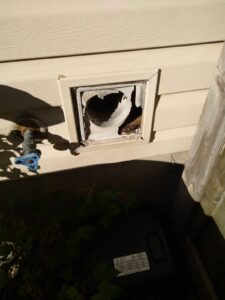 Rats don’t need large or obvious openings to get inside a home. In fact, one of the reasons they are so successful in urban and suburban environments across York Region is their ability to exploit extremely small vulnerabilities in a structure. A gap as small as a coin-sized opening can be enough for a rat to squeeze through, especially if it leads to warmth, shelter, or a reliable food source.
The first stage of entry often begins outside, where rats explore the perimeter of a home in search of weak points. Once they identify a suitable access point, they can begin moving inside unnoticed, often establishing regular travel routes between the interior and exterior.
Common entry points include:
- Gaps in the foundation or cracks in the basement walls
- Openings around utility lines, pipes, or cables entering the home
- Damaged or poorly fitted roofline components, such as soffits and fascia
- Unscreened or weakened vents, including attic and dryer vents
- Spaces under doors, garage door seals, or weatherstripping
Homes in York Region can be particularly vulnerable due to seasonal temperature shifts. As the weather cools, rats are drawn toward the warmth of heated structures, increasing the likelihood that they will investigate and exploit any available opening.
Once inside, the initial entry point often becomes the start of a larger network of movement. Rats rarely stay confined to one area; instead, they begin exploring wall voids, storage spaces, and structural cavities to establish safe and hidden travel routes throughout the home.
At Skedaddle Humane Wildlife Control, we focus on identifying every possible access point, not just the most obvious ones. By understanding exactly how rats first enter a home, we can develop a complete prevention strategy that helps ensure they are not able to return once they’ve left.
From Yard to Structure: The First Stage of Movement
Before rats ever reach the inside of a home, they often establish a predictable pattern of movement in the surrounding yard. This early stage is critical because it is where they assess safety, locate food sources, and identify potential entry points. In many York Region neighbourhoods, landscaped yards, sheds, decks, and fences unintentionally provide the cover they need to move confidently toward a structure.
Rats typically travel along edges rather than crossing open spaces. This means they will use fences, garden beds, retaining walls, and the perimeter of buildings as protective routes. Overgrown vegetation, stacked materials, and cluttered outdoor storage areas can make this movement even easier by reducing visibility and offering shelter from predators.
Common outdoor attractants and travel supports include:
- Garbage and recycling bins that are not properly sealed
- Fallen fruit, bird seed, or outdoor pet food
- Dense shrubs or ground cover close to the home
- Woodpiles, sheds, and deck structures that create hiding spaces
- Gaps beneath porches or additions that provide sheltered pathways
As rats move through these exterior areas, they begin testing the structure itself. They may investigate foundation edges, utility penetrations, or gaps beneath siding. Once they find a weak point, they often begin making repeated trips between the yard and the interior, gradually establishing a reliable route.
This stage of movement is especially important because it is the point where prevention is most effective. When activity is still concentrated outdoors, it is easier to identify attractants and structural vulnerabilities before rats fully transition inside the home.
At Skedaddle Humane Wildlife Control, we pay close attention to this transition zone. By understanding how rats move from the yard toward the structure, we can identify the earliest signs of intrusion and address the conditions that allow them to gain access in the first place.
Inside the Walls: Hidden Highways
Once rats make it past the exterior of a home, they rarely move through open living spaces right away. Instead, they rely on the hidden structure of the house to travel undetected. Wall cavities, ceiling voids, and utility runs create a protected network of pathways that allow them to move freely from one area to another without being seen.
These internal routes are often warm, quiet, and undisturbed, making them ideal for regular travel. Insulation provides both cover and nesting material, while gaps around plumbing, ductwork, and electrical wiring create natural “highways” between different sections of the home. In many cases, rats can move vertically and horizontally without ever needing to enter a visible room.
Common interior travel routes include:
- Empty spaces inside walls between studs
- Areas around plumbing pipes and drain lines
- Gaps surrounding electrical wiring and junction boxes
- Ceiling and floor cavities between levels of the home
- Ductwork pathways that connect multiple rooms
Because this movement is hidden, homeowners often only hear indirect signs of activity. Sounds may appear to shift locations from night to night, giving the impression that the activity is moving through the house. In reality, rats are simply following established routes within the structure itself.
Over time, these hidden highways can expand as more rats use the same pathways. What begins as limited movement can turn into a complex network that connects the basement, main floor, and upper levels of the home. This is one of the reasons early detection is so important, since activity inside wall systems is often well established before it becomes noticeable.
We understand how extensively rats can use these concealed routes. By identifying the exact pathways they are using, we are able to address the full scope of their movement within the home and develop a long-term prevention strategy that helps stop the cycle at its source.
Vertical Travel: How Rats Reach Upper Levels

Rats are not limited to ground-level movement. Once inside a structure, they can easily navigate vertically, allowing them to travel from basements all the way up to attics and upper bedrooms. This ability is one of the main reasons activity can seem to “spread” throughout a home over time, even when entry initially occurred at a single point.
Their movement upward is typically guided by structural features that provide both grip and protection. Narrow spaces, textured surfaces, and enclosed channels make it easier for rats to climb without exposure. In many York Region homes, once rats establish access to the interior walls, they can move between floors without ever needing to enter open living areas.
Common vertical travel routes include:
- Interior wall cavities that run between floors
- Plumbing stacks and drain pipes that span multiple levels
- Electrical wiring channels and conduit runs
- The backs of closets where walls are less insulated or finished
- Gaps around chimneys, ducts, and utility chases
Attics are often a key destination because they provide warmth, insulation, and minimal disturbance. From there, rats can continue moving through ceiling spaces and upper wall voids, sometimes reaching bedrooms without being directly visible. This is often when homeowners begin noticing sounds overhead or in walls during nighttime hours.
Vertical movement also allows rats to establish multiple nesting or resting areas within the same home. Instead of staying in one location, they may rotate between basement, wall, and attic spaces depending on temperature, activity, or food access. This flexibility makes their movement patterns more difficult to predict without a full understanding of the structure.
Recognizing how easily rats can travel between levels is an important step in understanding why isolated signs of activity should never be ignored. What may seem like a minor issue on one floor can actually indicate a much larger network of movement throughout the entire home.
Why Rats End Up in Bedrooms

Bedrooms are rarely the first point of entry or activity for rats, but they can become part of their travel network once they are established inside a home. As rats move through wall systems, ceilings, and upper-level cavities, they may eventually pass through or settle near sleeping areas without ever being directly seen.
One of the main reasons bedrooms become involved is proximity to quiet, undisturbed spaces. Upper floors often have less daytime activity, especially during working hours, which makes them easier for rats to navigate without interruption. Once established routes exist within wall voids or ceiling spaces, it becomes simple for them to move past bedrooms repeatedly.
Several conditions can make bedrooms more likely to experience activity:
- Wall cavities that connect directly to the attic or upper-level pathways
- Insufficient sealing around baseboards, vents, or electrical outlets
- Warm insulation that provides both shelter and nesting material
- Quiet nighttime hours when human activity is minimal
- Repeated movement patterns established through nearby structural voids
In many cases, homeowners first notice subtle signs rather than direct sightings. These may include scratching sounds in walls during the night, faint movement overhead, or disturbances that seem to shift location. Because bedrooms are quiet spaces, even minimal noise can feel more noticeable and concerning.
It is also common for rats to use bedroom-adjacent spaces, such as closets or wall corners, as part of their travel route rather than nesting directly in the room itself. This can create the impression that activity is inside the bedroom when it is actually occurring within the surrounding structure.
Understanding how and why rats reach these upper-level spaces highlights the importance of addressing the entire home as a connected system. Activity in one area often reflects movement patterns that extend far beyond what is immediately visible.
Chart: Common Rat Travel Paths Through a Home
| Starting Point | Entry Area | Travel Route | Final Destination |
| Backyard | Foundation gap | Basement walls & pipe routes | Main floor living areas |
| Deck/Patio | Vent or soffit | Wall cavities | Attic or upper floors |
| Garage | Door gaps | Interior walls | Kitchen or storage spaces |
| Roofline | Damaged fascia | Attic insulation pathways | Bedrooms |
| Garden | Utility line openings | Electrical/plumbing channels | Multiple rooms |
Why DIY Solutions Often Miss the Bigger Picture
When homeowners first notice signs of rat activity, the immediate reaction is often to try to address the problem quickly and locally. While these efforts may seem helpful at first, they often only address the symptoms of a much larger issue. The real challenge is that rat movement inside a home is rarely limited to a single visible area.
One of the main limitations of DIY approaches is that they typically focus on where activity is most noticeable, such as a kitchen corner, basement wall, or attic space. However, rats use hidden structural pathways that connect multiple areas of the home. Treating only one location leaves the broader network of movement untouched.
Common gaps in DIY efforts include:
- Missing hidden entry points around the roofline or foundation
- Overlooking wall cavities and internal travel routes
- Failing to identify multiple access points used simultaneously
- Addressing surface-level signs without locating the source of movement
- Not accounting for ongoing outdoor attractants that draw activity back in
Another challenge is that rats are highly adaptive. Even when one pathway is disrupted, they can often shift to an alternate route within the same structure. This means that partial solutions may temporarily reduce visible activity but do not resolve the underlying cause.
Effective resolution requires understanding the full scope of how rats are moving through the home as an interconnected system. Without mapping these routes, it is easy for activity to persist or reappear in different areas over time.
A complete approach focuses not just on where rats are seen or heard, but on how they are entering, travelling, and accessing resources throughout the entire property.
How Skedaddle Humane Wildlife Control Solves the Problem
Addressing rat movement through a home requires more than targeting a single area. Because their travel routes are hidden within the structure, a complete solution depends on understanding how the entire system is being used from the outside in.
The process begins with a detailed inspection of the property to identify how rats are entering, where they are travelling, and what areas are being used most frequently. This includes examining the roofline, foundation, vents, and any utility penetrations, as well as tracing signs of movement through interior wall systems.
Once the full scope of activity is understood, a humane removal strategy is implemented. One-way doors are installed at key entry points, allowing rats to safely exit the structure without being able to return. This approach ensures the home is cleared in a controlled and effective manner without relying on harmful methods.
After the animals have left the structure, the next step is securing all identified access points. This includes sealing gaps in the foundation, reinforcing vulnerable roofline areas, and repairing openings around vents, pipes, and other structural features. The goal is to eliminate the pathways that allowed entry in the first place.
Preventative measures are also an important part of the process. This can involve addressing outdoor attractants, improving waste storage practices, and advising homeowners on landscaping or structural changes that reduce future risk. By focusing on both removal and prevention, the likelihood of repeated activity is significantly reduced.
Skedaddle Humane Wildlife Control takes a comprehensive approach that considers the full movement pattern of rats within a home, ensuring that both current activity and future entry points are addressed together.
Understanding the Full Journey: From Backyard to Bedroom
Rats are capable of far more complex movement inside a home than most homeowners expect. What may begin as activity in a backyard can quickly develop into a network of hidden travel routes that connect basements, walls, upper floors, and even bedrooms. Because these pathways are concealed within the structure, the problem often grows quietly before it becomes noticeable.
Understanding how rats move through a home is one of the most important steps in preventing long-term activity. From their nighttime routines and exterior entry points to their use of wall cavities and vertical travel routes, each stage of movement reveals how adaptable and resourceful they can be in finding shelter and safety indoors.
By recognizing the signs early and taking a full-home approach to addressing the issue, homeowners can reduce the likelihood of ongoing activity and better protect their living spaces. A complete strategy that focuses on entry points, travel routes, and prevention offers the most reliable way to keep a home secure over time.
York Region Rat Movement and Home Access FAQ
How do rats usually get into homes in York Region?
Rats typically enter through small structural openings such as gaps in foundations, rooflines, vents, or areas where utilities enter the home. Even very small openings can provide enough space for access.
Can rats really move through walls and ceilings?
Yes, rats commonly travel through wall cavities, ceiling spaces, and other hidden structural voids. These areas allow them to move throughout the home without being seen.
Why do I only hear activity at night?
Rats are mostly active after dark. They leave their nesting areas at night to search for food and water, which is when homeowners are most likely to hear movement or scratching sounds.
Does seeing activity in one room mean the problem is only in that area?
Not necessarily. Because rats use connected pathways inside the structure, activity in one room can be linked to movement throughout multiple areas of the home.
How can I prevent rats from moving through my home?
Prevention focuses on identifying and sealing entry points, reducing outdoor attractants, and ensuring the structure is properly secured. A full inspection of the home and exterior is often needed to address all potential access routes.

 Loading...