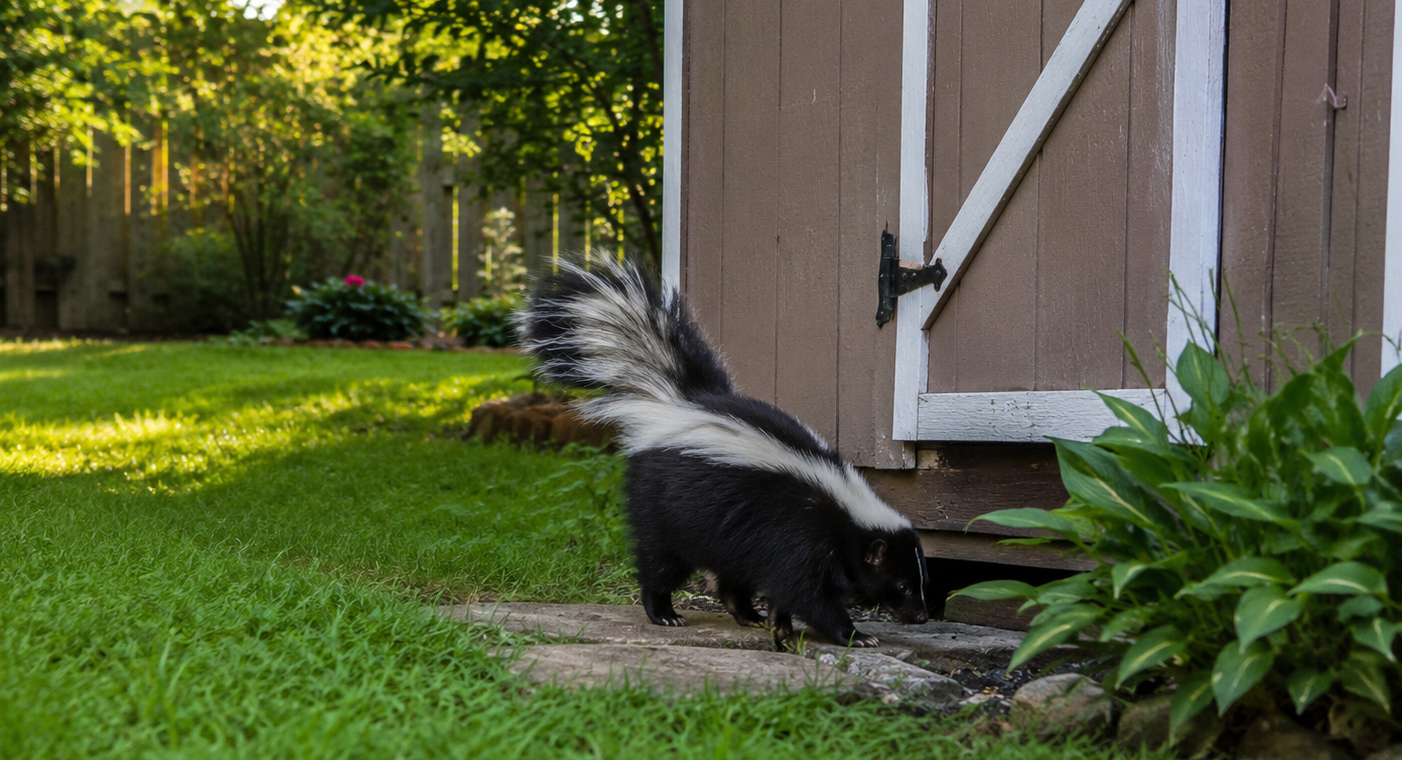
If you’ve ever noticed a skunk moving into your backyard, you might wonder why they’re so drawn to spaces like the area under your deck or shed. The truth is, skunks are looking for protection and comfort, especially during the warmer months. Summer is prime time for these animals to establish a safe place to rest, raise their young, and escape predators. Decks and sheds provide shade from the heat, safety from other animals, and an abundance of nearby food sources like insects, grubs, and even your trash cans if they can access them. These spaces are like perfect little havens for skunks, making your property an attractive option for them to settle down.
You might not think about it often, but your backyard could be offering just what skunks need. Skunks are digging to create burrows where they can stay cool and hidden. However, while they may seem harmless, having skunks this close to your home can become a problem, especially if they spray or dig up your yard searching for food. That’s where we come in. At Skedaddle Humane Wildlife Control in Niagara, we specialize in helping homeowners like you resolve skunk issues safely and humanely.
We’ll share why these critters are picking your property, the risks they pose, and most importantly, how our professional wildlife removal process can help restore your peace of mind. With our help, you can protect your home and ensure skunks stay where they belong—out in the wild. Keep reading to find out how we can support you and your family in keeping your yard skunk-free this summer.
Why do skunks dig under decks?
Skunks dig under residential structures because the soil is typically soft, and the overhead structure provides an instant, sturdy roof for their den. Once they hollow out a space, they gain a secure environment that is completely hidden from larger predators and extreme weather. Rather than sleeping out in the open, they prefer the safety of a pre-built shelter that only requires a little bit of excavation to become a perfect home.
When a female needs to prepare for her babies, she looks for spaces that are completely isolated from foot traffic. Your backyard provides a surprisingly quiet sanctuary, especially underneath heavy wooden platforms. The area beneath a low-to-the-ground structure remains undisturbed by lawnmowers, playing children, or neighbourhood pets. This isolation is precisely what a mother requires to nurse her offspring in total peace.
The soft dirt found near home foundations makes the excavation process incredibly easy for their sharp claws. Because they are not strong climbers, they must rely on ground-level shelters to survive. A hollow space below a wooden platform offers immediate ground-level access, meaning they do not have to struggle to reach their front door.
Nesting and Raising Kits
Summer is the most important time of year for skunks, as it is when they raise their babies. Finding the right place to nest is critical to keeping their kits safe and alive during this vulnerable period. Below are some key factors that make certain locations ideal for skunks to raise their young:
- Dark and Quiet Environments: A mother skunk actively searches for a space where light barely reaches, ensuring her babies stay hidden from the outside world. The space beneath a low platform blocks out streetlights and the glaring summer sun. You will often find that the less you use a particular outdoor building, the more attractive it becomes to wildlife. This total darkness provides a calming atmosphere that allows the mother to leave her babies safely while she forages at night.
- Protection from the Elements: Summer storms can bring heavy rain and strong winds that easily flood exposed burrows in open fields. A solid wooden floor acts as a waterproof umbrella, keeping the den completely dry during severe weather. The babies stay warm and comfortable regardless of how much rain falls in the surrounding yard. You can clearly see why a skunk would prefer a dry, covered home over a wet, muddy hole in the forest.
- Safe Space for Development: The babies, known as kits, are born blind and deaf, making them entirely dependent on a secure hiding spot. An enclosed space prevents wandering predators from spotting or reaching the helpless offspring. You provide an unintentional fortress when the base of your shed sits just inches above the soil. This tight clearance means only skunks can squeeze through, effectively blocking larger threats from entering the den.
Optimal Digging Conditions
The ground beneath your shed provides the perfect environment for skunks to dig and create their dens. Soft soil makes it easier for them to burrow quickly and stay hidden from predators. Combined with the protection of the shed above, this creates a safe and stable home for their young.
- Loosened Foundation Soil: Construction projects usually require digging and backfilling, which leaves the earth permanently softer around the edges of a building. When you water your garden or lawn nearby, the moisture keeps the dirt loose and pliable. Skunks possess long, powerful front claws designed specifically for scraping away loose earth. They can effortlessly move large amounts of dirt in a single evening, creating a spacious tunnel before the sun comes up.
- Ready-Made Roofs: Creating a den in an open field requires the skunk to dig deep enough to form a stable ceiling that will not collapse. When they burrow under a concrete slab or wooden joist, the ceiling is already constructed for them. This saves them a massive amount of energy and time during the hot summer months. You will notice that the entrance holes are usually placed right up against the solid edge of the structure for maximum structural support.
- Hidden Entrance Points: A burrow needs a discreet entrance to keep unwanted visitors away from the main living chamber. Shrubbery, tall grass, and decorative lattice work commonly surround the base of outdoor structures, offering excellent camouflage. Skunks use your garden plants as a natural curtain to hide their front door. You might not even notice the hole for weeks because the landscaping completely obscures the newly excavated dirt.
Proximity to Food Sources
Your property acts as a fully stocked grocery store for neighbourhood skunks. Living right next to their primary food source allows them to minimize the time they spend searching for meals.
You will often find that lush, green lawns are packed with their absolute favourite summer treat. White grubs live just beneath the grass, providing a high-protein diet that helps mothers produce enough milk for their young. They will roll back small patches of turf during the night to feast on these insects. Living under a nearby deck means they only have to walk a few feet to enjoy a massive nightly banquet.
Bird feeders and fruit trees also drop a steady supply of easy meals directly onto the ground. These creatures are opportunistic eaters, meaning they will happily consume fallen seeds, berries, or even pet food left outside. When their home is located directly adjacent to a spilled bird feeder, they can eat their fill without burning any excess calories. You are inadvertently providing a five-star dining experience just steps from their bedroom.
Garbage cans stored along the side of the house add another layer of convenience to their living situation. If a bin tips over or lacks a secure lid, the skunk can quickly grab food scraps and retreat to the safety of its den. They prefer to live where the commute to food is shortest. By nesting under a nearby shed, they ensure they never have to travel far into dangerous, open territory.
Temperature Regulation
Temperature regulation is very important for skunks to survive in different environments. These animals use fur, feathers, or fat to stay warm in cold weather and cool down in the heat. They also look for shelter or change their behaviours, like resting during the hottest parts of the day, to keep their bodies comfortable.
- Escape from Direct Sunlight: The blazing afternoon sun can quickly elevate a skunk’s body temperature to dangerous levels. The deep shade provided by an outdoor structure offers an immediate, significant drop in temperature. You will often feel a cool breeze if you place your hand near the gap of an elevated floor. This constant shade prevents the den from turning into an oven during the hottest parts of the day.
- Cooling Effect of the Earth: The soil located a few feet underground remains consistently cool, even when the surface grass is scorching hot. By digging a shallow trench beneath a shaded floor, the animal presses its belly against the cool dirt to lower its body temperature. You can think of this space as nature’s air conditioning system for wildlife. The combination of shade and cool earth creates the most comfortable environment available in a residential neighbourhood.
- Stable Climate for Babies: Young offspring cannot regulate their own body temperatures effectively during their first few weeks of life. A den that fluctuates wildly in heat could be fatal to the nursing babies. The insulated pocket beneath a shed maintains a steady, moderate climate regardless of the weather above ground. You are essentially providing a climate-controlled nursery that guarantees the babies stay healthy and comfortable all summer long.
Challenges in Niagara During the Summer
Niagara features a unique blend of urban development and rich natural landscapes, creating a high level of wildlife activity. The warm, humid summers in the region lead to an explosion of insect populations, which draws hungry wildlife directly into residential communities. As neighbourhoods expand, natural habitats shrink, forcing these creatures to seek shelter in human-made environments.
You will find that older properties in Niagara often have aging wooden structures with small gaps that invite wildlife inside. The frequent summer rainstorms in the area also drive skunks to seek higher, drier ground beneath elevated porches. Because the region is so densely populated, these creatures have adapted to living in close proximity to humans without fear.
Our local environment perfectly supports their lifecycle, making property invasions incredibly common between May and September. Understanding these local factors helps explain why so many homeowners in the region wake up to find newly excavated holes in their backyards.
Professional Removal and Prevention with Skedaddle
When a skunk decides to make your property its home, professional intervention is the only safe and permanent solution. Our professional wildlife team handles the entire process from start to finish, ensuring the mother and her babies are treated humanely.
We conduct a thorough inspection of your property to identify exactly where the skunk is living and how it gained access. Our technicians utilize specialized one-way doors that allow the wildlife to exit the den safely, but physically prevent them from re-entering. This humane approach ensures the creature can leave on its own terms without the stress of live trapping. Because we do the work for you, you never have to worry about coming face-to-face with an upset skunk.
Once the den is completely empty, our team focuses on long-term prevention to secure your property. We install heavy-duty, galvanized steel screening deep into the ground around the perimeter of your structures. This barrier stops any future skunks from attempting to excavate a new home in the same spot. We take pride in delivering lasting results that protect your yard and give you complete peace of mind.
Frequently Asked Questions
What should I do if I see a hole under my porch?
It’s important to avoid approaching the hole or trying to fill it in on your own. Doing so could disrupt the skunk or even lead to an unwanted encounter. Instead, call our professional team immediately so we can carefully inspect the area, assess if the den is currently in use, and decide on the safest, most effective solution to resolve the issue.
Can skunks cause structural damage?
Yes, certain animals can cause structural problems over time. Their digging can weaken the foundation of smaller or lighter outdoor structures. If left unchecked, the loose and shifting soil can lead to sagging floors, damaged decking, or even cracked concrete footings, potentially requiring costly repairs.
Will the skunk leave on its own eventually?
Although some skunks might leave after their babies grow, others could remain if conditions are right. For example, they may stay through the winter if the den is warm and comfortable. Additionally, even if they vacate, an empty den often becomes an attractive home for new skunks unless it is sealed properly by our professionals.
Are my pets safe in the yard?
For the safety of your pets, it is best to keep them away from any suspected den areas. Curious pets like dogs or cats might disturb a resting skunk, which could lead to injury or an unpleasant spray encounter. Our trained professionals can handle these situations safely, allowing you and your pets to enjoy your yard worry-free.
Skunks Love Your Deck and Shed, Lets Stop Them
Dealing with wildlife in your home or on your property can feel overwhelming, but you don’t have to face it by yourself. Skunks often move into human spaces because they need food, warmth, or shelter. While they may not mean any harm, these animals can cause damage to your property and create unsafe conditions for your family. That’s why it’s important to act quickly and seek help from our professionals who understand how to remove wildlife in a safe and humane way.
At Skedaddle Humane Wildlife Control in Niagara, we specialize in solving these problems for homeowners just like you. Our team knows how to handle various types of animals, from raccoons and squirrels to birds and bats, without harming them. Once the animals are removed, we will also seal up the entry points they used to make sure they don’t come back.
Your safety and peace of mind are our top priorities. Don’t wait for the problem to get worse, reach out to Skedaddle today and request an estimate. We’re here to provide professional support and long-lasting solutions, so you can enjoy your space without any unexpected skunks. Trust us to protect your home and help you take back control.

 Loading...







