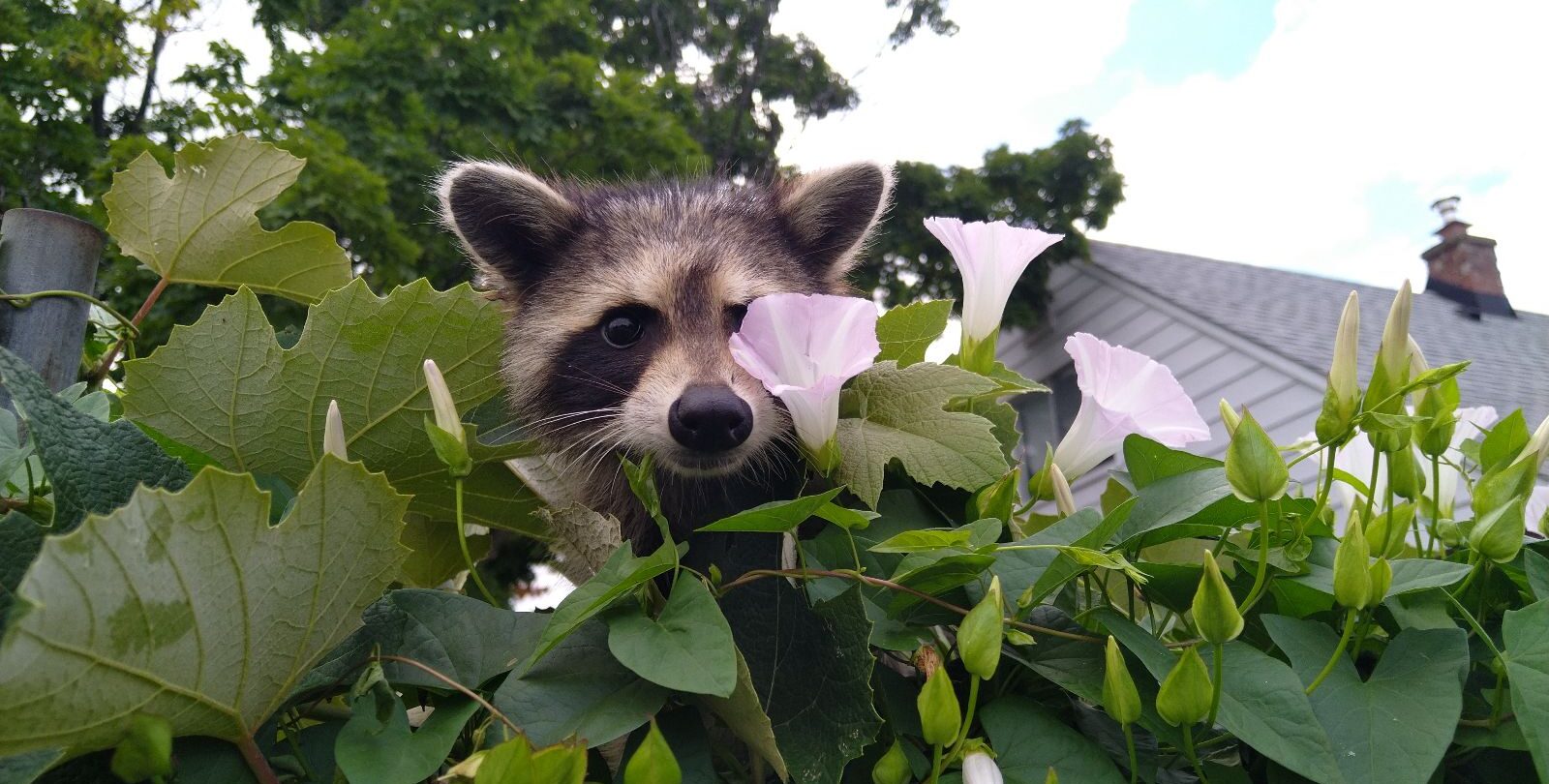
You hear scratching in the attic. You get it checked out. The opening gets sealed. Problem solved — right? Not always. If you live in a semi-detached home in Durham, fixing one side of the building doesn’t always end the problem. These animals don’t stop at property lines, and the structure you share with your neighbour gives them plenty of ways to keep moving.
Yes, wildlife can travel between semi-detached homes. Raccoons, squirrels, and other common Durham species move across shared rooflines, through gaps in soffits and fascia, and through small openings in the wall that divides both halves of the building. If your neighbour hasn’t dealt with their side, sealing your entry point often just sends these animals next door instead of away.
At Skedaddle Humane Wildlife Control in Durham, we see this happen all the time. In this blog, we explain how these animals move between semi-detached homes, why fixing only one side rarely works, and what a proper job looks like when the whole shared structure is involved.
What Wild Animals Are in Durham?
Durham is home to many wildlife species that regularly show up on residential properties. Raccoons are the most common — they’re bold, quick to adapt, and very good at finding weak spots on homes across the city. Squirrels are the second most common reason our team gets called out for attic problems, especially in areas with big trees that give them easy access to rooflines. Skunks, opossums, and birds also come up regularly across Durham neighbourhoods.
What makes Durham different from many other cities is how many animals live here relative to the number of homes. Green spaces, ravines, and mature trees across the city support large wildlife populations that have learned to live alongside people. These animals know the neighbourhoods well — they know where food is easy to find, which rooflines are easy to climb, and which types of homes offer the best shelter.
Semi-detached homes are especially attractive to wildlife because of how they’re built. The shared structure gives these animals more surface area to work with and more spots where two materials meet and wear down at different rates — creating gaps you won’t find on a detached home. In older neighbourhoods like The Annex, Leslieville, Riverdale, and East York, where homes are older and trees are large, our team gets a high number of calls throughout the year.
How the Shared Roofline Becomes a Highway
The roofline of a semi-detached home runs straight across both halves of the building. There’s no gap, no break, and nothing stopping movement between your side and your neighbour’s. For a raccoon or squirrel on your roof, that connected surface is a clear, open path from one side to the other.
Here’s what our team checks along the shared roofline during every semi-detached inspection in Durham:
- The Ridge Line Where Both Roofs Meet: On most semi-detached homes, the roof ridges of both halves come together at a shared peak or along a common wall. Small gaps often open up here as the home ages and materials shift with temperature changes through the seasons. These gaps are one of the first things our team looks for because they’re among the most common entry points we find. We check the full ridge line on both halves during every inspection and seal every gap with materials that hold up over time.
- Aging Shingles and Lifted Flashing Near the Shared Wall: Where the roofline meets the wall between both units on the outside, the flashing and shingles move more than anywhere else on the roof. Over time, flashing lifts and shingles shift — creating small openings that are hard to see from the ground but easy to reach from the roof. Our team checks this area up close during every inspection rather than trying to spot it from street level.
- Roof Vents and Exhaust Covers on Both Halves: Vents and exhaust covers on both sides of a semi-detached home are potential entry points, no matter which half these animals are currently using. A raccoon or squirrel that gets blocked from one side will move along the shared roofline and test every vent on both halves. Our team checks every vent cover during the inspection and replaces any that are cracked, warped, or pulling away from the frame.
Soffits, Fascia, and the Hidden Highway Under the Roof Edge
Soffits are the panels that run along the underside of the roof overhang. On a semi-detached home, they connect both halves of the building in one continuous run — with no break between your side and your neighbour’s. Where the soffit and fascia have aged, pulled apart, or been damaged over time, they create a hidden entry point right at the roofline. Our team checks the full run of the soffit on both halves during every semi-detached inspection in Durham.
- Gaps Where the Soffit Has Pulled Away From the Fascia: Over time, the soffit panel separates from the fascia board as materials expand, contract, and wear down through the seasons. Even a small gap along this edge is enough for a squirrel to push through and get into the attic above. Because the soffit runs across both halves of the building, a gap that starts on your neighbour’s side can lead straight into your attic. Our team checks the full length of this joint on both halves and seals every gap found with materials that last.
- Squirrels Following the Soffit Line Across Both Properties: Squirrels move along the underside of the roofline looking for any spot where the soffit has weakened or where a vent cover has worn down. They can travel from your neighbour’s side all the way to yours without ever touching the ground or climbing a separate structure. A squirrel that gets blocked from one entry point will just keep moving along the soffit line until it finds the next one. Our team tracks this movement during every inspection and checks every weak spot across the full shared run.
- Raccoons Pulling at Soffit Corners and Edges: Raccoons use their hands to test soffit corners and edges where the material has softened or where fasteners have come loose over time. A corner that looks fine from the ground can be easy to pull open from the roof, especially on older homes that have been through many seasons of weather. Our team checks these corners at roof level during every semi-detached inspection rather than relying on a view from the street. Every weak spot found on either half gets addressed as part of the full plan.
The Party Wall: What’s Happening Inside the Shared Structure
The party wall is the inside wall that divides both halves of a semi-detached home. Up in the attic, this wall doesn’t always go all the way to the roof deck — there are often small gaps or open spaces where the two attic areas connect. These openings are hard to spot without a close inspection, but they show up regularly in older Durham homes.
When there’s a wildlife problem on one side and the entry point gets sealed without checking the party wall, these animals often find their way through those internal gaps into the attic next door. The party wall becomes the easiest path — they’ve already been using this area, the scent is still there, and pushing through a small gap is much easier than finding a new way in from outside.
This is a big reason why our team always checks both sides of a semi-detached home on every call, no matter which half the person who called us lives in. The condition of the party wall is a key part of the full picture, and skipping it means the exclusion plan isn’t complete.
What Happens When Only One Neighbour Fixes the Problem
This is one of the most common situations our team runs into across Durham’s semi-detached neighbourhoods. One homeowner calls us, we do a full exclusion on their half — and within a season or two, the problem is back. Not because the work wasn’t done right, but because the other half was never addressed.
Here’s what tends to happen when only one side of a semi-detached home is treated:
- These Animals Simply Shift Over: A raccoon or squirrel that has been using your shared roofline regularly won’t give up just because one entry point was sealed. They move along the roofline, find the next open spot — often on your neighbour’s side — and keep using the same general area. The shared structure keeps them close to your attic, and they’ll keep testing your exterior for any new gap that opens up.
- The Scent Signal Keeps Pulling Them Back: Even after a successful exclusion on one half, the scent left behind in the attic keeps attracting these animals to the outside of the building. If the other half still has an open entry point, they find it and use it — and before long, a new group is set up right next door, separated from your attic only by the party wall.
- New Entry Points Develop Over Time: Older Durham homes change constantly as materials wear down and the structure settles with the seasons. A roofline that was fully sealed two years ago may have new small gaps by now — especially if the other half continues to have active wildlife pressure on it. Our team recommends checking semi-detached homes regularly for this reason, because the exclusion work is only as strong as the weakest point on either half.
Wildlife Removal and Prevention with Skedaddle
When our team arrives at a semi-detached home in Durham, the inspection covers both halves of the structure — the full roofline, every soffit and fascia panel, every vent cover on both sides, and the party wall up in the attic. We find every active entry point and every weak spot, and we plan out the full job before any work starts.
Our exclusion process uses one-way door systems at every active entry point. These let the animals leave the structure on their own but stop them from getting back in. Once both sides are confirmed clear, we seal every opening for good with heavy-gauge steel mesh and strong materials that hold up against persistent testing from outside. All cleanup of droppings and nesting material is done entirely by our team — homeowners should never go near any of this without the right protective gear. If you hear sounds in your attic, call us right away and stay out of that area until our team arrives.
Wildlife Concerns in Durham
Durham’s older semi-detached neighbourhoods come with a specific set of challenges our team deals with every season. The mix of aging homes, large trees, and a dense urban wildlife population creates steady, predictable patterns of activity — and semi-detached homes tend to see repeat problems because the shared structure offers so many more ways in than a detached home does.
Spring is our busiest season across Durham, as female raccoons and squirrels look for warm, safe spots to have their young. Attics in semi-detached homes are among the most common targets because they offer exactly what a nesting female needs: warmth, shelter, and safety from predators. The timing of maternity season also affects when certain exclusion work can be done, which is something our team checks at every property.
Durham’s winters play a role too. Freeze-thaw cycles through the season cause roofing materials to expand and contract over and over, which can open up small gaps in soffits, flashing, and vent covers that weren’t there the previous fall. A home that was checked in autumn may have new weak spots by late winter, especially on older properties where the materials have been through many of these cycles. Our team factors seasonal timing into every inspection and every recommendation we make.
Frequently Asked Questions
Can a raccoon chew through the party wall between two semi-detached homes?
Yes. Raccoons can chew through wood, drywall, and softer building materials, especially if they've been using a nearby roost and are looking for another way in. If one half of a semi-detached home has been sealed, the party wall can become their next target. Our team checks the party wall during every semi-detached inspection.
Do I need my neighbour's permission for Skedaddle to inspect both sides?
Our team can only access the half you own and have given us permission to work on. That said, our inspection of your half includes checking the party wall from your side of the attic and identifying shared weak spots on the exterior roofline. We'll let you know what we found and suggest your neighbour reach out to us as well.
How do I know if wildlife is moving between my attic and my neighbour's?
Watch for sounds that seem to move around in the attic, activity that starts up again shortly after an entry point was sealed, or signs of new scratching or chewing near the party wall. If any of these happen after a previous exclusion, call our team — the problem may have shifted rather than stopped.
How long does a wildlife exclusion take on a semi-detached home?
The inspection and one-way door installation can usually be done in one visit. The exclusion itself takes a few days as the animals leave on their own through the one-way devices. Sealing and cleanup follow once our team confirms both sides are clear. The full timeline depends on the size of the job and whether both halves are being treated at the same time.
What should I do if I think my neighbour's wildlife problem is affecting my home?
Call our team and have your side inspected as soon as you can. Don't wait to see if it clears up on its own - it won't. The sooner both sides of the structure are looked at, the simpler the exclusion process will be. Our team will tell you what we found on your half and recommend next steps for the full structure.
One Side Is Never the Full Picture — Let’s Look at Both
If you’ve dealt with a wildlife problem in your semi-detached home before, you already know how fast it comes back when the full structure isn’t dealt with. The shared roofline, soffits, and party wall connect your home to your neighbour’s in ways that make a one-sided fix a short-term solution at best. These animals don’t respect property lines, and the structure you share gives them more ways to keep moving than most homeowners expect.
At Skedaddle Humane Wildlife Control in Durham, we inspect both halves of every semi-detached home we’re called to – not just the side where the problem was first noticed. Our team finds every entry point and weak spot across the full shared structure, installs one-way exclusion devices at every active opening, and seals everything for good once they’re out. All cleanup is handled entirely by our team, homeowners should never go near droppings or nesting material without proper protective gear. You don’t have to sort any of this out on your own. Request an estimate today and let our team put together a complete plan for your property.

 Loading...







