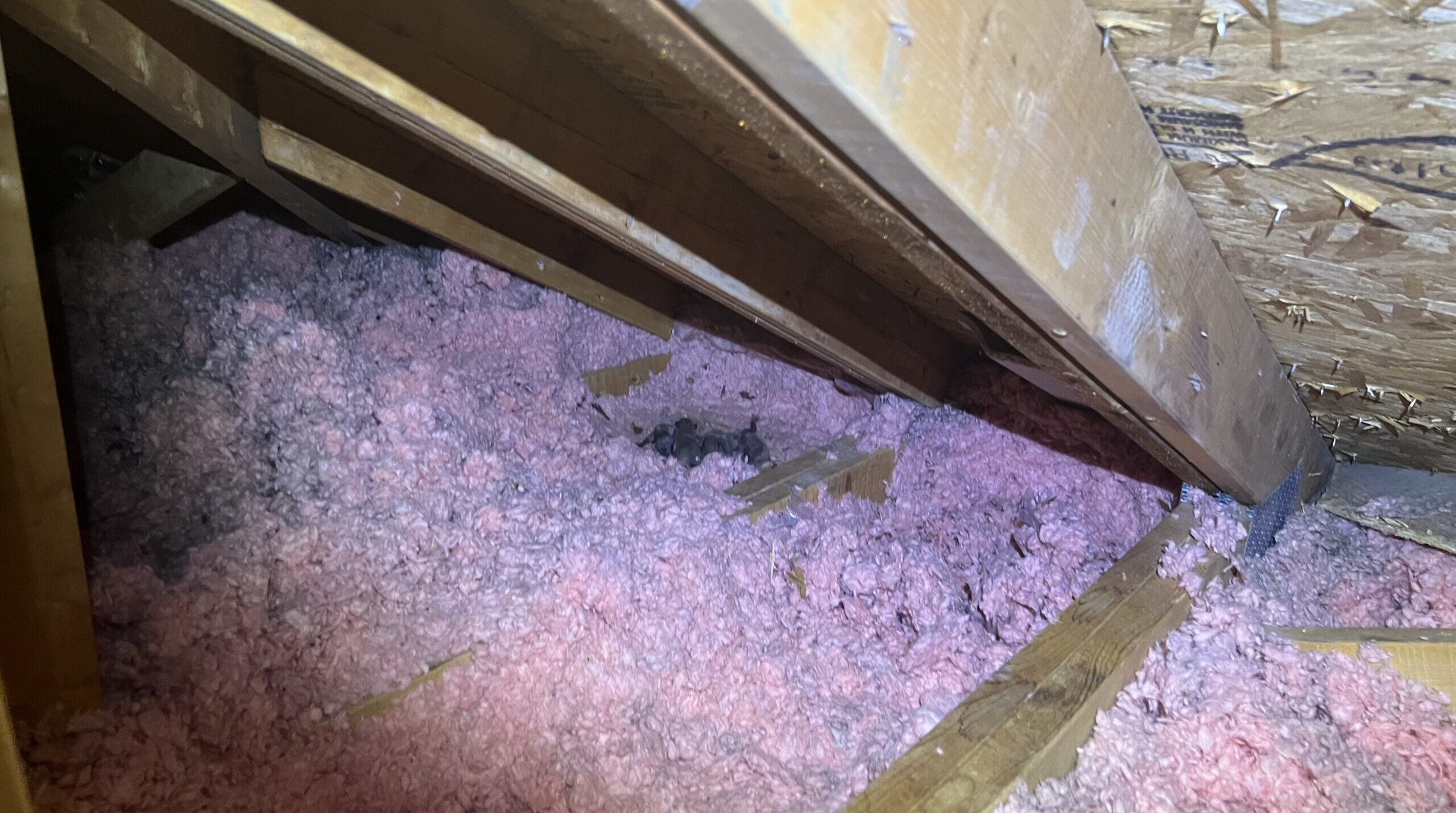
You open the attic hatch and know right away something is wrong. The insulation looks flattened. There is a dark stain on the wood above you. Something smells off. You are not sure if a pipe leaked, if the roof let in water during the last storm, or if something has been living up there. The signs can look similar at first, but they point to very different problems.
The good news is that wildlife damage and water damage leave behind different clues. Wildlife activity tends to show up as concentrated stains, strong smells, disturbed insulation, nesting materials, and physical damage to vents and soffits. Water damage creates wider staining patterns, uniform moisture, compressed insulation, and signs of mould growth that follow the path of the leak. Knowing which one you are dealing with is the first step toward getting the right help.
At Skedaddle Humane Wildlife Control in London, Ontario, we inspect attics across the area every season and see both types of damage – sometimes at the same time. In this blog, you will learn exactly what to look for to tell the difference, why both problems sometimes show up together, and why calling our team at the first sign of attic damage is the most important step you can take.
Can Wildlife Damage an Attic?
Yes, and the damage these animals cause can be significant in a short amount of time. Raccoons, squirrels, and mice can all tear through insulation, chew electrical wiring, claw open vent covers, and leave behind droppings and urine that contaminate the whole space. A single animal in an attic over one season can cause damage that is expensive and time-consuming to repair.
The damage is not always easy to spot right away. These animals often get in through small gaps that are nearly invisible from the ground, and they do most of their moving around at night. By the time a homeowner notices sounds overhead, stains on the ceiling, or a persistent smell from the attic, the activity has often been going on for weeks. The longer it continues, the more the damage spreads.
Wildlife damage and water damage are not the same even though both can stain wood, flatten insulation, and create bad smells. Telling them apart matters because the fix is completely different. A water leak needs a roofer. An active wildlife situation needs professional removal, sealing, and decontamination. Treating one like the other means the real problem stays in place and the damage keeps getting worse. Call our team at Skedaddle if you are not sure which one you are dealing with; we will assess the full picture and tell you exactly what is going on.
Stains and Discolouration
The stains left behind by wildlife and water look different once you know what to watch for. Here is how to tell them apart:
- Wildlife Stains Are Dark and Concentrated in Specific Spots: Urine from raccoons, squirrels, and mice leaves dark, concentrated stains on wood and insulation. These stains tend to show up in the same spots repeatedly, along travel routes, near nesting areas, and at entry points. Grease marks and rub stains also appear on beams where these animals move through the same path again and again. Those rub marks are a clear sign of wildlife activity and do not come from water.
- Water Stains Are Wider and Follow a Path: Water damage creates broader staining that follows gravity – down rafters, across ceiling boards, and along the path the water took before it stopped. The stains are usually yellowish-brown or grey and have a ring-like edge where the moisture dried. They tend to spread outward from the source of the leak rather than sitting in one spot. If you see staining that fans out from a single point near a roof vent or flashing, water is the more likely cause.
- Both Can Show Up at the Same Time: When these animals chew through roof vents or pry open soffits to get inside, they create openings that let rain and snow in too. That means one attic can have both concentrated wildlife stains near nesting areas and broader water stains near the damaged entry point. Our team looks for both types of damage during every inspection so nothing gets missed.
Odours
The smell in your attic can tell you a lot about what caused the problem. Wildlife damage and water damage each produce a very different type of smell.
Wildlife activity produces a strong, sharp smell that most people notice right away. Urine from raccoons and squirrels has a heavy ammonia-like quality that is hard to miss. Mouse urine has a similar but slightly different musky smell that builds up over time in enclosed spaces. Droppings add to the overall odour, and nesting material soiled with waste creates a layered, persistent smell that does not go away on its own. If the smell in your attic makes you think of a barn or a kennel, wildlife is almost certainly involved.
Water damage produces a very different smell: musty, earthy, and stale. That smell comes from mould and mildew that grow when moisture sits for too long. It is not sharp or ammonia-like. It is damp and lingering, like a basement that never fully dries out. Mould smell tends to spread throughout the attic rather than concentrating in one spot, and it often gets stronger in humid weather. If the attic smells like damp earth and old paper, water and mould are the more likely cause.
When both smells are present at the same time- a sharp biological odour mixed with a musty dampness- it is a strong sign that wildlife activity has led to water getting in. These animals create the opening, rain follows, and the mix of waste and moisture creates conditions for both types of damage to develop side by side. Our team knows what to look for in both cases and can quickly tell which problem is driving the damage in your attic.
Insulation Conditions
Insulation tells a clear story about what has been happening in your attic. Here is what different conditions mean:
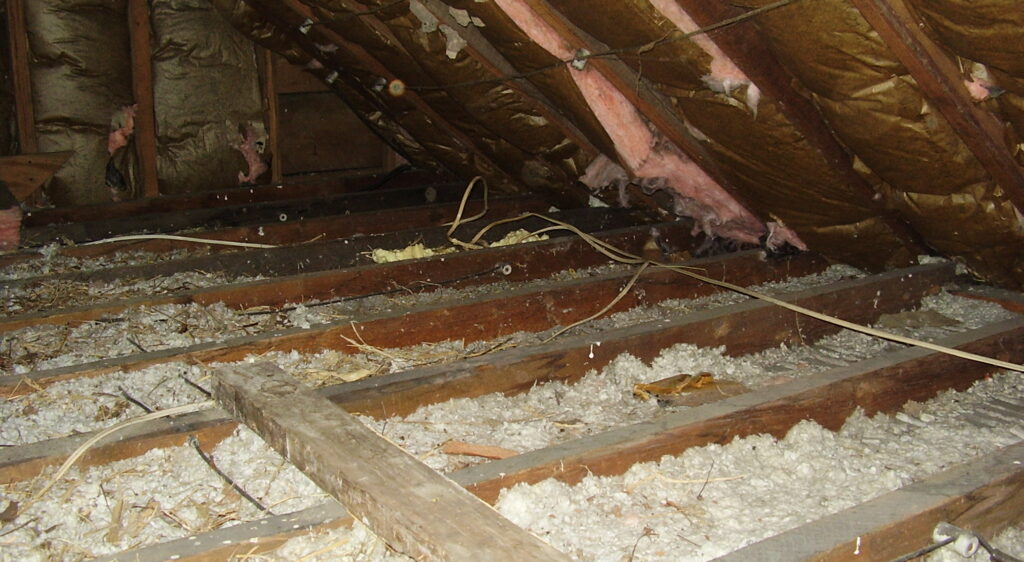
- Trampled or Tunnelled Insulation Points to Wildlife: Wildlife moves through insulation the same way every time, flattening it, pushing it aside, or tunnelling through it to create paths and nesting areas. You will see clearly defined paths through the insulation that follow regular routes, and spots where insulation has been mounded or piled to build a nest. Missing chunks are also common, as these animals pull material away for nesting. None of this happens from a water leak; insulation does not rearrange itself.
- Flat, Matted Insulation Points to Water: Insulation that has been soaked by water becomes heavy, compressed, and flat. It loses its ability to hold air and regulate temperature, and it stays matted down even after it dries. Water-damaged insulation does not show tunnels or paths, it just looks uniformly flattened in the area where the moisture collected. If the compression covers a wide area directly below a roof penetration, water is the most likely cause.
- Contaminated Insulation Needs Professional Handling: Whether the insulation has been damaged by wildlife or water, it needs to be professionally checked before anyone touches it. Insulation contaminated by wildlife droppings carries health risks from bacteria and parasites. Insulation damaged by water can hold mould spores that go into the air when disturbed. Homeowners should never try to remove or handle attic insulation after a wildlife or water situation. Call our team and let us assess the damage safely.
Nesting Materials
The presence of nesting materials is one of the clearest signs that wildlife, not water, has been in your attic. Here is what to look for:
- Wildlife Nests Are Made of Gathered Materials: Wildlife builds nests from whatever they can find and carry, shredded insulation, leaves, twigs, cardboard, fabric, and other debris. Nests are found in corners, along wall edges, or tucked under roof rafters where the animals feel safe and sheltered. A clearly defined pile of mixed materials in the corner of an attic is almost always a wildlife nest. Water does not create piles of organic material, it only damages what is already there.
- Nesting Activity Destroys a Wide Area of Insulation: A single nesting pair, and especially a female with young, can damage a large area of insulation as they gather material and shape the nest. That destruction spreads outward from the nesting spot and can cover a big section of the attic floor over a full season. Our team maps the full extent of nesting damage during every inspection because what looks like a small nest from one angle is often part of a much larger disturbed area.
- Nesting Near Electrical Wiring Creates a Fire Risk: Wildlife do not think about what is nearby when they pick a nesting spot, they just look for warm, enclosed areas with material they can use. That means nests frequently end up close to electrical wiring, and the chewing that happens around a nest often damages nearby wires. Dry nesting material packed next to exposed wiring is a real fire hazard. Our team checks for wiring damage in and around every nesting area found during an inspection.
Roof Damage and Moisture Deterioration
The type of damage to your roof and the wood in your attic is another reliable way to tell the two problems apart. Here is what each type looks like:
- Wildlife Damage Is Concentrated at Entry Points: Animals create damage at specific spots, chewed vent covers, clawed soffit edges, pried-open fascia boards, and torn roof membrane where they forced their way in. That damage is localized and shows clear signs of physical force, tooth marks, claw scratches, and displaced material. Wood rot near a wildlife entry point tends to be concentrated right around the opening rather than spread across a wide area.
- Water Damage Is Spread Across the Affected Zone: Water-related roof damage includes rotting roof decking, rusted fasteners, deteriorated underlayment, and sagging boards in the area where water has been collecting. The damage spreads outward from the source of the leak and covers a broader area than a single entry point. Peeling paint, warped wood, and black mould growth on roof sheathing are all signs of moisture that has been sitting there over time, not physical force from an animal.
- Wildlife Entry Points Let Water In Too: When these animals chew through a roof vent or tear open a soffit edge, that opening becomes a water entry point as well. Rain, snowmelt, and ice all follow the same gap into the attic, combining wildlife damage with water damage in the same spot. Our team addresses both the structural damage caused by the animal and the water entry that follows as part of every job that involves a compromised roofline.
Key Behavioural Differences
Beyond the physical signs, there are behavioural clues that help show what happened in your attic. Here is a quick breakdown:
- Indicators of Wildlife Activity: You will hear scratching, thumping, or scurrying sounds, usually at night when these animals are most active. Chewed wires, gnawed pipes, and droppings along travel routes are all signs of active wildlife. The sounds tend to come from a specific area of the ceiling and happen on a regular schedule based on the animal’s patterns. If the sounds are loudest at dusk and dawn, a raccoon or squirrel is likely involved. If they are constant and scattered, mice are a more probable cause.
- Indicators of Water Leaks: Water damage does not make noise, it just shows up visually over time. Staining that gets worse after a rainfall, ceiling drywall that sags or feels soft, and a musty smell that gets stronger in humid weather are all water-related signs. There are no sounds, no movement, and no droppings. The damage is slow and steady rather than concentrated and physically disruptive.
- How They Intersect: Wildlife and water damage often happen together because these animals create the openings that let water in. A chewed vent cover or pried-open soffit that goes unrepaired becomes a water entry point every time it rains. Over time, the structural rot from water widens the opening further, making it easier for more animals to get in. Our team always checks for both types of damage during an attic inspection because fixing one while the other is left in place does not fully resolve the situation.
Wildlife Concerns in London, Ontario
London’s mix of older neighbourhoods, mature trees, and green corridors along the Thames River creates steady wildlife pressure on homes across the city. Raccoons, squirrels, and mice are all active in London year-round, and the city’s older housing stock with aging rooflines, original wood trim, and worn vent covers gives these animals the kind of accessible entry points they are built to find and use.
Spring and fall are the two busiest seasons for attic entry in London. Spring brings pregnant females looking for warm, enclosed nesting spots. Fall drives these animals toward the warmth of interior spaces as temperatures drop. London’s cold, wet winters also speed up the kind of roofline wear that creates entry points; freeze-thaw cycles crack mortar, loosen flashing, and pull soffit panels away from the structure, opening up gaps that were not there the season before.
The situation our team responds to most often in London is a homeowner who noticed staining or damage in the attic and was not sure whether to call a roofer or a wildlife removal company. In many cases, both are eventually needed, but the wildlife situation has to be resolved first. Sealing a roof without removing the animals inside traps them. Repairing water damage without fixing the entry point that caused it means the next rainfall creates the same problem again. Our team looks at the full picture so you know exactly what you are dealing with before any work begins.
Wildlife Removal and Prevention with Skedaddle
When you call our team at Skedaddle, we start with a full inspection of your attic, roofline, and exterior. We find every area of wildlife activity, every entry point, and every area of damage, whether it was caused by animals, water, or both. That complete picture is what allows us to tell you exactly what happened in your attic and what needs to happen next.
Once we know what we are dealing with, we address the wildlife situation first. We put one-way doors at the active entry points so these animals can get out on their own but cannot come back. After the attic is clear, we seal every opening with professional-grade materials that hold up against future attempts to get back in. Homeowners should never try to seal entry points on their own, especially if active wildlife may still be present inside.
Cleanup and decontamination are the final steps. Our team removes nesting material, treats contaminated surfaces with professional-grade enzyme cleaners and disinfectants, and checks the insulation damage caused by wildlife activity. You should not enter the attic, handle any droppings or nesting material, or try to assess the damage on your own. Call our team at Skedaddle Humane Wildlife Control in London the moment you notice signs of damage in your attic and let us handle every step safely and completely.
Frequently Asked Questions
How do I know if I need a roofer or a wildlife removal company?
If there are sounds, droppings, nesting materials, or chew marks in the attic, call a wildlife removal company first. The wildlife situation needs to be resolved before any structural repairs are made. If the damage looks like water-only with no signs of biological activity, a roofer is the right first call.
Can wildlife and water damage happen at the same time?
Yes, and it is very common. When these animals chew through a vent or pry open a soffit, the same opening that let them in also lets rain and snow in. Our team checks for both types of damage during every inspection and helps coordinate the right order of repairs.
Is it safe to go into my attic if I think wildlife has been there?
No. Attics with active or recent wildlife activity contain droppings and urine that carry bacteria and parasites. Anyone who goes in without proper protective gear is at risk. Call our team first and let us assess the space safely before anyone goes up there.
How quickly can wildlife damage an attic?
Significant damage can build up in just a few weeks. A nesting female with young can destroy a large area of insulation in a single season. Chewed wiring can become a fire hazard within days of the damage happening. The sooner the situation is found and addressed, the less damage there is to deal with.
Will the smell go away once the wildlife is removed?
Not on its own. The smell from urine and droppings does not go away without professional treatment. Our team uses enzyme-based cleaners that break down the organic compounds causing the smell. Without that treatment, the odour stays and the scent signals left behind can pull new animals to the same spot.
How do I stop wildlife from getting into my attic in the future?
The most reliable prevention is a professional inspection that finds every weak point on the roofline and seals them with materials that hold up against chewing and weather. Our team addresses prevention as part of every job and makes sure the home is fully protected before we are done.
Not Sure What Happened Up There? Call Skedaddle and Find Out
Attic damage is stressful and trying to figure out on your own whether it was an animal or a leak makes it even harder. The signs can look similar, and guessing wrong means the real problem keeps going while the damage gets worse.
The good news is that you do not have to figure it out yourself. That is exactly what our team is here for. We know what wildlife damage looks like, we know what water damage looks like, and we know how to tell them apart quickly and accurately.
Waiting to call only gives the situation more time to grow. More droppings build up, more insulation gets damaged, and more water gets in through any opening that is left unsealed. Every week without our professional assessment is another week of damage adding up.
At Skedaddle Humane Wildlife Control in London, Ontario, our team inspects the full attic and roofline, identifies every type of damage, and tells you clearly what happened and what needs to be done. We handle the wildlife removal, sealing, decontamination, and insulation assessment, all of it. Request an estimate today and let our team give you a clear picture of what is going on and how to fix it completely.

 Loading...