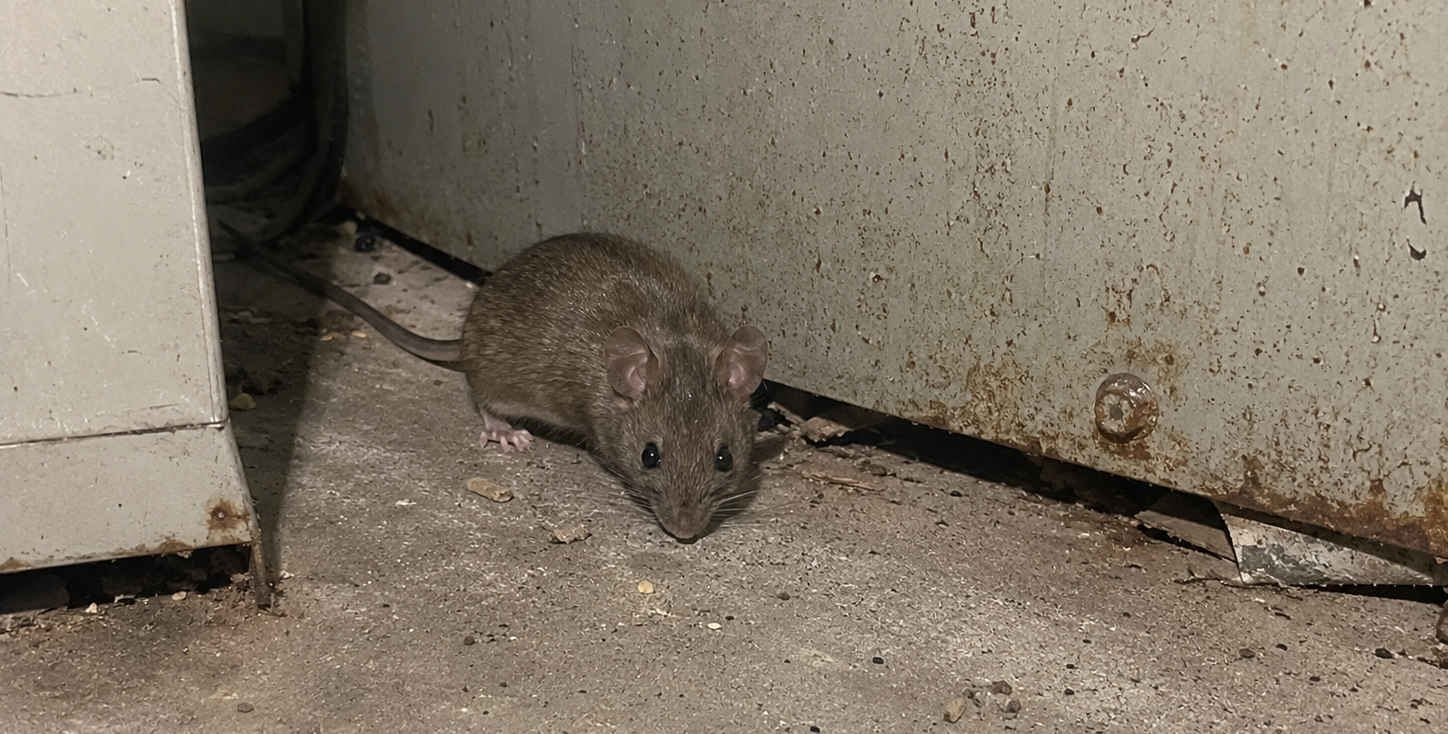
Rats and mice can move between Baltimore rowhouses, and it happens all the time. Rowhouses share walls, floors, foundations, and rooflines. That gives these animals a connected path that runs the full length of the block. A problem in one home is rarely just in that one home.
You might seal a gap in your basement and think the job is done. But if the rodent is coming from two houses away through a shared wall, it will be back in days. These animals follow scent trails and use the same paths over and over. The way Baltimore rowhouses are built makes it very easy for them to move from house to house without ever going outside.
At Skedaddle Humane Wildlife Control in Baltimore, we deal with this kind of block-wide problem all the time. In this blog, we walk you through how these animals move between rowhouses, what the signs look like, and what our team does to find every entry point and stop the problem for good.
What Is Harder to Get Rid Of, Mice or Rats?
Both are hard to get rid of, but for different reasons. Mice are harder to keep out because they can squeeze through a gap the size of a dime. Even a home that looks sealed often has entry points that haven’t been found yet. Rats are harder to remove once they’ve built a large, active population – they’re cautious and smart, and they don’t give up a territory easily.
In a rowhouse, both types create real challenges. Mice move through small gaps in shared walls and floor spaces quickly and quietly. Rats use bigger pathways – around foundation walls, through utility lines, and through basement connections – to get from one home to the next. In many Baltimore blocks, both types are present at the same time, using different routes through the same connected structure.
Neither one is easy to fix without a full inspection and a complete plan. Removing one type without finding all the entry points and without knowing how they’re moving through the block – just means the problem comes back. Our team always looks at the full picture before we put a plan together.
How They Move Through Shared Rooflines, Foundations, and Utility Lines
Baltimore rowhouses are built as one long connected structure. That means the paths these rodents use aren’t limited to just your home. Here’s how they get from one property to the next:
- Through Shared Wall Cavities: The walls shared between rowhouses have hollow spaces inside them and those spaces run the full length of the block. Mice can move through these spaces from one home to the next without ever coming out into the open. A scratching sound in your bedroom wall could be a rodent that got in through your neighbor’s house, not yours.
- Along Foundation Connections: Rowhouse foundations sit right next to each other with very little space in between. Cracks in the foundation, gaps around pipes, and openings in the basement wall all create pathways that connect homes at the ground level. Rodents take the easiest path available and in a rowhouse block, that path often runs straight along the foundation from one end to the other.
- Through Utility Lines and Plumbing: Gas, electric, cable, and water lines run through the walls and floors of every home on the block. Where those lines pass through walls, there are often gaps that weren’t sealed properly. These gaps are small enough to miss but big enough for mice to use as regular paths between properties.
- Across Shared Rooflines: Some animals prefer to travel high up and the roofline of a rowhouse block gives them a long, connected path. Gaps in shared roof walls, openings around rooftop equipment, and worn flashing all create entry points that link neighboring homes. An animal that gets in through one rooftop can reach every attic on the block.
Signs They May Be Moving Between Neighboring Properties
In a rowhouse, the signs of activity don’t always show up where the rodents got in. Here’s what to look for if you think they may be moving between homes:
- Sounds That Seem to Travel: If you hear scratching that seems to move along a wall, instead of staying in one spot – that’s a strong sign something is traveling through a shared wall cavity. The sounds might start in one room and show up in another room a few days later. That kind of moving sound points to a travel path, not a nest in one place.
- Droppings in More Than One Room: Finding droppings in several different rooms, especially on different floors or on opposite sides of the home, means these animals are moving through the house, not just nesting in one spot. In a rowhouse, that movement often goes beyond your home into the one next door. Do not try to clean up droppings yourself – call our team first.
- The Problem Comes Back After You Sealed Something: If you sealed a gap and the activity came back within days, rodents are almost certainly getting in from a different direction, likely through a shared path from a neighboring home. This is one of the most common things we see on Baltimore rowhouse calls. It’s exactly why a full inspection always comes first.
- Fresh Gnaw Marks in Several Spots: Gnaw marks showing up in multiple locations – along baseboards, around pipes, and near utility areas – mean these animals are actively moving through your home’s structure, not just sitting in one spot. The only way to stop it is to find and seal every entry point at once.
Why Treating One Room or Opening Won’t Solve the Problem
In a regular single-family home, sealing one obvious gap can sometimes help. In a Baltimore rowhouse, it almost never does. The connected structure of the block gives rodents multiple ways in. Closing one without finding the rest just sends them to the next opening.
The scent trails they leave behind also keep the problem going. Once a path through a wall or foundation gap has been used, other animals will follow that same scent trail. Even if you remove the animals that are there now and seal one spot, new ones will find the same trail and work their way through nearby gaps until they find a way in. Every entry point has to be sealed at the same time.
That’s why our inspection covers the full outside of your home – not just the room where you first noticed the problem. We check the foundation, every pipe and utility opening, the basement, the shared walls, and the roofline. In rowhouse situations, we also look at the bigger picture – where the activity is likely coming from and which paths are being used to get to your home.
How Alley Garbage, Birdseed, and Pet Food Fuel the Problem
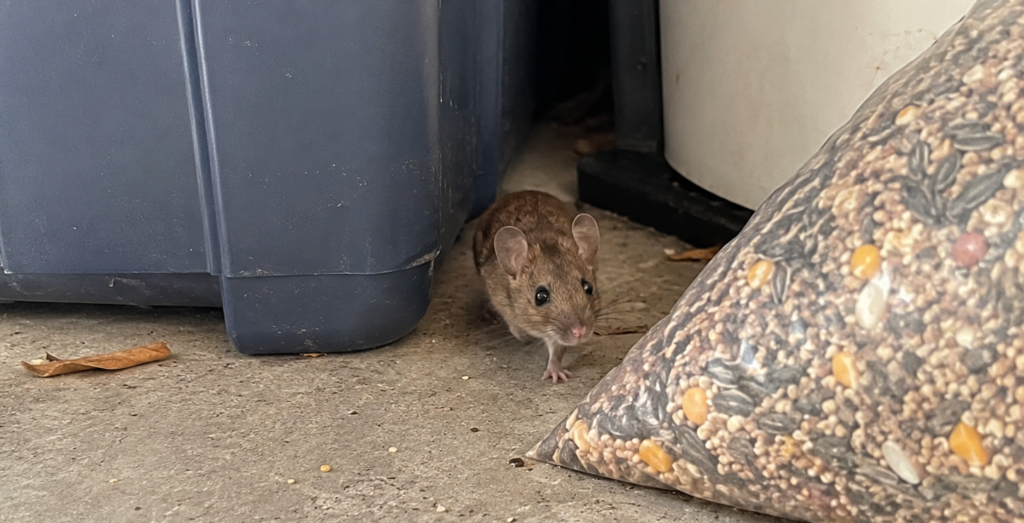
Baltimore’s alleyways are a big reason rodent activity stays so strong in rowhouse neighborhoods. Garbage bins in the alley, especially ones that aren’t fully sealed, give these animals a steady food source that draws them into the block in large numbers. When food is easy to find, the population grows fast and the activity spreads to nearby homes.
Birdseed and pet food make things worse. A bird feeder at the back of the property drops seed right onto the ground – exactly where these animals look for food. Pet food left outside after feeding time is another easy meal. In a rowhouse block, when several households all have food sources in the same alley, the rodent population along the whole block can get very large very fast.
The food doesn’t even have to be in your yard to be your problem. If a few houses near you have open garbage, fallen birdseed, or pet food in the alley, the population that grows from that affects every home on the block. Our inspection looks at the full property and the area around it, not just inside your home. Fixing the problem inside your home while the food sources outside stay the same just means it comes back sooner.
When Neighbors May Need to Coordinate Inspections
In some rowhouse situations, the best approach is for neighboring homes to get inspected at the same time. This isn’t always needed, but when rodents are clearly moving through shared walls and foundation paths, fixing only one home leaves the rest of the route wide open. If your neighbor has an unsealed gap that connects to your basement, sealing your side alone won’t stop them from coming through.
Bringing this up with a neighbor can feel uncomfortable, but it doesn’t have to be about blame. These animals move through connected structures no matter what any one person does — that’s just how rowhouses are built. Talking about it as a shared problem with a shared fix tends to go much better than making it feel like one person’s fault. Our team can help you figure out whether a coordinated inspection would make a real difference in your situation.
When neighbors do get inspected together, the results are much better. Every entry point along the shared structure gets found and fixed at the same time, which means no gaps are left open for these animals to use after the work is done. It’s not always possible to get everyone on board, but when it happens, it’s the most complete fix available for a rowhouse rodent problem.
Rodent Infestations in Baltimore
Baltimore has one of the worst rodent problems of any city on the East Coast and the rowhouse layout of most neighborhoods is a big part of why. Block-long connected buildings give rodents easy paths to spread from home to home. Once a population gets going on a block, it grows and stays unless every home takes action.
The city’s older buildings make the problem worse. Many Baltimore rowhouses are over a hundred years old, and the materials used to seal gaps around foundations, pipes, and shared walls have worn down a lot over time. Cracked mortar, worn pipe seals, and weak basement walls are common across the city and those are exactly the kinds of gaps these animals use to move between homes.
Baltimore’s cold winters also push these animals hard toward warm indoor spaces starting in the fall. Because rowhouses are connected, that pressure hits the whole block at once instead of just one home. Fall is the busiest time of year for rodent activity in Baltimore. Homes that haven’t been inspected and sealed before fall hits are the ones that deal with the most problems through the winter.
How Professional Exclusion Helps Prevent Them From Returning
Exclusion is what makes the removal stick and in a Baltimore rowhouse, it has to be more thorough than in a regular standalone home. Here’s what our team does to make sure rodents can’t get back in:
- A Full Exterior Inspection Comes First: Our team checks every possible entry point on the outside of your home – foundation cracks, pipe openings, basement windows, roofline gaps, and shared wall connections. In a rowhouse, we also look at the paths that connect your home to the ones next door. We write down every entry point before any sealing work starts so nothing gets missed.
- One-Way Doors Before Sealing: We use one-way door systems at active entry points that let these animals leave on their own without being able to get back in. We never seal a gap while animals are still inside – that makes things much harder and more complicated. The one-way door process confirms the space is clear before we do any permanent sealing.
- Sealing With Materials That Last: Every entry point gets sealed with strong materials: heavy-gauge steel mesh, industrial sealants, and reinforced covers that can’t be chewed through or pulled apart. Regular hardware store materials don’t hold up. Our team uses materials built for long-term exclusion so the job holds up and doesn’t need to be done again next season.
- Addressing the Full Route, Not Just One Spot: In a rowhouse, sealing one gap without finding the rest of the route just moves these animals to the next opening. Our exclusion work covers every entry point found during the inspection – all at the same time, so there’s nothing left open for them to use going forward.
Frequently Asked Questions
Can rodents really travel through an entire rowhouse block?
Yes. The connected wall spaces, foundation lines, and utility gaps in a rowhouse block create a path these animals can use without ever going outside. A single group can spread across many homes over time if those paths aren't found and sealed.
Why does my rodent problem keep coming back after I seal one gap?
Because they're getting in through a different route - often one that connects to a neighboring home. Sealing one visible gap without finding all the others just sends them to the next opening. A full inspection is the only way to find every entry point.
Should I talk to my neighbors about coordinating inspections?
If the activity seems to be moving through shared structural paths, it's worth bringing up. You don't need to make it about blame - it's just how rowhouses are built. Our team can help you figure out if coordinated inspections would make a real difference in your situation.
Do rodents come in from the alley?
Yes. Alley garbage, birdseed, and pet food all draw these animals onto the block. They follow food sources and move toward the nearest available shelter. Reducing food access helps, but it doesn't replace the need for a full inspection and exclusion.
How do I know if the activity is in my home or coming from next door?
Signs that point to movement rather than nesting include sounds that travel along a wall, droppings in several rooms on different floors, and activity that comes back fast after you've sealed something. Our inspection will tell you exactly where they're getting in and how they're getting there.
Is it worth getting an inspection if I haven't seen any signs yet?
Yes, especially in a rowhouse neighborhood where block-wide activity is common. Many entry points don't make obvious noise, and many infestations grow before homeowners notice them. An early inspection is always faster and less expensive than dealing with an established problem.
Your Rowhouse Shouldn’t Be the Weak Link, Let Our Team Fix It
Rats and mice can move through the connected structure of a Baltimore rowhouse block and a problem in one home rarely stays there. Shared walls, floors, foundations, and rooflines all give these animals paths to travel between properties. Treating one room or sealing one gap is rarely enough.
The right fix is a full inspection that finds every entry point, combined with exclusion work that closes every gap at the same time. You don’t have to figure out where they’re coming from or handle any part of this yourself – that’s what our team is here for.
Our team at Skedaddle Humane Wildlife Control in Baltimore will inspect your home, find every entry point, and put a complete plan in place so these animals can’t keep moving through your property. Contact us today to request an estimate and find out how we can help you get ahead of this problem for good.

 Loading...







